We may earn revenue from the products available on this page and participate in affiliate programs. Learn More ›
One of the most common arguments we hear in favor of choosing larger cartridges for hunting big game is that a magnum cartridge will offer margin for error. When considering cartridges like 6.5 Creedmoor vs. .300 Win. Mag., the .300 has more energy, drives a bigger bullet faster, and, we assume, will do more damage than the 6.5. That means that if we don’t hit exactly where we are aiming, we are more likely to still kill the animal cleanly by choosing the magnum. At face value, the logic is sound. But how does it hold up when we start examining what the bullets actually do downrange? You might be surprised.
Smaller Cartridges Vs. Magnums
There are two schools of thought that commonly divide hunters when it comes to choosing cartridges. One opts for milder cartridges that have lower recoil and are generally easier and more pleasant to shoot well. The other wants the extra power to cover their bases. Everyone, of course, falls somewhere on a spectrum, and the categories aren’t mutually exclusive.
Small Cartridge Theory
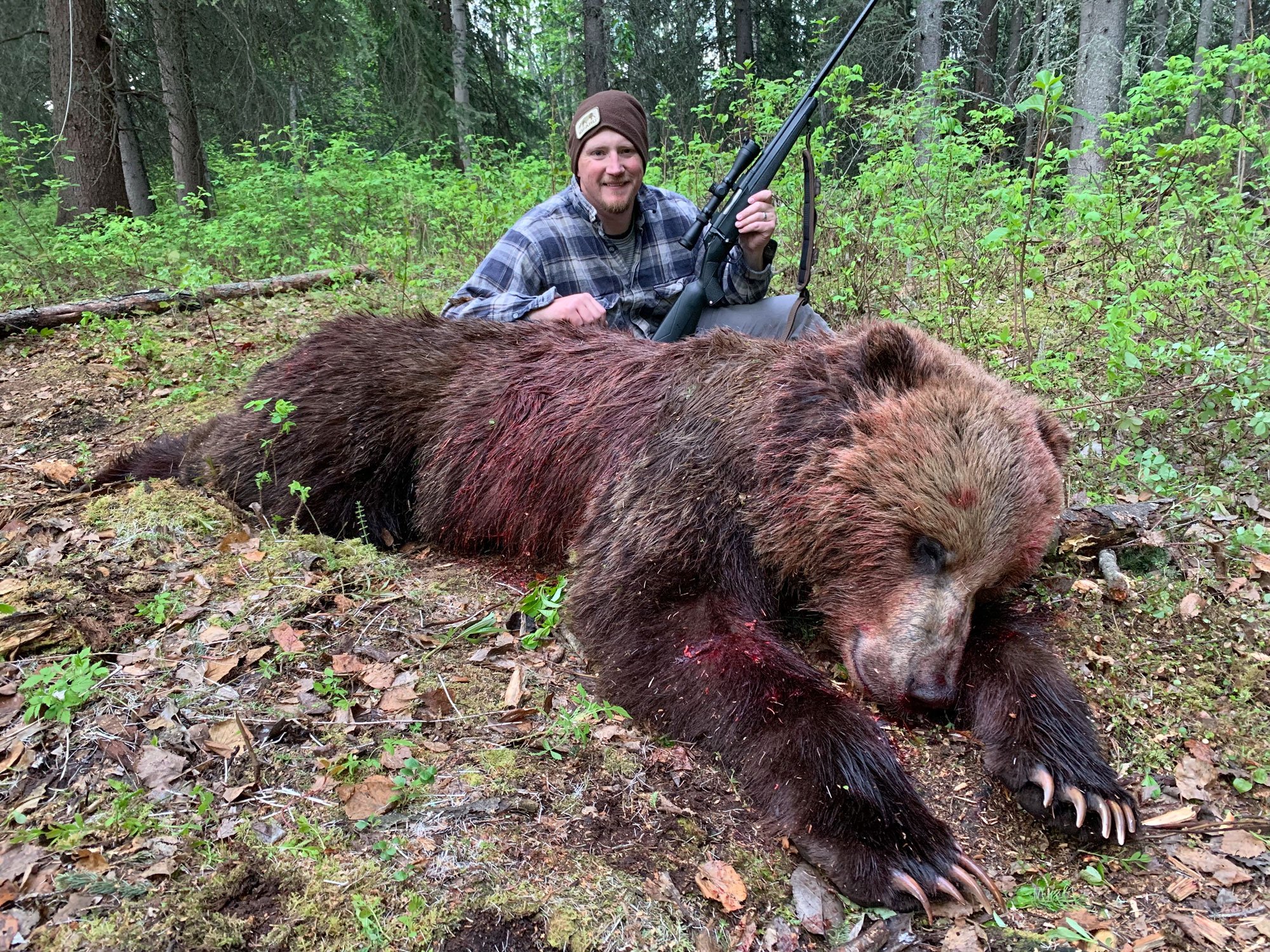
I’ve written a lot about why I think smaller cartridges are often the right choice for big game, and it generally boils down to two observations. First, with thoughtful bullet selection, I haven’t noticed a dramatic difference between the wound characteristics of smaller and larger cartridges — and the smaller rounds have produced consistently satisfactory results. Second, milder cartridges are more pleasant to shoot and, despite having no real limitations on the cartridges I have access to, that’s what I reach for consistently. I have the rifles and ammo to torch a hundred rounds of .300 PRC in a range session practicing positional shooting but, realistically, I’m going to pick a 6.5 Creedmoor, 6 Creed, or 22 ARC to do that. Practice with smaller cartridges can also benefit how you’ll shoot magnums, but there’s a lot of value in hunting with the cartridge that you train with.
Large Cartridge Theory
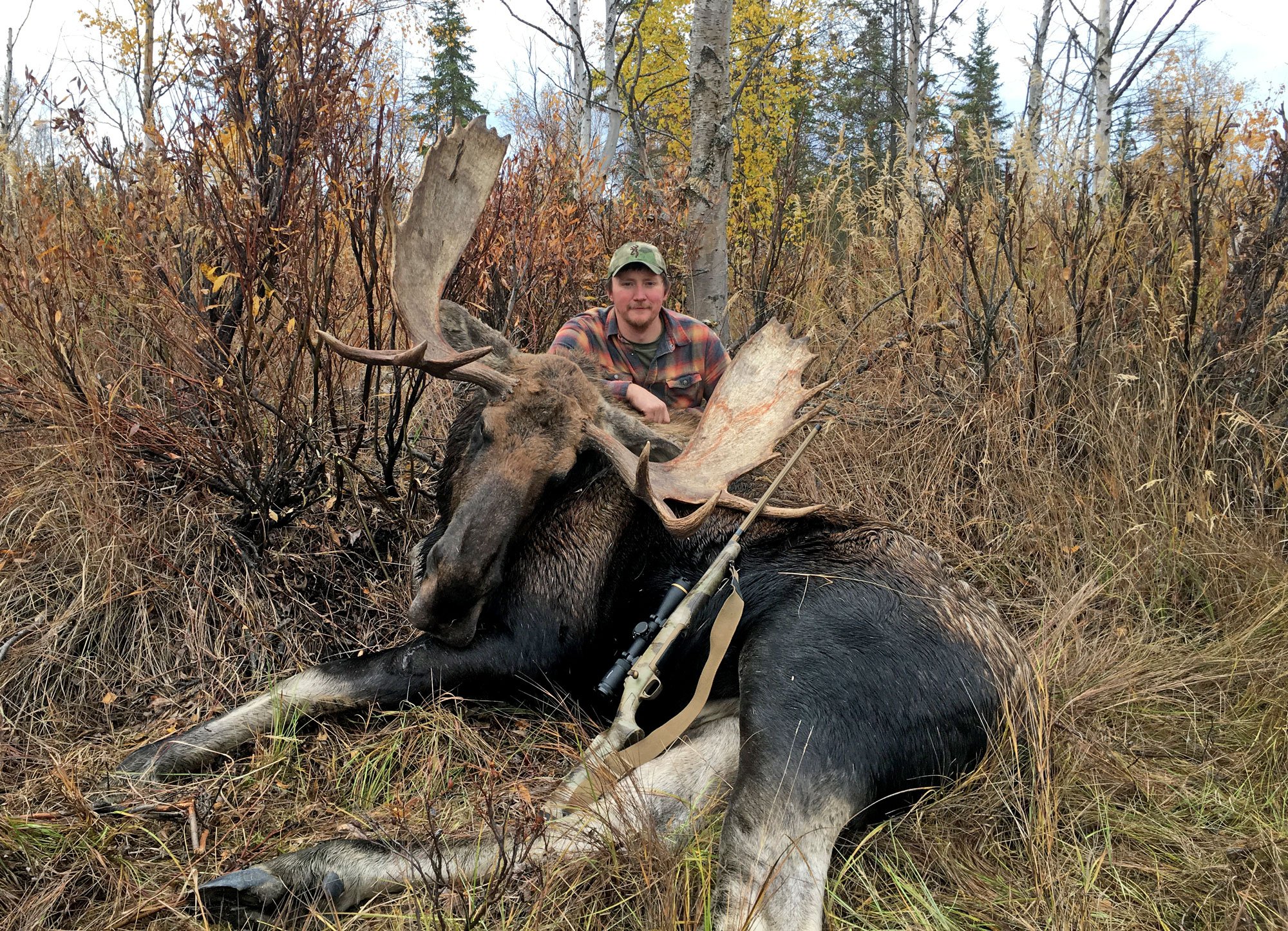
You’ll commonly hear hunters argue that you should choose the largest cartridge that you can handle without flinching — especially for larger game. Lots of hunters consider this basic conventional wisdom, and it’s rooted in the belief that a larger cartridge, bullet, or more kinetic energy will result in a larger wound and will kill the animal more quickly. This makes up for some degree of shooting error, or will allow more forgiveness on less-than-ideal shot angles. Essentially, choosing a more powerful cartridge is viewed as cheap insurance.
Real-World Results
There are many ways that bigger cartridges like the .300 Win. Mag. outperform smaller ones like the 6.5 Creedmoor. When choosing something for yourself, you need to know what the real benefits are, and decide whether they actually apply to you and your hunting. What does that look like in terms of margin for error? That’s exactly what we took a look at in the video above.
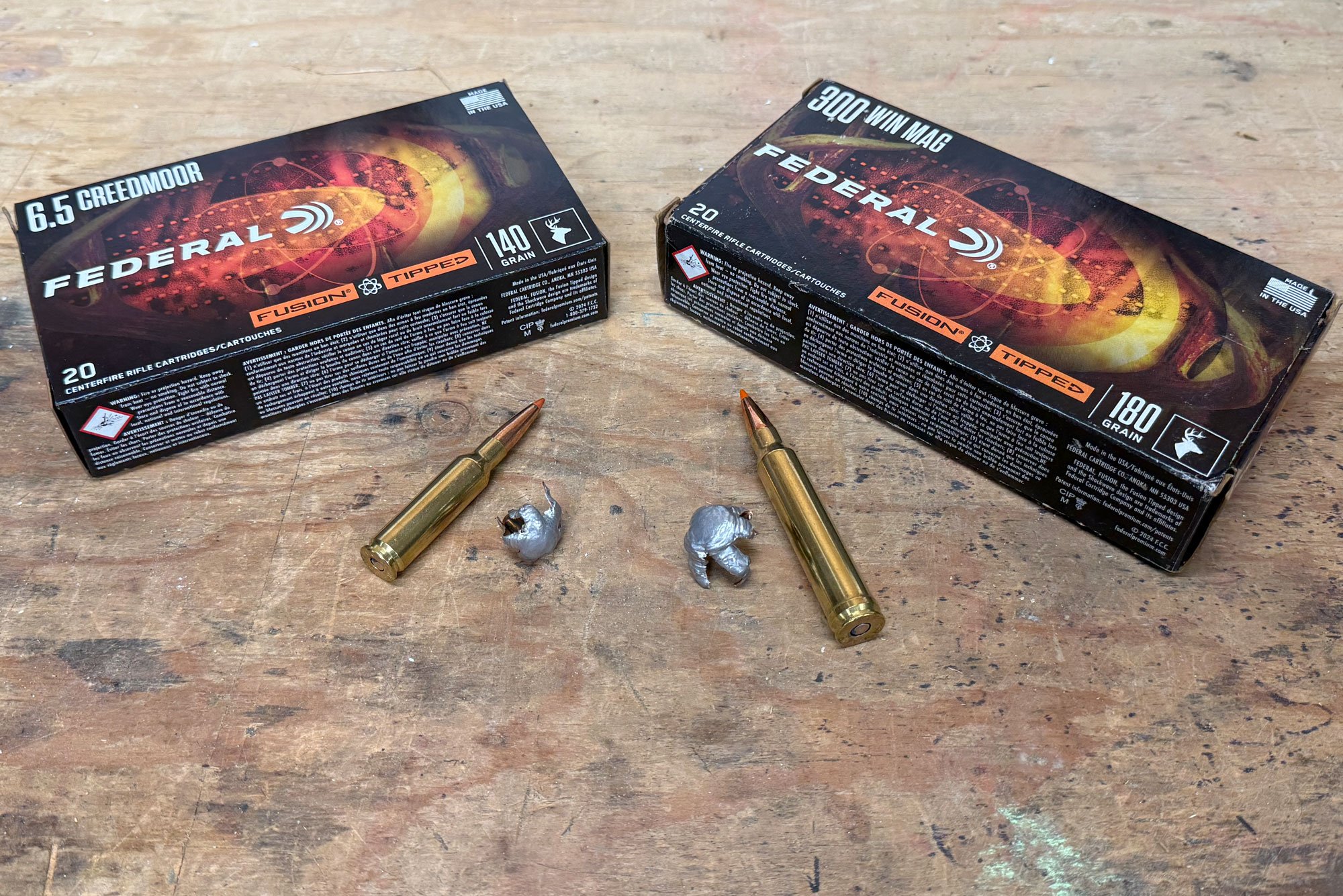
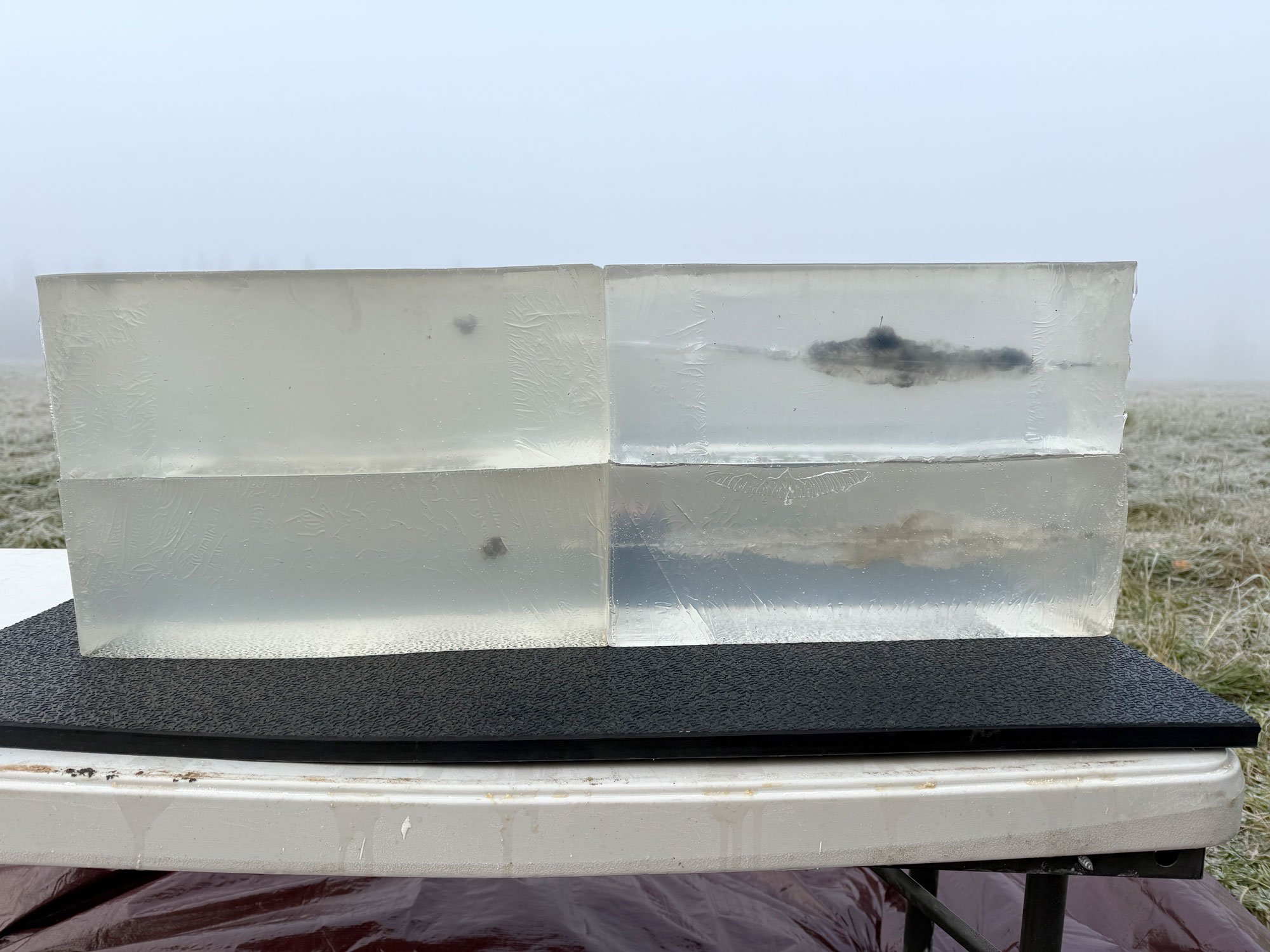
I took a 6.5 Creedmoor and .300 Win. Mag. to the range and fired the same line of factory ammo — Federal Fusion Tipped — from each into identical blocks of Clear Ballistics gel. This gel isn’t a one-to-one representation of flesh, but it is a homogeneous, consistent medium in which we can get a side-by-side comparison of two bullets. The blocks were placed at 200 yards with a Garmin chronograph positioned about 15 yards in front of the target to record impact velocity. The Fusion Tipped bullets were 140 grains and 180 grains for the 6.5 CM and .300 Win. Mag., respectively. The rifles were the same except for different barrel lengths — 18 inches for the 6.5 CM and 22 inches for the .300. Impact velocities were recorded as 2,233 fps and 2,526 fps, with the advantage going to the .300.
| Rifle | Ammo | Impact Velocity | Expanded Diameter | Penetration Depth | Wound Cavity Diameter |
| 6.5 Creed | Federal 140-grain Fusion Tipped | 2,233 fps | .446 inches | 20.75 inches | 2.25 inches |
| .300 Win. Mag. | Federal 180-grain Fusion Tipped | 2,526 fps | .554 inches | 20.0 inches | 2.25 inches |
As expected, the .300 Win. Mag. load delivered higher velocity and more energy at the target than the 6.5 Creedmoor. The block was knocked off the table and was clearly hit harder with the 180-grain slug than the 140. However, the actual wound cavities were not much different. The expanded diameters of the recovered bullets were within .015 inch when measuring both the extreme diameter of the jacket (which would typically be smashed down flat in an animal) and the diameter of mushroomed bullet bodies. The .30-caliber bullet left a slightly wider overall wound cavity across its traverse, disrupting slightly more tissue, but the wound channels aren’t perfectly cylindrical either. The overall diameter of the wound channels and penetration were nearly identical.
Takeaways
This demonstration shouldn’t be taken to mean that the 6.5 CM and .300 Win. Mag. are completely equal. They each have their advantages and disadvantages. The results, however, do track pretty well with other gel testing I’ve done, and what I’ve observed on animals. Those are that, with the same bullet construction, results don’t vary too much across most common hunting cartridges. In fact, things like penetration and wound cavity size can be more greatly influenced by bullet selection than simply picking a bigger or smaller cartridge.
Some hunters place a lot of weight in having a cartridge that “hits harder.” While we can see some of the effects in the movement of the gel blocks during this demonstration, and that delta in impact force could possibly offer increased effect to the central nervous system, it’s not a reliable predictor of how fast an animal will die, or how much room for error you have. What we can rely on is the damage the bullet does.
One of the real advantages of a magnum cartridge, with a thoughtfully chosen bullet, is that it can deliver effective velocities over longer distances. A disadvantage of a 6.5 Creedmoor, in common shorter barrel configurations, is that it will produce lower muzzle velocities and result in a shorter effective velocity window. Ensuring that your impact speeds are high enough to make the bullet work properly is critical.
Our field shooting exercise did demonstrate that you might be able to shoot a magnum just as well as the 6.5. If you can, then you are better poised to take advantage of a magnum’s real benefits. Over time, most people will find that they shoot milder cartridges more consistently. It is most important to choose a cartridge that you can shoot well and will practice with.
Final Thoughts
Along with better equipment and more refined shooting technique, we are constantly learning more about terminal ballistics. Many of our long-held beliefs are simply a product of lore and oversimplified logic. If you’re a successful hunter and your favorite cartridge works well for you, we’re not asking you to change. But if you’re feeling the pressure to choose a cartridge that you don’t think you’ll shoot as well, because you feel that it’s powerful enough to make up the difference, you’re barking up the wrong tree. The smaller cartridges will work just as well on the good shots, and the big ones will do just as poorly on the bad shots.