
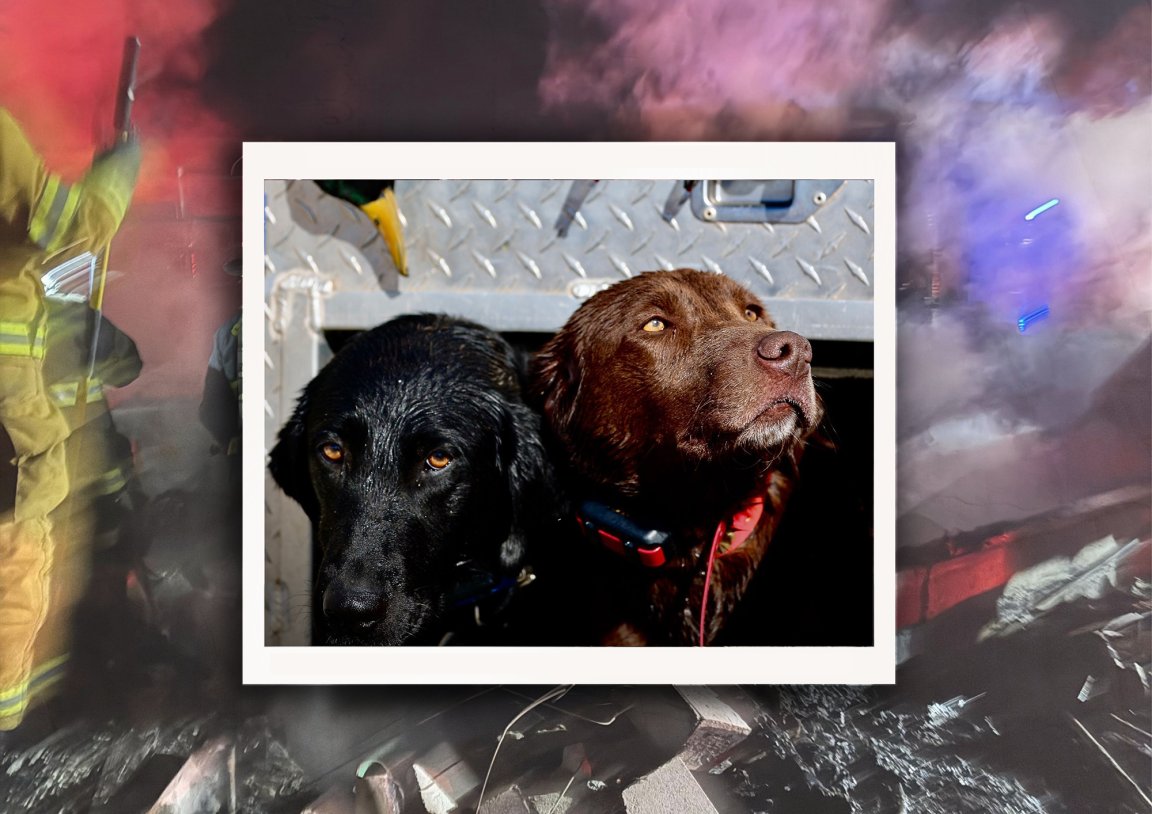
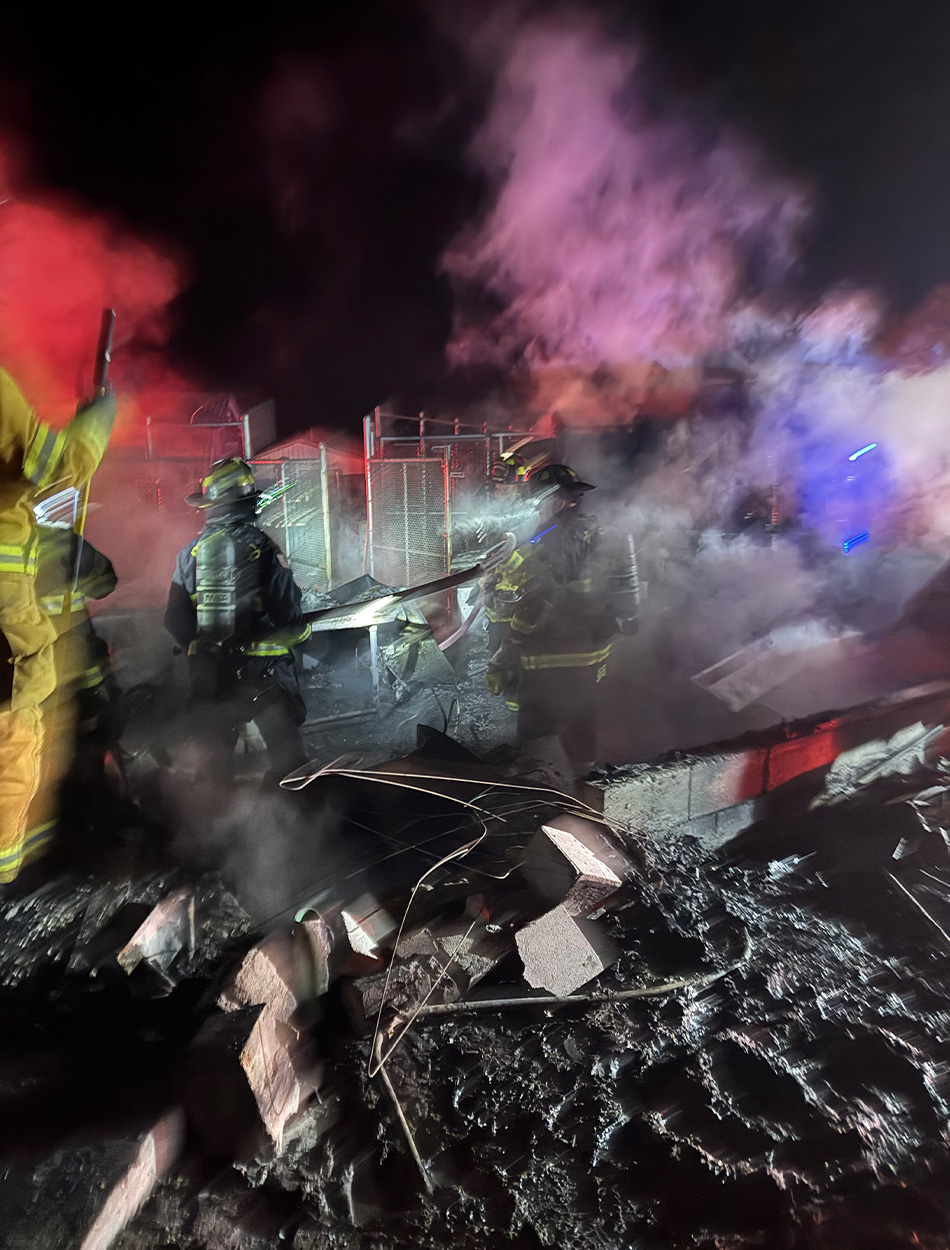
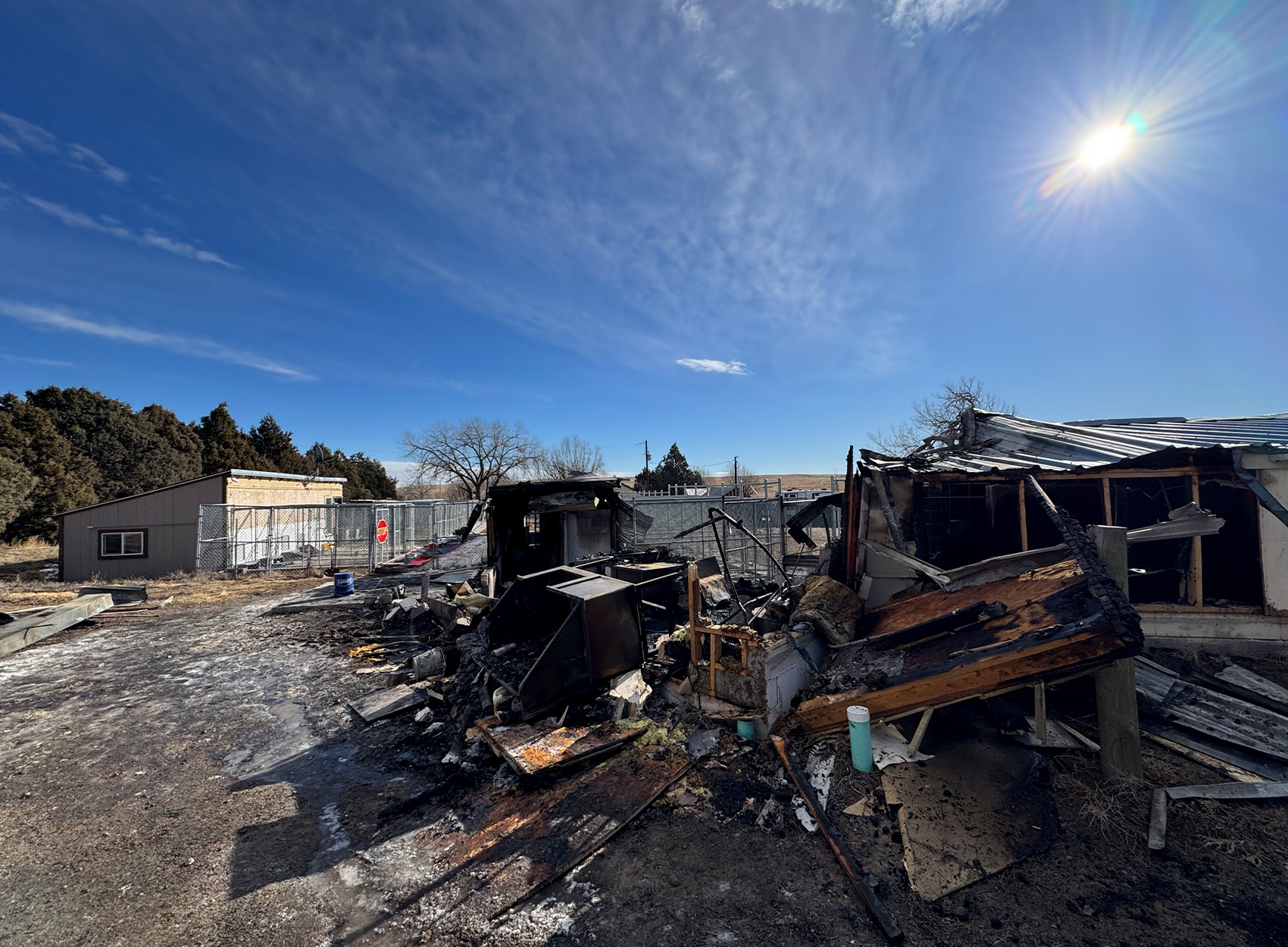
Around 1 a.m. on Jan. 29 a fire broke out in the kennel building at Rocky Mountain Roosters, a pheasant hunting preserve that lies about an hour northeast of Colorado Springs. Fortunately for the dogs, Dan Pohja was sleeping nearby in his camper.
As he awoke to the sound of barking and the smell of smoke in the air, Pohja, one of the preserve’s hunting guides, moved as quickly as he could. He threw on some shorts and a pair of boots and ran toward the building that was belching flames. Following the operation’s fire plan, Pohja opened the gates to the kennels and let out the 30 bird dogs that were stuck inside. Then he called 911.
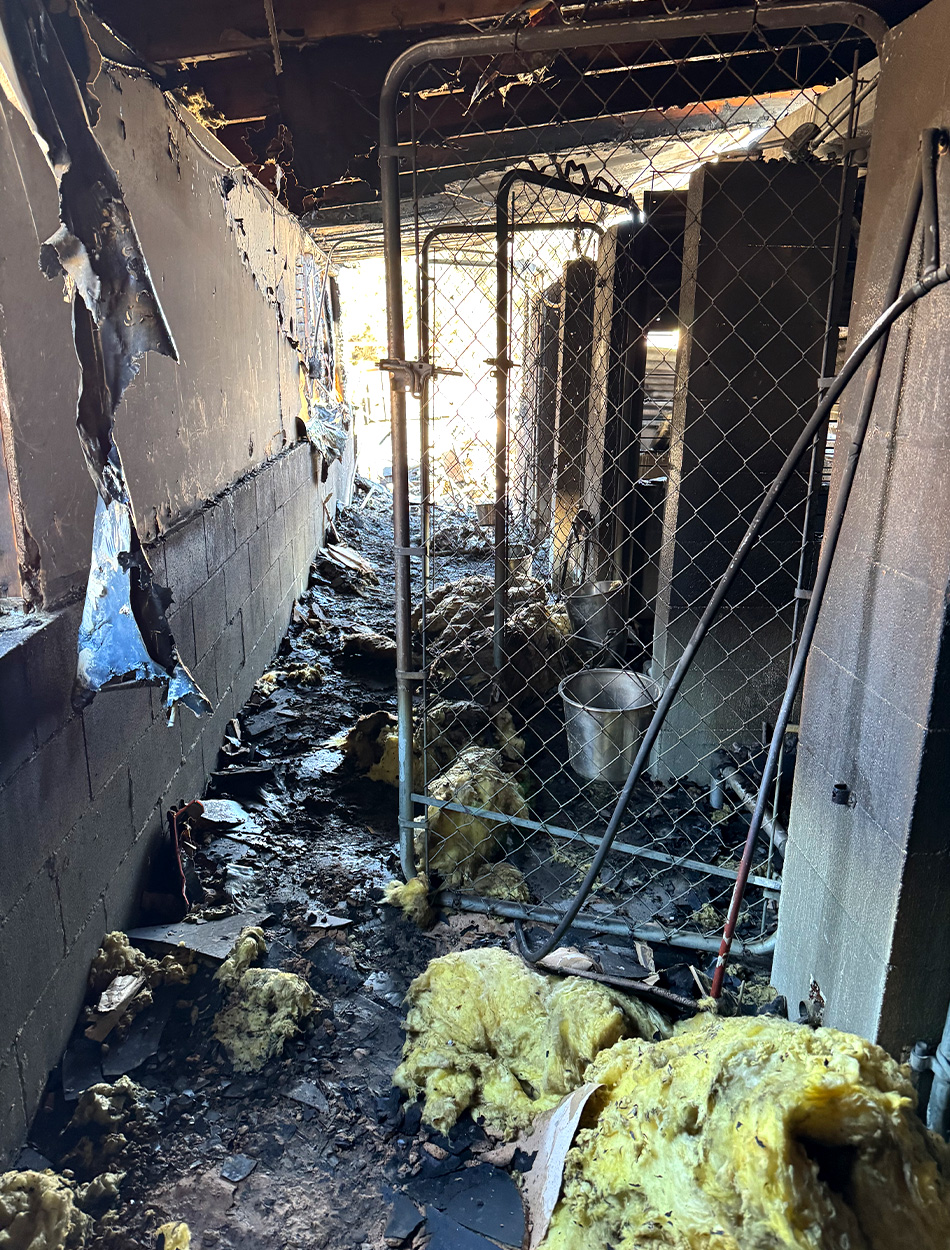
“Dan being there, he was the true hero,” says Ben Garcia, a trainer and breeder who works with the preserve and kennels his own dogs there. “He was able to get some [of the dogs] in crates, and then he got some into the holding pens we have. He got the Labs in one pen, and the setters and pointers and Brittanys into the other, which saved the dogs’ lives.”
By the time Garcia arrived at the blaze around 1:30 a.m., crews from four volunteer fire departments were already there. After the fire was put out, they recovered the body of one of Garcia’s Labs, Muddy, who died from carbon-monoxide poisoning before Pohja reached the dogs. Muddy was the only dog that did not survive.
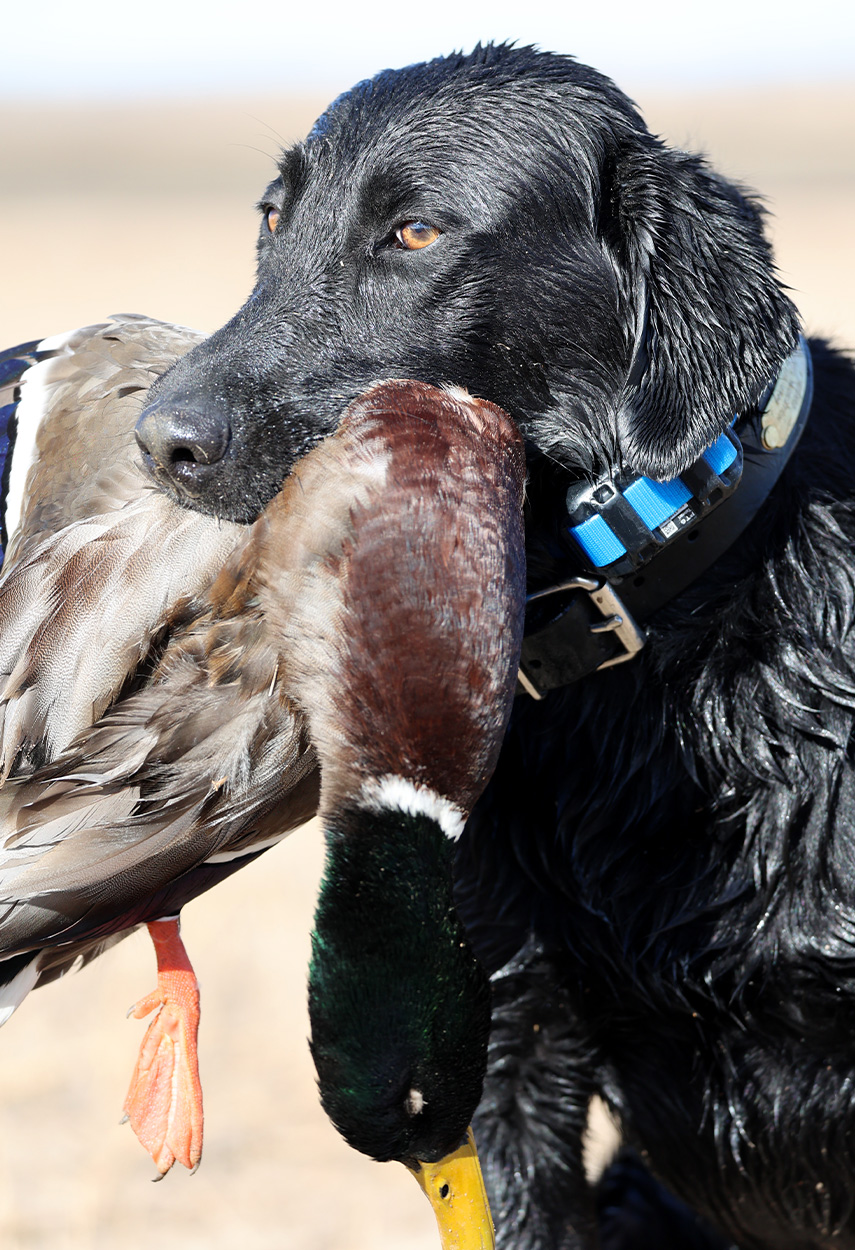
“It’s crazy, too, because I had a nine-month-old Brittany puppy right next to Muddy that was untouched,” Garcia says. “Which just shows you, fire is a crazy monster in itself.”
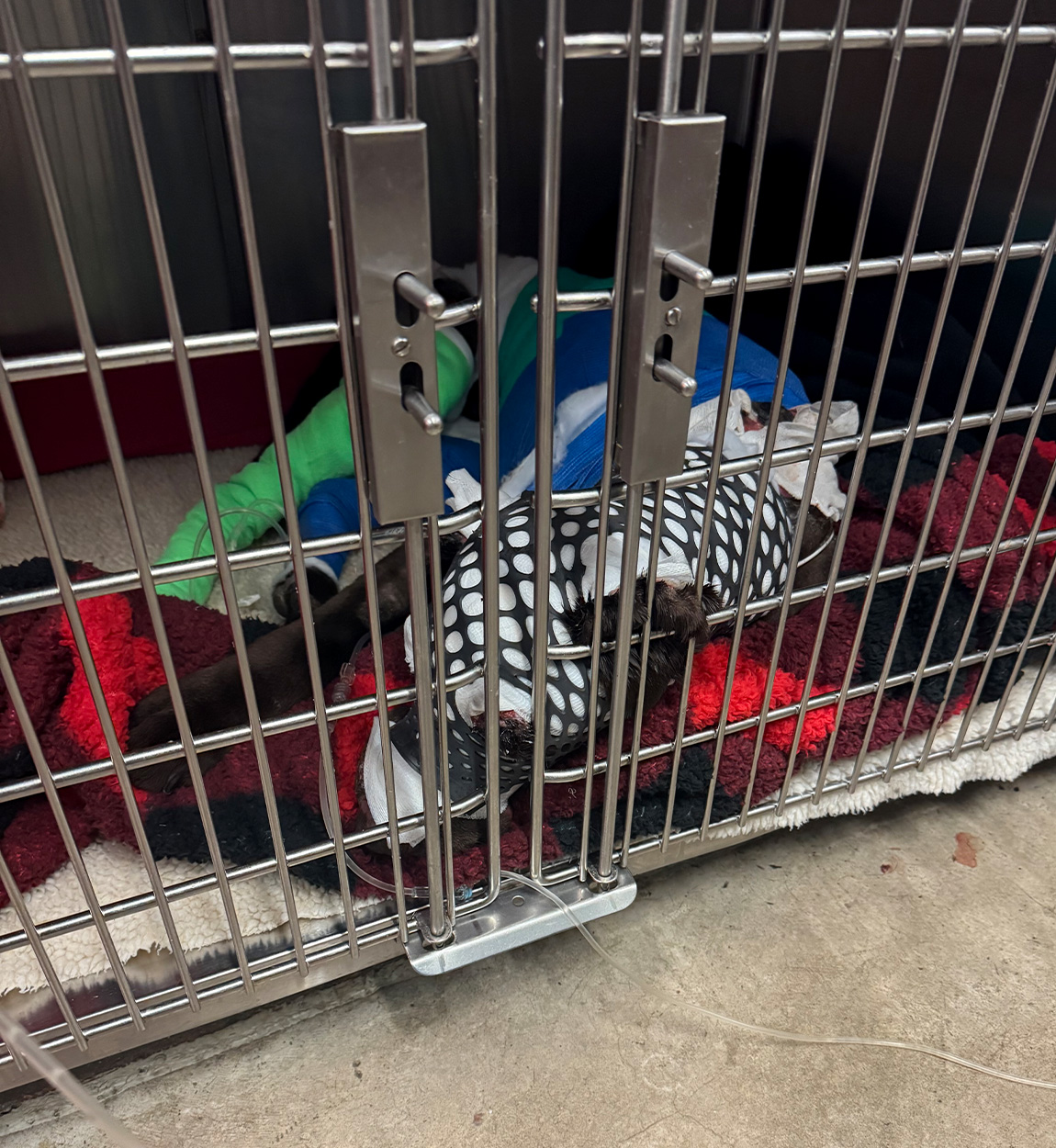
Another one of Garcia’s Labs, a chocolate named Piñon, was badly burned during the fire. Piñon was able to dig himself out after a wall collapsed on him, but he came away with first-degree burns on his face and fourth-degree burns all over his body.
“We’re on the mend now,” Garcia says. “He’s on solid food, they pulled the feeding tubes out, and he’s doing much better … But it was gnarly. He had a rough first week.”
Scott Axton, the Rocky Mountain Roosters office manager, says it’s a miracle the eastern Colorado winds weren’t blowing that night like they usually are. He says it’s not immediately clear how the fire started, and that authorities are still investigating.
“Dan said that when he got up, the flames were shooting straight up,” Axton says. “And where the kennel was — or is — there are these cedar wind break trees about twenty five to thirty yards away. If those flames had gotten into the grass or into those trees, we’d have lost the whole property.”
Axton is also beyond grateful for the volunteer firefighters, who came as quickly as they could from the nearby towns of Calhan, Simla, Elbert, and Peyton. Although the kennel building was lost, the firemen were able to stop the blaze before it spread, which saved the 40-year-old hunting operation. To show their appreciation, Rocky Mountain Roosters set up a GoFundMe page to raise money for the rural firefighters. He says the business’ insurance will cover the kennel building.
“It’s all going to them,” Axton says. “These are all volunteers, and they’re very limited on their budget. So it’s a huge thing to be able to support these rural communities that don’t have city fire departments.”
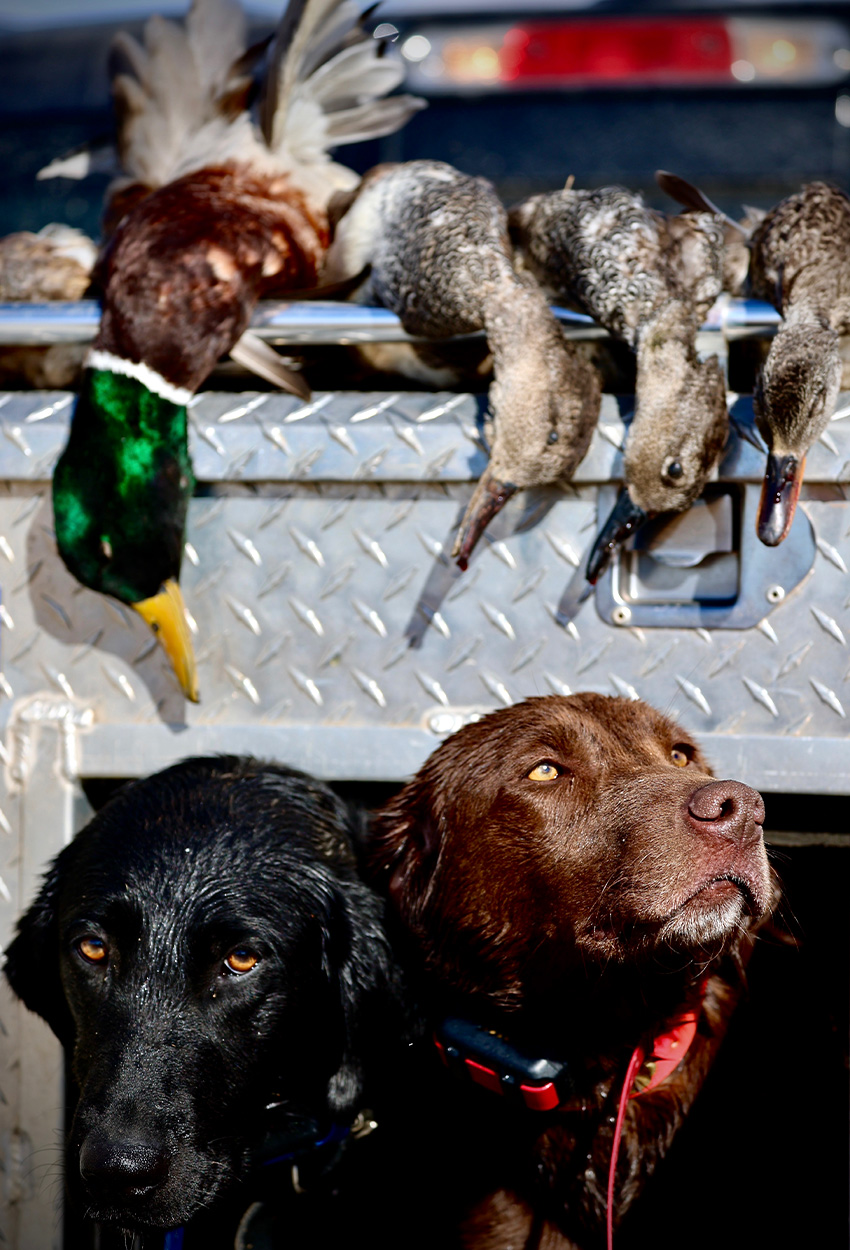
Garcia adds that along with Pohja’s heroic effort, and the unusual lack of wind that night, some other things worked out in their favor. All the dogs on the property were either his own, or they were guide dogs used by Rocky Mountain Roosters, but they were supposed to have another 14 dogs checking in the next day. He says it all goes to show how important training is, especially when things go sideways.
“The reason why you crate-train your dog is for moments like this. Because if you have a dog that doesn’t understand the crate, and that’s where they can go to be safe,” Garcia says. “Imagine … if firemen have to come in and grab your dog and throw him in a crate? You gotta train for when things go wrong. Not for when things go right.”