
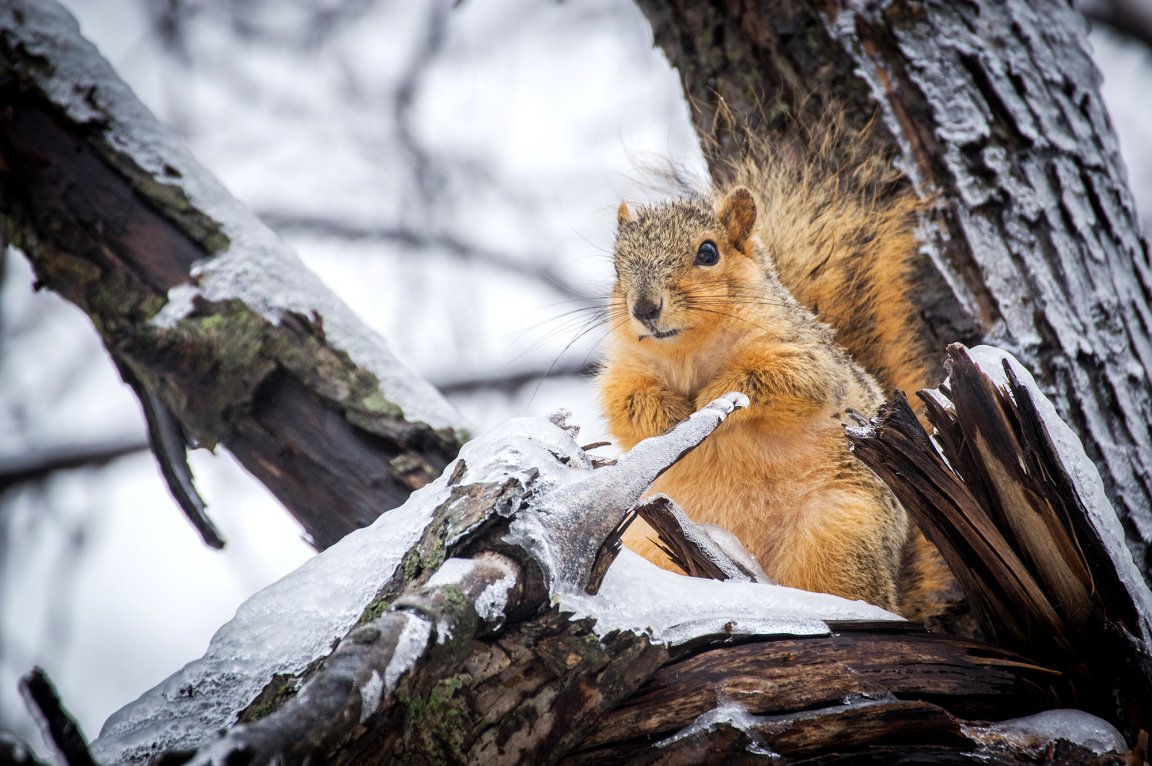
Tradition has it that squirrel hunting is an early-season pastime. It’s a good tradition, one of crisp leaf-crunching mornings, balmy shirtsleeve afternoons and scenes of treetop bushytails cutting succulent hickory nuts. I have memories of fall squirrel hunts that date back to my boyhood and my first .22 rifle.
But lately I’ve been breaking with tradition because in some areas the squirrel season extends through the winter. I’ve begun taking my .22 when I trek through the snow, and have found that hunting snow-time squirrels holds a fascination all its own.
Unlike the snowshoe rabbit that blends in with the snow, the fox squirrel with its rust fur and the gray with its dusky salt-and-pepper coat stand out in the whitewashed woodlands. When they are out in winter rummaging for buried nuts, you can spot their darting movements at greater distances than at any other season.
During blizzards squirrels sometimes hole up for days. But they never really hibernate, and after the harsh weather passes, they come out. They do not stay outside as long as they do in the fall, when they frantically cache nuts. In winter they sleep in, and allow themselves only one feeding spree a day — normally in early afternoon.
I got my first taste of snow-time squirrel hunting several years ago in Waukesha, Wisconsin during the Christmas holidays. My father and I had planned a day of grouse hunting. As we crunched over foot-deep snow, we skirted the edge of a hollow filled with stately hardwoods. Through the open woods I glimpsed a butterball fox squirrel 100 yards away. When I spotted another squirrel, I mentioned it to my father.
“No kidding,” he said. “I took lots of squirrels from those woods a few months back. The season is still open. Want to give it a try?”
I did. The day was windy, and the grouse were flighty and not holding well. It seemed as though squirrels would be more cooperative. Two hours later, my father’s game bag sagged with a pair of fox squirrels that he’d caught at close range. We had seen several others, but they were out of the reach of our open-choke grouse guns. How I had wished for my scoped .22!
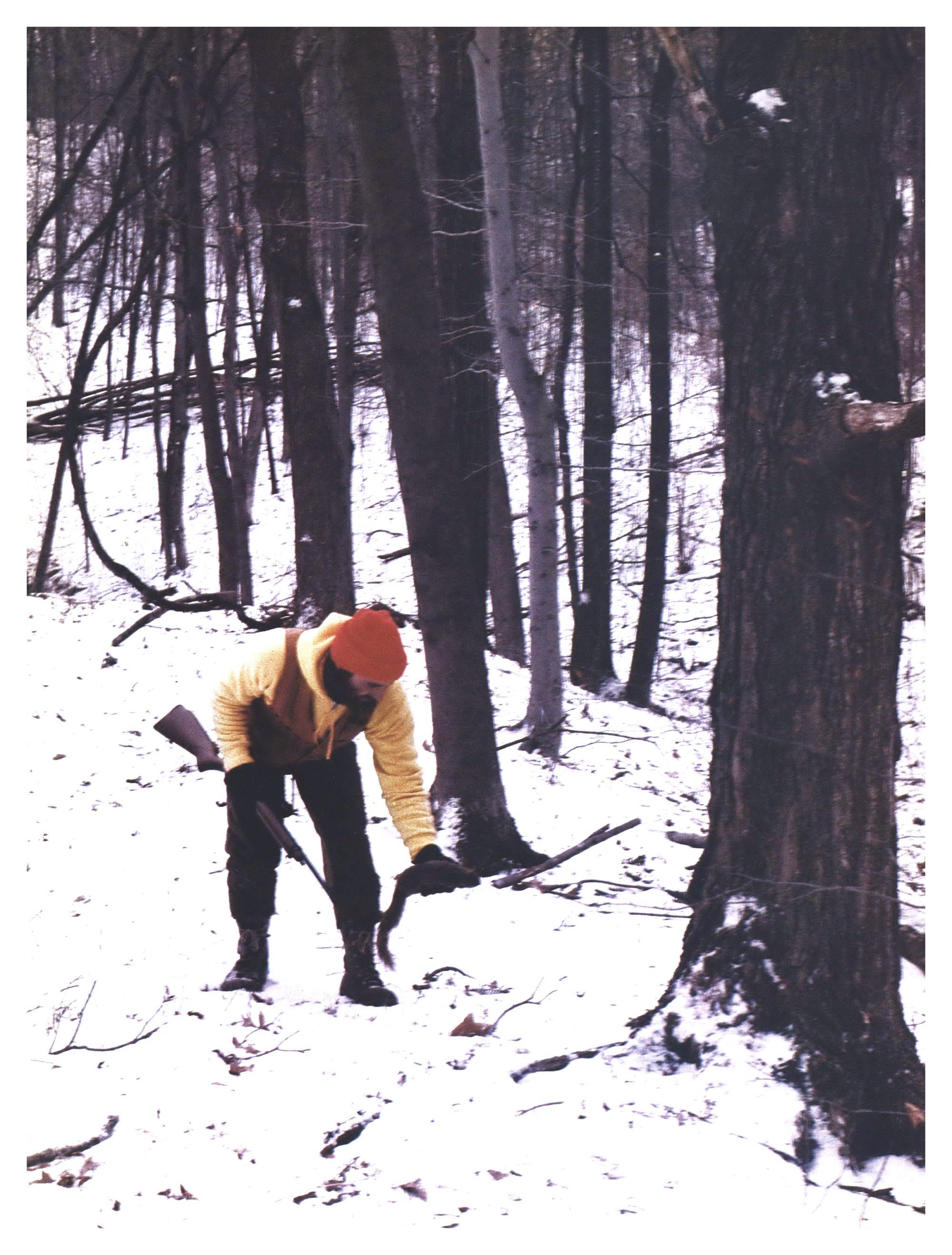
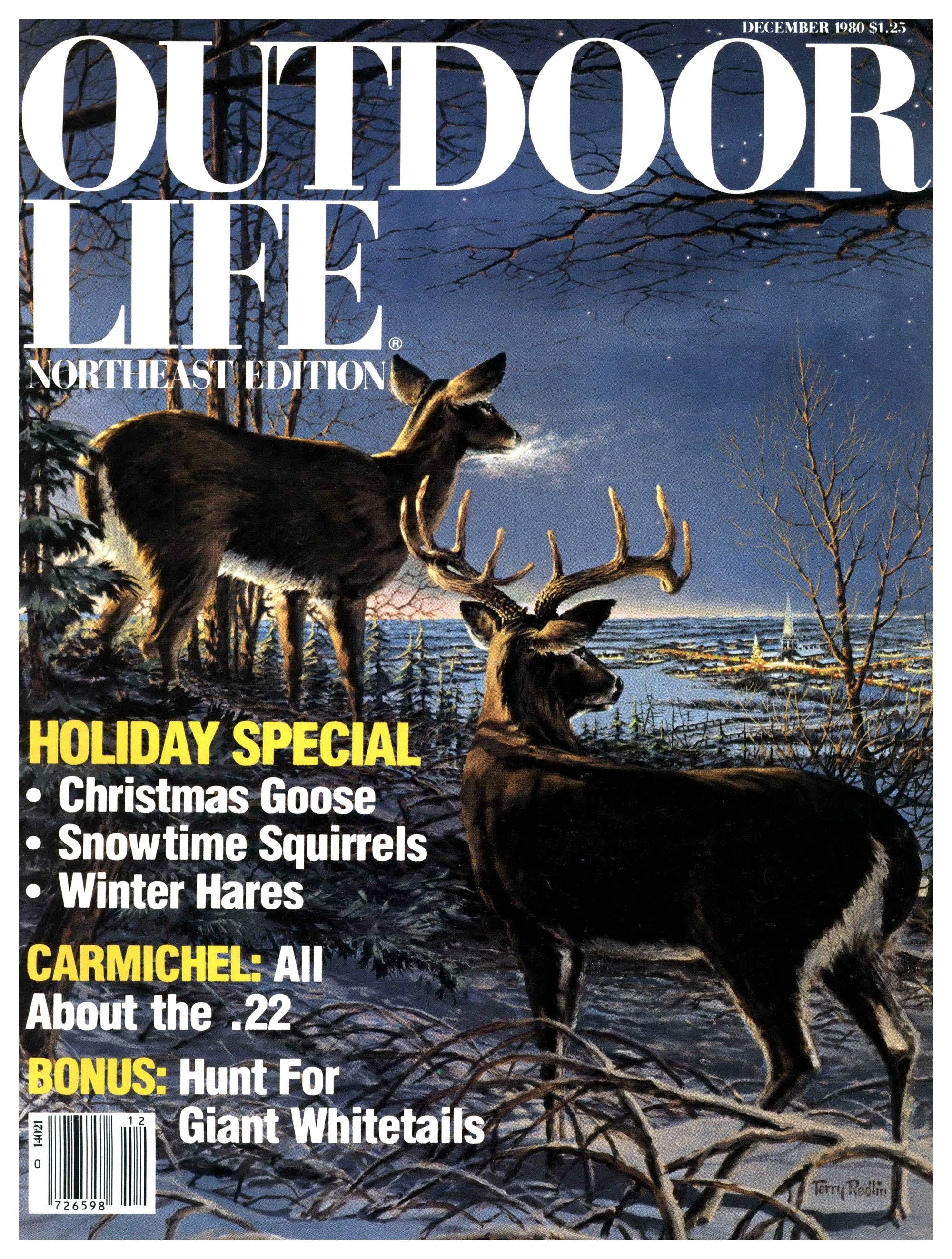
This story, “Snowtime Squirrels,” appeared in the December 1980 issue of Outdoor Life.
Opportunities for snow-time squirrels are more widespread than you probably think. New York’s squirrel season, for example, extends to the end of February. Many Appalachian states, such as Pennsylvania, Virginia and West Virginia, also get plenty of snow before their seasons end. Even if your state’s season doesn’t stretch into winter, you may be treated to a few early snowfalls.
A late-fall dusting of white seems to make squirrels more active than ever. Maybe it reminds them that winter is near and that they’d better stash more nuts while they still can. They avoid deep, fluffy snow because they sink into it, but tunnel underneath it if they have to. Deep compact snow is no bother to them since it supports their weight. A squirrel’s keen sense of smell can detect nuts through the snow, and he may dig through more than a foot to reach a cache.
While an abundance of fresh cuttings is the key to squirrels’ whereabouts in the fall, in winter look for their diggings. The mouths of these tiny snow caves are littered with bits of leaves and shell fragments. They are easy to find. So are squirrel tracks.
In winter’s wide-open woodscape, squirrel nests are easy to see. Most of the breezy, shoddily constructed summer nests have been torn down by winter’s rough weather, and those that remain are winter nests. They are sturdy and offer good insulation from the cold. To make them even cozier, the squirrels plug the entrance hole after entering with some of the nest material.
Dens are also important homes for winter squirrels. They are holes about 3 inches in diameter that form when branches fall off mature hardwoods. Dens offer better protection from the elements than nests, but they can’t be moved. If a den is in an area with a poor mast crop, it’s not likely to be inhabited. A nest can be slapped together in a single day by an industrious squirrel after he’s found a mast-crop bonanza. He often builds one in a food-producing tree. That’s why winter nests are better than dens at indicating that squirrels are using a particular woods.
On my first deliberate hunt for snow-time squirrels, I was surprised to find my favorite woodlot bustling with more bushytails than during my early-season outings. I thought I was seeing more squirrels because of winter’s increased visibility, but there was more to it than that.
Since the woodlot is near a roadside, it had been hit regularly by hunters in the fall. Many squirrels were harvested, and those that survived were difficult to bag. Once the woodlot was left alone after the initial weeks of the season, squirrels moved in from adjacent woods too deep to receive much hunting pressure. The summer-born squirrels that had been too young to venture from their dens in the fall were weaned. This kind of shuffling is common wherever squirrels are found.
It didn’t take me long to find out that squirrels stay indoors on sunny days. Such days are usually the coldest. Then too, a squirrel’s eyes are as sensitive to sunlight as man’s. Squirrels are most active on overcast days.
When the day is calm I take a stand — my preferred method for hunting snow-time squirrels. I rest my back securely against the bosom of a thick beech tree on a high hillside. There I can look over a wide white hollow that has an impressive stand of mature nut trees. Many squirrels winter in these woods. I know that because I’ve scouted and found many diggings and tracks.
I approach this stand carefully, and my efforts have paid off. I’ve been here 10 minutes, and already a fox squirrel is slipping down a white oak. This one’s a real trophy — a grizzled old boy fattened and lazy from the easy pickings in a nearby cornfield. He weighs about 3 pounds, or three times the size of a typical gray squirrel. He scampers over the snow 60 yards away.
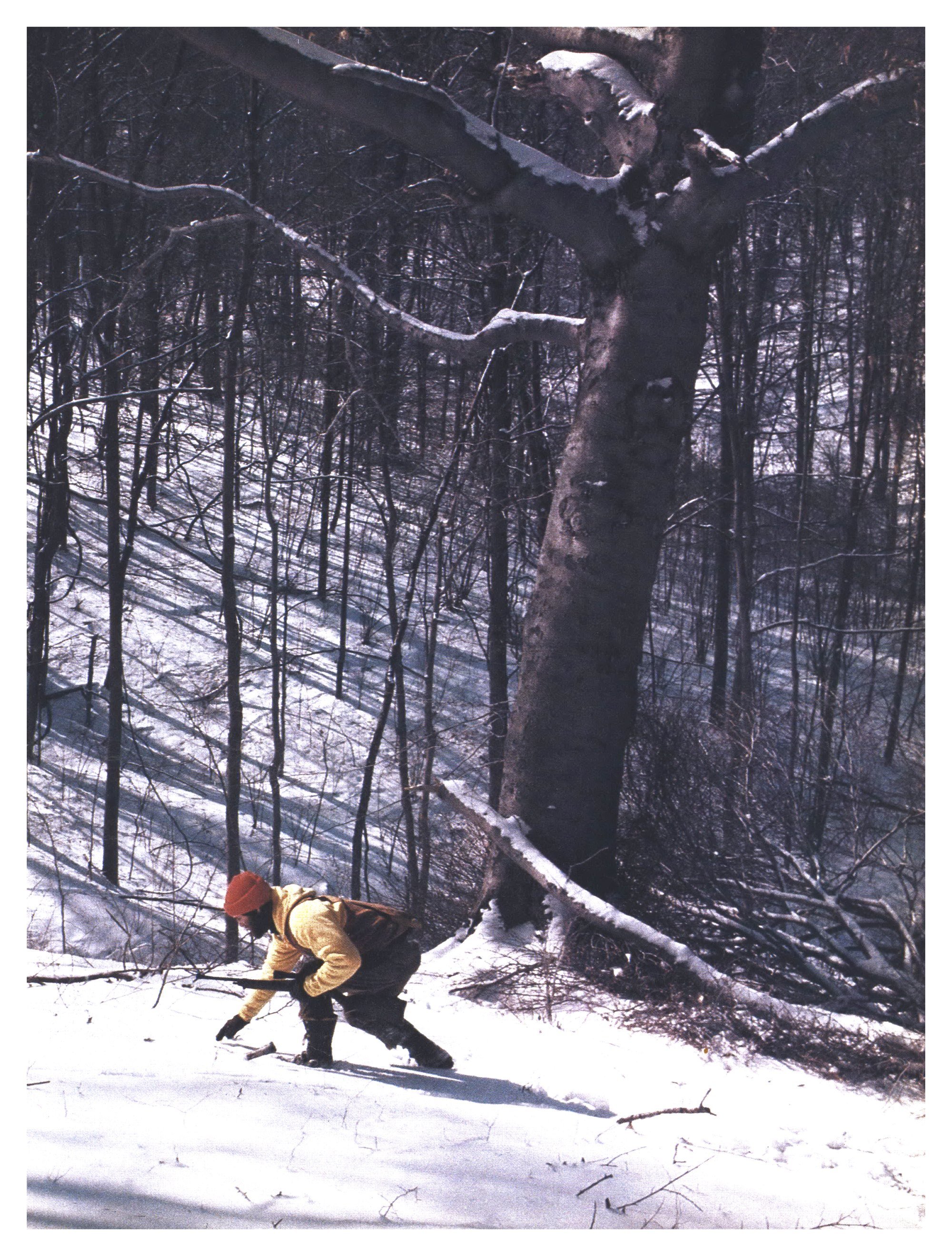
It’s a longer shot than I’d try in the heavy foliage of the early season, but such a goading target in sharp contrast against the white is irresistible. With my elbows braced by my knees, I rest the crosshairs on the squirrel’s chest. It’s a bigger target than the head, yet a shot here kills clean and wastes little meat. The gun spits and the squirrel slumps. The kill proves clean.
When a chilly wind makes stand hunting uncomfortable, I still-hunt and stalk. The blustery weather doesn’t bother the squirrels, and the banging and scraping of tree limbs and branches drown out my footfalls. This is especially helpful when the snow crunches underfoot.
Still-hunting and stalking aren’t easy because just as easily as you can spot a squirrel’s small figure against the snow, he can detect you. Take only a few catlike steps at a time when still-hunting. And when actually stalking a squirrel, use trees or other available cover to screen your approach. I like to sneak up behind a tree or stump and use it to steady the rifle for the shot.
Read Next: Old-School Squirrel Hunting Tricks That Still Work
Offhand shooting at squirrels is the best way to waste ammunition. Of course, a bushytail may suddenly appear on an overhead limb, forcing you to shoot quickly.
Winter’s ground rules are similar to those of fall, but the playing field is vastly different. The woods are bright, clean and often strangely quiet — slumbering. Perhaps you never suspected squirrels would forage actively through the midday hours in such an austere environment. But they do. So this year, when the first snowfall blankets your favorite woods, grab your .22 and make tracks. It could be the start of a new tradition.