
It was 53 years ago this spring when Vermont held its first turkey season after a period of live-trapping and translocating wild birds from other areas. This was part of a larger effort by state wildlife agencies to bring America’s largest native game bird back to the landscape.
In hindsight, the wild turkey’s comeback is one of the great conservation milestones in our country’s history. And on April 18, the Vermont Fish and Wildlife Department hosted an event in Pawlet to commemorate the bird’s return to the Green Mountain State. Several top officials, wildlife biologists, and conservation orgs were there, along with Gov. Phil Scott.
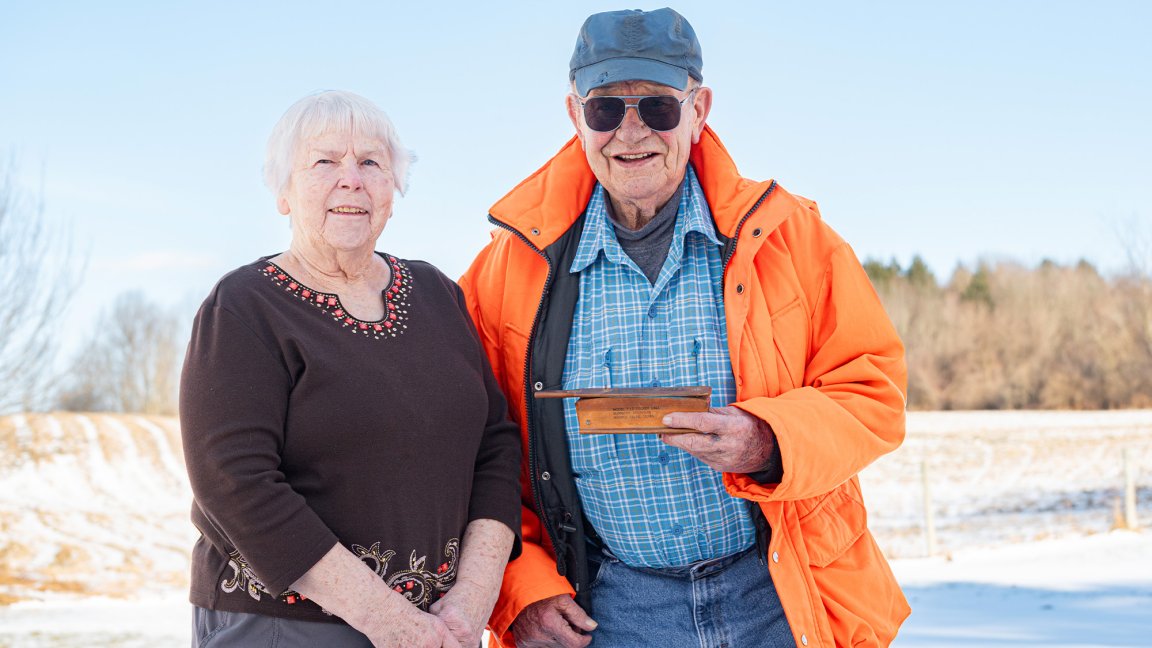
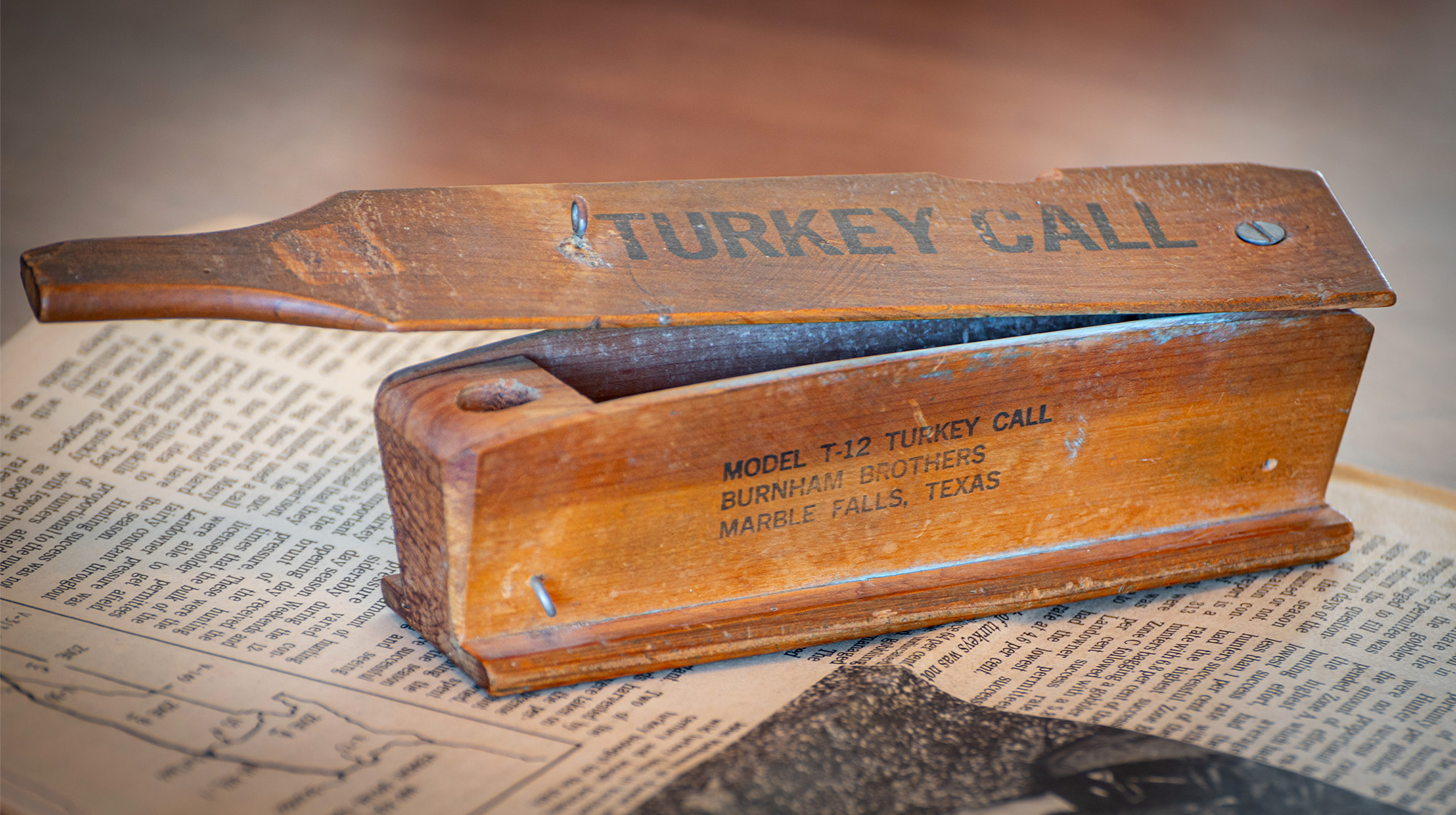
As part of that ceremony, VFWD honored John Hathaway, the first turkey hunter to check in a gobbler on that historic opening day back in May 1973. The 86-year-old dairy farmer is no longer able to hunt, and he donated his old box call to the local historical society at the event.
“It was really something,” John tells Outdoor Life of that first spring season. “I could never have imagined that in that short amount of time, the turkeys [the state] put out would multiply the way they did. I mean, we had a lot of turkeys around there.”
The King of Spring Returns
Born in 1939 on a farm in southern Vermont, John grew up in a family with five brothers. The boys started hunting deer early on — whitetail populations were strong but still rebounding after totally collapsing in the late 1800’s. Turkeys, on the other hand, were still “totally nonexistent,” John says. He wouldn’t see his first wild bird until he was around 31 years old.
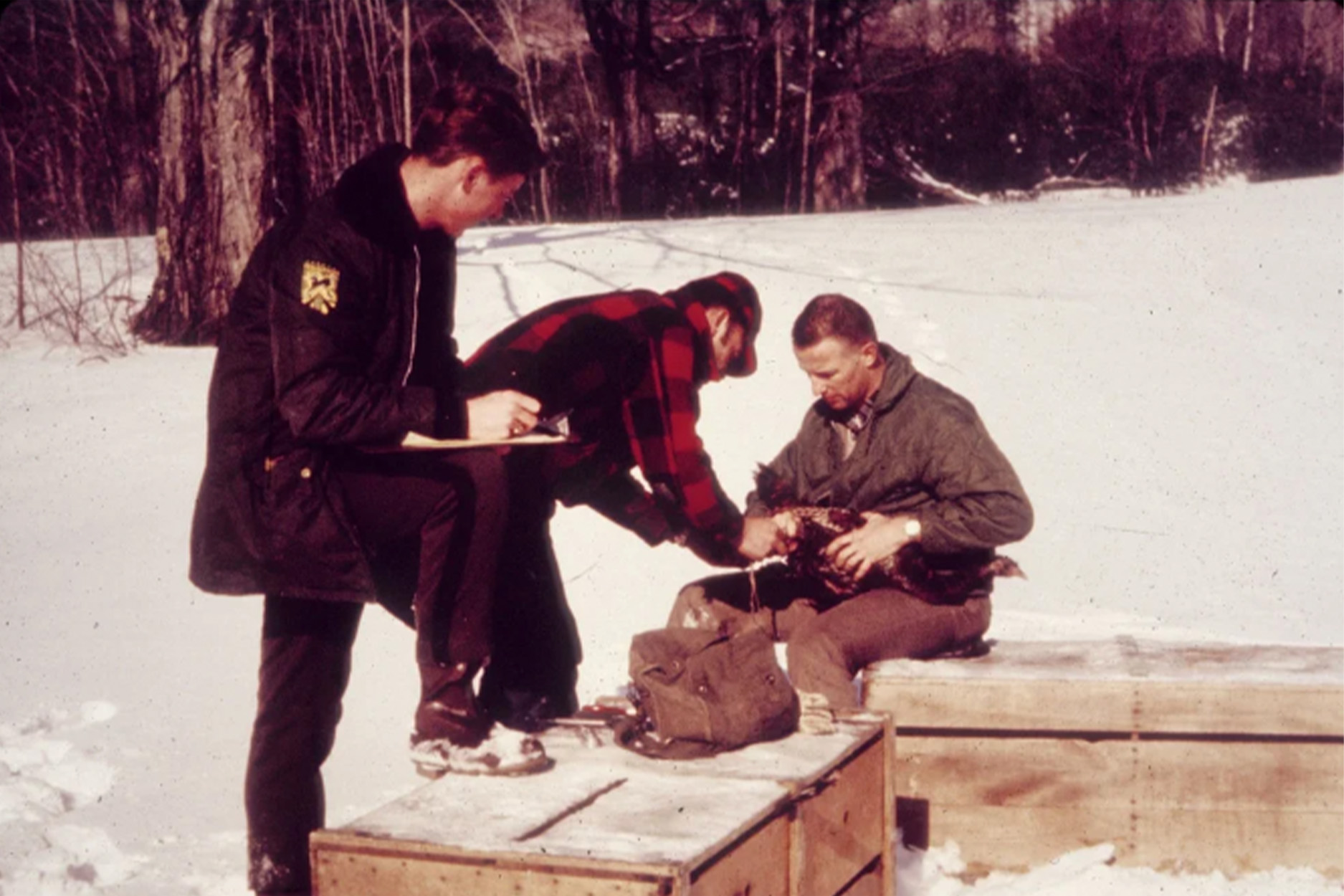
By that point, John and his wife were running their own dairy farm in Pawlet. The small town sits in the Mettawee Valley near the border with New York, and it’s where the state released its first batch of wild turkeys in 1969. VFWD wildlife biologist Bill Drake had live-trapped some birds over in New York, and in February, they released 17 turkeys — five toms and 12 hens — onto some farmland off Route 30.
“That was only about seven, eight miles south of where I lived, and they migrated up my way pretty quickly. It seemed like all of a sudden, I started seeing them gathering around and scratching in the barnyard,” John says. “By 1972, I was seeing as many as 50 or 60 birds around my farm.”
John’s neighbor up the road, Bill Cleveland, and other locals were finding similar numbers on their farms. And with an estimated 600 turkeys now in the area, the VFWD started planning its first hunting season for the following spring. They issued 579 tags for a 12-day season to open May 9. This gave John and his neighbors a few months to try and learn how to turkey hunt.
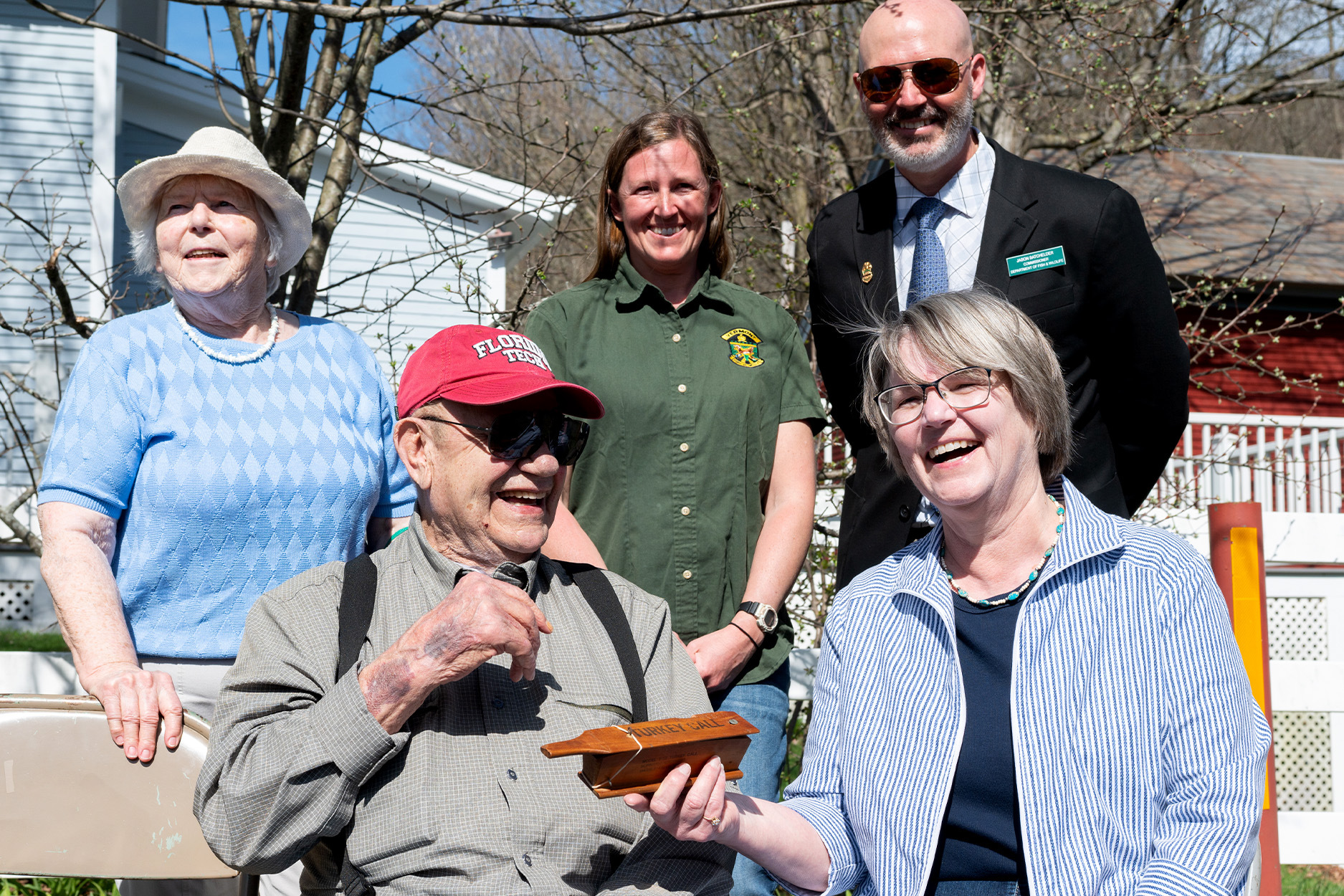
“We went to a couple of turkey calling seminars — they had all these different calls. And I just settled on one call, so I could go out and see how it worked. It was a Burnham Brothers box call, out of Texas.”
“A Little Late Milking”
After learning how to work the call, John practiced during the preseason on the birds around his place. When late April rolled around, he’d more or less figured out their patterns. Every morning, before milking his cows, he’d go out and listen for gobbles.
“The turkeys would normally be back behind my barn,” John explains. “Over to the west of the barn there was a big hill with maple trees and nut trees, and that’s where they usually went.”
The habits of wild turkeys, though, are about as predictable as the weather in the springtime. And on the cold, wet morning of May 9, when John woke up before the sun, it was strangely quiet west of the dairy barn. He stepped out a second time around sunrise. Still no gobbles.
“Finally I got ready, because it was getting close to milking time. And then way across the road to the east of the barn, about a half mile away, I heard a turkey gobbling,” John says. “I could see him way in the meadow over there, and I said, ‘Well, I think I’ll go after him. I’ll just be a little late milking.’”
As he approached the meadow carrying a borrowed shotgun, John started working his way up a steep sidehill to the field edge. He was about even with the bird and hidden behind a pine tree when he first sounded off the box call. The tom gobbled back from a little more than 100 yards away. John called a second time, and the bird gobbled back again, only now he was headed up toward a hill and away from where John was sitting.
After a few more calls back and forth, John watched the tom disappear over the crest of the hill. The bird kept answering his box call but he didn’t seem to be coming any closer. If anything, it sounded like the tom was working away from him and toward the far edge of the field.
“So, I’d run up the hill a ways and squat down, and just like a periscope, his head would come up and he’d look around,” John says. “Then [his head] would go back down and I’d call, and he’d gobble. And I’d run up the hill some more.”
John kept creeping closer, until he was about 30 feet away from where the gobbler was sounding back near the far brush line. He made one more push, popped up, and shouldered the Savage 12-gauge right as the bird started to bolt.
“He was already moving fast and going from my right to my left, so it was a perfect shot for a right-hander,” he says. “I just swung onto him and bang. And that was the end of the hunt.”
The tom went down on the spot roughly 25 to 30 feet away. But when John ran up for a closer look at the bird, he got a surprise.
Read Next: The Vintage Turkey Tactics That Never Let Me Down
“I reached down to pick him up and check out his beard. But he didn’t have a beard,” says John. He’d eventually find a short, two-inch beard that had been partially torn off by another gobbler. The bird’s spurs were 1 1/8 inches long.
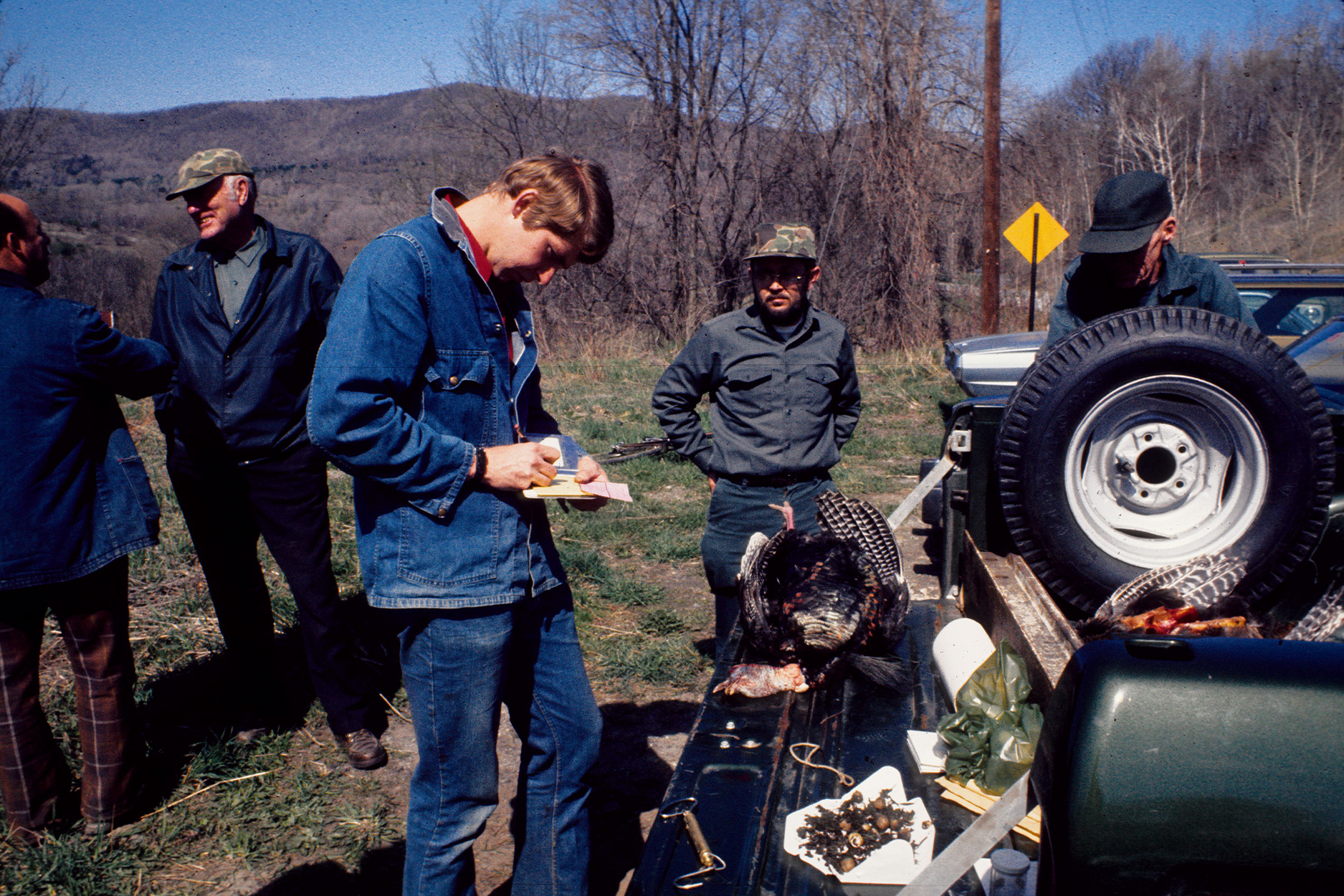
Later that morning, John would be the very first hunter to check in a turkey with VFWD. (There were 23 gobblers in total harvested over the 12-day season.) But first, he had some milking to do.