
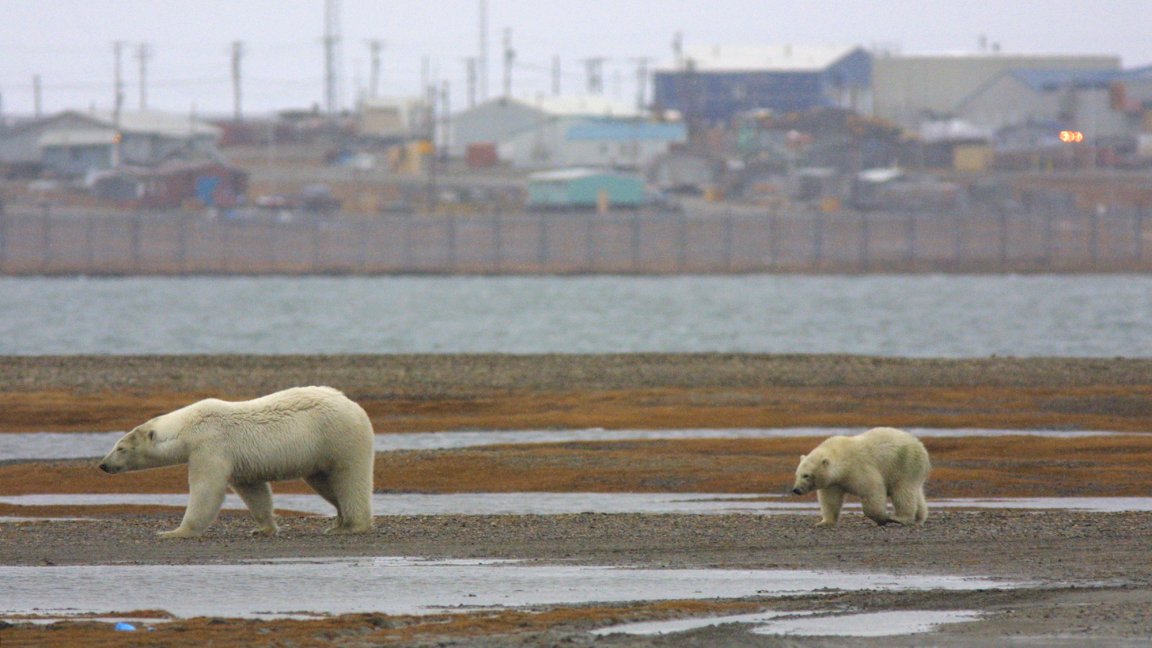
A conservation group in Canada is lauding a new technology called “Bear-dar,” an innovative radar system that it says can help prevent surprise encounters with polar bears and other wildlife in the Arctic.
Polar Bears International partnered with a military tech developer, Spotter Global, to build the early detection system. The medium-range radar uses fixed cameras and artificial intelligence to identify and distinguish polar bears from other animals on the landscape. It can then alert individuals or communities to their presence.
“You can have it send you a text message, you can have it send you an email, you can have it trigger a flashing light,” Geoff York, the senior director of PBI, told Canadian reporters earlier this year. “You can even have it trigger potentially what we’d call a remote deterrent. So it could trigger a strobe light, it could trigger a certain noise that might startle a bear, all remotely.”
The organization says bear-radar has already proved its worth at the Environment and Climate Change Canada weather station in Nunavut, where it was installed in 2025. A video that PBI shared on YouTube last week shows the radar system in action on June 11, when it alerted staff at the research station to a group of three polar bears that were coming near camp. PBI says this is the first time the tech has been used successfully to prevent a potential conflict with polar bears. (It had previously alerted staff to the presence of wolves).

“Previously they didn’t have radar or a camera there [at the research station] for this. So it would just be human observation,” PBI research support specialist Elbert Bakker said in an interview with CBC News on Monday. “But you can only look in so many directions at once.”
In the video shared last week, the adult female polar bear and her cubs can be seen skulking around the camp in Eureka, a small research base located on the northwest tip of Ellesmere Island. After getting an alert from the bear-dar system, staff used their vehicles to safely escort the three bears away from camp and back out onto the sea ice. Staff were then able to keep track of the bears on camera, and they recorded the bears successfully hunting seals on the ice the following day.
Read Next: A Polar Bear Tried to Eat My Neighbor — and Other Close Calls With Nanuq in Alaska’s High Arctic
Bakker said PBI is now trying to educate other Arctic communities about the benefits of Bear-dar technology. On its website, the group notes how the Eureka installation is the first (and farthest north) deployment of Bear-dar, and that they hope to keep refining the tool so it can be rolled out in other communities.
“A whole town, or a large number of buildings that are spread out, might be a little bit more difficult,” Bakker explained. “But then there are other tools that we could offer for those areas. So it’s really about education, and empowering people that they can live in areas around bears, [and through] awareness and taking action, you can keep everybody safe.”