
A few years ago, while I was researching an article I was writing about a Nazi-killing mad trapper, I came upon unrelated stories of two expert woodsmen who went missing in the Yukon wilderness. The two tragedies occurred within 115 miles of each other but 27 years apart. Both men were alone and in both cases about two weeks passed before anyone knew something was wrong. At both scenes, only scant and bizarre evidence was found.
One of the men was Ed Wilkinson, a 58-year-old trapper who disappeared in 1977. Ed was said to have been born on the trap line, as tough as they come, but kind-hearted too. He was known to have survived grizzly attacks and was once gored by a bull moose. He had lived his entire life in the Yukon wilderness. The other man was a 49-year-old large carnivore expert and a traditional bowhunter named Bart Schleyer, who failed to show up for a scheduled floatplane pick up in 2004. Later, a few of his bones were found. Schleyer was a legend in his own time, called the last wild man by some. He was a friend to wildlife biologists, hunters, and other adventurers around the world.
A Trapper Goes Missing
Ed Wilkinson lived with his older brother Jared in an abandoned trading fort named Lansing, which was built where the Lansing River flows into the Stewart River. The fort had been established in 1902 by two men returning from the Klondike gold fields. Like nearly all stampeders, they were poorer than when they’d set out. They noted that the upper Stewart River was good fur country and that Indigenous people in the area were receptive to trade. Before long, Lansing was booming, with as many as 300 people camped there. That changed when a series of epidemics beginning in 1918 decimated the Indigenous population. By the late 1930s Lansing was well on its way to abandonment. The occasional trapper used the two remaining buildings, but sometime in the 1950s the outpost was deserted.
In 1976, Ed and Jared moved to Lansing to use it as a base to trap from. They had been raised at Fort Selkirk, where the Pelly River flows into the Yukon River. As the years passed, the brothers had moved and trapped their way east, up the Pelly River and then north to the upper Stewart River. Dolores Cline Brown, herself a Yukon trapper as well as the province’s first female hunting outfitter, wrote that at the time of Ed’s disappearance all wasn’t going well with the brothers, but she didn’t clarify what their troubles were.
Winter Bear
Toward the end of November 1977, Jared set out from the cabin by dogsled to run his trapline. Deep cold set in when he was on the trail. He hunkered down to wait for safer, warmer traveling weather. When it finally warmed up, he’d been gone for two weeks, significantly longer than he’d hoped, but he knew Ed wouldn’t be worried. Deep cold and delays were nothing unusual.
When Jared was a mile and half from Lansing, he came across a dead grizzly. It lay halfway up the riverbank stretched out in the snow as if it didn’t have the strength to make the climb up the steep bank into the forest. Jared examined the bear for a few moments. There was no blood or sign of a struggle. It was old and so emaciated that its bones were jutting against its hide. A block of ice had formed in the snow around its mouth, indicating that it had lay still breathing for some time before dying.
It was a winter bear, which is a grizzly that knows it will not survive hibernation — as desperate and dangerous an animal as you’ll find in the North.
Ed Vanishes
Jared mushed to the cabin. Despite it being -45, the chimney was covered in snow, meaning that Ed had not lit a fire for some time. Inside the cabin, Jared found the book his brother had been reading two weeks ago still open on the table. Cookies that had been made right before Jared left were untouched in the kitchen. Firewood Jared had stacked near the stove had not been used. He yelled and searched the immediate area around the cabin but found no sign of his brother.
There was another trapper who lived 30 miles away, and Jared mushed to his cabin and asked for help. The two returned to Lansing to search and soon found Ed’s parka hood, which had been torn off and had frozen blood on it. The other trapper mushed 120 miles to Mayo to get more help.
A search party arrived and combed the area. One article in the Whitehorse Daily Star, headlined “Ed Wilkinson Dead or Not,” stated that the district conservation officer found snow, leaves, and sticks dug out and heaped up in a way that a bear caches a carcass. There were no human remains in the heap though. Nearby, scattered about, were shreds of clothing and frozen blood. There were piles of wolf scat with what appeared to be human hair in it, but a biologist would later say the evidence was inconclusive on whether Ed was eaten by wolves.
A biologist turned his attention to the grizzly. By then, a story had begun to circulate through the Yukon which told of Ed stabbing an attacking bear, and the animal ultimately dying from its wounds. The biologist conducted an autopsy on the bear and found no stab wounds, though it had an old wound on its shoulder (likely from a fight with another bear). The grizzly was old and in terrible shape. It was missing seven teeth and most of its remaining teeth were worn down to gumline. The biologist said it weighed 200 pounds. If it had been healthy, it should have easily weighed twice that. There was nothing in the bear’s stomach. He ruled that the bear died from starvation.
Death Certificate
The following May, after the snow melted, another search was conducted. All it yielded was Ed’s hat and a button. A month later, the Whitehorse coroner held an inquest regarding issuing a death certificate. A six-person jury made up of other trappers and woodsmen ruled out foul play and concluded that Ed had been killed by a bear. At the inquest, the biologist who’d examined the bear said that because of the bear’s digestive process it was inconclusive of whether it ate the trapper.
The prevailing theory was that Ed blundered into or was ambushed by the emaciated grizzly while the trapper checked a marten set a couple hundred yards from the cabin. The bear could have been trying to rob the trap set’s bait when Ed’s dogs alarmed him. Thinking it was just a marten in the trap, Ed could have gone without his rifle to collect the animal. At some point after the attack, likely attracted by the smell of blood, wolves came and consumed whatever remained of the trapper.
Still, for some years after, folks wondered if Ed might suddenly appear out of the wilderness.
An Experienced Hunter Goes Missing
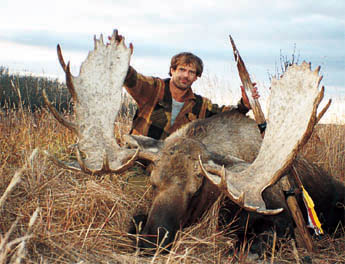
Twenty-seven years after Ed disappeared, Bart Schleyer got dropped by floatplane at the Reid Lakes to hunt moose. By all accounts, Schleyer was an exceptional man, from his dedication to wildlife conservation to his strength and stamina in the backcountry, to his kindness to strangers and kids. Other biologists and bowhunters were in awe of him. He’d avoided “real jobs,” working seasonally as a tiger researcher in eastern Russia, in a taxidermy studio in Wasilla, and guiding bear hunters on the Alaska Peninsula. He made his bows from the woods he wandered and from the beasts that lived there. And he hunted everything from Dall sheep to brown bears with them.
Two weeks after dropping off Schleyer, on Sept. 27, the bush pilot returned on the scheduled pickup date. He found Schleyer’s camp but no hunter. He flew back to the nearest community, Mayo, and reported the hunter missing. The next day a Royal Mounted Canadian Police search party flew in. They found the camp undisturbed. There was an action packer still full of food and the remains of one partially consumed meal. No campfire had been made. A can of pepper spray, a knife, and a VHF radio were left out. A Whitehorse Daily Star article offered a strange description of Schleyer’s tent, writing it had “being screwed into trees” and “being so tightly wrapped in the bushes.” There was no sleeping bag in the tent, leading to an officer to speculate that a bear had dragged the hunter off into the night, although there was no blood, signs of struggle or tears in the tent. Others speculated the hunter had decided to walk out to the Klondike Highway, eight very brushy miles away on the other side of the formidable Stewart River. Either way, all evidence pointed to the fact that Schleyer had used the camp for one night at most.
Later that day, Mounties found Schleyer’s raft about a half mile from camp, tied to the brush along the lakeshore. The weather was deteriorating by then, so they flew a few circles at low elevation and then headed home.
A Friend Goes Looking for Answers
The days wore on and the RCMP did not return to Reid Lakes to continue the search. Schleyer’s friends back in Whitehorse grew increasingly frustrated until one decided to take matters into his own hands. Around Oct. 1, Dib Williams drove to Mayo, chartered a bush plane and flew into Reid Lakes. Williams and the pilot spent two days searching. On the first day they searched around camp, finding the tent collapsed. They were both experienced woodsmen but even to their trained eyes it was unclear if it was caused by weather or an animal. Nearby was the backpack, a VHF radio, knife and bear spray as the Mounties had described.
The following day the two men returned and focused on the area where the raft was tied up. About 60 yards from the boat in the forest, they found Schleyer’s bow, quiver and moose call “leaning neatly against a tree.” There was also a drybag that Schleyer had likely been using for a seat. The items were found near thick stands of black spruce and willows surrounded by open meadow. It was the sort of place where a bowhunter would try to call in a moose for a close shot. Nearby was a camouflage face mask with blood and hair on it. About 100 yards from that were some bones, including at least part of a skull with some teeth still attached. The two men guessed that Schleyer had been set up calling for moose when a bear had snuck up behind him.
They returned to Mayo and let the RCMP know what they had found. The following day the Mounties returned to Reid Lakes to better search the area.
Evidence Doesn’t Add Up
During the first part of October a succession of articles in the Whitehorse Daily Star focused on the controversy surrounding how the RCMP had handled the search. Schleyer had friends and family across the world who were left wondering what happened. Many weren’t buying the story about a bear getting the jump on Schleyer. The man had spent much of his life working with and hunting large carnivores. Few if anyone knew bears better. Schleyer had lived in Alaska before moving to the Yukon, and the Alaska community wanted answers. Craig Medred, a hard-edged reporter for the Anchorage Daily News, went after the story and the article he wrote was strange enough that 20 years later YouTubers and outdoor forums are still debating what happened to Schleyer.
Medred interviewed Yukon conservation officer Kevin Johnstone, who’d been involved with the search for Schleyer. Johnstone said the scene wasn’t “characteristic of any sort of bear mauling site” and that, “It’s inconclusive to how Mr. Schleyer may have died.”
When the Mounties began their search on Oct. 4, they found a baseball cap, a torn pair of camouflage pants, a camera, and a few bones including part of a skull. Teeth from the skull were used to identify Schleyer. Johnstone pointed out several things that seemed inconsistent with a bear attack. There was no clothing fabric found in any of the bear or wolf scat in the area. Besides the hat, balaclava and torn pants, no other clothing was found. There was no sign of a struggle—no torn-up moss or broken branches, even the dry-bag Schleyer had likely been using for a seat had not been disturbed. There was no heap of torn up vegetation, something a bear normally does to cover carrion. Schleyer’s bones had no flesh on them and were lying atop the moss below some spindly spruce trees.
Bears are inquisitive, especially during hyperphagia in the fall, when they are also more dangerous. It is strange that none of Schleyer’s gear was torn up. The dry-bag, raft and his camp a half-mile away, including a tote of food, were all left undisturbed.
Some wondered if wolves or a moose were responsible for the hunter’s death but, again, there was no sign of a struggle. Just as likely, Schleyer may have died from natural causes like a heart attack or an aneurysm and then been scavenged by wild animals. That, too, was hard for the people who knew him to believe. The man was considered as tough and fit as they come; he’d just come off two weeks hunting stone sheep before flying into Reid Lakes.
Many of Schleyer’s friends did not believe it was a bear that got the hunter. They also expressed that Schleyer would not want his death to sensationalize the danger of bears.
Read Next: Why the Roadless Rule Is Important for Hunters and Anglers
Unending Mystery
It seems no one will ever know what happened to Ed Wilkinson or Bart Schleyer.
Writing about them stirred up a lot of my own memories from trips I made in the Yukon. During a hike and packraft trip one September I floated by Lansing. I don’t remember noticing the cabin where the Wilkinson brothers once lived. What I do remember are golden forests, alpenglow creeping down the mountains and gray limestone canyons. I remember lying beneath stars and northern lights next to a big crackling fire. I remember the wind filling the air and surface of the river with yellow and orange leaves as the hillsides of birch, willows, aspen, and cottonwood trees were gradually stripped of their leaves. I remember nearly every river bar I stopped on having the tracks of wolf, bear, moose, and sometimes lynx. I remember bull moose grunting and cows calling and wolves howling. I remember the snow coming down the mountains and being awed, and worried, about whether winter would catch me while I was still out in the wilderness.
I remember feeling a sort of happiness that I’m guessing Ed and Bart were also experiencing, right up until the wilderness swallowed them.