
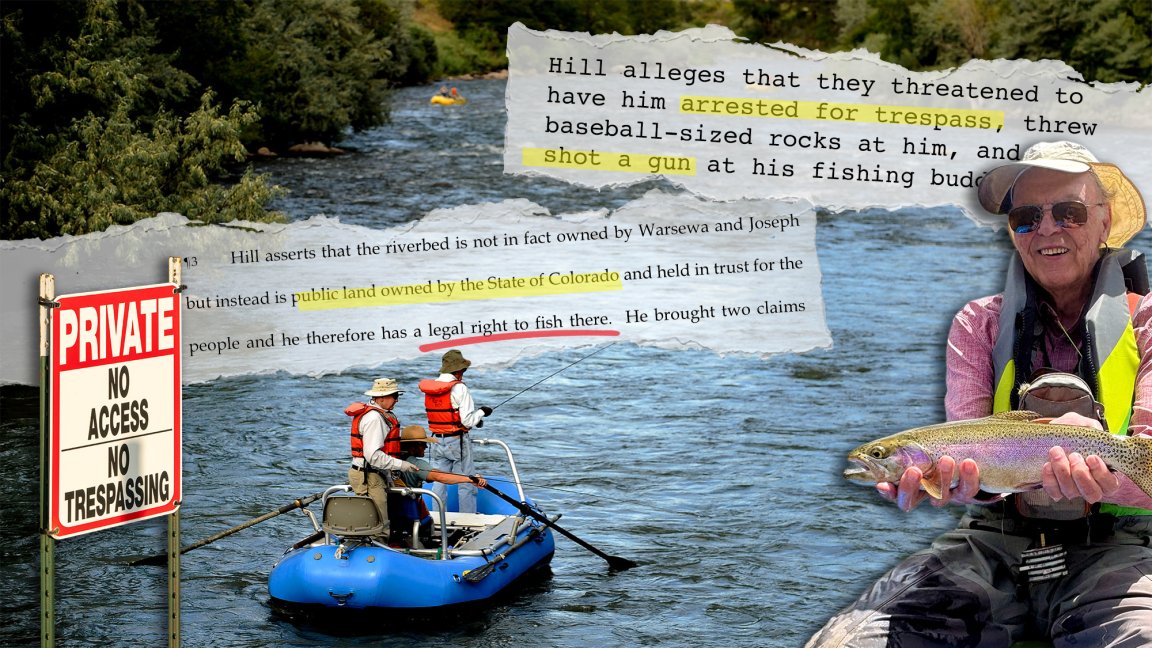
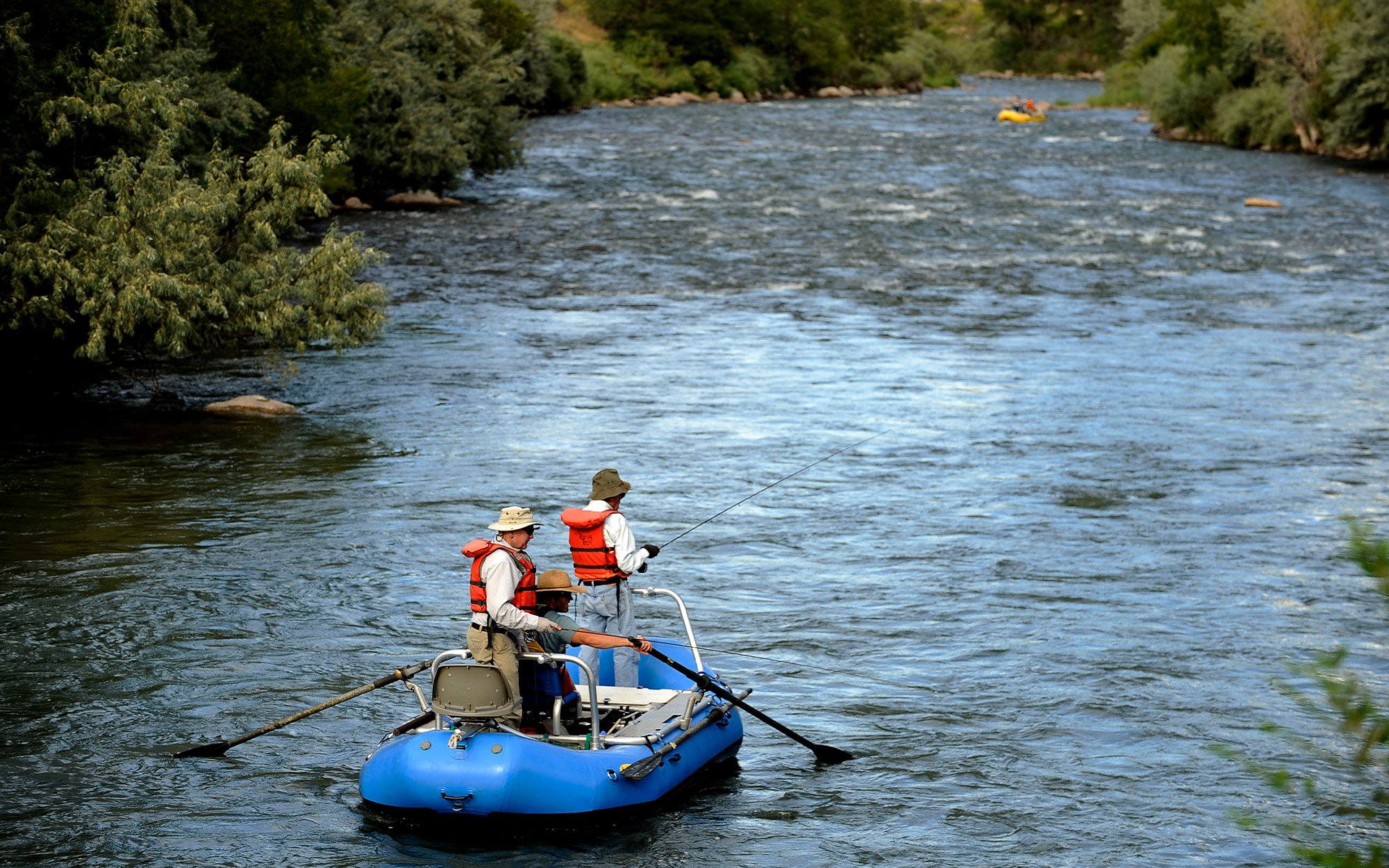
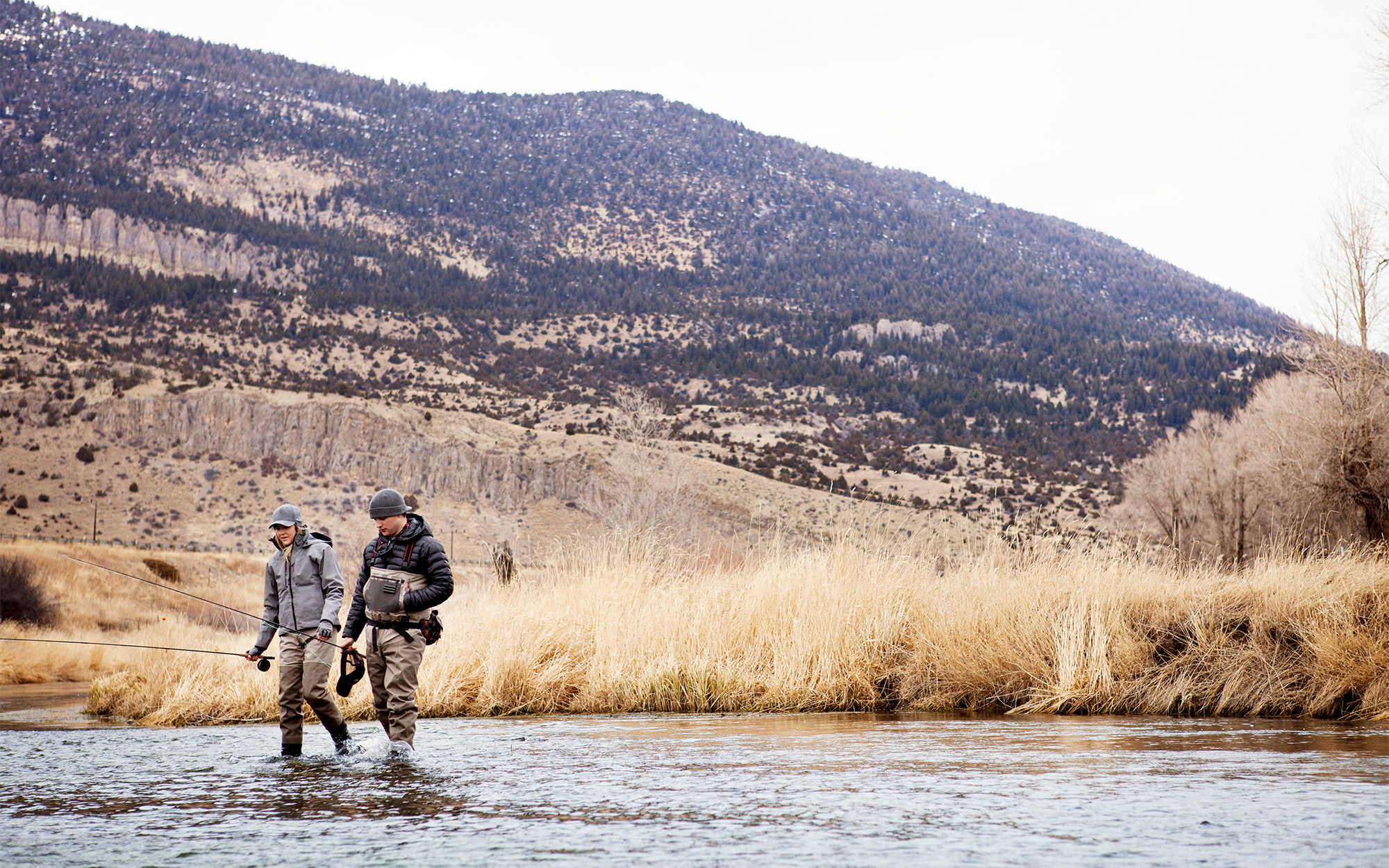
Sitting in a raft afloat the Eagle River, Roger Hill peers intently through his glasses as he struggles to tie on a fly. Now 84, he has wiry white hair and a calm voice buoyed by wry humor. He sits with his shoulders hunched, his blue eyes laser focused on the hook eye. The combined effects of glaucoma and essential tremors make it hard for him to thread a line through it.
I want to lend a hand but don’t. For I, too, know the pride of self-sufficiency. And I can only hope, if I’m lucky enough to live as long as Hill has, to still possess the stubborn love he harbors for rivers and trout.
This love, combined with egalitarian ideals, has made Hill a bit of a late-blooming maverick. He’s spent the last 15 years challenging Colorado’s longstanding interpretation of stream-access laws, which is unusually restrictive and murky compared to the rest of the West. That interpretation is also flat wrong, Hill will tell you.
His own breaking point came in 2012, after two irate landowners on the Arkansas River hurled rocks at his head while he was wade fishing. A couple years later, after one of them shot at his friend, Hill sued the landowners. But then the state joined the lawsuit on the landowners’ behalf and stonewalled Hill in the courts, where he was ultimately told he didn’t have “standing” to sue.
Hill then tried for a spell to get arrested while wading. He figured this was his best shot at getting back in a courtroom, where he could present his case that the public has a right to float and wade in the state’s major rivers like the Arkansas.
The problem was, nobody in law enforcement would touch him. Because in the eyes of a powerful legal system that is either unwilling or afraid to upset the status quo, Hill was but a brief interrupter. The system could easily wait out one aging retiree.
“The bastards were right,” he tells me. “I didn’t die. But I got old.”
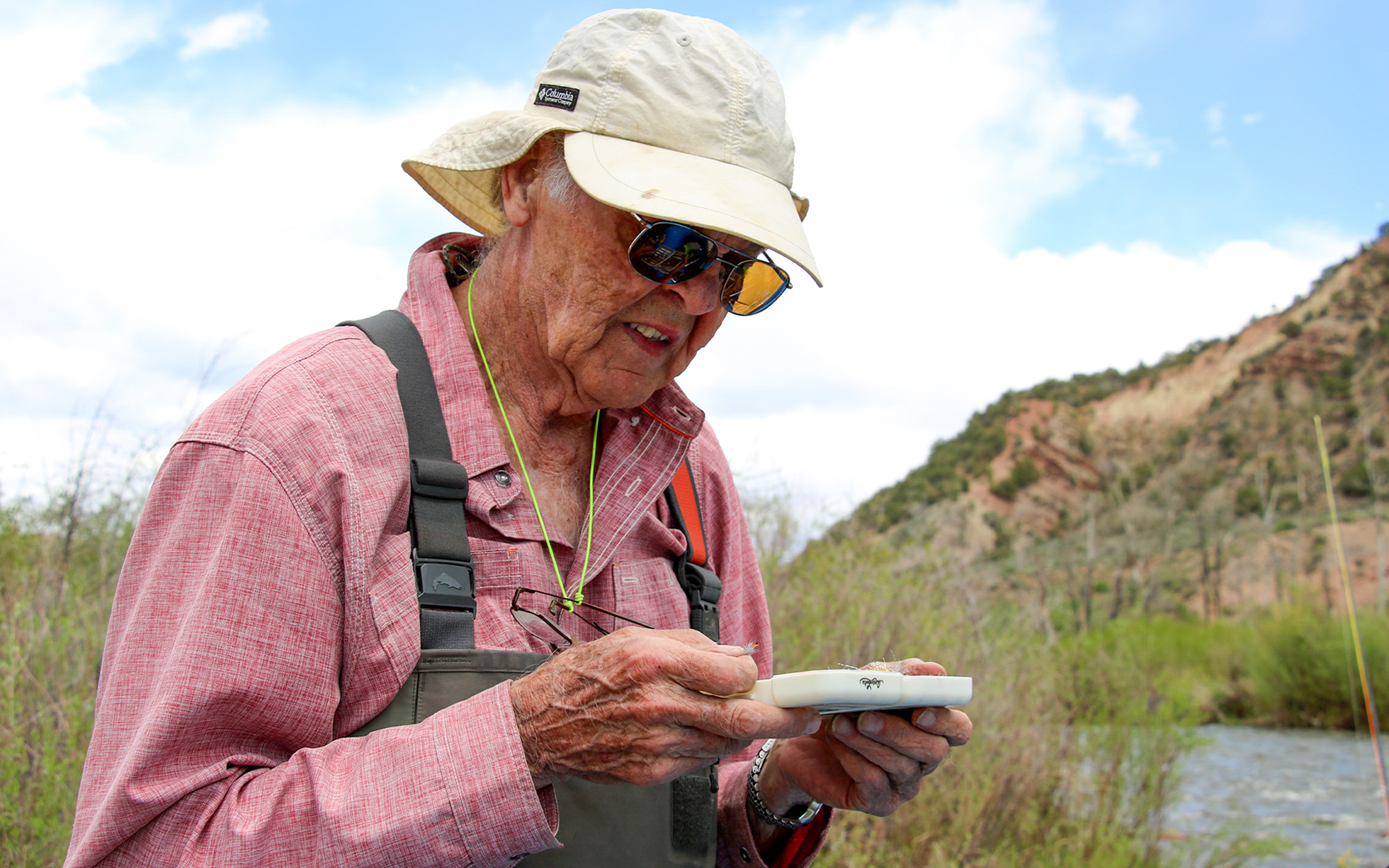
What Hill means is that he is no longer physically capable of wading up a swift river where he might get handcuffed. Which is why we’re in my raft today instead. And for the moment, the octogenarian outlaw is having a hell of a time with the task at hand.
Finally, Hill threads the fine tippet through the eye of the size-16 fly, his own variation of a pheasant tail nymph he simply calls “the fish catcher.” He pulls the knot tight as I haul on the oars, ferrying us back out into the current.
An Outlier in the West
Colorado is a marquee destination for outdoor recreation, and that includes everything river related. Between the gold-medal trout streams winding through the valleys and the canyons beckoning whitewater boaters, the rivers of Colorado contribute $19 billion per year through recreation alone. That’s more than any other state in the Rocky Mountain West. And yet, when you look at stream-access laws across the region, the river-rich Centennial State is an outlier.
Mark Squillace, a law professor at the University of Colorado Boulder who represented Hill in his lawsuit, says Colorado’s rules around public-river access are some of the most restrictive in the region, and perhaps the entire country. Squillace notes that it’s the only state in the West where no court has found any river to be navigable. This is important, because in the U.S., navigable waterways are typically considered public. (More on this in a minute.)
Under the state’s interpretation, all of its streambeds can be privately owned. Accordingly, riverfront landowners have always operated under the presumption that they can exclude the public from their riverbeds. This has given rise to a long-simmering debate between them and the fishing and boating public.
Property owners and the groups that represent them say Hill and his supporters are waging a naïve and misguided battle. They say that for 150 years, the Colorado Supreme Court has said there are no navigable rivers in Colorado, and that establishing a law to allow public access to private streams would be a “taking” of private property rights. This would likely unleash a torrent of lawsuits. And it could blow up the current arrangement that many landowners have with the public: They let us float through so long as we don’t touch the bottom or the bank.
“If the state were to pass a statute requiring public access, landowners would certainly sue the state for just compensation. It is also likely that landowners would restrict access to their property to protect their rights,” says Trey Rogers, a Colorado lawyer and legal counsel to the Colorado Water Conservation Alliance who owns property on the Arkansas River. “In other words, if the state were to require public wading or floating on private property in an effort to expand access, the effort will backfire and result in less public access, not more.”
Serfs in the Stream
An Oklahoman with a PhD in nuclear physics, Hill left Tulsa in 1963 to earn his graduate degree at Kansas University. In 1967, he relocated to Colorado Springs to work as a government contractor developing nuclear weapons systems.
“It was the first job offer I got out of school,” he tells me from the bow between casts. But that relatively short-lived job — or really any job — is not what has kept him here.
From my place in the rower’s seat, I spend a good portion of our conversation staring at the back of Hill’s head. It is shaded from the sun by an old neck-flap cap. Once off-white (my best guess) it’s now a dirty and sweat-speckled tan. Like Hill’s hands, the hat has seen its share of fish slime.
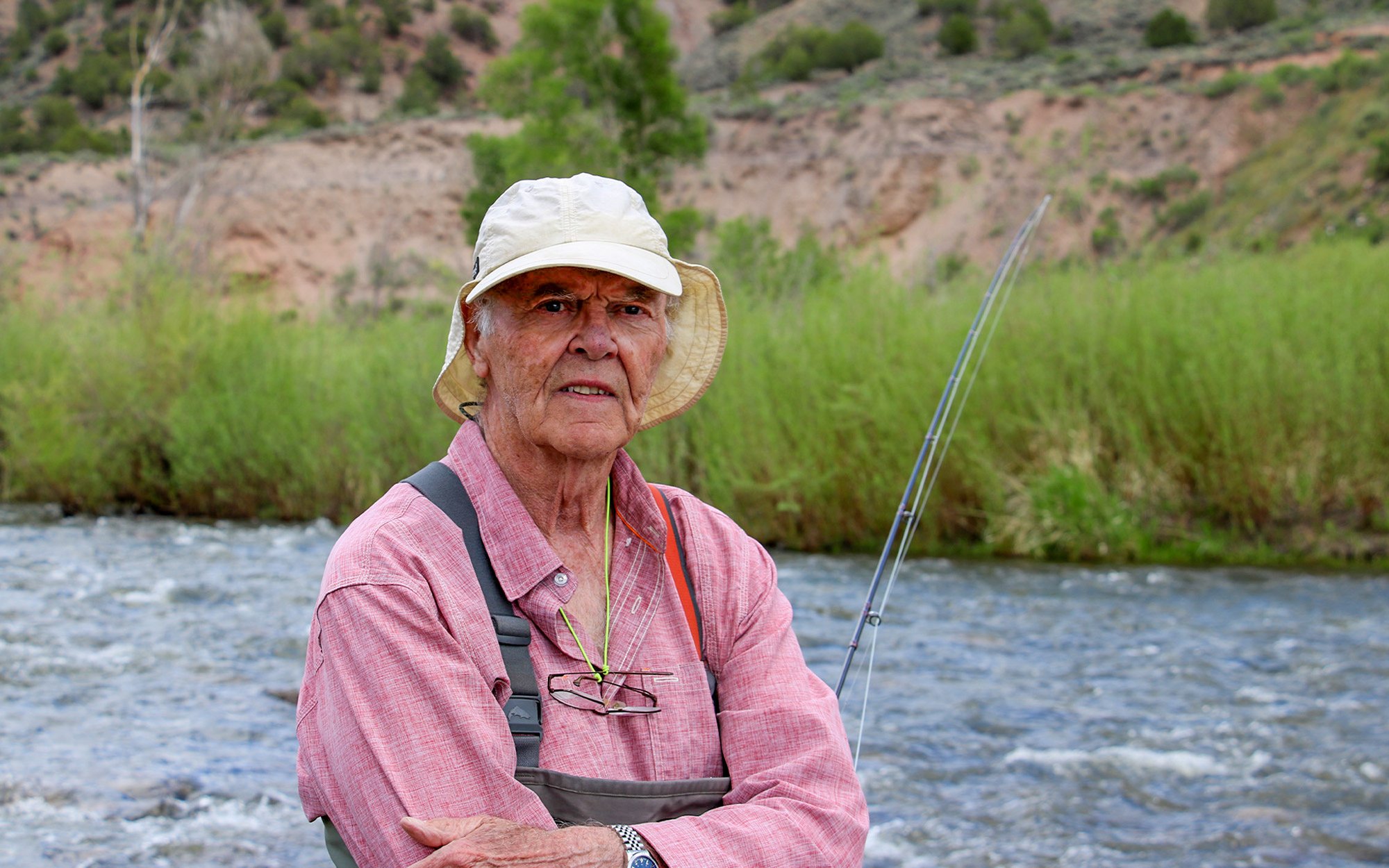
“I think we all have a series of memories that are special to us — ones that we can always recall. And they always have an element of place to them,” Hill remarks mid-cast.
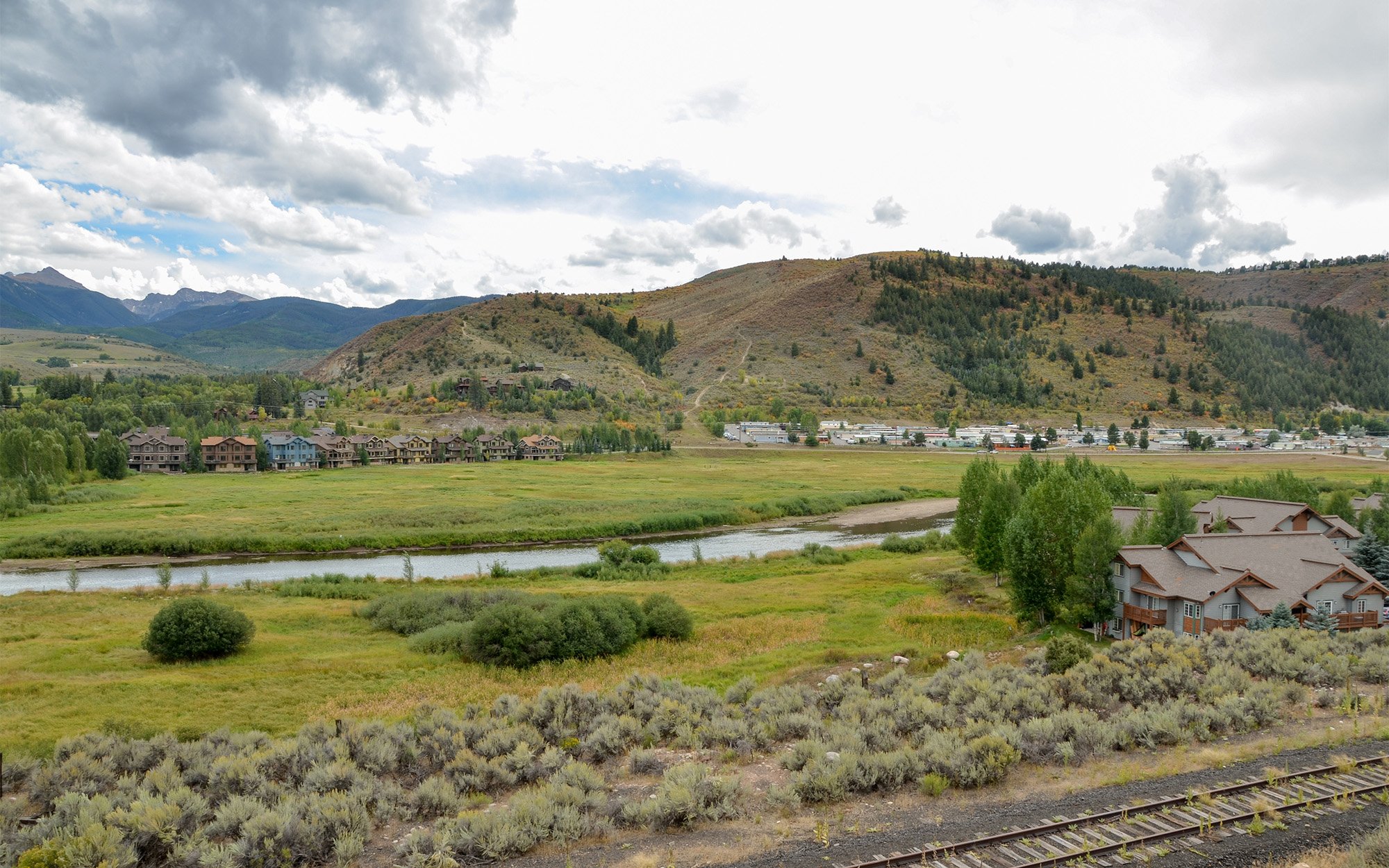
This kicks off a lengthy discourse about favorite fishing holes, epic hatches, and the head-scratching days where the fish seem to win. There’s the wild and remote Gunnison Gorge, which is on BLM ground and has an entirely different feel than the mostly-private Eagle River, hemmed in with condos the way it is.
“When I was a younger man, two buddies and I hiked down that 1,000 feet to get to the [Gunnison], then found a place where we could cross it, and spent a day down there,” Hill says. “And on that day, I caught 60 fish on one fly before I took that fly off and put it in my hat. Now that is a magical day.”
I’m starting to suspect it’s the same hat.
Now roughly a mile into our half-day float, we approach a split in the river. I’m reminded of some advice I’d gotten from a friend of a guide buddy in Avon: “That’s a great run where the channels converge. The property owner river-right is a real bitch, but if you can, back-row and fish it hard.”
Which I plan to do very shortly. But now it’s story time, and Hill and I are drifting through his memories, from Southwest Colorado on over to the South Platte. Next stop is the Arkansas, where he recounts the infamous stoning attempt near the confluence of Texas Creek: After yelling at Hill, who refused to leave the riverbed, the landowner grabbed a baseball-sized rock and chucked it off the bluff at his head.
“Well, she’s not a Nolan Ryan,” he laughs. “But I was on blood thinners at the time. If she would have hit me in the head with one of those rocks, I would have died on the spot, or maybe 30 minutes later, with a cranial bleed.”
Navigability and Public River Access
Colorado might be unique in the West with regards to its stream-access laws. But the debate around these laws isn’t new, and it isn’t isolated to the Centennial State.
A recent example is New Mexico, where at some point a special certificate was created to grant landowners private-property rights over stream beds. In 2023, the New Mexico Supreme Court struck down this misguided rule, thereby restoring the public’s stream-access rights enshrined in the state constitution.
Other Western states, including Utah and Montana, have grappled with these same questions to different ends. These debates inevitably return to “navigability,” which is a fundamentally important legal concept that dates back to the founding of the United States.
In 1845, the U.S. Supreme Court held that under the Equal Footing Doctrine, a state joining the Union would be granted title to the bed of every stream, river, and lake that was navigable at the time of statehood. (Colorado became a state in 1876.) And according to the Public Trust Doctrine of 1842, the state is to hold those titles “in trust for the use of the people, that they may enjoy the navigation of the waters … and have the liberty of fishing therein….”
This begs the important question of what constitutes a navigable waterway. According to the federal government, it’s any waterway that was used (or could have been used) for commerce at the time of statehood.
Some states have since created their own navigability tests to make more specific determinations. Colorado has never established such a test. Regardless, since federal law trumps state law, Colorado is legally bound to honor the concept of navigability.
“The fact of the matter is that the state of Colorado flouts the rule of law by not accepting that federal law applies to the rivers in Colorado.”
Roger hill
The closest the Colorado Supreme Court has come to clearing up the access dispute was in 1979, when the court ruled in People v. Emmert that a group of rafters had committed criminal trespass by walking on a section of the Colorado River flowing through a ranch. In writing their opinion, the justices cited an archaic common law rule from 13th century Europe: “for whoever owns the soil, it is theirs up to heaven and down to hell.”
After Emmert’s conviction, the legislature amended the state’s criminal trespassing statute to exclude floating on a river’s surface. This created some confusion among river runners, and it led the state attorney general to try and clarify the law in a 1983 opinion: that floating through private property is not considered criminal trespass if it can be done without touching the banks or beds of the river. That opinion gave birth to the “float but don’t touch” concept that has guided Colorado boaters ever since. But this is more of a tenuous agreement — it is not an actual law.
“There is no right to float here,” Squillace, Hill’s attorney and a kayaker, explains. “It is true, I would say, that most landowners are reluctantly accepting that the public has a right to float, and I think it’s mainly because they don’t want to see Emmert overturned.”
The Boogeyman on Broadway
Squillace, along with Alex Hood, represented Hill for free in his lawsuit against the landowners who’d assaulted him on the Arkansas.
Their planned argument was simple: Hill was at risk of harm due to a longstanding but incorrect interpretation of the law. He had a right to wade-fish that stretch of river because the Arkansas River is, and always has been, navigable.
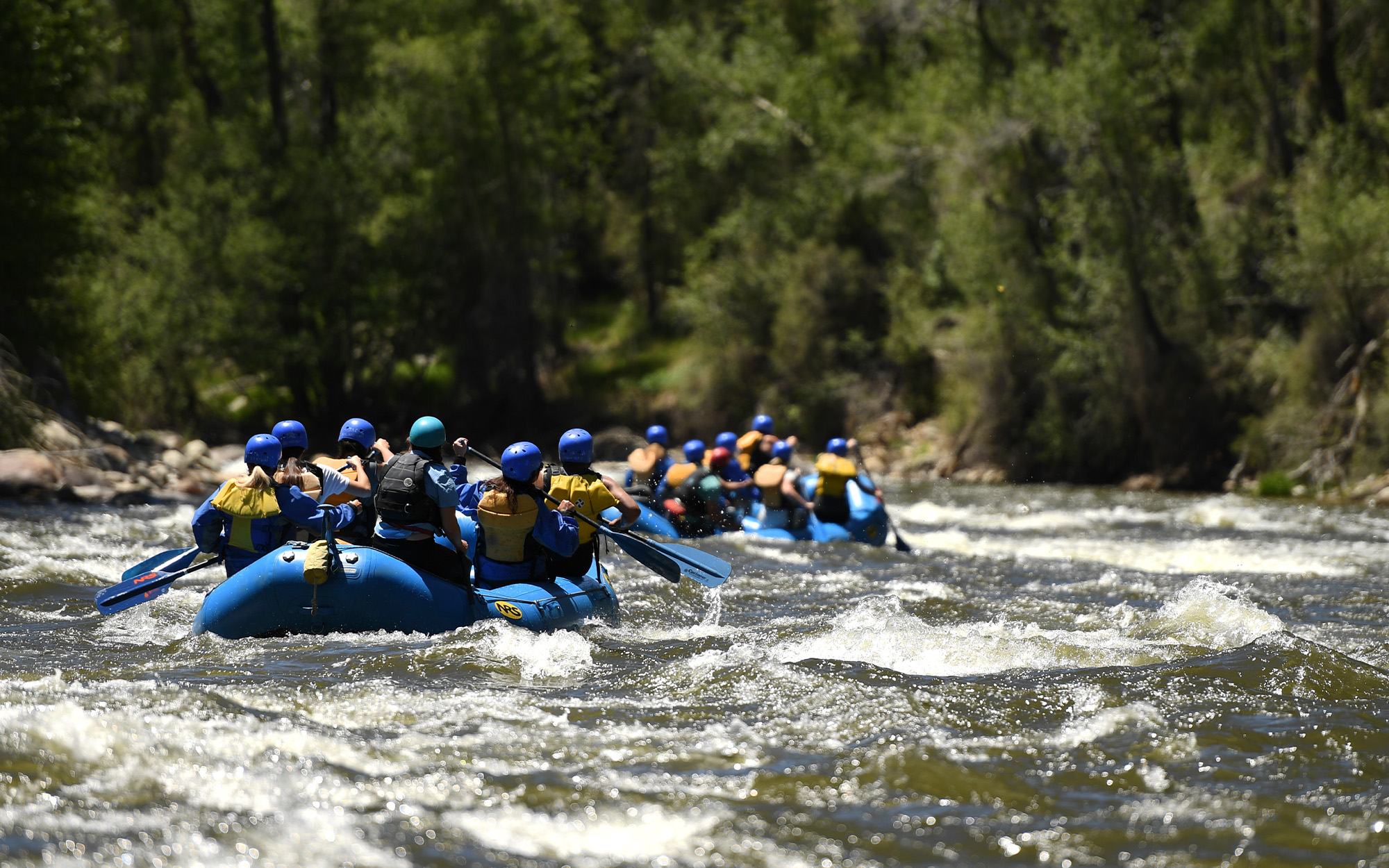
It is, in reality, the most navigated river in the nation for rubber pushers. The Arkansas sees around 250,000 commercial raft trips in an average season. This booming rafting industry is the latest phase in a long history of commerce that predates statehood.
An 88-page study firmly establishing this history was never seen by a judge, though, because Hill’s case never made it that far. After years of delays, Hill lost in federal court but won in the 10th Circuit Court of Appeals, which then sent him back to the state level. By then, the landowners had dropped out and the state’s attorney general, Phil Weiser, had intervened on their behalf. Hill was then told by the justices that he did not have standing to bring his lawsuit.
“The Supreme Court [essentially] said, ‘You want to ask what is the law? What is the law regarding access to rivers in Colorado?’” Hill explains. “They said, ‘You don’t have a right to know the answer to that question.’”
With Hill thwarted by the courts, and no deputy in Fremont County willing to punch his return ticket by way of the jailhouse, stream-access advocates decided to go a different route. If they couldn’t force the courts to rule on stream access, they’d try to pass a new law.
In 2024, the Colorado Stream Access Coalition was born. By 2025, the group had split into two factions: Those who firmly believed in a right to wade, and those who wanted to codify a right to float into law.
Gaspar Perricone is a former Colorado Parks and Wildlife commissioner and a member of the Colorado Water Conservation Alliance, which champions private property rights and supports the current framework. He also owns land along the Elk River.
“As an avid angler I can appreciate the desire for expanded public access similar to surrounding Western states,” Perricone says. “The unfortunate reality is that unlike our neighboring states, these lands [and riverbeds] have been privately held since statehood, and any effort to expand access to them will constitute a taking.”
Some landowners already participate in lease programs that provide increased public access, Perricone points out. And they all play an integral role in conserving fish and wildlife habitat in Colorado. The state’s private waters are, in some ways, sanctuaries for the resource.
“As outdoorsmen and women,” Perricone says, “we would be wise not to forsake the role that private lands play in stewarding intact ecosystems and fish and wildlife habitat, which provide very real public benefit for all.”
Outfitters certainly recognize this. Indeed, many of them have cut exclusive access deals with landowners that they would very much like to keep.
David vs. Goliath
Private boater groups saw Hill’s lawsuit as an opportunity to raise awareness and push for protections around the public’s right to float. After running a poll that showed support from 84 percent of Coloradans, they tried finding a legislator to sponsor a right-to-float bill.
“I do think Roger Hill was a kind of catalyst for that [campaign] in some ways,” says Nik White, the conservation and access director for Colorado Whitewater.
Their efforts ultimately failed during this past legislative session. No lawmaker wanted to put their name on a bill that might cause such an upheaval among the landowner community, which had brought its resources to bear under Denver’s golden dome.
“We’ve kind of been looking at this as a David vs. Goliath fight in many ways, and that’s certainly the feeling we got when we actually tried to nail legislators down,” White says. “Basically, we got out-spent by lobbyists. I’m going to make a wild-ass guess and say it was ten to one, but it might have been closer to one-hundred to one.”
The CWCA is one of the lobbying groups that proudly batted down this effort. Throughout that process, they explained to legislators how codifying a right to float would trigger a swift and costly backlash.
Besides, the group points out, Coloradans have been down this creek before. Stream-access proponents took a similar approach in 2010, after a landowner on the Taylor River strung cables from bank to bank to keep a rafting company from floating down. Although advocates were able to convince a state representative to sponsor a right-to-float bill, it died on the floor during a final Senate hearing.
“We marched right through the initial hearings and committees, and next thing you know, there were eighteen or nineteen lobbying firms lined up against us,” says Bob Hamel, a former commercial outfitter who was the executive director of the Colorado River Outfitters Association at the time. “I mean crazy, crazy money came out.”
The landowner lobby had also responded to the 2010 bill by running multiple ballot initiatives to confirm the prohibition of floating over private streambeds. This led then-governor Bill Ritter to convene a blue-ribbon commission, which brokered a solution to preserve the status quo. Ritter maintains today that the “float but don’t touch rule” works for everybody, and that any alternative could blow it to pieces.
“A recent study published by the Colorado Common Sense Institute put the potential cost to taxpayers for a right-to-wade proposal in the billions of dollars,” Ritter wrote in an op-ed in May. “Even worse, a right-to-float bill could have the very real consequences of the courts reaffirming no right to float exists, prompting property owners to restrict access.”
Hamel, who is now with the Arkansas River Outfitters Association, says he understands the perspective of riverfront homeowners and ranchers, who bought their acreage under the assumption that they could legally own part (or all) of the riverbed. Hamel was not involved with the renewed push for a right-to-float bill, but he did share some advice with those who were.
“I see the benefits of the Montana law, but to turn back the clock now, it’s just not going to happen in Colorado. That’s my opinion,” Hamel says. “I told them this from the beginning. I said, ‘You don’t know what you’re up against. You’re never going to raise the money to fight these people. You’re working with dollar or five-dollar donations from a bunch of private boaters, but these guys are writing big checks, you know? And the legislators, they’re too afraid of their own jobs to pick something like this back up.’”
Which brings us to where we are today. And in this legal climate, where the wealthy can maintain their grip on the beds of our common waters, what’s an ordinary boater or fly chucker to do? It’s a question that’s been posed before by another skilled fisherman and American scofflaw — one who actually was arrested in 1846, just one year after the Equal Footing Doctrine was established.
“Unjust laws exist,” writes Henry David Thoreau in Civil Disobedience. “Shall we be content to obey them, or shall we endeavor to amend them, and obey them until we have succeeded? Or shall we transgress them at once?”
Touching Bottom
Hill and I have already drifted through the run twice without a bite. So far, I’ve followed the no-touch rule and refused the urge to get out or drop anchor. Either would be an insubordinate act that would surely get us arrested, right?
That’s highly unlikely, says Hill. And that even if I was cuffed and booked, there’s no guarantee the case would make it to the state Supreme Court.
“But it is a solution advocated by the Denver Post, when they said, ‘Just go fishing.’ It’s an idea whose time has come.”
On our third pass along the far seam, Hill loses his flies to a snag. So, I row back up the eddy and give him my own rod, already rigged with a dry and two droppers. With renewed confidence, we make our fourth drift through walking-speed water that screams trout. Hill’s dry inches down the foam line as I keep pace with the oars. Then, in a split second, his fly is gone, yanked into the depths by a rainbow.
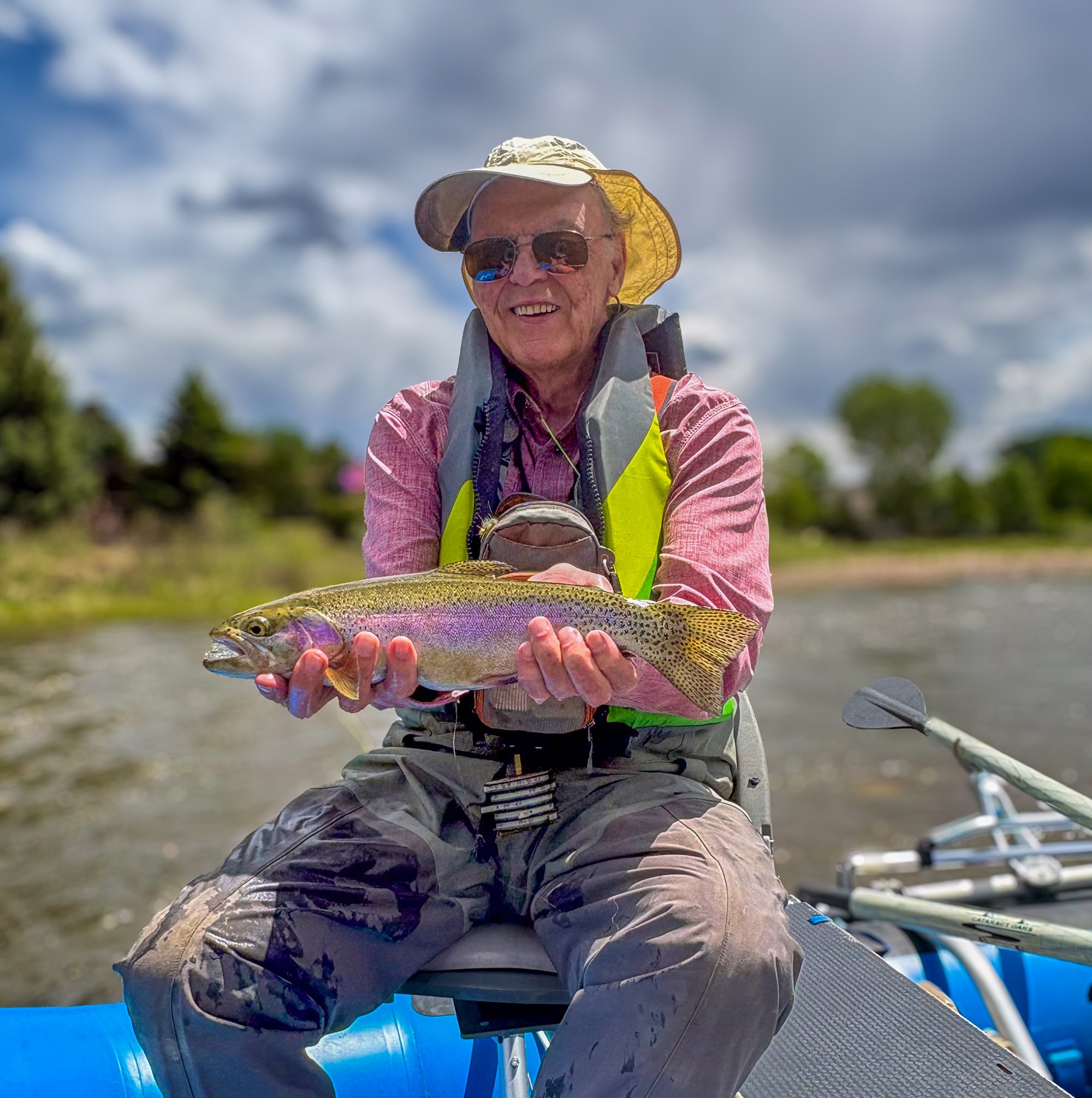
The fish runs as Hill comes tight, the reel singing in his hand. It’s a feisty little 13-inch trout, but he plays the fish well and brings it to the surface as I pull us back toward the shallows. Mid-stroke, I look quickly across the river toward the houses, then reach for the net at my feet. After scooping the fish, I glance again. With no one in sight, I think, Why the hell not, and slide down the side of the raft.
Read Next: “I’d Have to Bury You Out Here.” The New Mexico Stream Access Battle Is Far From Over
Hill hears the splash as my feet touch the bottom. He looks back and I hand him the net. Framed between rooftops, he holds up the trout for a few quick pictures. We say nothing of the minor transgression. We’re too busy admiring his fish.