

The Department of the Interior released a five-year strategic plan Tuesday that outlines the federal government’s intentions to sell public lands, further reduce the workforce at its agencies, and continue to pursue natural resource development for energy dominance.
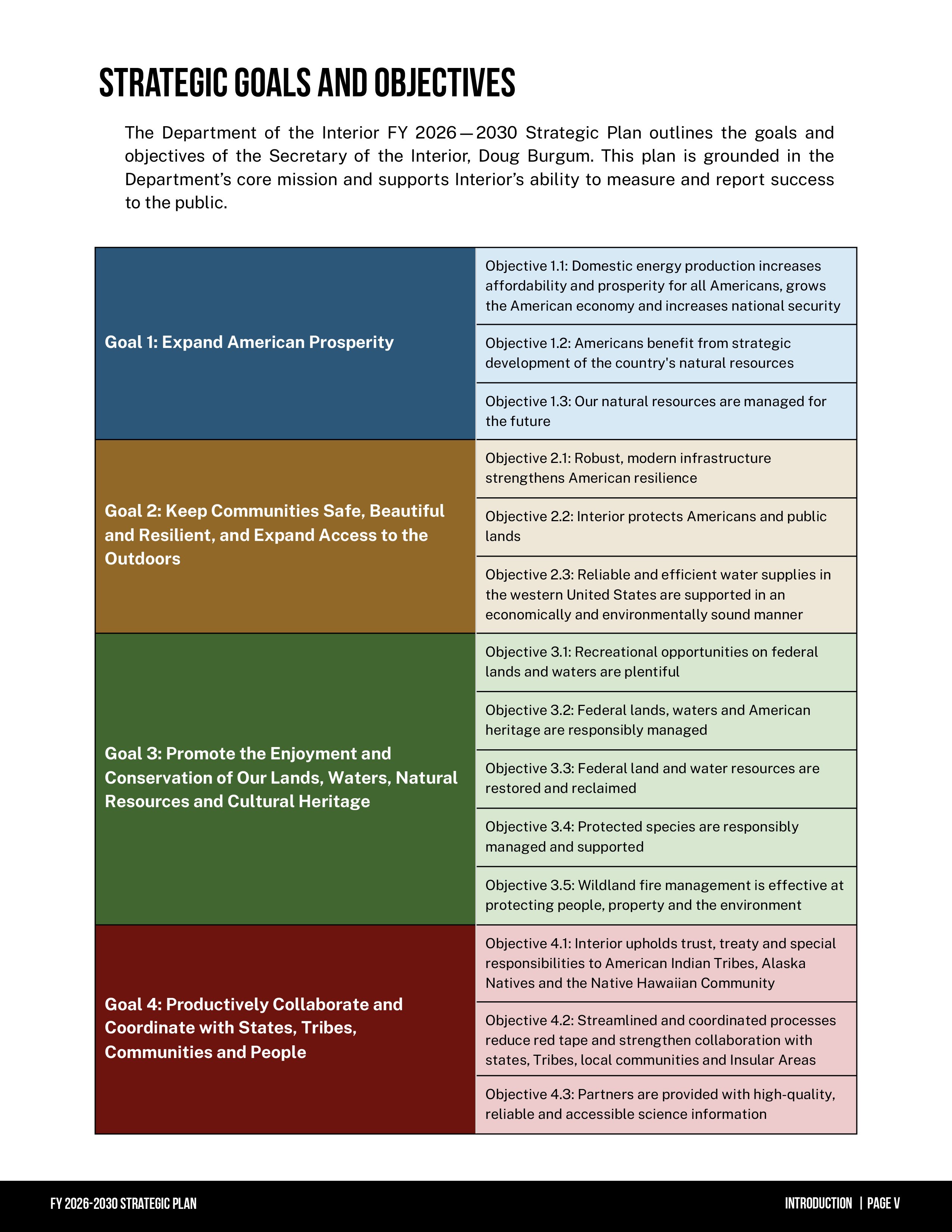
The 28-page document outlines four key goals for fiscal years 2026 through 2030. One of the most critical sections of the document for the conservation community is nested under the fourth goal of collaborating with states, tribes, and communities:
“The Department will consolidate its workforce to advance operational efficiencies,” reads the plan. “The Department will work to decrease the size of the federal estate by offering to states, localities and Tribes the opportunity to purchase federal lands. Through these sales, the Department will be able to focus its resources on primary federal responsibilities and nationally significant federal lands.”
According to the Interior, the proceeds from such sales of lands that aren’t considered “nationally significant” will go toward “purchasing entities to use for conservation purposes elsewhere” for “improved recreation access for American citizens, while at the same time decreasing the federal taxpayer’s financial responsibility to manage federal lands.”
“From a hunting and angling perspective, we love the places that are not of national significance,” Backcountry Hunters and Anglers president and CEO Ryan Callaghan tells Outdoor Life (we interviewed him while he was deer hunting a piece of no-name BLM ground out West). “Because they don’t have a big spotlight on them, and that’s where we go to hunt and fish.”
Selling and transferring federal lands — of any significance — is also wildly unpopular with American outdoorsmen and women.
“I’d need to see the criteria for disposal, but at first blush this flies in the face of overwhelming positive appreciation and sentiment for America’s public lands,” says Callaghan. “We’ve proved that middle-of-nowhere BLM land in Utah is of national significance during last summer’s budget reconciliation process. From an end-user standpoint, the American people want more public land and a workforce that can manage them responsibly.”
The staff cuts to the U.S. Fish and Wildlife Service, National Park Service, Bureau of Land Management (as well as the U.S. Forest Service, which is managed by the USDA) have also been a point of contention for hunters and anglers. As we reported in September, key public land agencies have already been chronically understaffed and underfunded for decades, with an accelerated decline under the second Trump administration.
Agency Staff Cuts
Measured by direct civilian full-time equivalent
| Fiscal Year | USFWS | USFS | BLM | NPS |
| 2002 | 7,452 | 34,289 | 7,964 | 18,952 |
| 2026 | 5,441 | 28,830 | 6,405 | 14,600 |
| Change | -27% | -16% | -20% | -23% |
The only sectors where the DOI’s strategic plan promises to add staff are law enforcement and public safety — not conservation roles. That includes building a larger Park Police presence in Washington, D.C. The plan includes no staffing numbers or targets. These priorities are the heart of the objective: “Interior protects Americans and public lands.”
Transferring federal lands to states poses both the risk of further sell-off to private entities — and greater regulation for hunters, anglers, and outdoor users in general.
“People have got to understand [the restrictions of state land],” says Callaghan. “You can’t camp on state land in Colorado or Wyoming unless posted. You can’t drive on state land even on established roads unless they’re signed here in Montana. It’s illegal to shoot clay pigeons on state land in Montana. We just literally got de facto public access to our state lands in Montana about 20 years ago. State lands are private lands first, and the public access components come second to the ability to make money off those state lands. You’re not going to have [default state] public access unless it’s compatible in some way.”
The plan also merges wildland fire programs into the new U.S. Wildland Fire Service as part of a massive restructure of how the federal government fights wildfires.
‘Super Intelligence’ and Resource Development
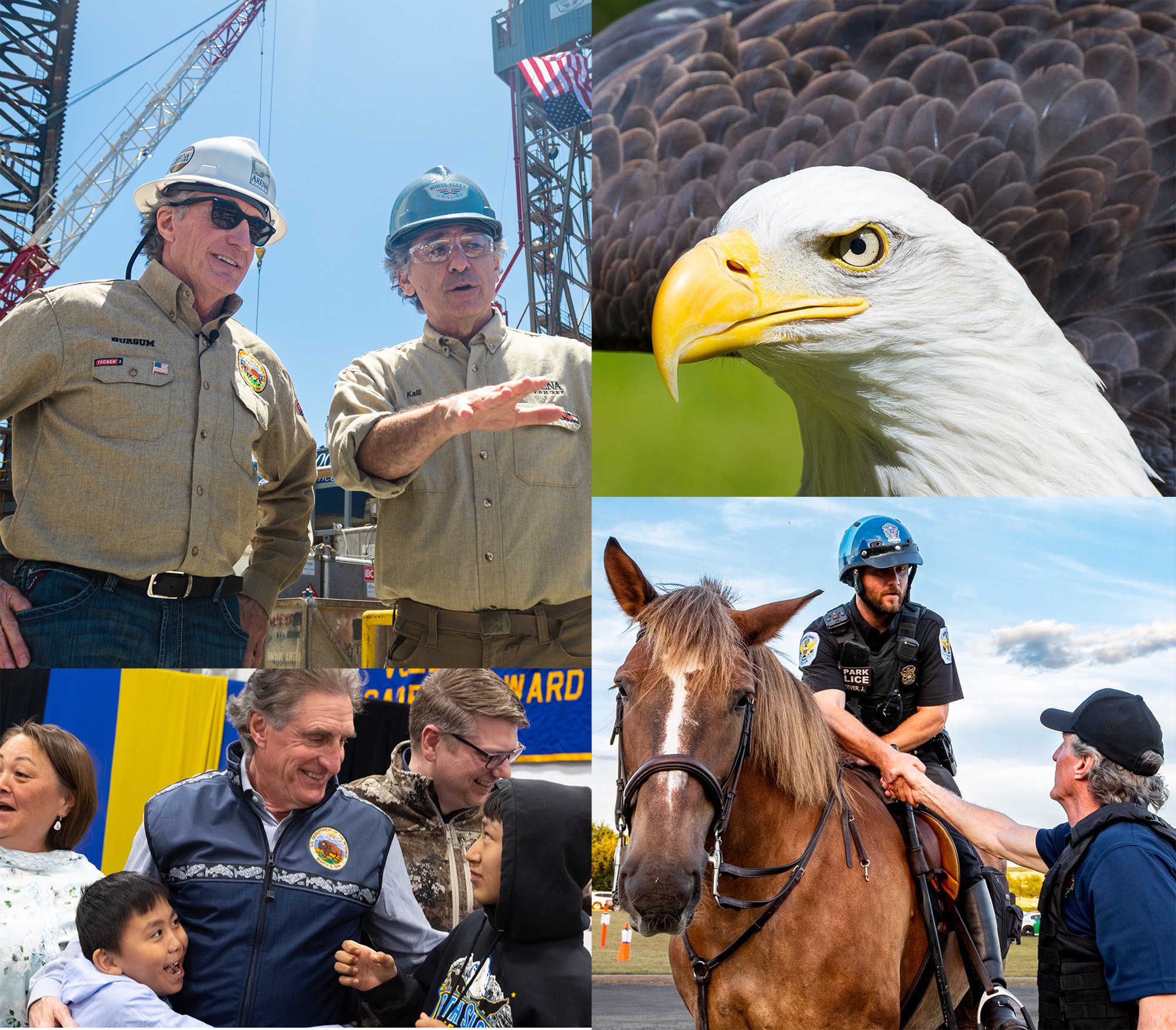
Burgum also emphasizes the role of “super intelligence” throughout the DOI’s strategic plan.
“For the first time in human history, we can turn electricity into intelligence,” he writes, in the only bolded line in his letter that prefaces the plan. (Nowhere in the document does the DOI use the phrase “artificial intelligence.”)
The Trump administration is considering proposals for no fewer than a dozen data center projects on public land, as we reported in September. Together, those data centers could impact at least 17,600 acres of public land in the West.
“At every turn, the plan prioritizes extraction over conservation, emphasizing the need to pillage our public lands in order to power AI data centers,” Center for Western Priorities communications director Kate Groetzinger said in a statement Wednesday. “Of course, that’s no surprise given Burgum’s financial ties to the AI industry. But it flies in the face of the American public, who have made their feelings about data centers abundantly clear.”
Related: The Rush to Build Data Centers on Public Lands Is Worse Than You Thought
In the plan Burgum directs DOI employees to “harness technology to power efficiency,” pointing to efforts to replace manpower with artificial intelligence. The directive comes just days after the USFWS announced it wanted more “boots on the ground” to better manage our national wildlife refuges.
“Our team is actively expanding domestic energy production and securing our critical minerals supply chain — reducing reliance on foreign adversaries, accelerating innovation and protecting the global environment,” writes Burgum in the plan. “…Timber, grazing, geothermal energy, hydropower, outdoor recreation, hunting and fishing, mining, oil and gas and more contribute mightily to every facet of American life. As President Theodore Roosevelt, who helped shape and define our department, explained: ‘Conservation means development as much as it does protection.’”
Burgum is referencing a speech then-former President Roosevelt gave in 1910, in which he spoke forcefully against private interests. The full quote from Roosevelt reads:
“Conservation means development as much as it does protection. I recognize the right and duty of this generation to develop and use the natural resources of our land; but I do not recognize the right to waste them, or to rob, by wasteful use, the generations that come after us.”
Reduced Public Comment at the BLM
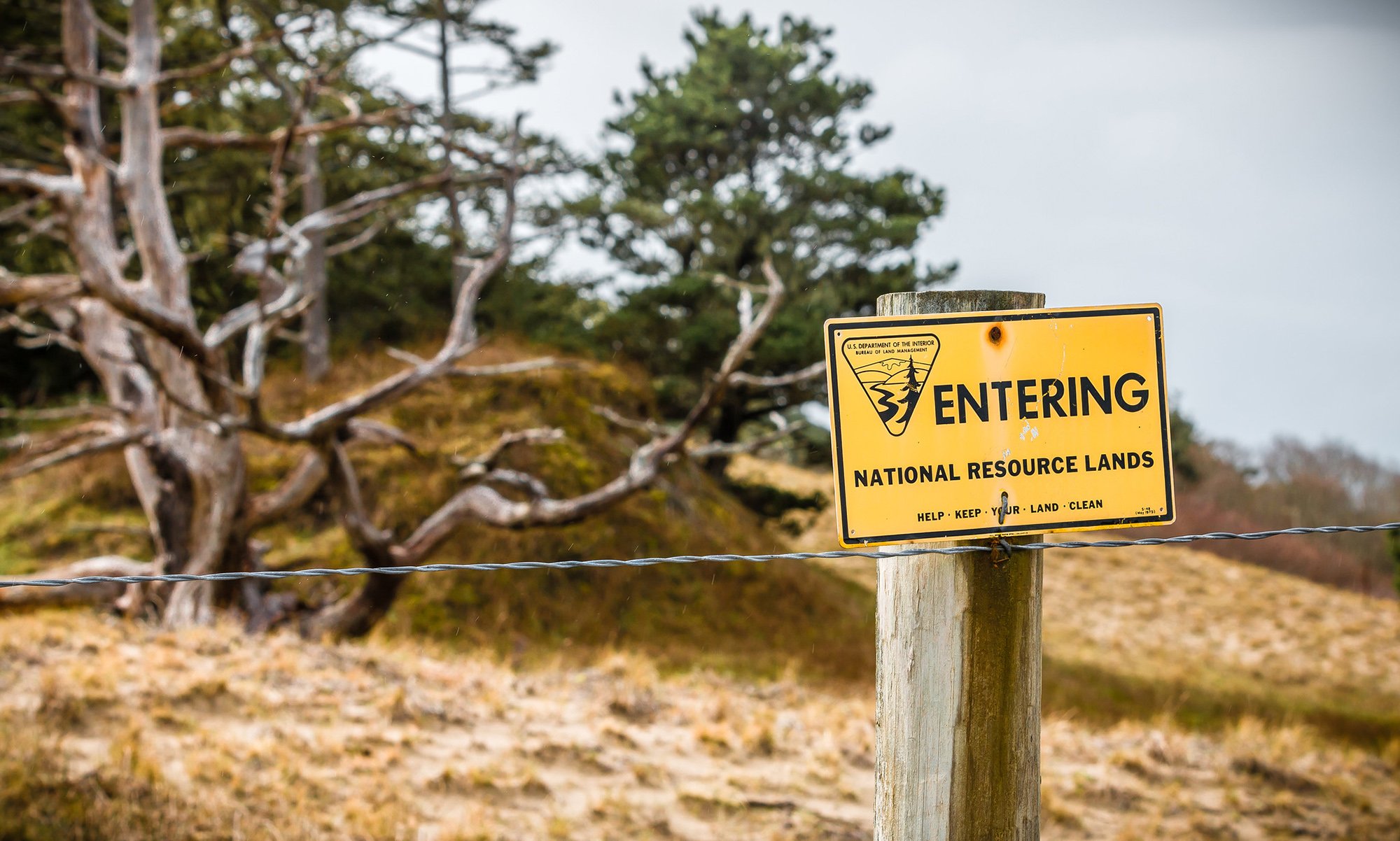
The DOI’s strategic plan was released on the same day the BLM proposed a rule that would make the goals outlined in this plan easier to execute.
The potential rule is rooted in public-land rule making, but it would essentially overhaul the guidelines for writing BLM resource management plans. That includes eliminating the 90-day public comment period for major plans, throw out the currently required draft plan for public comment period, and potentially replace public comment periods with public meetings.
“Those plans decide where drilling, mining, and grazing can happen on public lands, and which lands can be sold,” according to the Center for Western Priorities. “Under the Federal Land Policy Management Act, BLM can sell land only after a resource management plan identifies it for disposal.”
The proposed BLM rule is open for public comment through Jan. 11, 2027.