We may earn revenue from the products available on this page and participate in affiliate programs. Learn More ›
In debating the relative merits of rifle cartridges, few comparisons elicit more passionately held beliefs — or trigger more derision and insults — than pitting the 6.5 Creedmor vs. the .30/06.
Fans of each cartridge react to any criticism of their favorite like you just kicked their puppy. That has always seemed a bit nonsensical to me. In reality, these two cartridges are very different. Each has obviously different strengths and weaknesses. The only real reason to compare them is because they are two of the most popular and beloved big game cartridges.
The .30/06 Springfield is decidedly old school, but still popular and unarguably effective. The 6.5 Creedmoor helped launch an entirely new era of modern cartridge design. The .30/06 punches with power, at both ends of the rifle, while the 6.5 Creedmoor is easier on the shoulder and designed for precision.
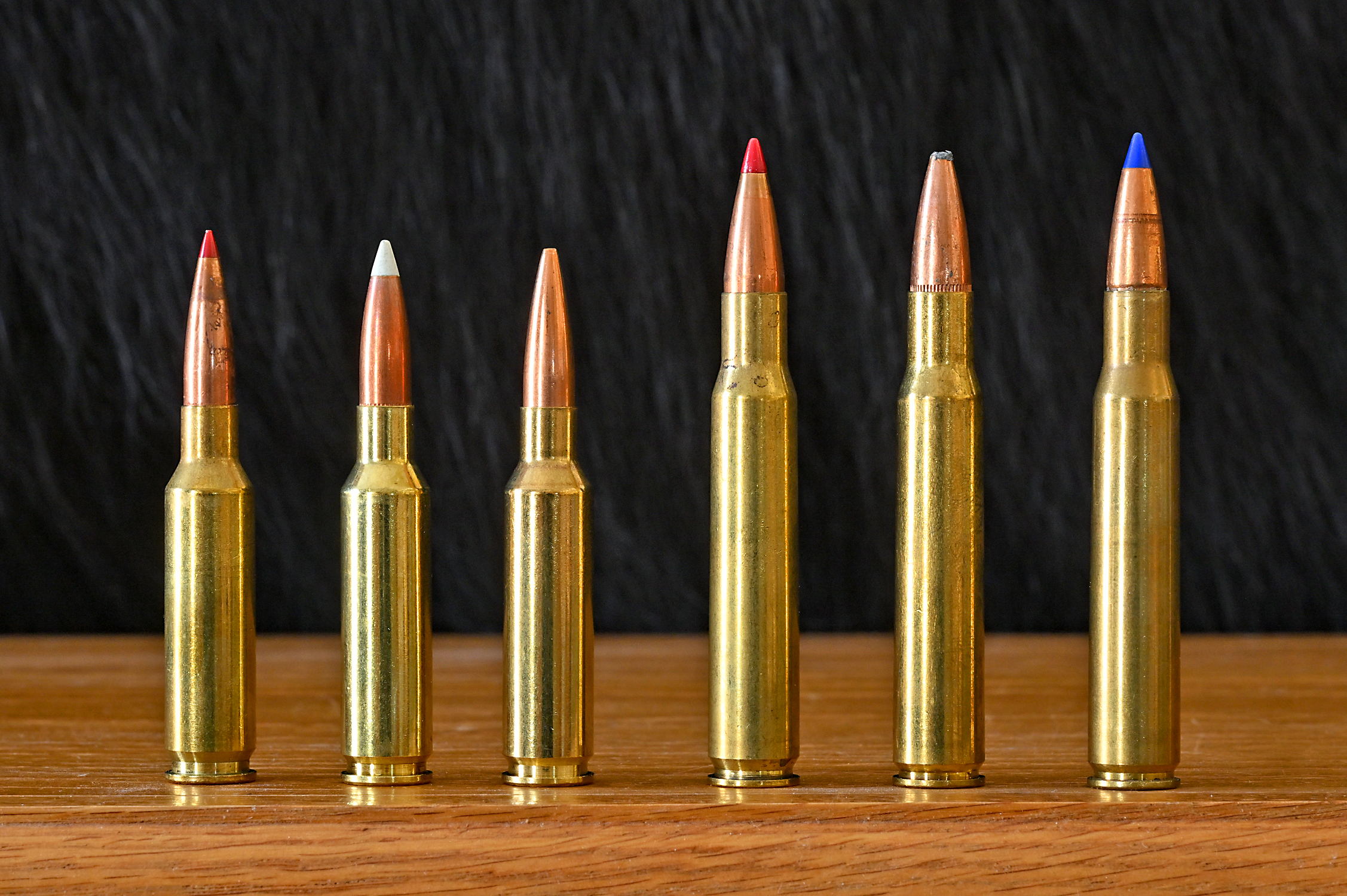
These days, many of us own rifles chambered for both cartridges. But still, the 6.5 Creedmoor fans tend to view the .30/06 defenders as plaid-clad Fudds who believe cartridge design began and ended in 1906. The ought-six crowd lampoons 6.5 Creedmoor fans as effeminate latte-sippers who shouldn’t use the cartridge on anything larger than a coyote. Shots from both sides land wide of the mark.
Any honest comparison isn’t about picking a winner. It’s about defining the strengths and weaknesses of each cartridge so that people can make an informed decision on which cartridge better satisfies their needs. Two things are certain: neither cartridge is going away anytime soon, and neither will ever win the debate. With that established, here’s an unbiased look at what you need to know about each cartridge to decide for yourself.
History
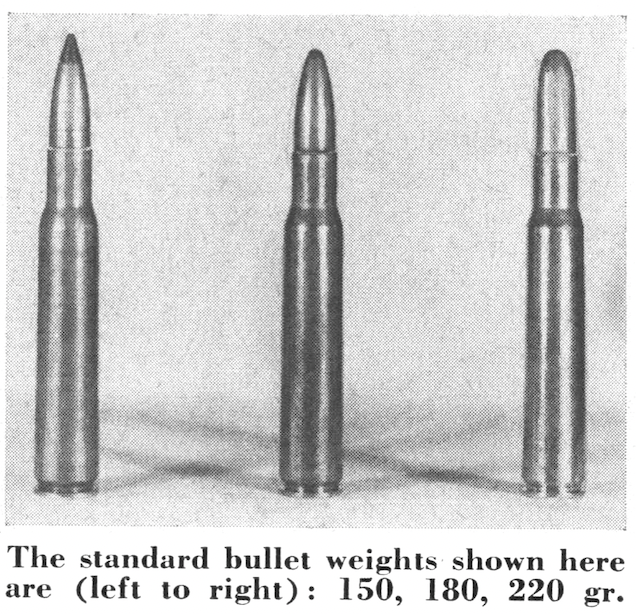
The storied history of the .30/06 Springfield began when the US military realized that its .30/40 Krag cartridge, which entered service in the 1890s, was falling behind. European armies were moving toward lighter, more aerodynamic bullets with greater velocity and effective range. The 1903 adoption of the .30/03 Springfield did not close the gap because it used the same heavy, round-nosed bullet as the Krag, however it did lead to the creation of the .30/06 Springfield in 1906. U.S. military and sporting history would be forever changed.
The .30/06 Springfield was used in both World Wars as well as the Korean War. It even saw limited use in the Vietnam War. It’s hardly surprising that millions of returning service members gravitated toward the cartridge for hunting and recreational shooting. In trajectory and energy, it left popular lever-action cartridges like the .30/30 Win in the dust. For hunters, the .30/06 became a versatile, do-it-all cartridge that could handle everything from varmints to big bears.
Virtually every major rifle maker has chambered guns for the cartridge, and the majority still do. There was a time when the first new rifle models shipping from factories were always chambered for the .30/06 Springfield, but that hasn’t been the case for a long time. Today, they are far more likely to be chambered for the 6.5 Creedmoor, and that’s a direct reflection of sales.
Detractors still talk about the 6.5 Creedmoor like it’s some new and unproven cartridge. That’s hardly the case. The cartridge was introduced by Hornady 19 years ago. It took a while to gain traction, but it has since become immensely popular. The goal in developing the 6.5 Creedmoor was to produce a cartridge that would excel in across-the-course NRA High Power target shooting, produce minimal recoil, and fit in a short action. Designers Dave Emary and Dennis DeMille succeeded beyond their wildest dreams. They did so by loading 6.5mm bullets with high ballistic coefficients and sectional density into a necked-down version of the 30 Thompson Center case. Once hunters caught on to the virtues of the cartridge, sales soared.
While the .30/06 had a tremendous impact on cartridge design in the 20th Century, the 6.5 Creedmoor has had far greater influence on modern cartridge design in the 21st Century. Unlike traditional cartridges, newer rounds inspired by the 6.5 Creedmoor, and its design principles, are more efficient and inherently accurate. They emphasize optimal head height and faster twist rates to stabilize heavy-for-caliber, high-BC bullets. They launch these bullets at moderate velocities, headspace off sharp shoulders, have tight throats, and minimal body taper.
Read Next: Jack O’Connor’s Opinion of the Indestructible .30-06
Accuracy
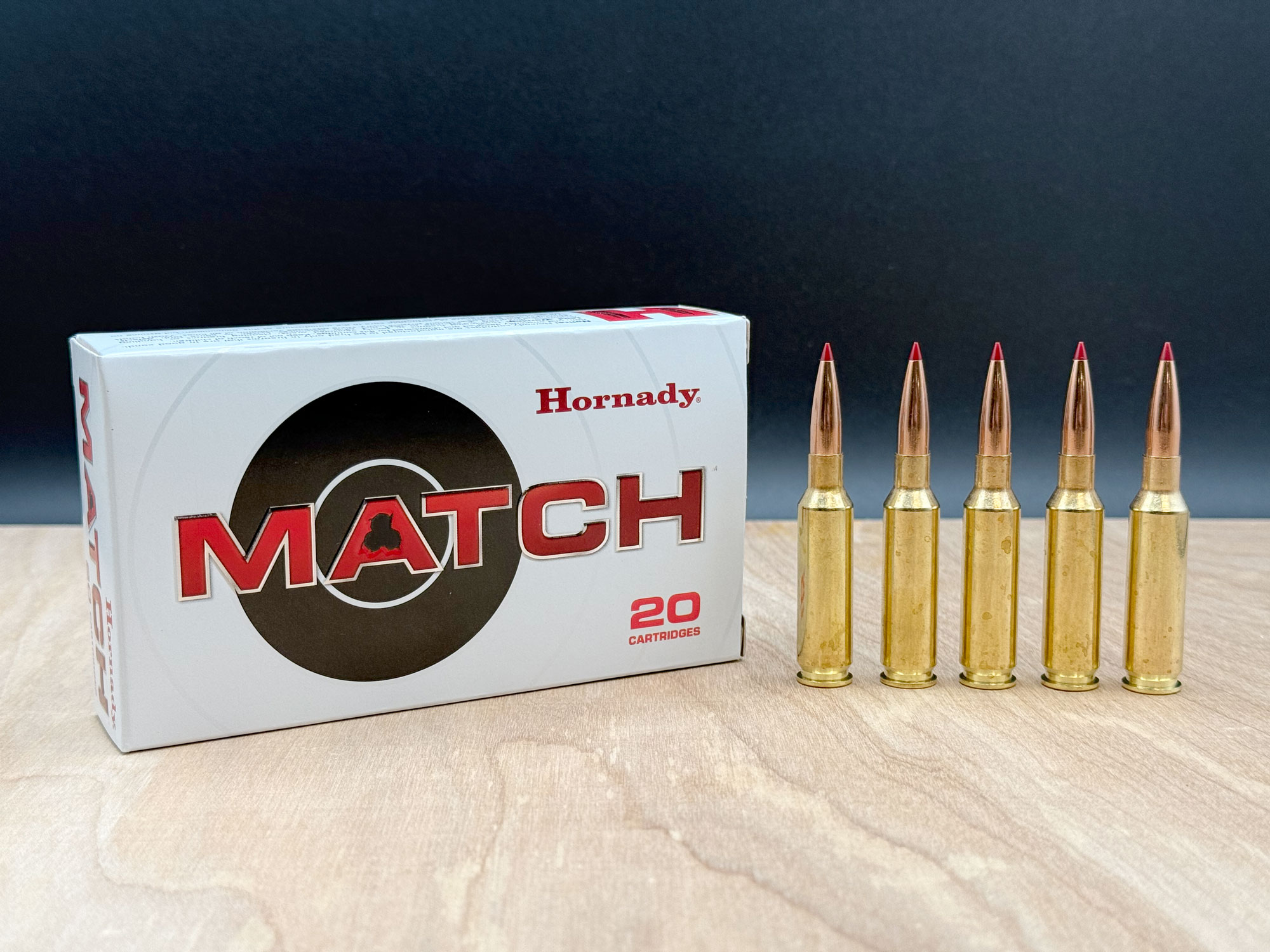
Let’s get this out of the way up front. Factory hunting rifles chambered in .30/06 Springfield cannot, as a general group, compete with factory hunting rifles chambered in 6.5 Creedmoor in terms of accuracy. Cartridges like the .30/06 are used in rifles with barrel throats that are notably larger than the bullet diameter, which is not ideal for achieving great accuracy. The SAMMI specification for the .30/06 is .0026 in. over the bullet diameter. That may not sound like a lot, but the number for the 6.5 Creedmoor is a mere .0005 in. over the bullet diameter. That’s just one more factor giving the Creedmoor a baked-in advantage.
This doesn’t mean you can’t find individual rifles chambered in .30/06 Springfield that are quite accurate with loads they like, but as a whole, accuracy of factory .30/06 rifles doesn’t meet the same standard.
The 6.5 Creedmoor is a different story. I have never tested any other chambering that produced such consistent accuracy as the 6.5 Creedmoor, even in cheap rifles. Outdoor Life previously took a deep dive into the accuracy of 6.5 Creedmoor factory ammunition — shooting more than 200 five-shot groups — and reported impressive results. The most accurate 6.5 hunting ammo OL shot (Federal Premium loaded with a 143-grain ELDX) recorded a five-shot group average of .56 inches, a 20-shot group average of .81 inches, and a mean radius of .23 inches.
The issue for hunters is deciding how much accuracy they really need. From a practical standpoint, the limiting factor when it comes to accuracy in a hunting situation is usually the shooter’s ability, not the rifle or the cartridge. But here the 6.5 Creed still has a distinct advantage. Because it’s easier to shoot (more on this in a minute) it’s much easier to train with and become skilled with at longer ranges. In other words, shooting the 6.5 Creed, and shooting it a lot, is a good way to improve your field accuracy, which is what really matters most.
Recoil
Depending on their weight, rifles in .30/06 Springfield deliver recoil on a level that’s at the threshold of what many shooters can tolerate and still shoot accurately. The Creedmoor is notably more pleasant. Most 6.5 Creedmoor-chambered rifles deliver 10.8 to 11.6 ft.-lbs. of recoil energy. Rifles in .30/06 Springfield produce 19 to 26 ft.-lbs. of recoil energy depending on bullet weight. These numbers are for rifles weighing 8 pounds.
As rifle weight decreases, recoil increases. With seven-pound rifles, the difference can be more pronounced, ranging from about 16 ft.-lbs. of recoil using a 143-grain 6.5 Creedmoor cartridge to 27 ft.-lbs. using a 178-gr. .30/06 cartridge. Of course, recoil can be mitigated with recoil pads and muzzle brakes, but recoil tolerance is an important factor to consider, especially with lightweight backcountry rifles.
The 6.5 Creedmoor is a logical choice for new shooters or anyone who is sensitive to recoil. It’s also an obvious choice for shooting at longer distances where it’s critical to spot your hits through the scope — though the shooter should always keep impact velocity in mind because neither cartridge is exceptionally fast. Cartridges with heavier recoil make spotting hits and delivering precise followup shots a real challenge.
The .30/06 remains a solid choice for those who want to employ a cartridge firing heavier bullets, so long as they can handle the recoil without sacrificing accuracy.
Ballistics
One of the claims often made for the 6.5 Creedmoor is that it shoots flatter with relatively greater retained energy than the .30/06. But is that really the case? While the numbers don’t lie, they can be misleading. For a fair comparison, let’s look at the numbers for cartridges using relatively similar bullet weights and styles.
Hornady’s 6.5 Creedmoor Precision Hunter 143-grain ELD-X bullet has a muzzle velocity of 2,700 fps. Zeroed at 200 yards, it drops 22.4 inches at 400 yards and 44.4 inches at 500 yards.
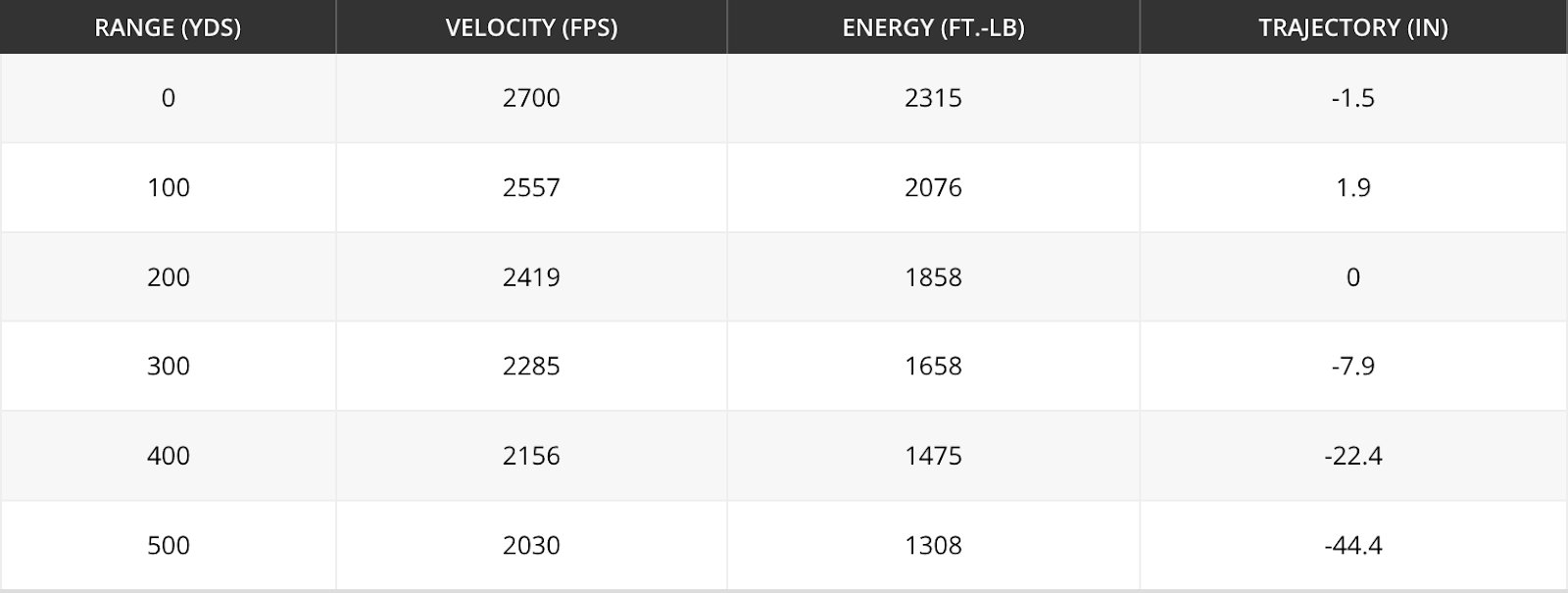
6.5 Creedmoor Ballistics. Hornady
In contrast, Winchester’s .30/06 Springfield 150-grain Ballistic Silvertip bullet launches 200 fps faster. Zeroed at 200 yards, it drops 21.2 inches at 400 yards and 43 inches at 500 yards. There’s little difference in trajectory with these two cartridges, at practical distances for most hunters.
| Range (yds) | Velocity (fps) | Energy (ft-lbs) | Trajectory (in.) |
|---|---|---|---|
| muzzle | 2900 | 2801 | |
| 100 | 2687 | 2404 | 1.7 |
| 200 | 2483 | 2054 | 0 |
| 300 | 2289 | 1745 | -7.3 |
| 400 | 2103 | 1473 | -21.2 |
| 500 | 1926 | 1236 | -43 |
.30/06 Springfield Ballistics. Winchester
There are, however, differences in velocity and retained energy at distance even though these two loads use similar bullet weights. The .30/06 round outruns the 6.5 Creedmoor to 300 yards, but the 6.5 Creedmoor starts to match the .30/06 beyond that distance. The .30/06 load brings greater energy inside of 300 yards, but the 6.5 Creedmoor strikes with more retained energy beyond that mark. This is where you start to see the advantages of the 6.5 Creedmoor, including its superior resistance to wind drift.
Let’s compare these same two loads. In a 10 mph, full-value wind, the /30/06 bullet will drift 6.21 inches at 300 yards, 11.42 inches at 400 yards and 18.48 inches at 500 yards. The 6.5 Creedmoor numbers are just 4.63, 8.48 and 13.55 inches at the same distances.
That’s a clear advantage for the 6.5 Creedmoor. Of course, with the .30/06, you have the option to run heavier, 180- to 220-grain bullets. Hornady’s Custom International 220-grain InterLock load, for example, launches from the muzzle with a whopping 3,704 ft.-lbs. of energy, or 1,000 ft.-lbs. more than the 143-grain 6.5 Creedmoor. At close and mid distances, the .30/06 obviously brings more energy to the target with these heavy bullets.
Terminal Performance
All things being equal, bigger bullets with larger frontal surface areas make bigger holes. Depending on bullet design and velocity, they can inflict more damage on vital organs and cause more blood loss. This generally gives the .30/06 an advantage in terminal ballistics. But remember that means velocity and bullet construction are equal. Your bullet selection makes a big difference.
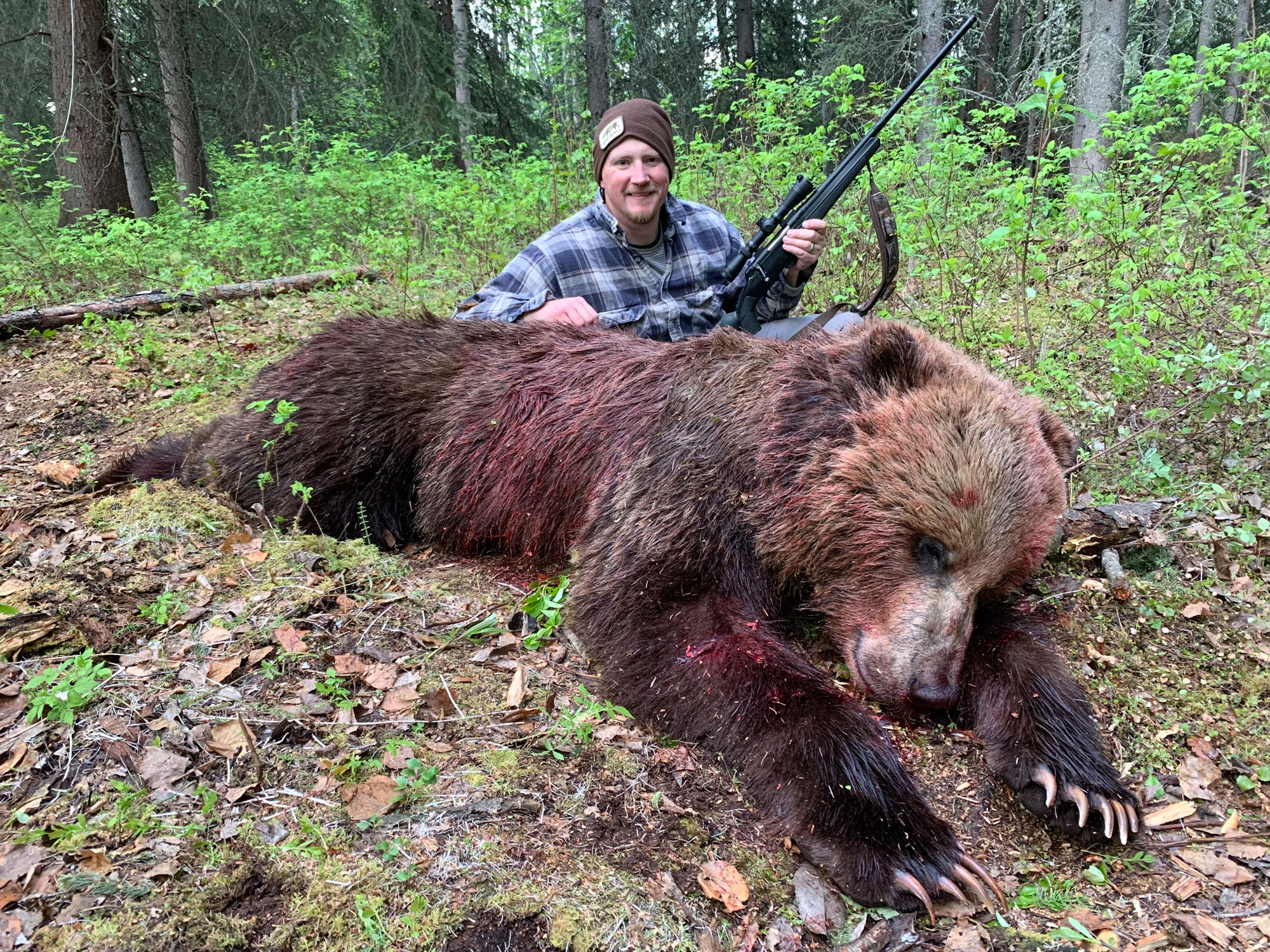
Mind you, this doesn’t mean that you can’t take larger animals with the 6.5 Creedmoor. Outdoor Life staff writer Tyler Freel proved you can kill a large grizzly ethically with a 6.5 Creedmoor using a tough, 140-gr. Nosler Partition bullet at relatively close range. He has also noted that the 6.5 Creedmoor with a 143-grain ELD-X can produce more dramatic wound channels than some rigidly constructed bullets in larger cartridges like the .338 Win. Man. OL’s shooting editor John B. Snow has killed a trophy room worth of bull elk with the 6.5 Creed at distances from near to far.
By the same token, you can certainly kill deer with the .30/06, but you don’t need .30/06 power to take whitetails cleanly. I’ve shot a lot of deer-sized game with the 6.5 Creedmoor, and the cartridge has never let me down. I did once have to hit an aoudad in Texas four times with a 6.5 Creedmoor to put him down. The bullets were going where they were supposed to, but that aoudad hadn’t read the script. They are tough animals. Would that ram have gone down faster if I’d been shooting a bigger cartridge? Maybe, but probably not. Each shooting situation is dynamic and it’s impossible to predict how any one animal might react with a given cartridge.
With that said, I look at it like this: For large animals inside of 300 yards, the advantage goes to the .30/06. At longer distances, the accuracy advantages of the 6.5 Creedmoor make it a good choice, especially for deer-sized game.
Read Next: Are You Getting Bad Blood Trails with the 6.5 Creedmoor? This Is Why
Ammo Availability and Selection
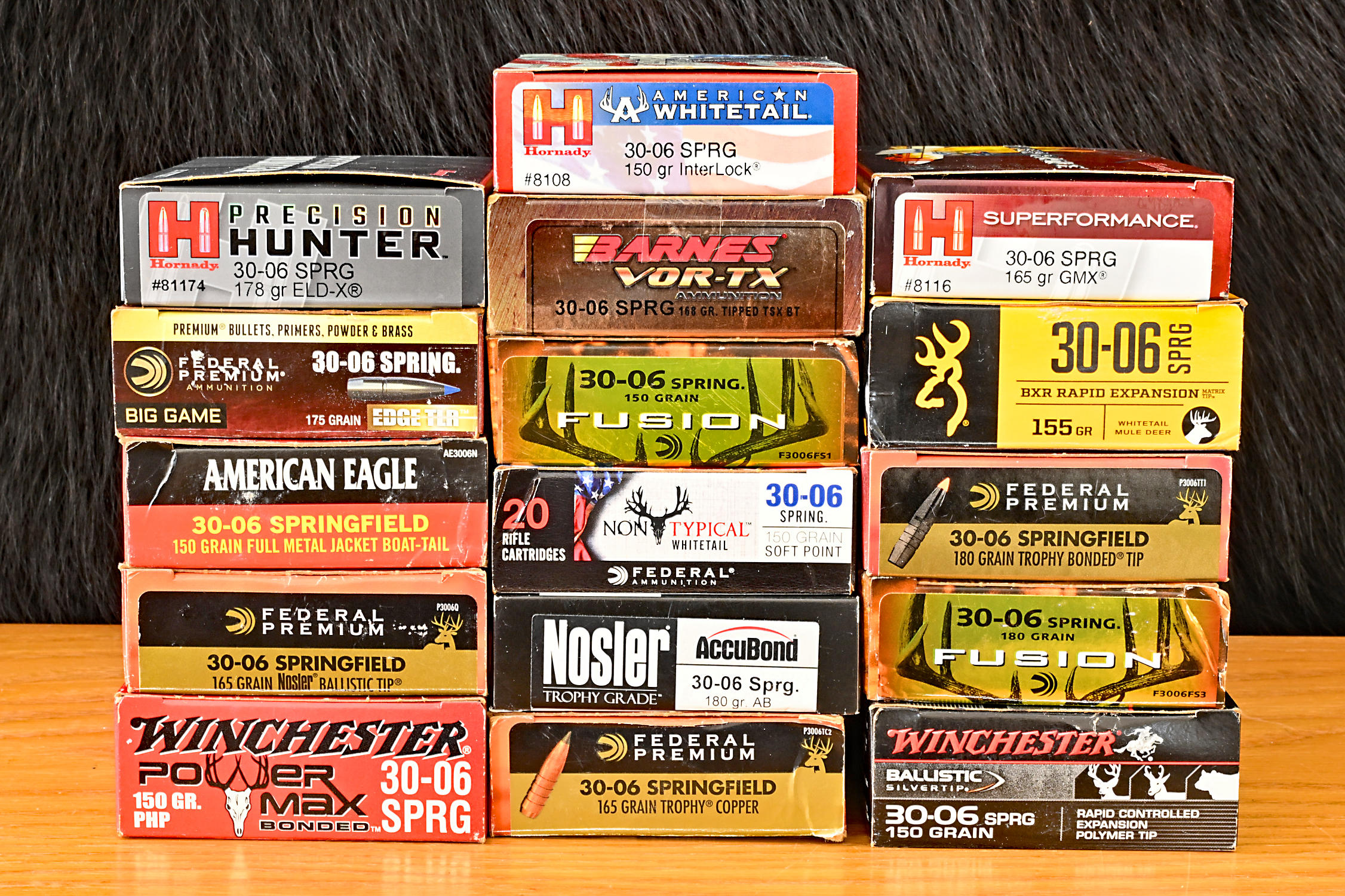
It’s always been easy to find .30/06 ammo at retailers in just about any backwoods location. That wasn’t always true of the 6.5 Creedmoor, but the round has steadily been catching up in terms of availability as it has grown in popularity over the last two decades. You can now find 6.5 Creedmoor ammo at most retail outlets that sell ammunition.
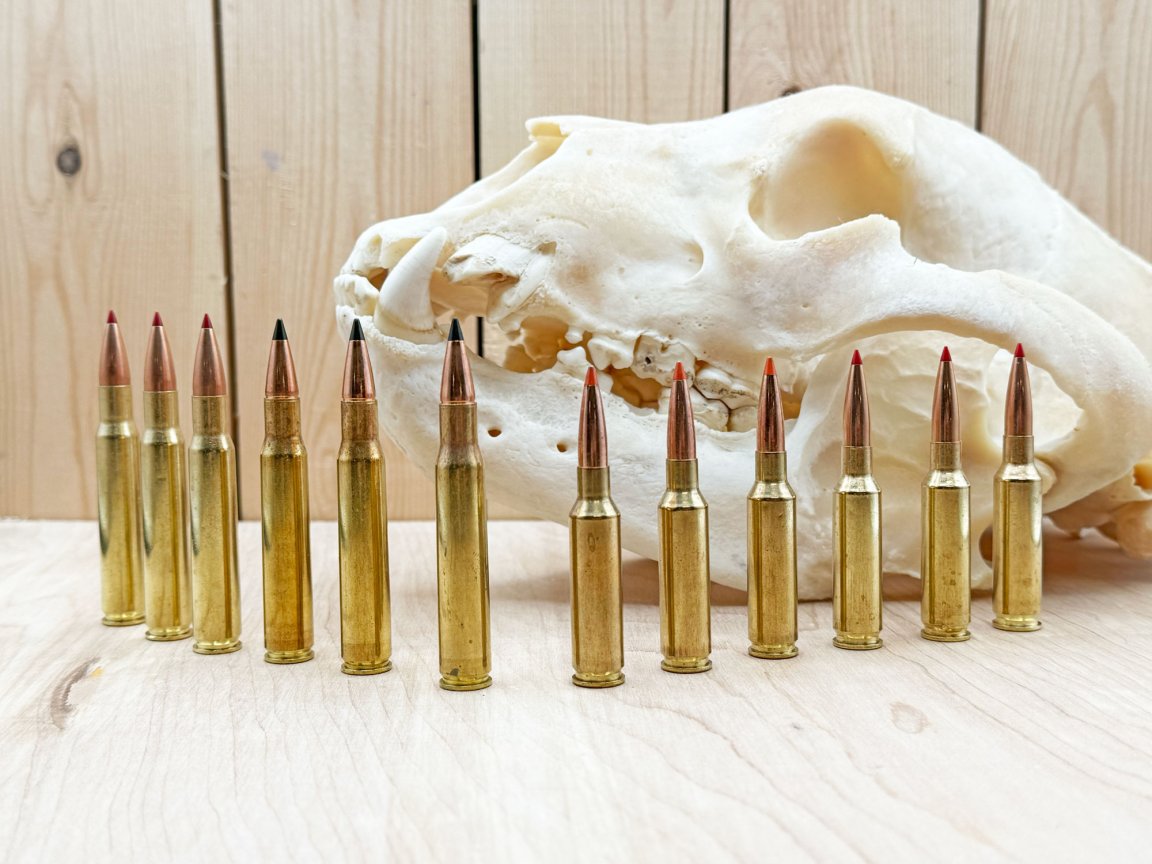
The .30/06 is more versatile in the sense of being tolerant of a greater variety of projectiles, and it’s still sold in a wider range of bullet weights and types. Currently offerings from just three of the biggest ammo brands – Hornady, Federal, and Winchester – include 48 different .30/06 loads in bullet weights ranging from 125 to 220 grains.
In comparison, current 6.5 Creedmoor offerings from the same three manufacturers include 31 different loads in bullet weights ranging from 95 to 147 grains. In other words, both cartridges are excellent choices if you care about ammo availability, versatility, and new rifles chambered in your round.
Final Thoughts on 6.5 Creedmoor vs .30-06
The 30/06 Springfield isn’t as obsolete as some people assert, and the 6.5 Creedmoor isn’t the feeble newcomer some portray it to be.
The smaller range of bullet weights for the 6.5 Creedmoor reflects the difference in design philosophy. The 6.5 Creedmoor was designed to launch heavy-for-caliber, high-BC bullets at faster twist rates for greater long-range accuracy. It has proven to be remarkably accurate and immensely popular.
The .30/06 was designed to compete with European military ammo more than 100 years ago. The fact that this granddaddy of a cartridge still enjoys great popularity among hunters speaks volumes about its effectiveness on medium and large game animals.
All cartridge choices are a matter of personal preference, and that’s one of the great things about the current state of shooting sports. We’ve never had the freedom to choose from so many great cartridges. In my book, the .30/06 and 6.5 Creedmoor are both good choices. It just depends on what you intend to do with them. And really, you should have rifles chambered in both.