
We may earn revenue from the products available on this page and participate in affiliate programs. Learn More ›
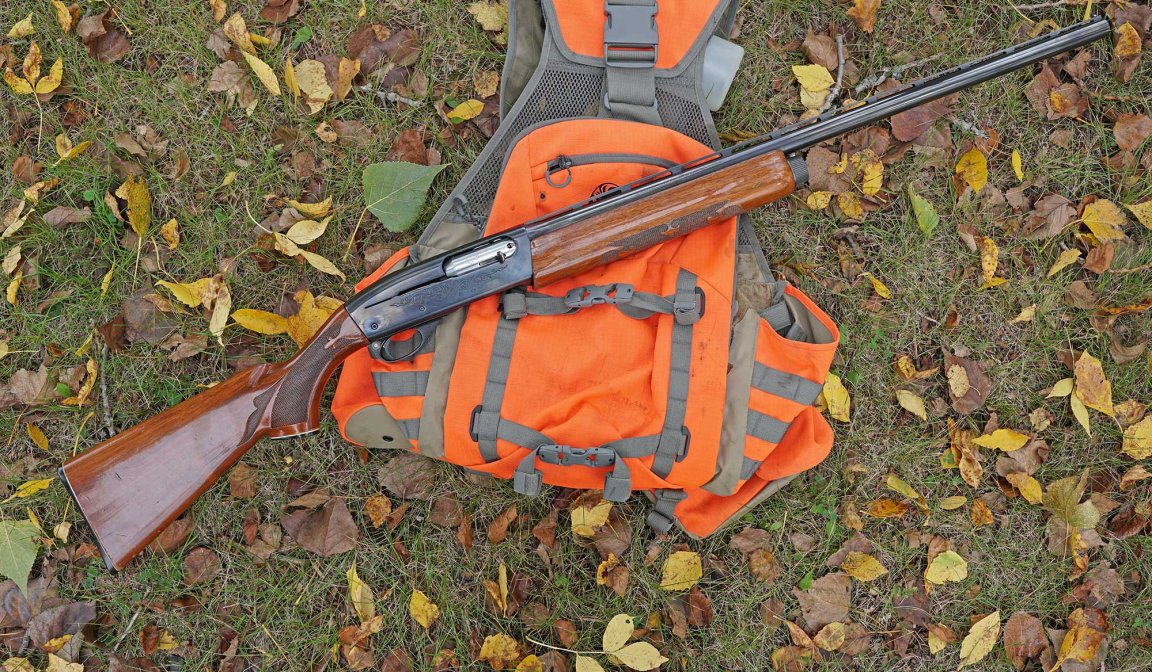
Before the Remington 1100, semiautomatic shotguns either worked by long or short recoil, or they just didn’t work very well. The 1100 changed that. It was not the first gas semiauto. It was the first reliable gas semiauto. An immediate hit, it instantly became the most significant autoloader introduction in the 63 years since the invention of John Browning’s Auto 5 in 1900. It kick-started the gas-gun era. It’s among the most popular shotguns ever made, to the tune of over 4,000,000 guns built. It was offered in every gauge except the 10, and it was also offered in hunting, skeet, trap, sporting, and slug configurations.
Target shooters and hunters immediately realized the advantage of a reliable semiauto with the recoil-reduction advantages of gas operation. The 1100 also had a stock that fit nearly everyone as well as an out-of-the-box stock can. It had some weight-forward balance, too, which made it a shooter.
The 1100 is “iconic” and not iconic in the modern, overused, watered-down sense, where your cat, or the overnight oats you had for breakfast are “iconic.” The 1100 endures as a symbol of 1960s American know-how, design, and manufacturing. It also endures as a terrific shooter by the standards of any era.

History of the Gas Gun
Gunmakers had known about gas operation long before the 1100 debuted in 1963. The Clair Brothers of St. Etienne, France, built a semiautomatic shotgun in the 1890s that used expanding gases bled from the barrel to cycle the action. The Clair gun never proved reliable enough to go into production. From 1900 through the early post-war years, John Browning’s long-recoil design dominated semiauto design.
Following WWII, gunmakers switching back to civilian arms put their new-found experience making gas-operated military small arms into practice. Gas guns offered a significant advantage in recoil reduction over other action types. The moving parts of the gun stored, then released, recoil energy, spreading it out to give the shooter the sensation of a push, not a punch, to the shoulder.
Gas guns also presented design challenges. Making a gun that functions with a wide range of ammo is tricky. Bleed too much gas off the action, and the bolt slams back, shortening the life of the gun. Bleed off an insufficient amount, and it won’t drive the piston and cycle the action. Yet, you can’t tune a sporting shotgun for a single load, as you can with a military weapon. It has to work with a wide range of ammunition. Also, making use of expanding gases to drive a piston means fouling builds up in the action. Gas guns either have to be kept very clean, or they have to be designed to run dirty.
The first commercially available gas semiauto was the J.C. Higgins Model 60, built by High Standard for Sears, Roebuck in 1956. It had a bulky gas system contained beneath a bulbous forearm, and lasted only a few years. Also in 1956, Remington introduced the Model 58 gas gun. Remington followed it in 1959 with another design, the 878. Beretta introduced its first gas semiauto, also called a Model 60, in 1960. Those early semiautos shared a trait: they didn’t always work. Smug pump-gun shooters called semiautos “jammamatics.”
Read Next: Gas vs. Inertia: Which Semiauto Shotgun is Best?
Semiauto Revolution
The 1100 replaced three semiautos (Model 58, 878 and the long-recoil 11-48) in the Remington lineup, so sure was Big Green that it had the gun of the future in the 1100, and they were right. The 1100 design team was led by an engineer named Wayne Leek, who would also invent the Nylon 66 rimfire rifle. The shotgun was designed with the aid of computers, made to be mass-produced, and it had a simple, easy-to-clean gas system that was itself billed as “self-cleaning.”
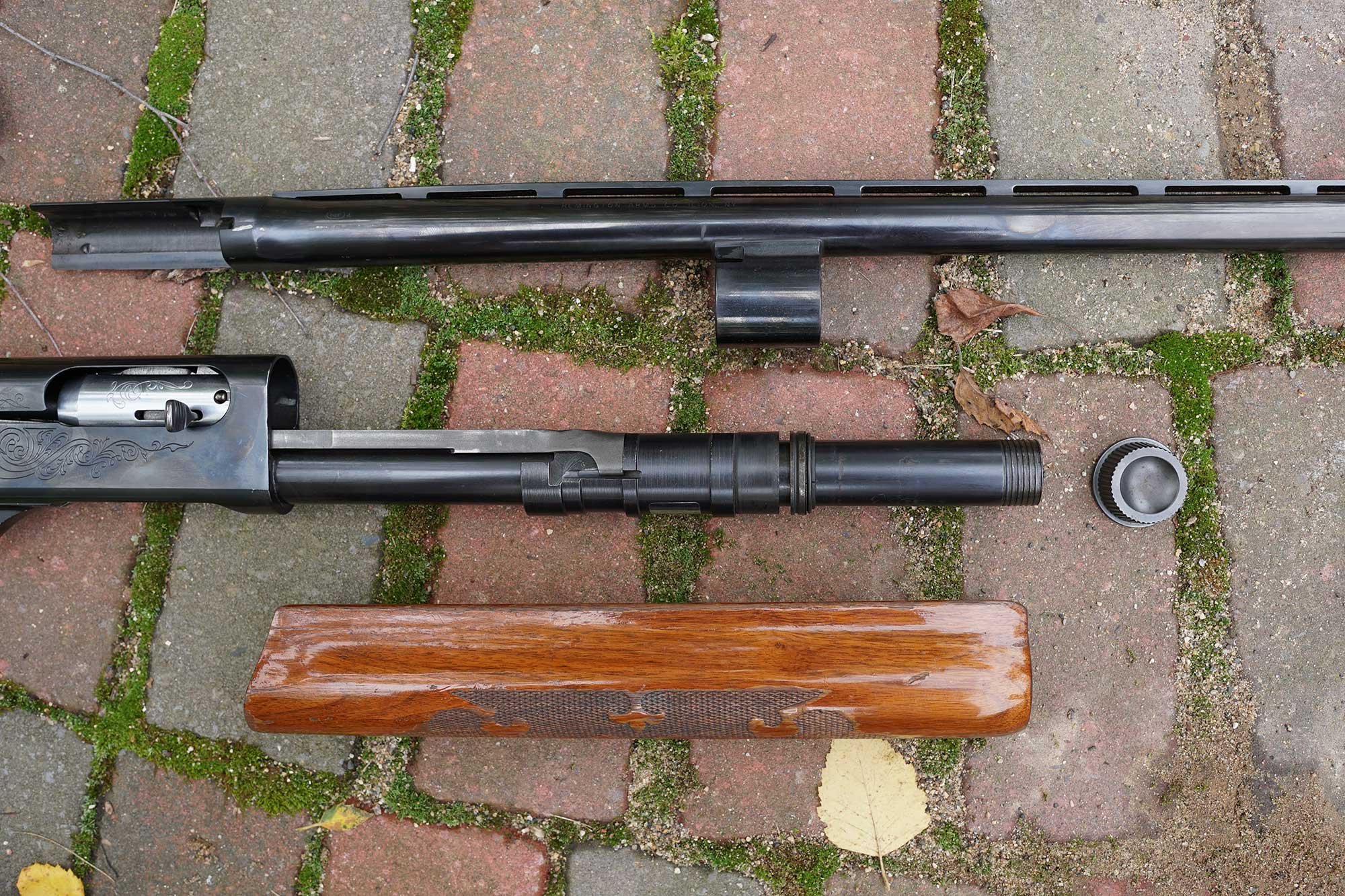
The system was, by 1963 standards, elegantly simple. There was an action bar, a sleeve, a piston ring, a metal piston seal and a rubber O-ring and ports in the barrel ring to admit gas to the action. Keeping an 1100 running meant cleaning all those parts every few hundred rounds, making sure you put the metal seal on facing the right direction when you reassembled the gun, and keeping a spare O-ring with you, just in case the old one broke. O-rings still cost $2. It came apart without tools nor the need to curse at it. A friend used to pull his apart and run the gas system pieces through the dishwasher every time he used it, and I never saw his gun hang up.
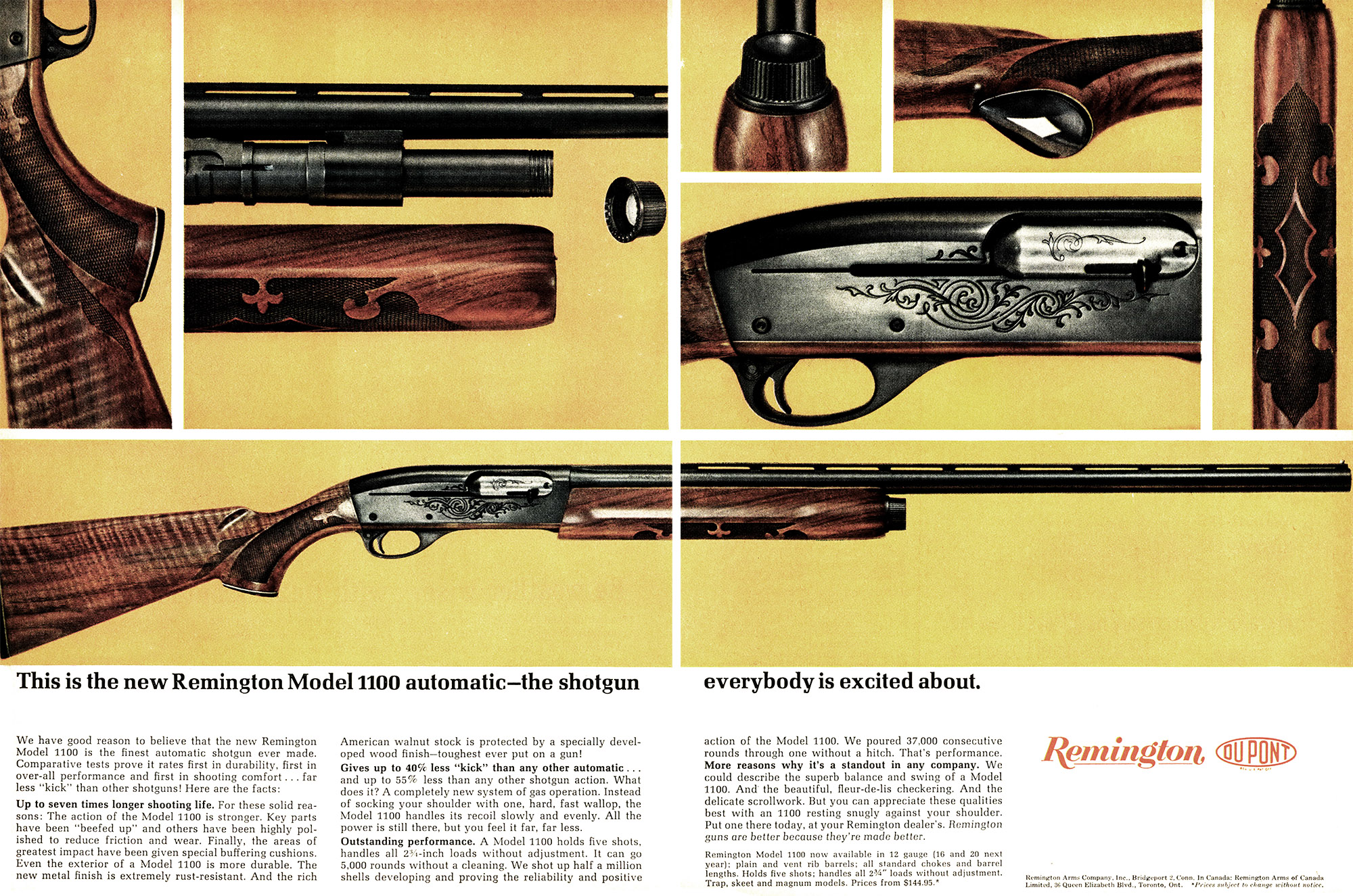
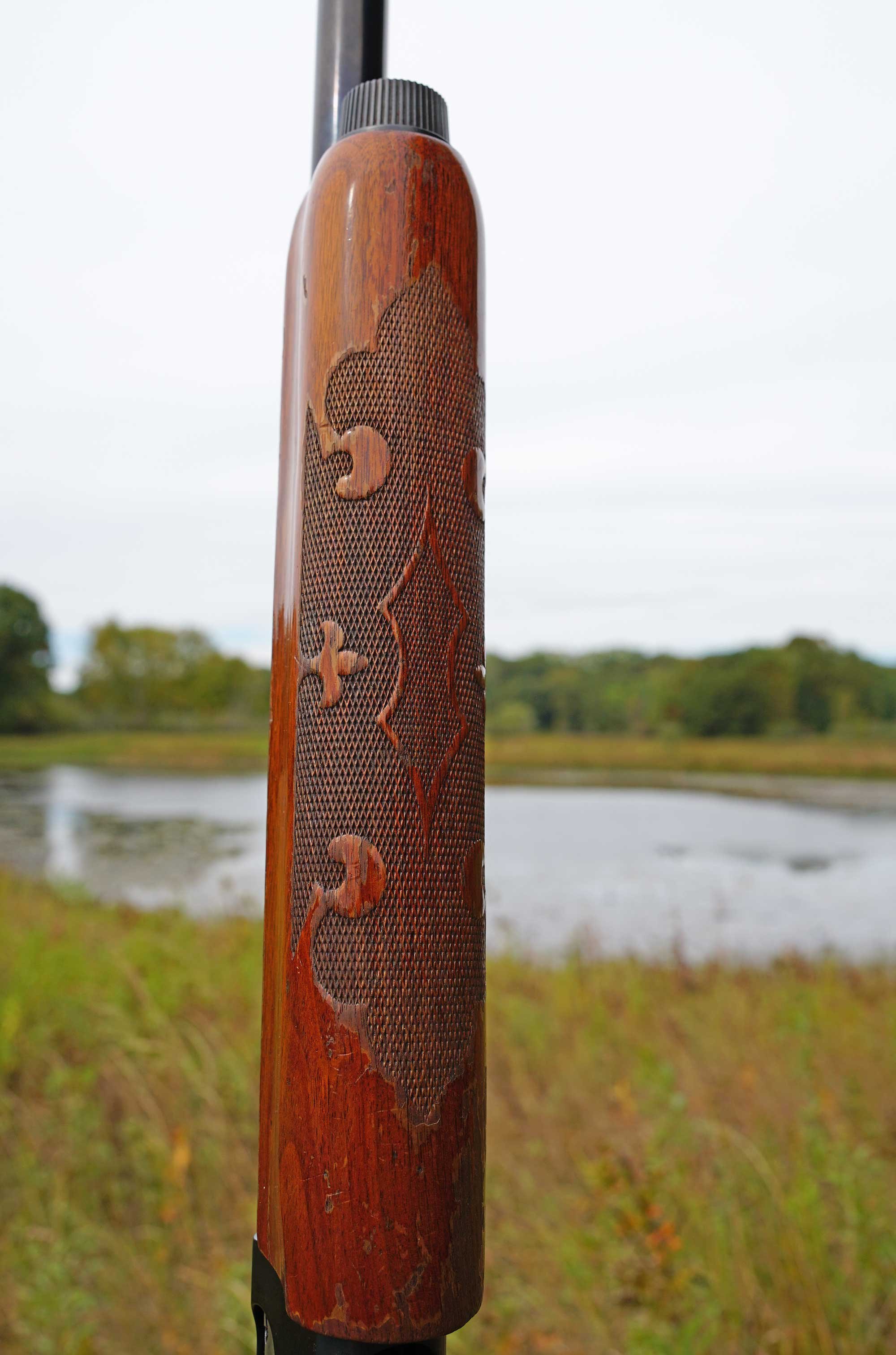
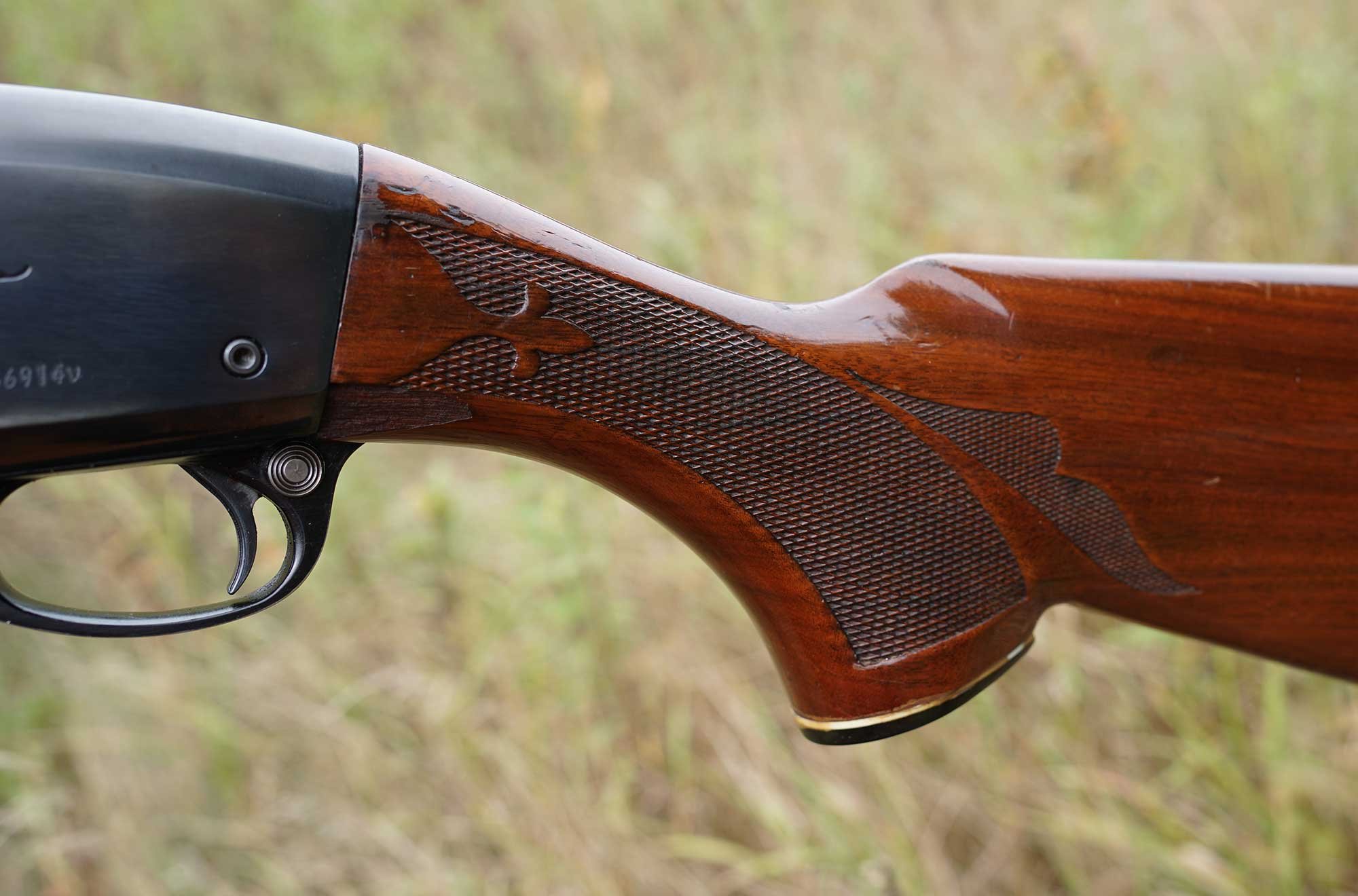
By the standards of the day, the 1100 was sleek and low-profile, having been built on the receiver of the 16-gauge 11-48. Walnut stocked, with fleur-de-lis checkering covered in a glossy RKW finish (designed by parent company DuPont to protect bowling pins), the 1100 had a shiny, modern exterior to go with its state-of-the-art gas system. It looks dated today, but in the right way. It has good lines and it’s all steel and walnut which is rare in these days of alloys and plastic parts.
Instant Success
Hunters and target shooters loved the 1100 right away. Remington claimed the gun kicked 40 percent less than any other semiauto, and it has always felt that way to me. From the beginning, the gun was offered in both 2 ¾- and 3-inch 12-gauge, and the soft-kicking 1100 magnum became a waterfowler’s favorite. Trapshooters took to the gun, especially after Remington added a deflector to send empties downward, and not into the shooter on your right.
The first 20s were built on 12-gauge frames. In 1966 the LT-20 on a 20-gauge frame came out, and it weighed more like what a 20-gauge should, at about 6.75 pounds. By 1969, 1100s came in the four skeet gauges (and in 16), and if you went to a skeet shoot in the 70s or 80s, over half the shooters would be using 1100s. By 1983, Remington had already made 3,000,000 1100s. That year Remington also introduced one of my favorite 1100s, the straight-gripped, short-barreled “Special Field” with a 21-inch barrel, in 12- and 20-gauge.
It was made into slug guns, into a series of Ducks Unlimited commemoratives, into true left-hand models and more. There was a Special Purpose 3-inch magnum, with dull walnut and bead-blasted steel as well.
Reinvention of the 1100
While 1100s were cutting-edge for 1963, you still had to own two barrels for your gun if you wanted to shoot the full range of 2 ¾- and 3-inch ammunition. That was true of all semiautos, not just the 1100. Being limited to 2 ¾-inch shells was not a big deal in the days of lead shot waterfowling, when 2 ¾-inch shells held plenty of lead pellets for ducks and geese. Steel was lighter, so you needed to shoot bigger shot sizes, and adequate steel payloads required 3-inch hulls.
Some of us never shot 3-inch shells at all in the day, but the coming of steel changed that. Remington engineers worked on the problem and added a spring-valve to the piston that was stiff enough to stay in place with light and standard loads, and vent off excess gas generated by 3-inch shells. Remington called the gun an 11-87. But it was really an 1100 except for the redesigned ring.
Even after the 11-87 debuted – and it, too, was a big success – the 1100 remained in the lineup, mostly as a target gun. In the early 2000s I bought a pair of Youth model 1100 20-gauges, with 21-inch barrels and short synthetic stocks. Both my sons, and one of their friends, learned to shoot with these guns, and I brought them along on Boy Scout “troop shoots” too, where a lot of kids and a few adults broke their first clays with them. They were heavy, but not too heavy for a 12-year-old and they were easy to shoot and almost recoilless. Like all 1100s, they had stocks with thin-enough combs that anyone could get down on the stock. That stock, along with the light recoil, made the 1100 a gun everyone could shoot. I had an 1100 trap gun, too, that I used as a loaner during my days of SCTP coaching. Like the Youth guns, it was a wonderful gun to put in anyone’s hands.
Read Next: 10 Classic Shotguns Every Wingshooter Should Own
Remington 1100 Legacy
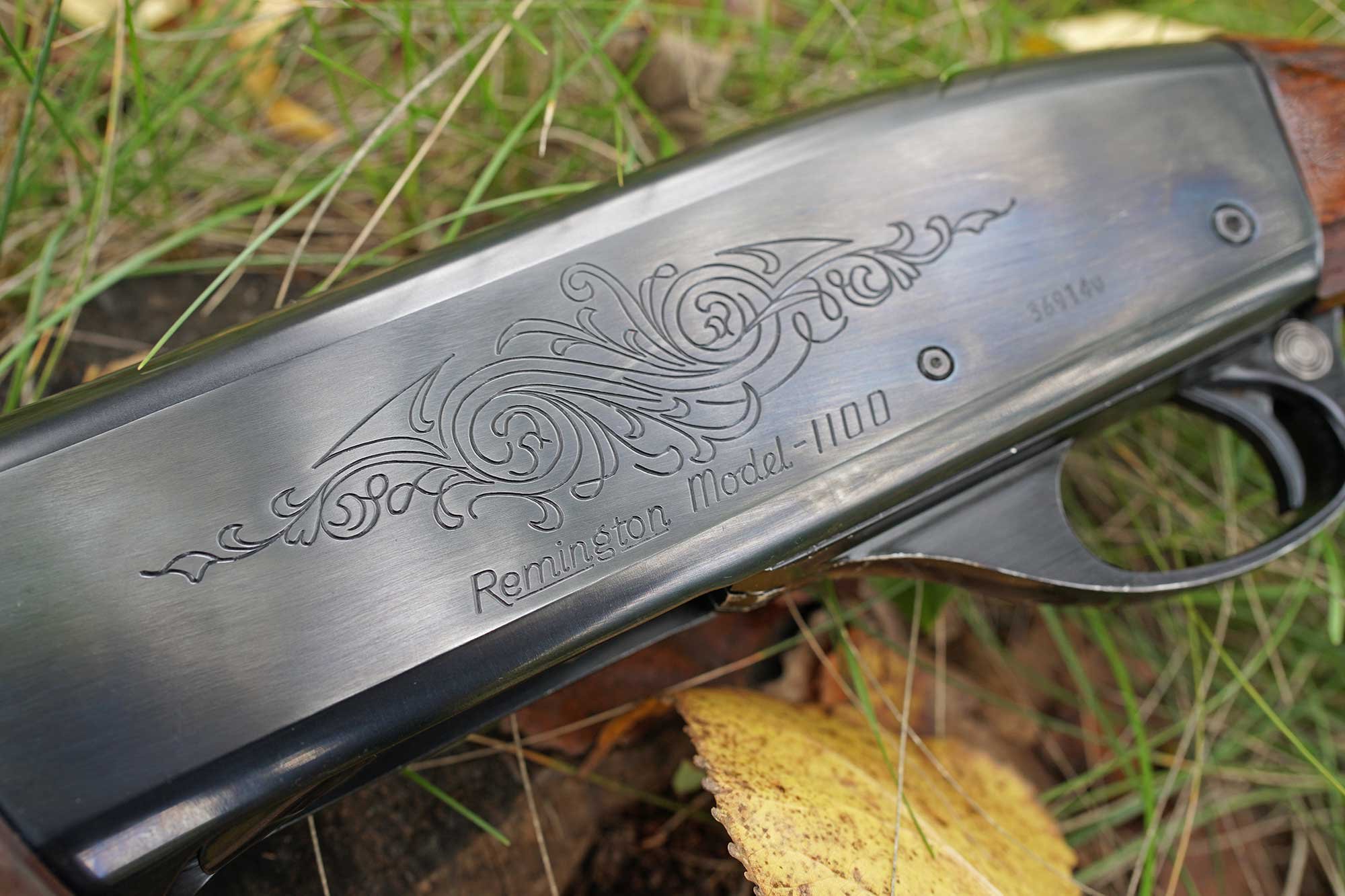
After setting the bar high, twice, first with the 1100, then the 11-87, Remington fumbled away its lead in the semiauto race. While other gas gun designs caught and passed the 11-87, and Benelli’s inertia guns became popular, Remington waited a long time to respond. When they did, it was with the horribly ill-conceived, bottom-ejecting 105 CTi. Later, even as Remington was falling into bankruptcy and failure, the 1100 had one last gasp of greatness as the 1100 Competition, a target gun with an adjustable, recoil-reducing “Bump Buster” stock that was a soft shooter even by 1100 standards.
But today the 1100 is more than an artifact of early-1960s design. It may have lost its technological edge, but it’s a great shooter, and still the softest-kicking semiauto I’ve ever shot. People are getting smart and snapping them up, and the prices keep rising on the older guns with the fleur-de-lis and shiny RKW stocks. You can find them on the used market ranging from about $600 up to over $2,000, depending on the version and condition.
There were 4,000,000 made and you should find one while you can. There won’t be any more made, and if there ever were, they wouldn’t be able to make them like they used to.