We may earn revenue from the products available on this page and participate in affiliate programs. Learn More ›
Hunting rifles come and go and sometimes even good ones don’t stay around. The decades following World War II saw a boom in hunters and a voracious appetite for new rifles and cartridges. This was the heyday of the Pre-64 Model 70 and the Winchester Magnums, but we no longer hear much about the many Mauser sporting rifles made by FN and imported from Belgium.
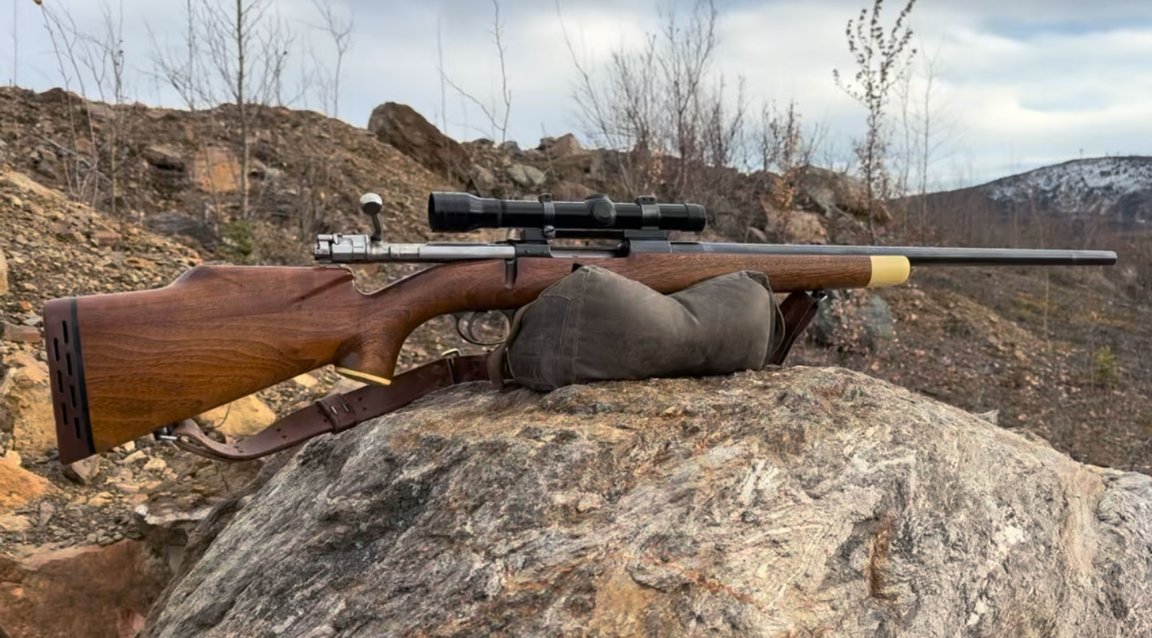
I recently got my mitts on one of these rifles, which belonged to my great grandfather, chambered in .270 Win. While this gun undoubtedly rode around in the rifle rack of Grandpa Curtis’s truck when I was a youngster, I’m looking at it anew. According to my dad and uncle, Grandpa’s brother was a gunsmith and built the rifle for him. This was after he’d raised a family in a log cabin in Colorado during the Depression and developed a taste for July mule deer. He used this rifle to shoot a lot of deer and elk.
A family heirloom like this gives me a perspective on what a quality hunting rifle looked like in the 1950s, and an idea of how well it’s held up over time. It’s also fun to compare it to the rifles we have today.
FN Mauser Specs
- Cartridge: .270 Win.
- Action: Mauser 98
- Stock: Custom, bedded
- Weight: 9 pounds, 10 ounces
- Trigger: Adjustable, 3 pounds, 7 ounces
- Barrel: 22 inches, chrome vanadium steel, 1:10 twist
- Year of Manufacture: 1951
Sporting Mausers vs. Sporterized Mausers
It’s common to hear or read about the many sporterized military rifles that post-war hunters adopted. These would typically be either 1903 Springfields or remnant military Mauser rifles. But these FN Mausers weren’t sporterized — they were manufactured for a couple decades as sporting-specific guns. Many, including this rifle, were imported by Firearms International Corp. and marked as such on the receivers.
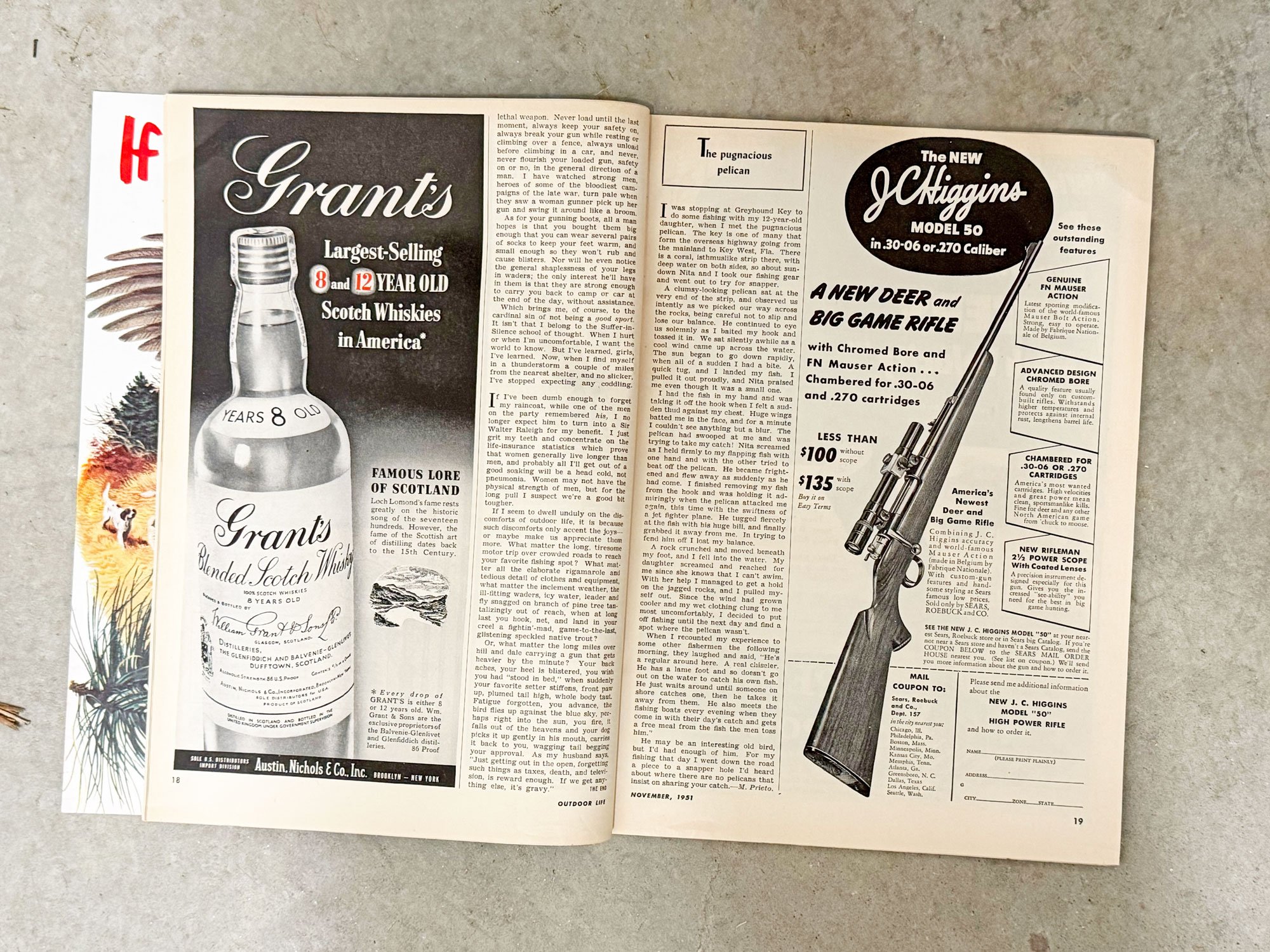
They were brought in and sold by various companies and in numerous formats. An ad in the November, 1951 Issue of Outdoor Life displays the JC Higgins Model 50 — which was simply an FN Mauser and sold at Sears, Roebuck. They had the chrome vanadium steel barrel and even came with a 2.5-power scope, for $135. Another ad, from the September, 1952 issue, for the Parker-Whelen Gun Catalog, lists .30/06 and .270 FN Mausers for $137.50 without a receiver-mounted rear sight. That would cost you another ten bucks. This could be a clue to the specific origin of this .270, as the front of the barrel has markings that appear to be where a front sight was once mounted, but there is no evidence of a barrel-mounted rear sight like you’ll see on Pre-64 Model 70 rifles and others like the Remington Model 721.
Ultimately, lots of these guns were imported in various forms and were sold by companies like Weatherby, Harrington & Richardson, and Colt. Complete FN rifles, according to what little I could find, had a specific pearl edge to the checkering on the grips, but it’s likely that not all of them did. Barrelled actions were also imported and built into custom hunting rifles.
Great Grandpa’s Mauser
This particular rifle appears to be either one that showed up as a barrelled action — possibly with a front sight. The barrel and receiver both bear the appropriate stampings for a matched pair that left the factory in Belgium. But the 22-inch barrel appears to have been cut down and re-crowned — as these were generally 24-inch barrels. It’s stamped with the year “1951” and bears matching 2837 serial numbers.
Stock, Fit, and Finish
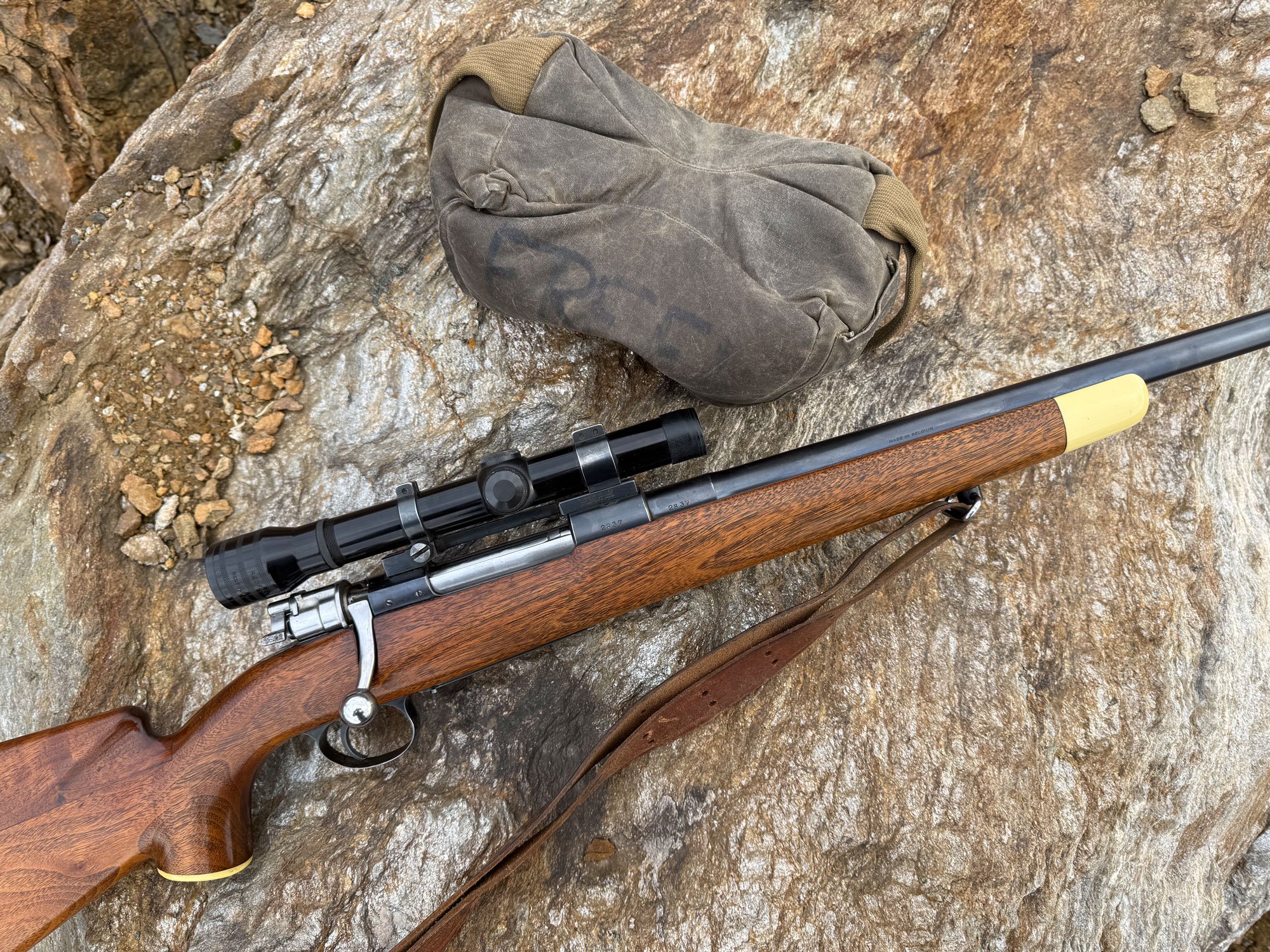
The stock has a handsome grain and good ergonomics. It lacks any checkering, but the fore-end has a nice belly and is capped with an ivory-colored plastic cap. The grip is capped with a similar plastic cap and its vertical orientation provides a wonderful balance of trigger reach and allows a crisp perpendicular squeeze. The raised comb is, in part, made from a separate block of wood. It’s pinned atop the buttstock and shaped to match, but the seams are still visible.
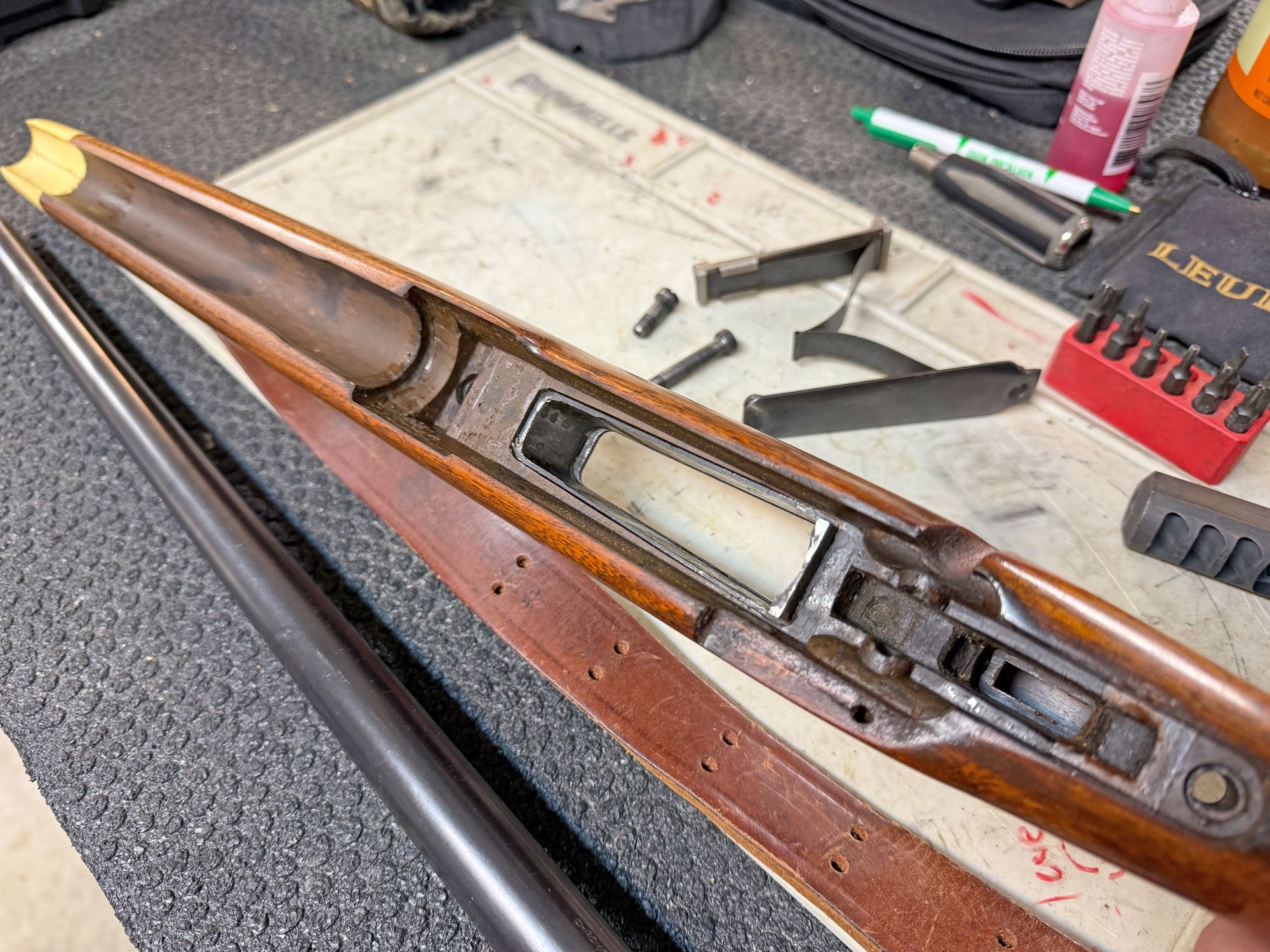
The floorplate isn’t hinged on this rifle. Rather, it’s detachable and retained by a spring-loaded button at the rear and retaining lip at the front. The fitting of the stock is very precise and, despite being bedded from the tang to the cap on the fore-end, very little bedding material is visible alongside the metal. Pillars around the action screws also help create an incompressible bridge between the bottom metal and action. The precise fit of metal and wood are things we’ll only see today on custom rifles and the highest-end production guns. Factory stocks — both wood and synthetic — are either CNC-milled or molded with baked-in tolerances rather than hand fit. The workmanship on my 1954 Model 70 is good, but not to the same level.
Barrel, Action, and Optic
The barrel is a pretty standard sporter taper, finishing at .635 inches. I assume it has been cut down from 24 inches to 22. It’s a heavier barrel than you’ll see on classics like the M70 featherweight and contributes to the rifle’s roughly 9.5-pound overall weight.
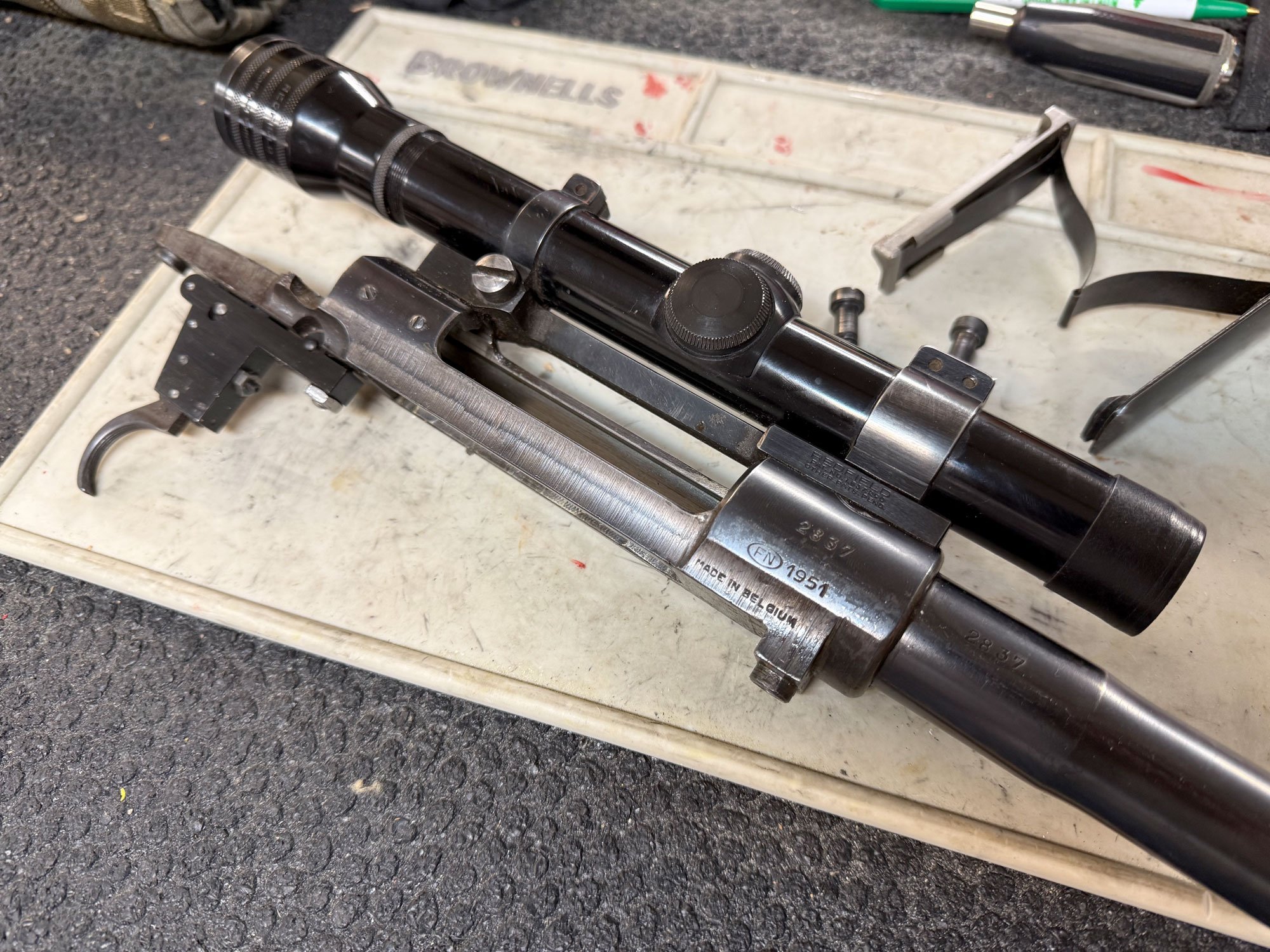
The action and barrel share all matching and appropriate proof marks, and remain in good shape, with the bolt sliding like glass down the slick raceways. The bottom of the bolt handle is flattened and knurled for a better grip, and is generally smoother to operate than my previously mentioned M70. The safety switch is textured on both sides. It appears to be pitting because of its irregularity, but no other parts show similar signs of corrosion.
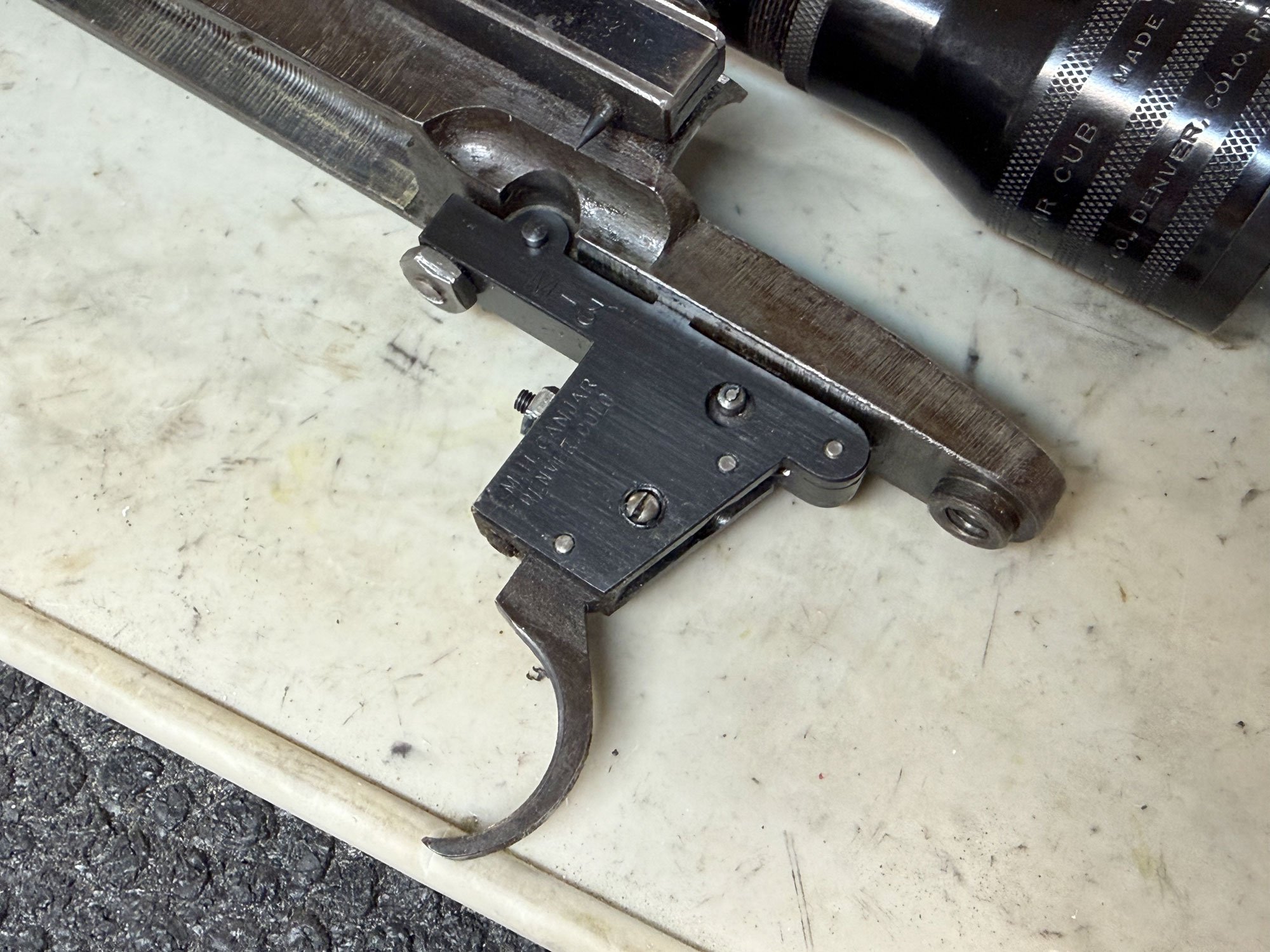
The receiver is topped with a one-piece Redfield mount and Bear Cub 2 ¾-power scope that uses a post-style reticle. In the early days of magnified optics, this gave a sight picture similar to that of a front post iron sight — to which most shooters would be accustomed. It was fitted with a Canjar trigger — a premium aftermarket upgrade, that breaks at 3 pounds, 7 ounces as set.
Accuracy
To test the rifle for accuracy, I fired four five-shot groups with several different types of contemporary .270 ammo. Where we would normally aggregate these five-shot groups into a single 20-shot group for each type of ammo, It was apparent that the system was limited, in part, by the optic, so I’m just sticking with the group size averages.
| Ammo | Bullet Weight | Velocity | Avg. 5-Shot Group Size |
| Federal Non-Typical | 150 grains | 2,663 fps | 1.43 inches |
| Hornady Precision Hunter | 145 grains | 2,821 fps | 1.58 inches |
| Remington Core Lokt | 130 grains | 2,884 fps | 2.28 inches |
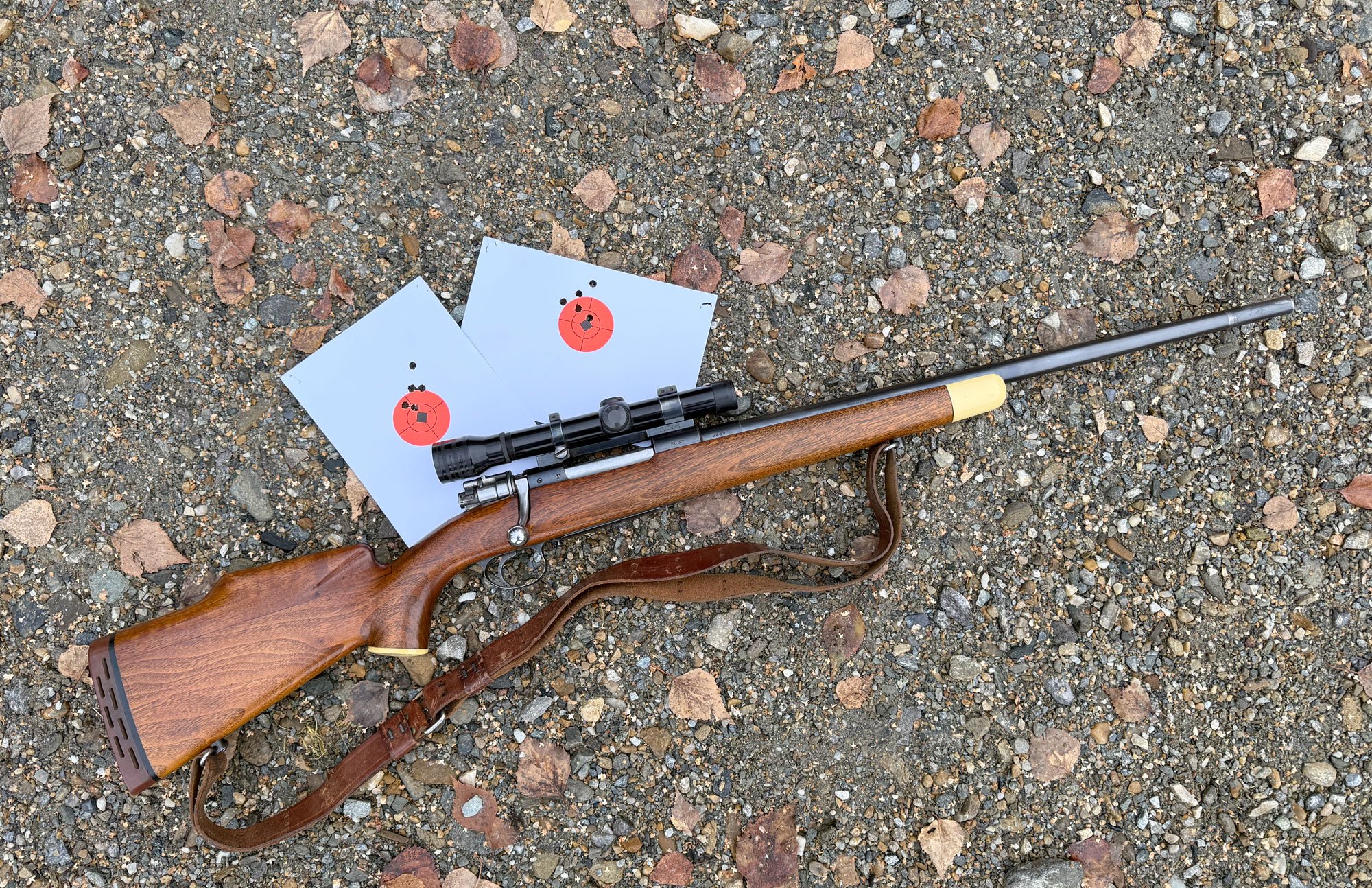
I believe the rifle is certainly capable of better accuracy than this but, considering the vintage scope, it proved itself perfectly capable of hitting a deer or elk cleanly out to 200 to 300 yards. Frankly, it’s not uncommon for us to test modern rifles with high-magnification scopes that average worse. A low-power optic itself doesn’t prevent a rifle from shooting accurately either, but this style of reticle requires the correct-sized target and a lot of concentration to maintain a consistent hold. The post covers about four inches of a 100-yard target. When the barrel warmed, mirage definitely affected sight picture too. I tried both a six-o’clock hold and a navy hold (dead center), and saw some vertical stringing with both methods.
Read Next: 10 Classic Hunting Rifles Every Hunter Should Own
Final Thoughts
For as much as we hear about classic rifles like the Savage 99 and Winchester Model 70, I’m surprised that Mausers like this haven’t carried a similar reputation. So many rifles, including the Winchester, were derived from the Mauser action itself. The rifles even commanded a higher price than Model 70s at the time. While precision manufacturing, materials, and coatings have gotten better, a rifle like this one could still hold its own today.