
Deer hunters are always looking for an edge. From the latest equipment like bows, rifles, and optics to upgraded camouflage, lightweight treestands, and everything else in between, we’re willing to spend a small fortune for a leg up.
Fortunately, one of the best tools a private-land deer hunter can have is likely already sitting in your garage.
If your mind jumps to a chainsaw, you’re in the right head space. Chainsaws can be used for timber stand improvement and habitat work in the offseason, and we highly recommend doing that when appropriate. But hunting season is upon us, so those habitat projects need to wait a few more months.
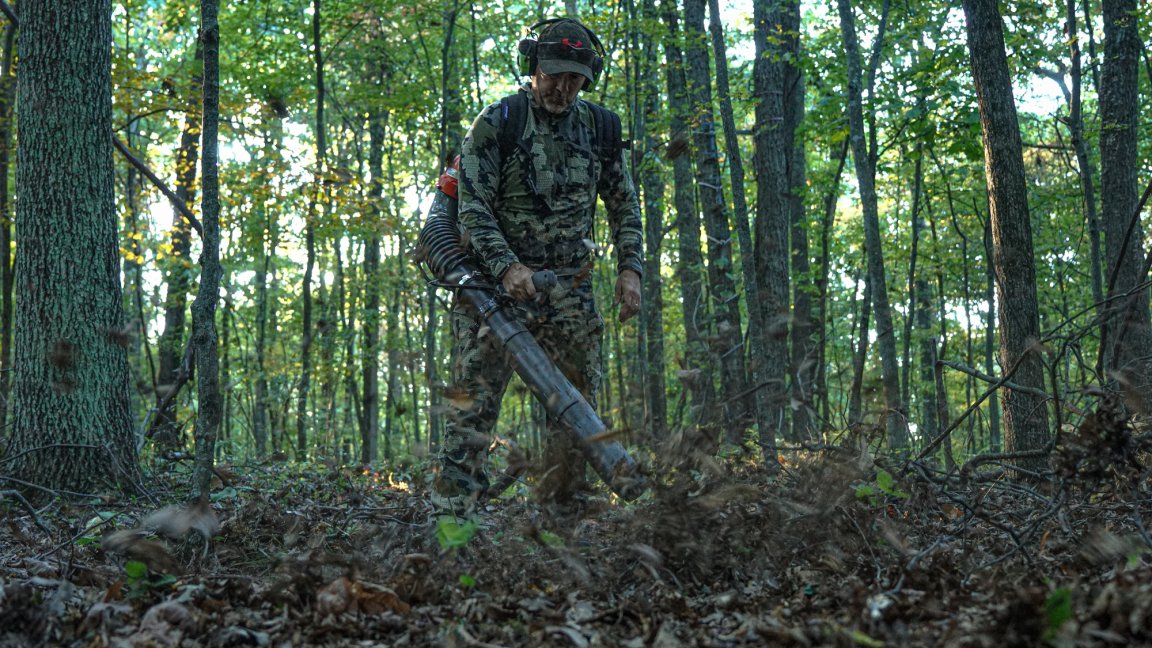
Instead of a chainsaw, I’m talking about a backpack blower. Access is king in the whitetail woods. Bad access causes you to bump deer on your way to the stand, leaves a trail of scent the deer will inevitably cross, and generally sets you up for a disappointing hunt. But a backpack blower, a bit of planning, and a free afternoon can usually resolve these issues.
Here’s how to put a backpack blower to use right now to improve your access to treestands and blinds.
Plan Your Best Access Route
In short, the best way to access your stand isn’t always the straightest path. You need to take into account the prevailing winds, location of the bedding areas, and how to give yourself the best odds of getting in and out of the stand undetected.
If bucks are bedding nearby, blowing them out of the county on the way into your stand is a surefire way to ensure you head home disappointed. Out of all of the criteria for a clean access route, using the wind to your advantage is by far the most important. No matter how hard you might try, you’ll never beat a deer’s nose.
Always access your stand with the wind blowing from the bedding area to you — never the other way around. If that requires you to make a big loop or zig-zag through the woods, then so be it. Your entire goal should be avoiding your scent getting anywhere near the bedding area. Through the use of onX Hunt or a similar app, you can easily map out a general path prior to getting the backpack blower fired up.
Clear Your Path to the Stand
Once you’ve got the plan in place and the backpack blower fired up, it’s time to get to work. Choose a time of day that will cause the least disturbance to the particular area you’re prepping, and plan to get in, take care of what you need to, and get out.
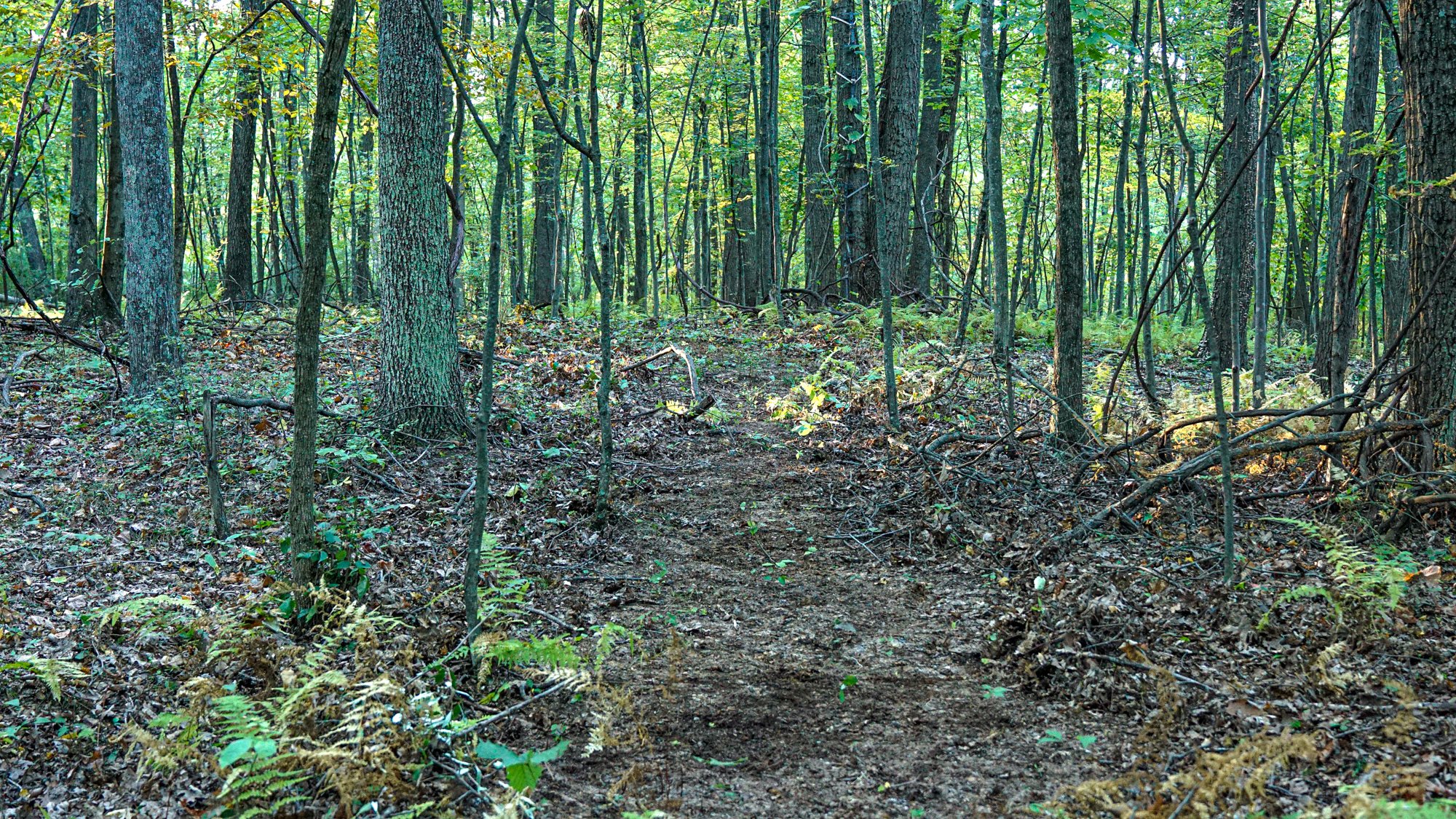
Typically, we start prepping the trail several hundred yards away from the stand to ensure a silent entry. Through a moderate sweeping motion, the leaf litter and duff will easily lift off of the forest floor. Your path doesn’t need to be wide enough for the pickup truck, but you do want to ensure you’re not having to side-step to avoid any leaves or sticks when walking to your stand in the dark.
The best way I’ve found to clear a path is with two people. One person should run the backpack blower while the other should remove larger limbs and sticks ahead of the blower. If you don’t remove the sticks and branches, you’ll end up defeating the purpose of clearing a path. From there, simply work through the woods, following your pre-planned path and clear all leaf litter and debris until you reach your stand site.
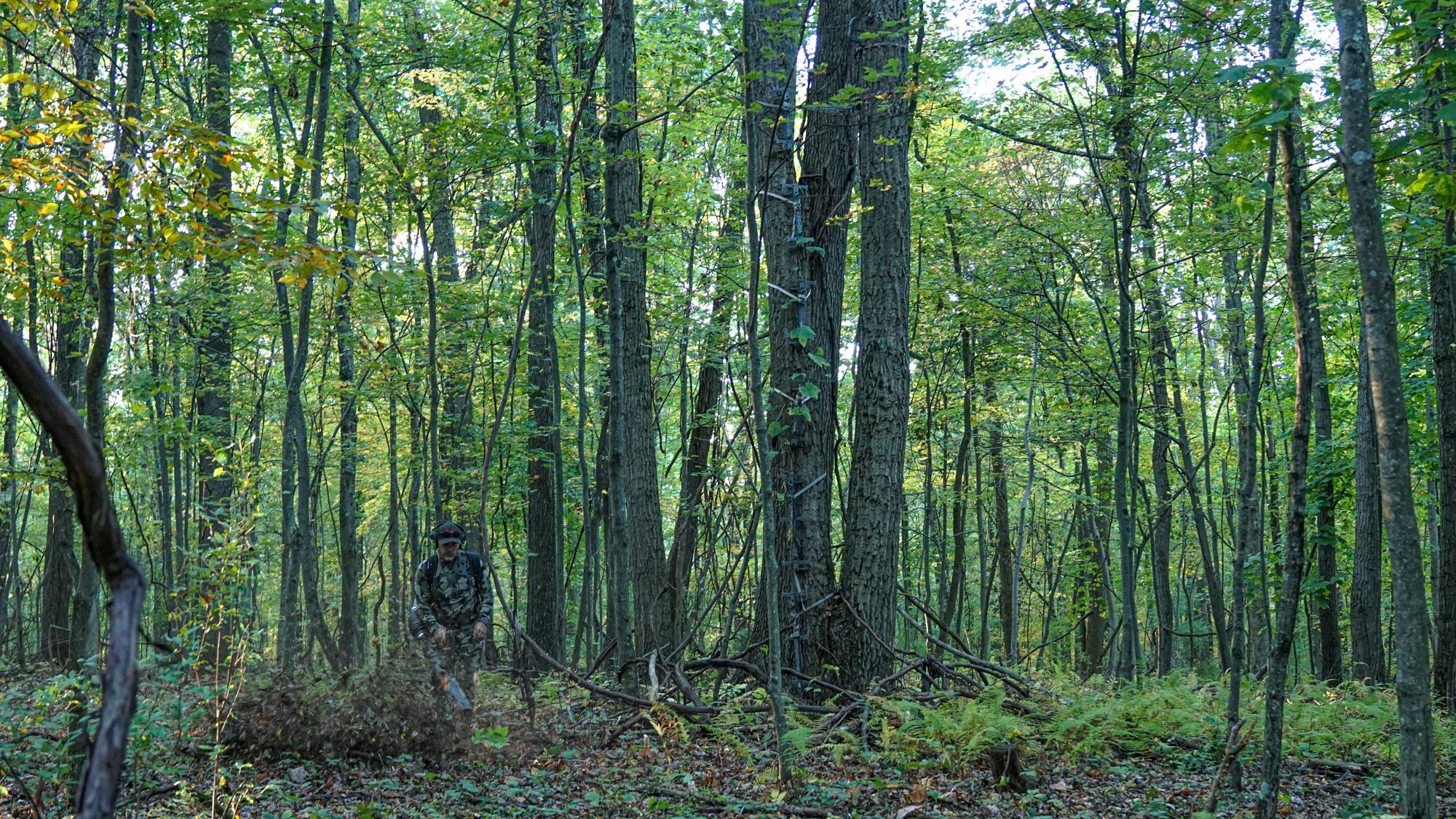
Around the base of the tree, clear a large area to ensure any gear you set down while prepping to climb has a clear landing area. It’d be a shame to put in all of this work just to make a ruckus once you actually arrive at your destination.
Why I Truly Believe This Works
Blowing a path isn’t a necessity, and might seem like overkill to some hunters, but a well blown access path makes a world of difference.
First, you’ll always know where your stand is. No more wandering off course and finding yourself tromping through the woods just before first light wondering where on earth your stand is.
Second, the lack of ground noise allows you to get to your stand quietly. If you mind the wind direction, this can mean you get their undetected. I’ve snuck to the base of my tree with deer bedded a mere 50 yards away that never noticed me. With the wind in your favor, a lack of ground noise, and slow, deliberate movements, you can sneak to your tree in a way that is ninja-like.
Finally, you leave a negligible amount of ground scent. Deer will inevitably cross your path throughout a morning or evening hunt. Whether you tramped through some leaves or short grass, you’re leaving scent behind from your boots and pants. But when all you’re walking on is a cleared dirt path, you’re drastically decreasing the amount of scent left behind.

If you don’t have a backpack blower but want to get in the clean-access game, I highly recommend the Husqvarna 570BTS model. It’s powerful, efficient, and not all that noisy.
Final Thoughts on Using a Blower for Access
Before you knock this tactic, break out the backpack blower and give it a try. The one-time disturbance you make clearing a path will pay dividends on future hunts. Once you’re able to sneak through the woods, avoid blowing deer out by controlling your scent and sound, and see the immediate benefits, I’m confident you’ll jump on the bandwagon.