
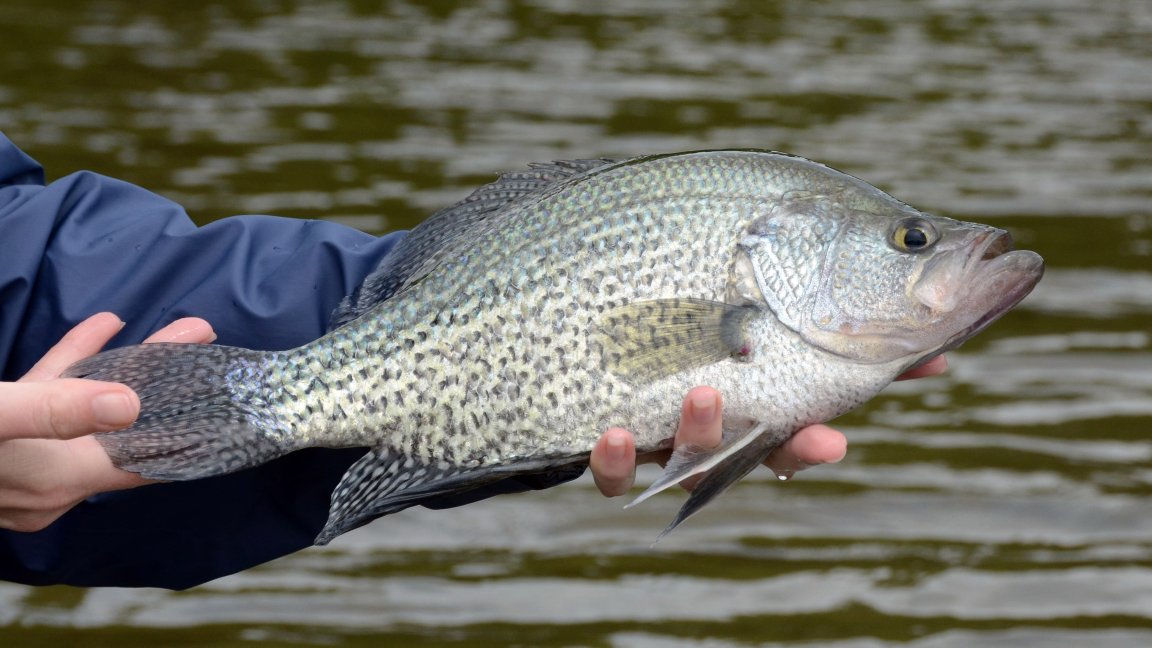
These old-school tips come from the story, “Get ‘Em Outta Bed,” which appeared in the May 1995 issue of Outdoor Life.
In my part of the country, the crappie spawn is an event anticipated with barely controlled expectation. The springtime mating ritual of the feisty panfish generates a bonanza like few others, with slab-laden stringers and the sweet scent of pan-fried crappie fillets permeating the occasion.
Its occurrence is predictable, but the crappie spawn by no means guarantees coolers brimming with fish. Cold fronts can shut down the action without warning. And hammering a prime spawning flat unremittingly will just as surely scatter the fish to find their springtime bliss elsewhere.
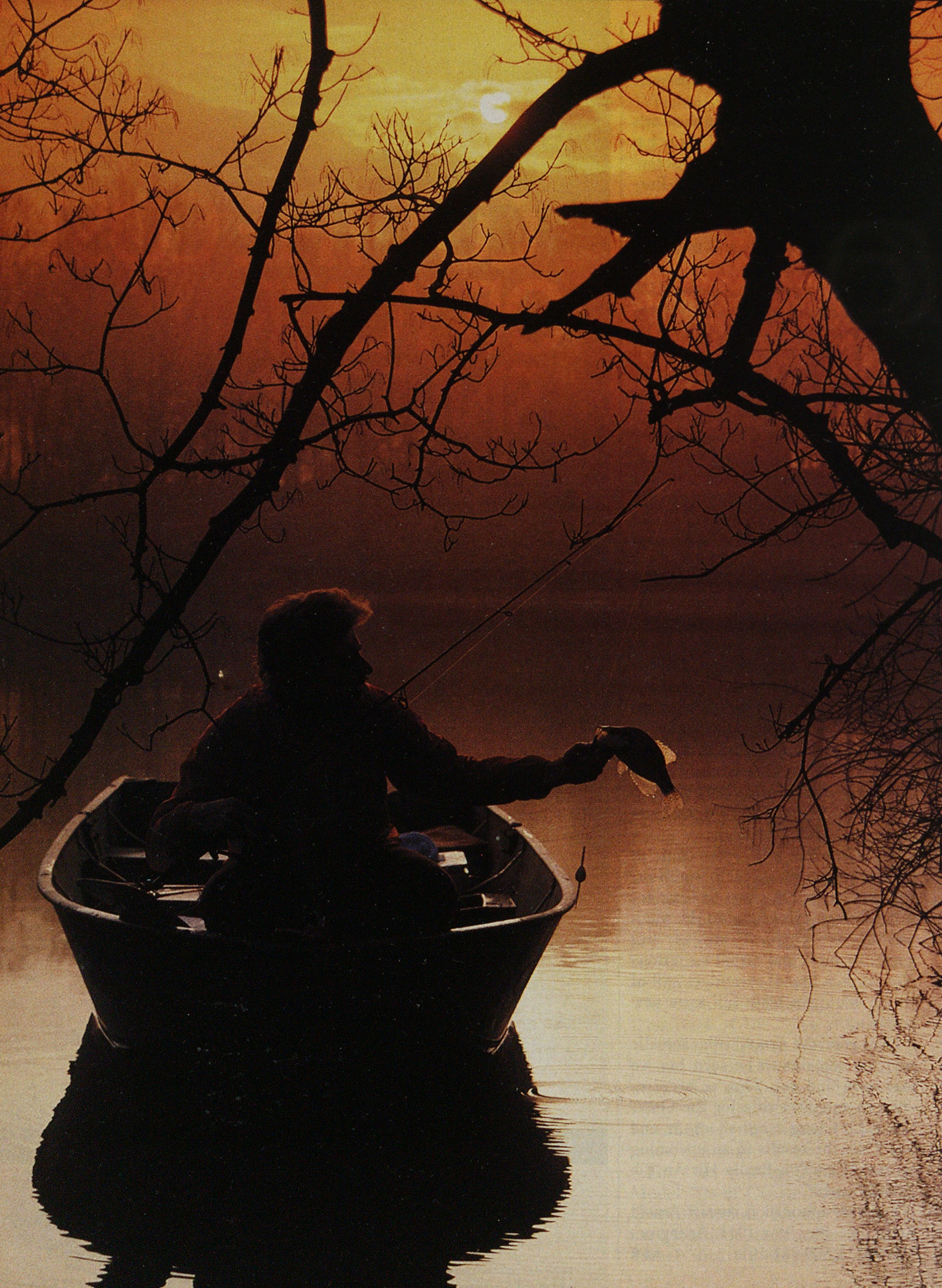
There was a time in leaner years when crappie fishing’s sporting qualities were almost lost on me, when a rough day on the water meant more than a bruised ego. Subsistence fishing was essentially what I was caught up in during college, and the spring spawn was supposed to be my bountiful harvest. Quite often it was not.
Related: The Best Crappie Rods, Tested and Reviewed
No ruler-wielding schoolmarm can impart the urgency of learning the way hunger can. And so, necessity whipping me onward, I sought out the subtle secret of fishing the crappie spawn as fast as I could, most of my knowledge coming from my college friend John Holley, a partner whose expertise on the subject was unquestioned. His methods were, and still are, crude — he hacks down his own cane poles and employs cable-strong line. But he gets results like no man I’ve ever seen for one simple reason — he knows where to go.
Heavy Cover
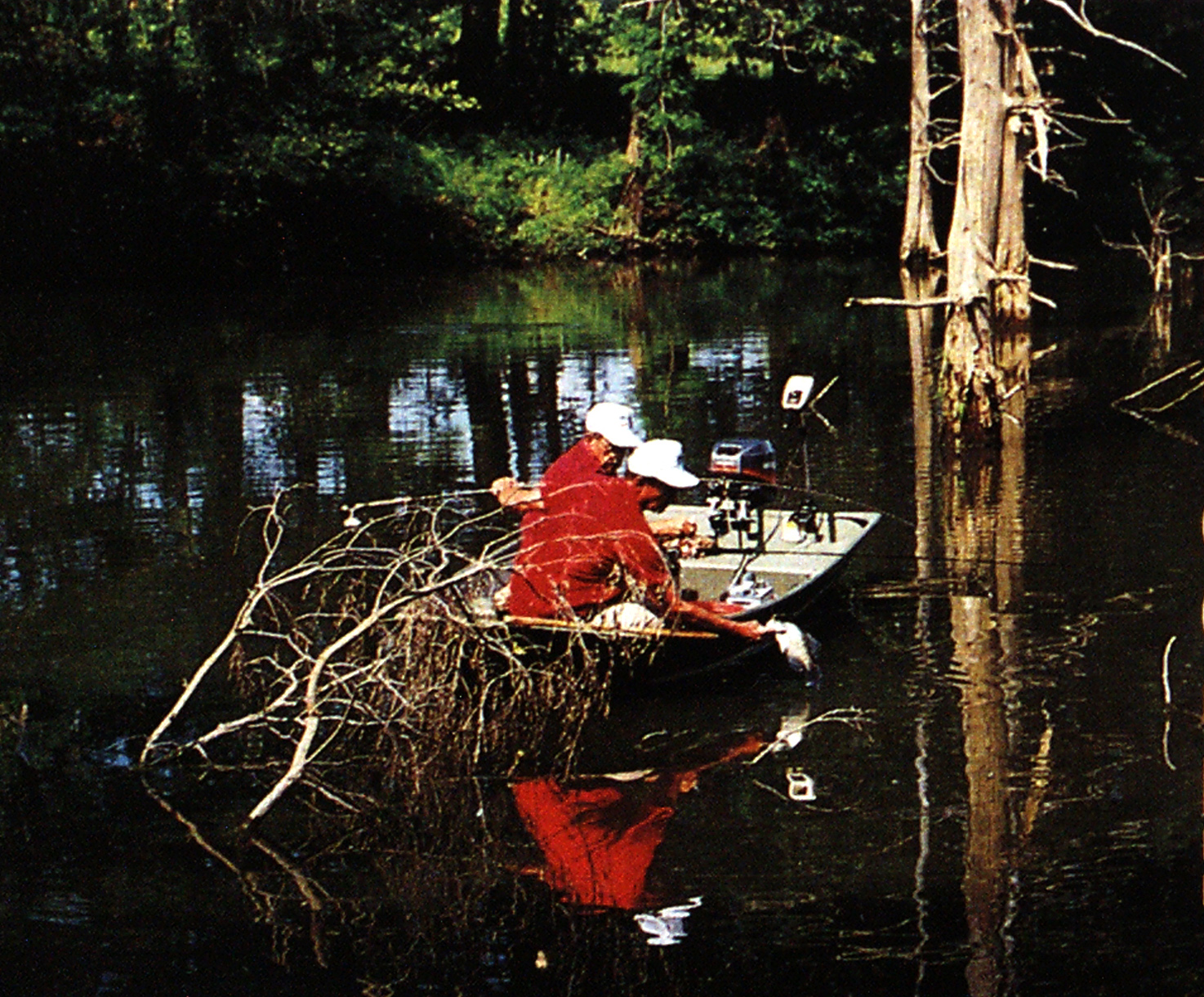
spawning urges that send them to shoreline beds, egg-laden females stage amid thick offshore cover. Photo by Soc Clay / OL
Holley’s favorite technique for fishing spawning crappies is simple. He drop-fishes minnows in the thickest, most obscure cover he can find.
“Most any water has some underwater cover most anglers don’t see,” he says. “While those guys hammer the topwater stuff, I hit the invisible cover they’re overlooking.”
I remember one of my first outings with Holley, watching dumbfounded as one after another he pulled two-pound slabs out of cover so thick I thought we’d have to use a chain saw to haul out the fish. Drop-fishing, I’ve since learned, is one of the most effective techniques during the spawn, but it’s one that demands plenty of patience. The best success comes using it in jungle-thick cover, worming a minnow down between uncooperative branches. If you aren’t getting hung up, you aren’t in dense enough cover.
Holley uses line in the 25-pound range, filament that enables him to muscle fish out of the thick stuff and bend his hooks free of hangups without losing the terminal tackle. A bit extreme, perhaps. But then so is the cover I’ve seen Holley fish. I’ve found that line down to eight-pound can also bend light hooks free, and are much more re-liable in clear water when crappies grow wary.
Brush piles near the entrances to shallow bays and coves are other thick cover favorites of Holley’s.
“They don’t get pounded during the spawn like shorelines do,” he says, “and they produce fish that are typically larger than those on the beds.”
This, owing to the fact that egg-laden females stage in thick cover before and during the spawn.
In murky water, Holley anchors right over the cover and jigs down into it with either minnows or spoons weighing up to ¼ ounce-brash tactics, to be sure, but they work in dark water conditions where light lines, lures and precise presentations aren’t required. When the water’s clear, he switches to six-pound line, jigs weighing 1/24-ounce or less, and he moves off the cover and casts to it.
Deep Water
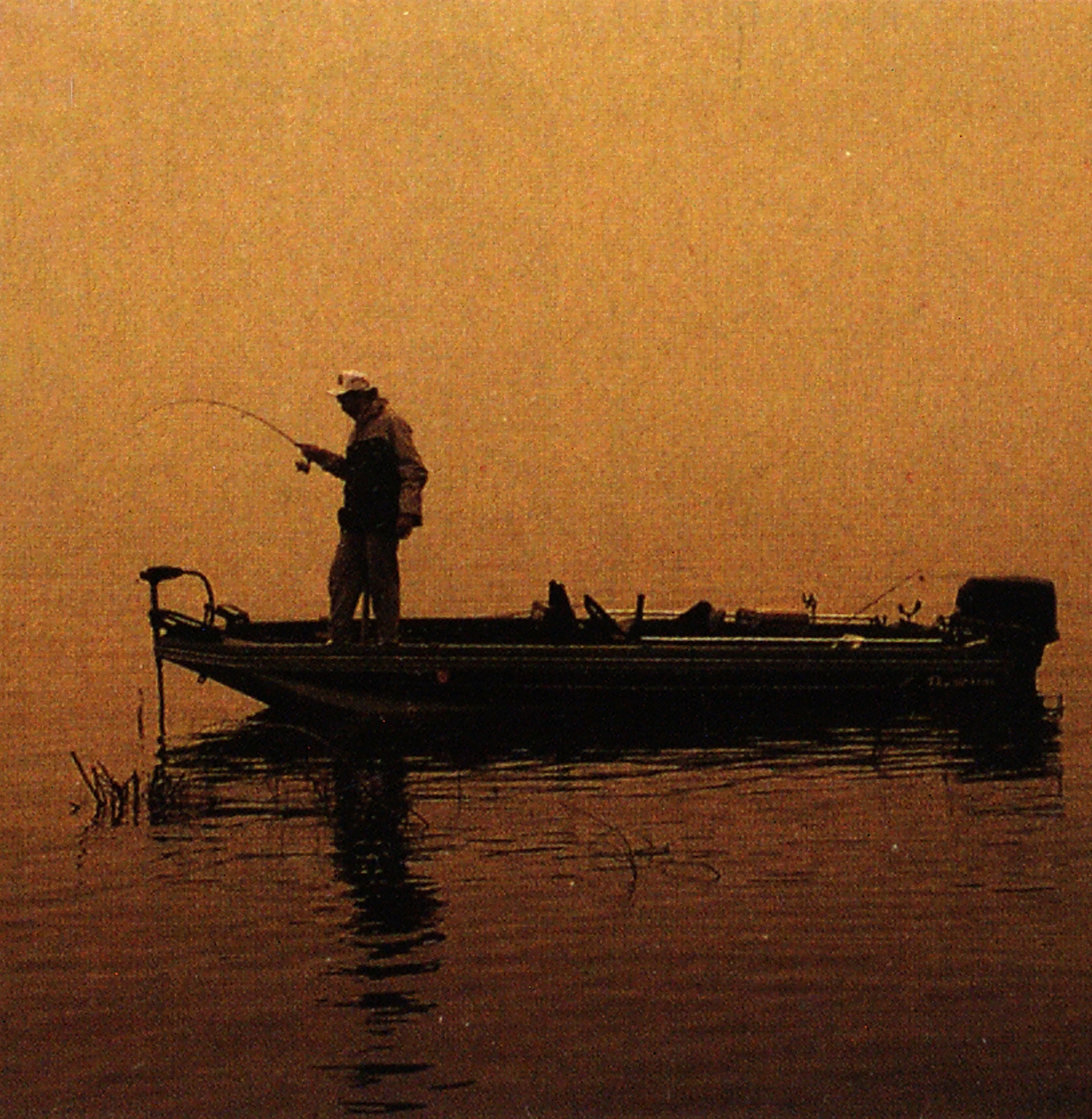
Not all female crappies go to the bank at the same time during the spawn, nor do they go there just once. Instead, they lay their eggs in a nest for an hour or so then return to deeper water to await their next spawning urge, which moves them to lay eggs up to four times each spring.
Between forays into the shallows females rest in the cover of small ditches and cuts near shallow-water breaklines and river channels in six to 10 feet of water. Use a depth finder to locate ledges, drop-offs, underwater stumps and other structural breaks along these underwater depressions — they’re favorite staging areas for female crappies before and after they head to the banks.
Crappies also head to these deeper waters when a cold front hits during the spawn. The dropping water temperatures signals them to get off the shallows. Typically, they will then school up along the first bottom break out from the shallows. But if the cold front is especially severe, they may head farther out into the main creek channels, the same places you’d expect to find them later in the year.
Use marabou jigs, jigs tipped with one- to two-inch minnows and spoons for combing these deeper areas.
Shallow Water
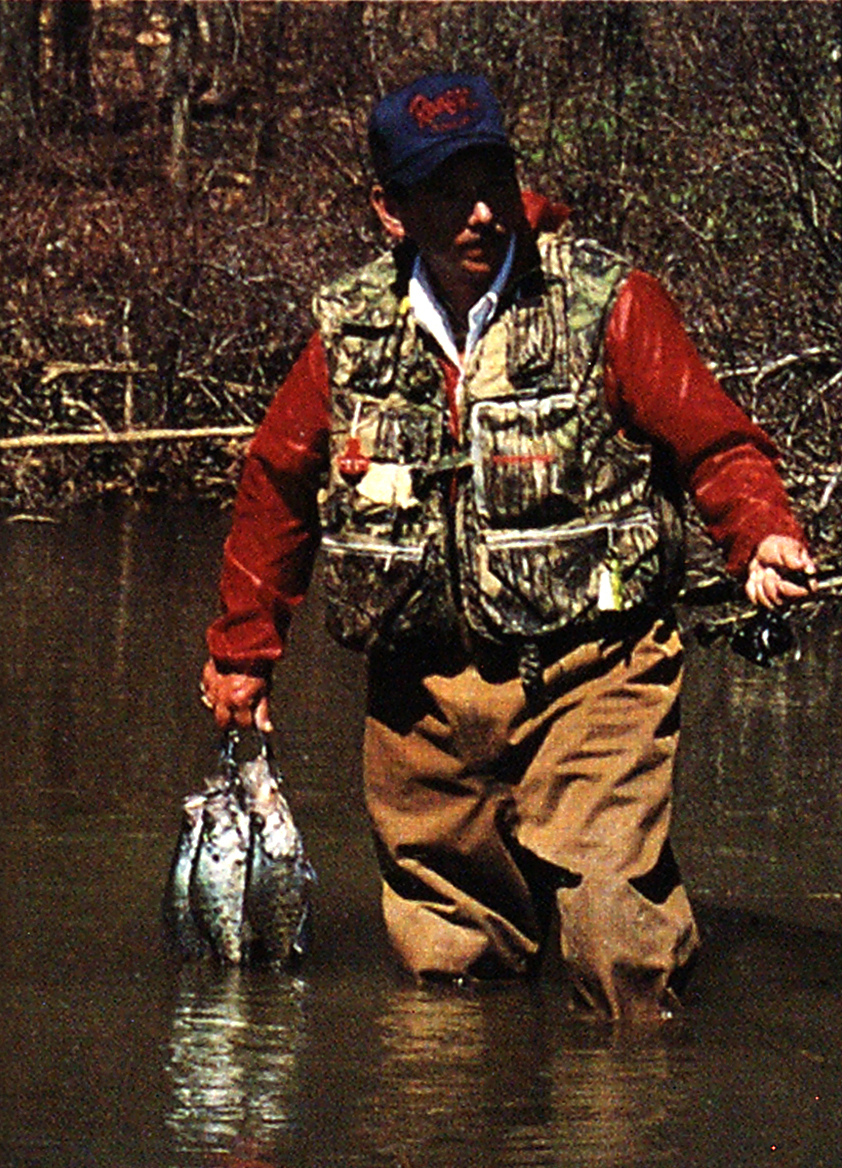
Even when the fish are holding on their beds in the shallows, it’s not just a matter of plucking them from the water — my hungry college days can attest to that fact. Crappie behavior is predictable once you know what to look for:
When the water temperature hits the low- to mid-60s, crappies head to sand or gravel bottoms in two to 10 feet of water to lay their eggs. This crucial part of their life cycle occurs as early as January in the South, and as late as July in the North.
Minnows are the preferred bait here. Present them under a bobber or float, putting them at crappie eye level. Use line in the two- to four-pound class to avoid spooking extremely wary fish and to permit the minnows swimming freedom. And don’t be afraid of fishing “too” shallow, either — crappies sometimes spawn in water only a few inches deep, their backs sticking out of the water. This is especially true early in the spawn, when the shallowest waters heat up first, and crappies arrive looking for baitfish schooled up right to shore. Most fish taken off beds will be either males guarding the eggs and young fry or other “bachelors” roaming the shoreline in search of random eggs to fertilize.
In addition to minnows, try using insect larvae, subsurface flies, small spinners, jigs and tiny crankbaits pulled directly over the beds.
Streams
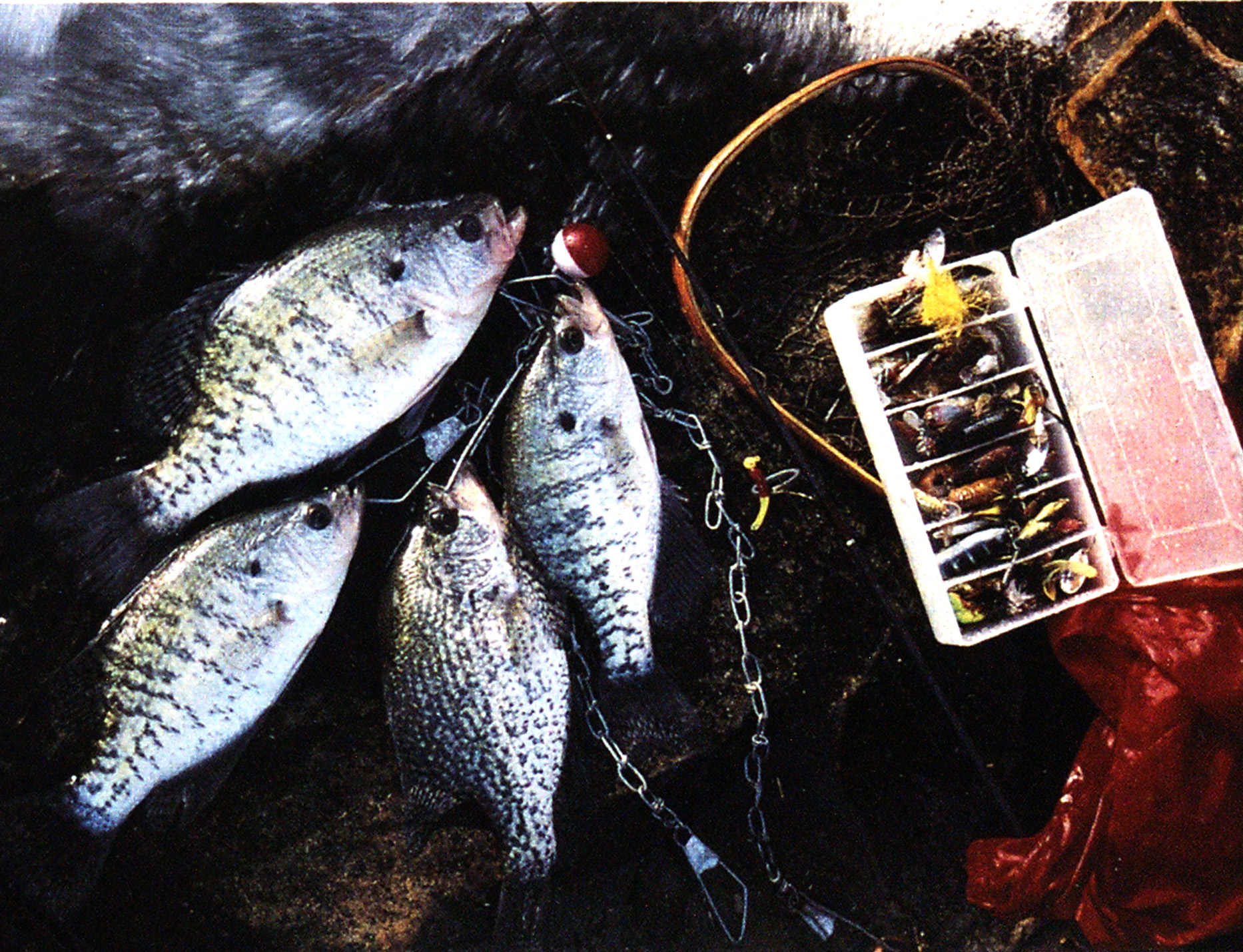
Shallow sloughs and slow-moving streams are types of water most crappie fishermen ignore until after the spawn, but in some lakes they warm up faster than typical spawning grounds, and crappies gravitate there first.
In creeks, concentrate on slack water areas. Eddies downstream from peninsulas, brush tops, sunken trees, deep holes, and other current breaks are ideal. Use jigs in the 1/32-ounce range rigged under small floats, allowing them to wash around obstructions and through the slack water.
Read Next: The Best Baits for Catching Bluegills (and Other Panfish)
Also target the mid-water region at the mouths of creeks. Troll them using 1/24- and 1/32-ounce jigs on two- and four-pound test, the lighter line being appropriate because there arc rarely cover snags to worry about.