
We may earn revenue from the products available on this page and participate in affiliate programs. Learn More ›
Broadheads are like religion. You need faith in the one you choose and when it’s time to find out if you chose the right one, it’s too late to change sides. Choosing a broadhead is also a matter of personal preference. What works for me, might not work for you.
To separate bowhunting lore from fact, I spent a week shooting nine popular mechanical broadheads while testing them for durability, accuracy, wound channel size, and out of the box sharpness. At the end of testing, I found that nearly all of them are worth considering. Here’s a nuanced look at these heads and how they performed in my tests.
- Best Overall: SEVR Magneto Ti 1.75
- Best Value: Rage Black Series Cut on Contact
- Best for Large Wound Channels: G5 MegaMeat
- Best Two Blade: Speed 100 Titanium
- NAP Killzone RX 2.0
- G5 T2
- Swhacker Levi Morgan #261
- Bowmar Beast 2.0 Titanium

The Best Mechanical Broadheads at a Glance
| Broadhead | Price for 3 | Entrance Wound | Blade Width | Sharpness | Accuracy | Durability Score | Noise |
| SEVR Magneto | $66 | 1.32″ | 1.75″ | 257 | 2.58″ | 4 | 5 |
| Rage Black | $35 | 1.6″ | 2″ | 151 | 2.65″ | 3 | 1 |
| G5 MegaMeat | $70 | 2.85″ | 2″ | 193 | 2.7″ | 3 | 3 |
| Speed 100 Titanium | $99 | 1.23″ | 2″ | 122 | 2.7″ | 4 | 4 |
| NAP Killzone RX 2.0 | $58 | 1.3″ | 2″ | 314 | 2.46″ | 4 | 3 |
| G5 T2 | $70 | 1.36″ | 2″ | 151 | 2.56″ | 4 | 3 |
| Swhacker Levi Morgan | $50 | 1″ | 2″ | 199 | 2.56″ | 4 | 5 |
| Bowmar Beast 2.0 Titanium | $85 | 1.16″ | 2″ | 108 | 2.9″ | 5 | 4 |
| Grim Reaper Old Glory | $30 | 1.2″ | 1.2″ | 228 | 2.73″ | 1 | 3 |
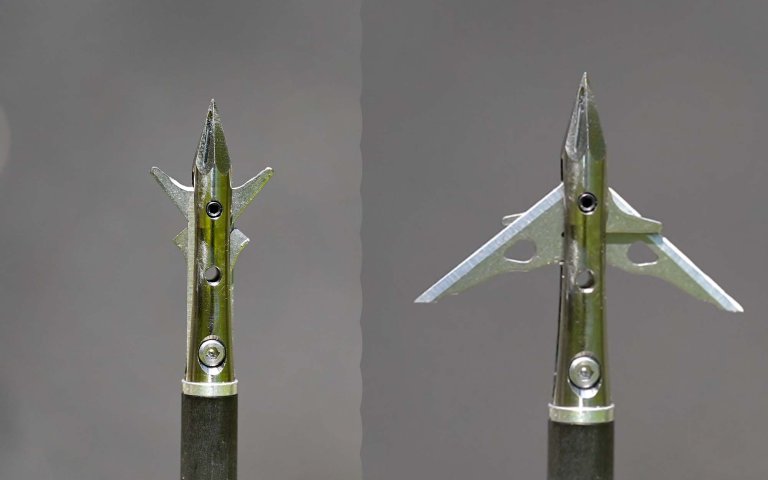
Best Overall: SEVR Magneto Ti 1.75
Pros
- Quiet in flight
- Easy to practice with
- Good entrance wound size
- Accurate at long ranges
Cons
- Not very sharp out of the box
Key Features
- Weight: 100 or 125 grain
- Blade Width: 1.75 inches
- Grade-5 titanium ferrule
- Magnetic blade retention
- Blades swivel out of the way of bone
- Also available as a hybrid broadhead
This broadhead test was a close race, and I’d hunt with nearly all of the broadheads I evaluated. There’s a good reason to use each of them, depending on your needs and setup. But if I were going to recommend one head universally, it would be the SEVR Magneto, for its overall performance and features.
Even though every broadhead I tested grouped with field points out to 50 yards with my setup, it’s still a good idea to confirm the same is true for yours. Confidence that your broadhead will hit where you’re aiming matters just as much as confidence that it will open and cut. The SEVR broadheads are easy to practice with, and you can shoot them as much as you want without dulling the blades. All you have to do is install a blade-locking screw, shoot until you’re happy, and remove the screw before you go hunting.
I’ve hunted with various SEVR broadheads, and I have a lot of faith in them. They’ve always performed for me. But one of the newest improvements is the removal of the O-ring that used to hold the blades closed, in favor of magnets. It’s a cleaner system, and you don’t have to worry about a dry-rotted O-ring ruining your day.
In the gel test, blades that didn’t securely lock open produced inconsistent wound channels. SEVR’s blades lock open securely but also swivel out of the way of bone. In testing, the SEVR cut a good wound channel and, for what it’s worth, penetrated the gel better than the other heads.
Most of the time, you’ll be able to reuse a SEVR after it passes through a deer, but the blades will need to be replaced. A pack of replacement blades runs about $18.
The main con of the SEVR Magneto is that, out of the box, the blades are sharp enough to cut but not as sharp as I’d like. I’d recommend giving them a light touch-up with a strop or a ceramic rod until they cut thin paper with ease.
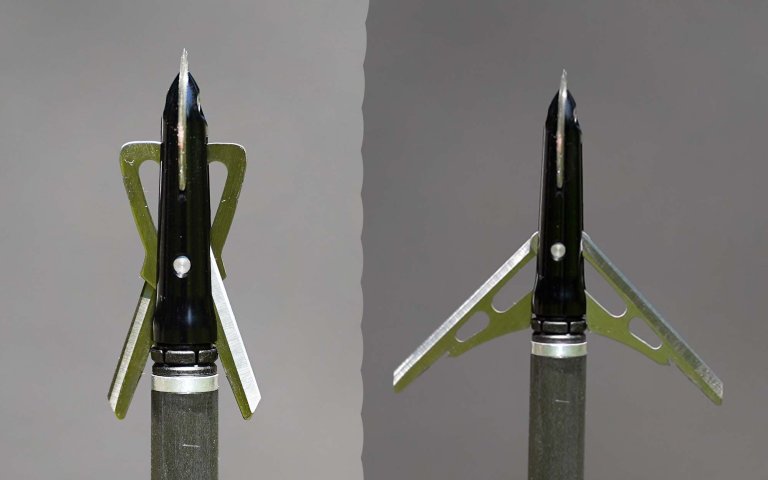
Best Value: Rage Black Series Cut on Contact
Pros
- Large entry wound
- Good durability
- Very sharp out of the package
Cons
- Blades rattle in the quiver
- Noisy in flight
Key Features
- 100 grains
- Aircraft Grade Aluminum Ferrule
- 420 SS Blades
- Blade Width: 2-inches
- Blade Thickness: .035 inch
- Three Crossbow and three vertical bow Shock Collars included
- Price: $35
The Rage Black is very sharp, it cut a giant entrance hole, and held up through durability testing. Best of all, a three-pack costs only $35.
But the Rage Black did something odd in the gel. Its exit hole was lower than the other broadheads’, and the shaft kicked up after impact. After noticing this on the first shot, I shot the head again into the gel and got the same result. I was shooting at a slight downward angle, but the Rage exited an inch lower than the other heads. The Rage Black is also fairly loud in flight and the blades rattle together when they’re in your quiver. To fix the rattle, apply a thick bowstring wax to the blades to fill in the gaps and reduce play. Despite those cons, the Rage Black is the best budget-friendly head I tested.
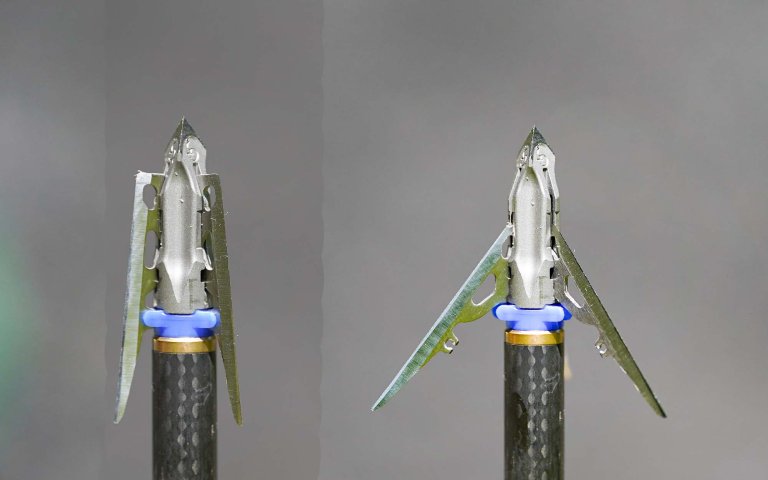
Best for Large Wound Channels: G5 MegaMeat
Pros
- Largest entry wound in the test
- Sharp out of the package
- Shock collar securely locks blades in place
Cons
- Some blade rattle and noise in flight
Key Features
- Weight: 100 or 125 grain
- Diameter: 2 inches
- Includes a practice tip and extra collars
- Price: $70
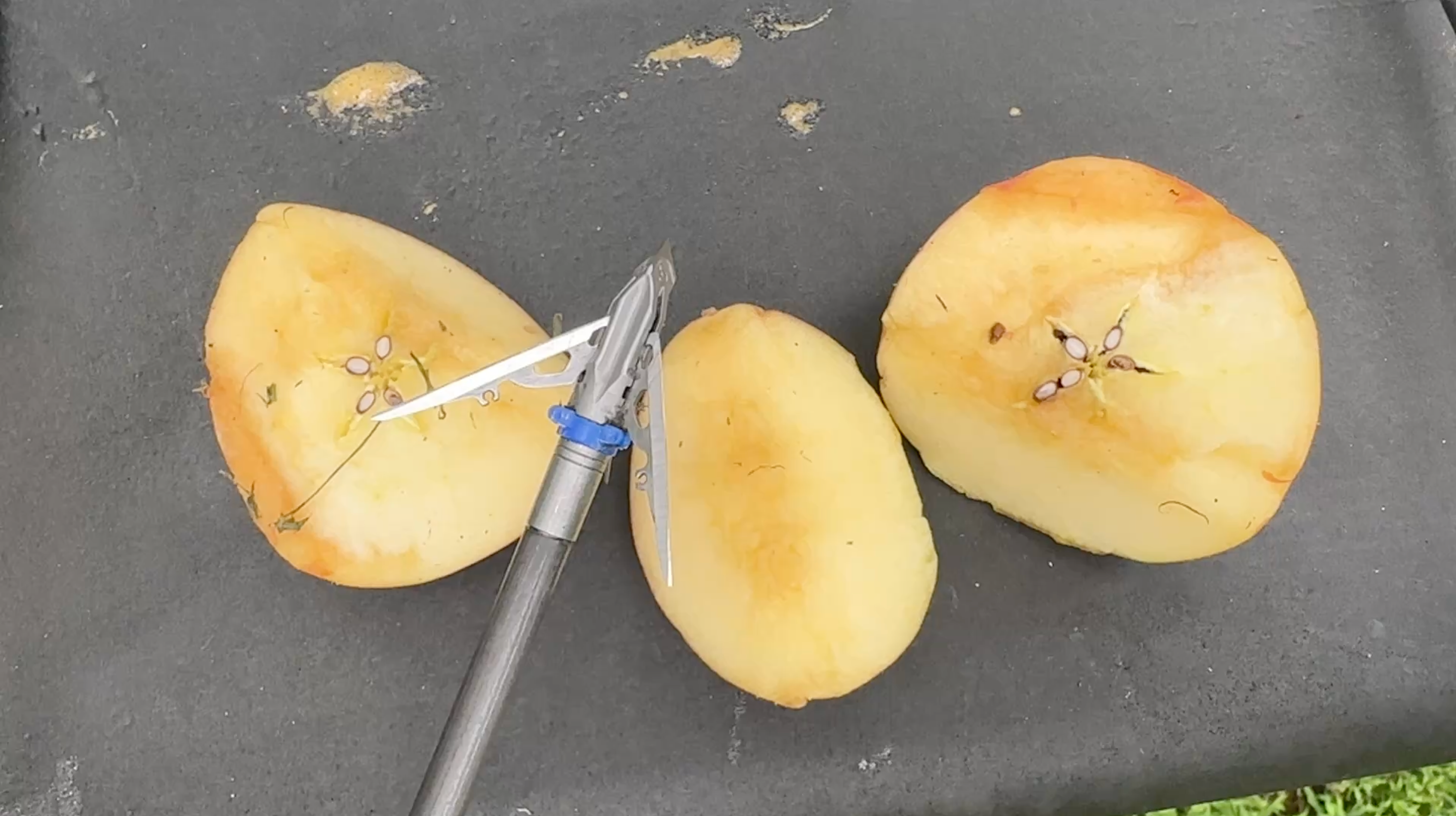
The G5 MegaMeat is a nasty broadhead. It cuts a huge wound channel with large entrance and exit wounds. I think it’s a fantastic choice for hunters who are shooting with plenty of draw weight and want a larger wound channel. In the course of testing, I shot one into an apple just to see what it would do. The broadhead cut the apple into three sections and I could only imagine how devastating a similar wound channel on a deer would be. However, if you’re worried about getting pass-throughs with mechanicals shot through your setup, I’d suggest looking at other options.
One of the main cons of the MegaMeat is that this broadhead makes noise in flight and will rattle in your quiver. The blades also don’t lock open so they can close up after they’ve been deployed. In the gel test, all three blades opened on impact, but one of the blades closed as it was passing through the gel. It’s possible that the gel played a role in compressing the blade closed, but it’s worth noting if you’re considering the MegaMeat or any broadhead with blades that don’t lock open.
Best Two-Blade: Speed Titanium 100
Pros
- Very sharp out of the box
- Well made
- No collars or o-rings
Cons
- Some blade rattle
Key Features
- Weight: 100 grain
- Blade Thickness: .039 inch
- Blade Width: 2 inches
- Grade 5 titanium ferrule
- Price: $100

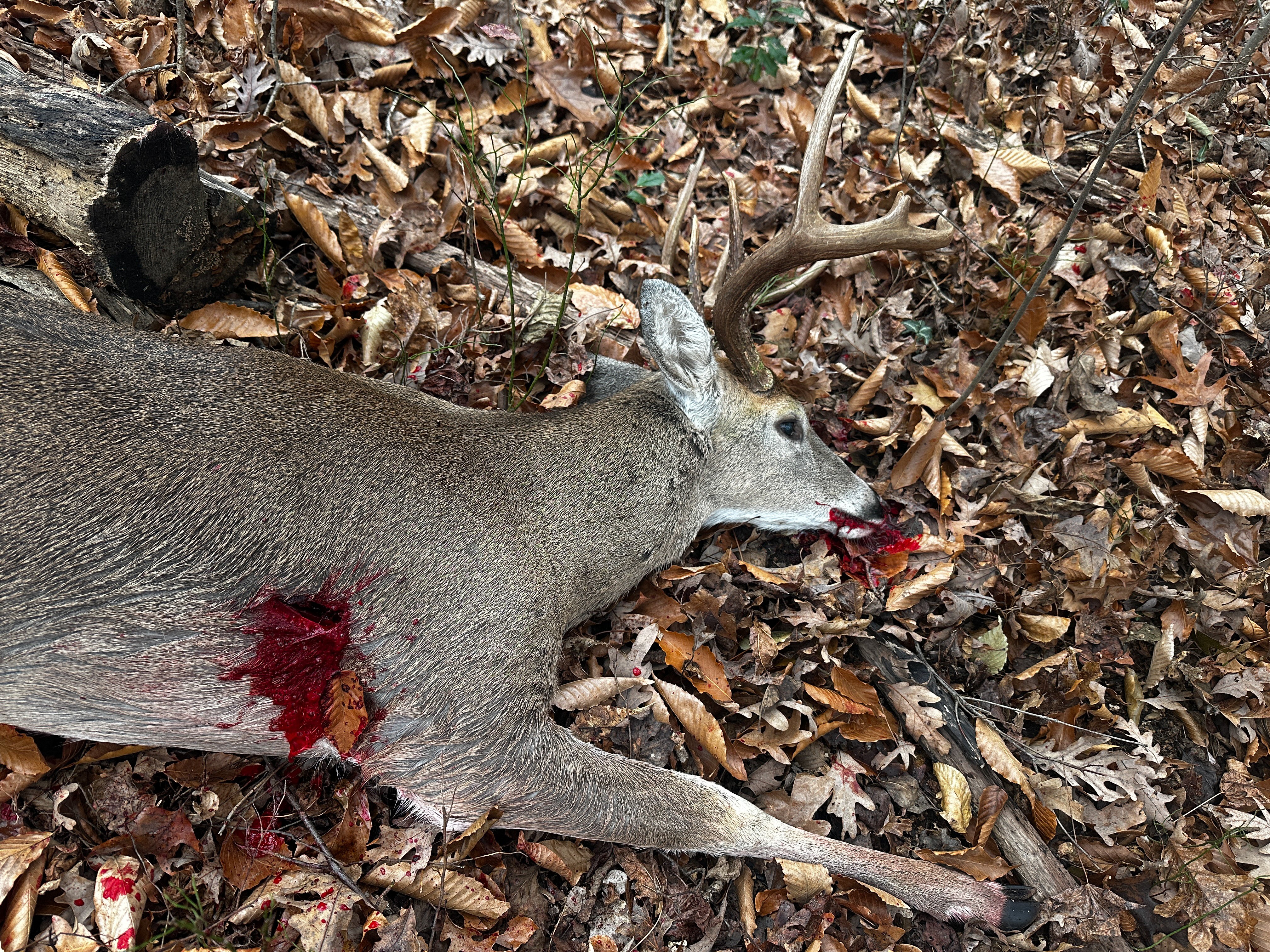
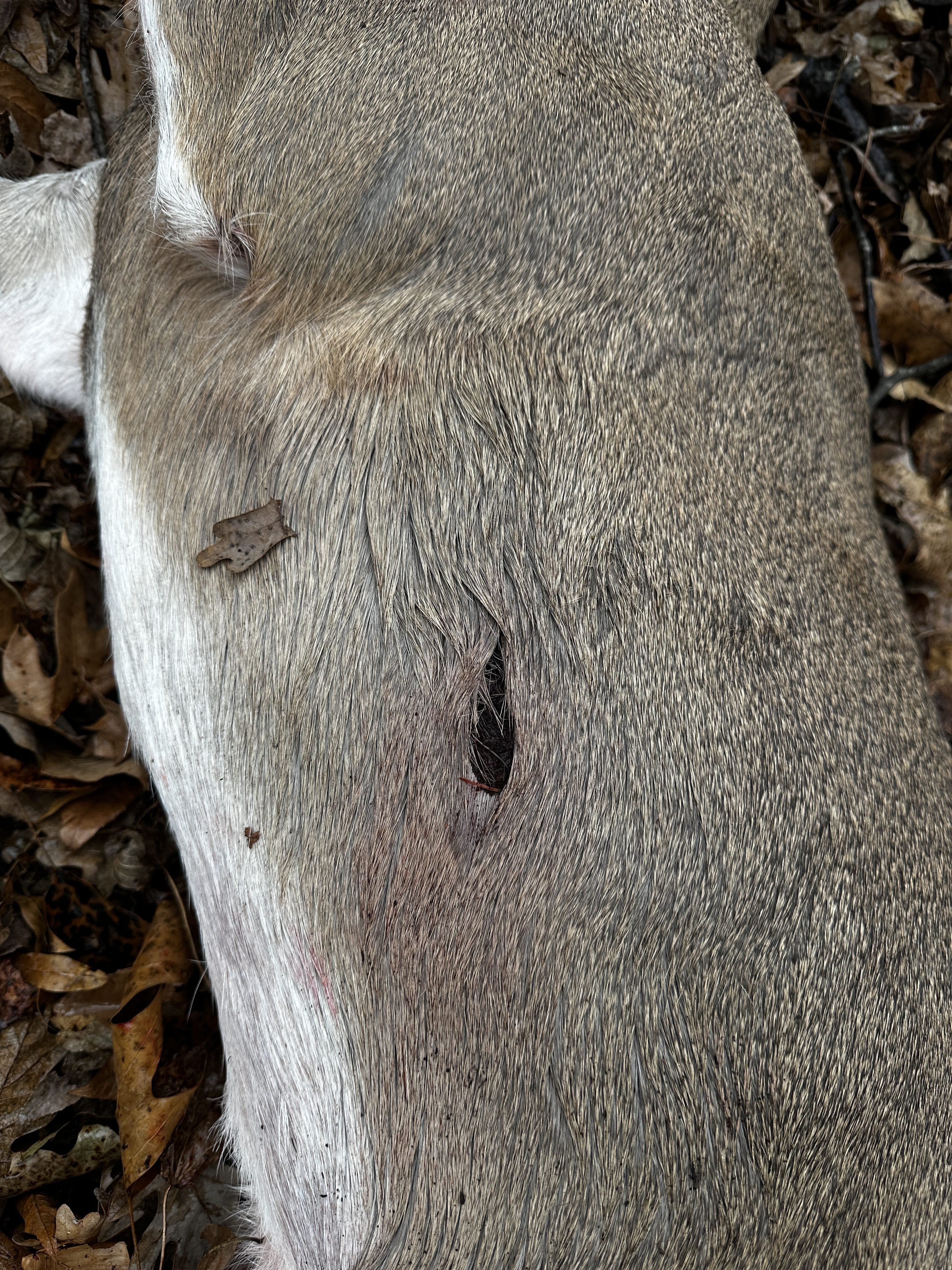
I killed a deer with a Speed broadhead last year and was impressed with its performance. The broadhead produced a massive entrance and exit wound with an easy-to-follow blood trail. The deer died within 50 yards. The broadhead’s blades were bent and would have needed replacing to reuse the head.
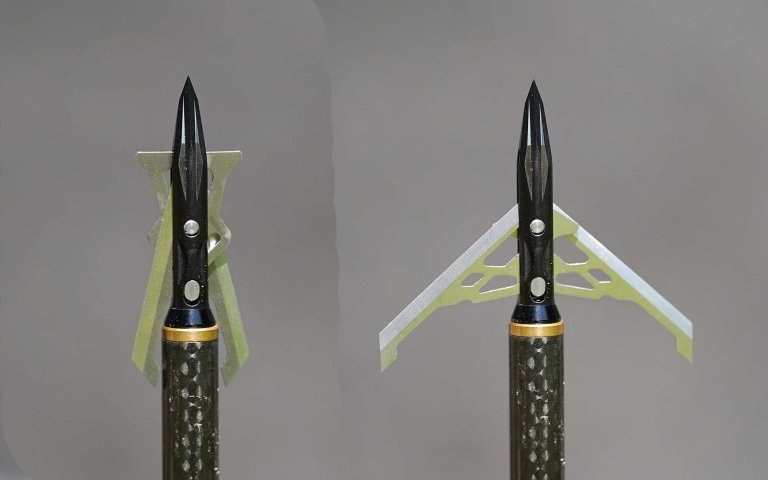
In testing, I saw similar results: a massive wound channel and OK durability. After passing through the PVC pipe, one of the blades was bent and would need to be replaced. I do like that the blades bend rather than break. Speed broadheads are exceptionally sharp out of the package, and that’s one of my favorite things about them. Another great thing is that they don’t use bands or collars to keep the blades closed — Speed uses a spring piston instead, and the specs say only 1.5 pounds of force is needed to open the blades.
NAP Killzone RX 2.0 Titanium
Pros
- Good wound channel
- Blades lock open
- Durable
- No blade rattle
Cons
- Not sharp out of the box
Key Features
- Weight: 100 grain
- Blade Thickness: .040 inch
- Blade Width: 2 inches
- Price: $58
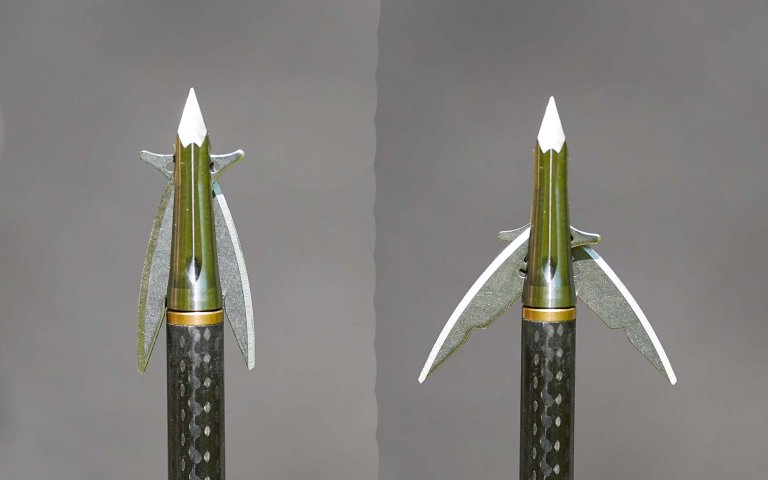
The NAP is slightly less expensive than the options from G5 and SEVR, and it performed well in testing. It cut a good entrance and exit wound and produced a nice wound channel, with minimal blade damage through durability testing. The main drawback is sharpness. If you choose the NAP, test the blades’ sharpness out of the pack and touch them up on a strop or ceramic rod to get them hunt-ready.
Bowmar Beast 2.0 Titanium
Pros
- Very sharp out of the box
- Very durable
Cons
- Did not cut an exit wound in the gel
Key Features
- Weight: 100 or 125 grain
- Blade Thickness: .035 inch
- German LUTZ blades
- Grade 5 Titanium ferrule
- Price: $85
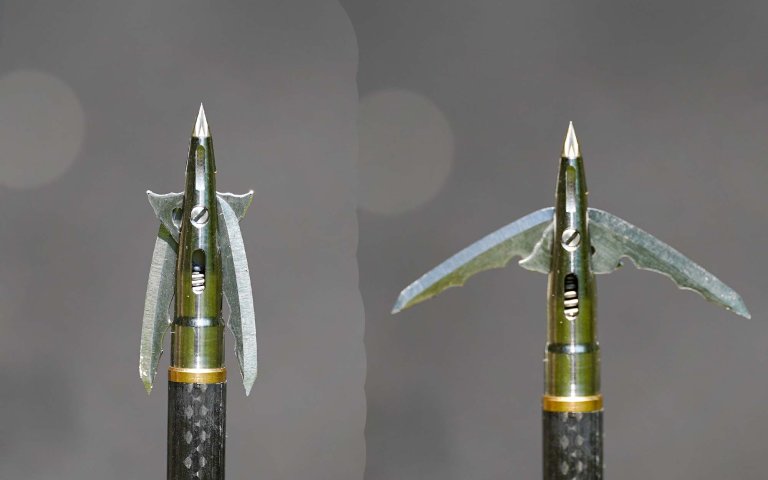
The Bowmar Beast 2.0 is a unique broadhead. It uses spring-loaded blades that pop out when triggered and compress when they contact anything they can’t cut through. The idea is that they’ll compress out of the way of bone, then spring back open to cut soft tissue. The Beast looked brand new after durability testing and was the sharpest broadhead out of the box. It cut a nice entry hole, but the blades fully compressed on the way out of the gel block — resulting in an exit wound that was about the same diameter as the arrow shaft.
If the blades compress on their way out of an animal, it could produce a less-than-optimal blood trail. Personally, I’d be worried about the blades compressing too easily and not cutting enough. Others might have more faith in this design’s ability to avoid hard impacts with bone and penetrate better than other mechanicals.
G5 T2
Pros
- No blade rattle in the quiver
- Durable
- Sharp out of the box
Cons
- No practice tip included
Key Features
- Weight: 100 or 125 grains
- Blade Width: 2 inches
- All steel construction
- Price: $70
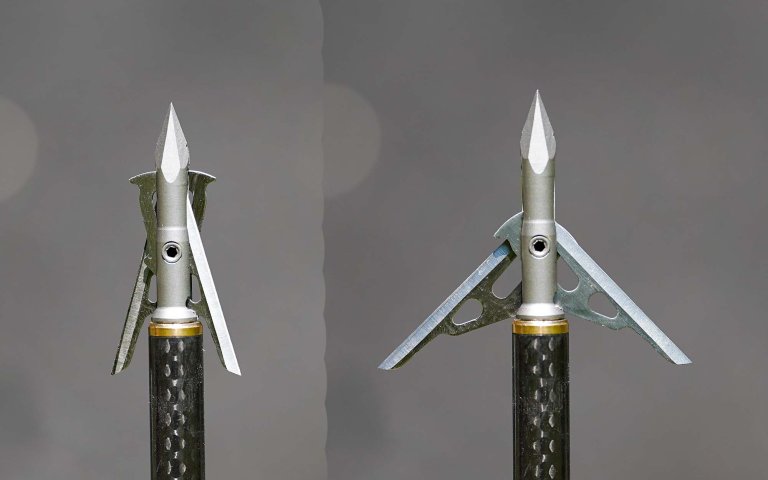
The T2 is a great head. It made it through the durability test with just a slight bend in one blade. It was one of the sharpest broadheads out of the box, it flew well, and it cut a big hole. One con is that this broadhead’s blades don’t lock open. In the gel, the blades retracted slightly as the arrow passed through and then opened up again. This caused an inconsistent wound channel.
Swhacker Levi Morgan #261
Pros
- No blade rattle
- Easy to practice with
- Blades lock open
- Good wound channel
Cons
- Small entry wound
Key Features
- Weight: 100 grain
- Blade Width: 2 inches
- Blade Thickness: .031 inch
- Pracitce mode
- Price: $50
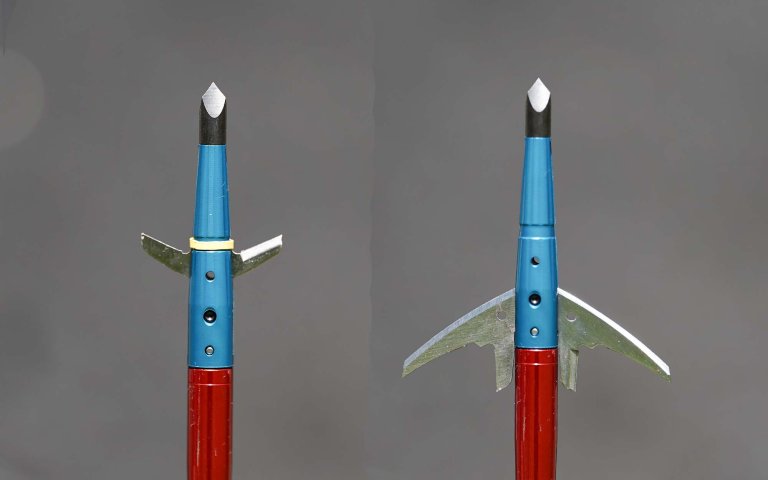
The Swhacker is a lot like the SEVR. The best reasons to shoot it are its accuracy at extended ranges and how easy it is to practice with. The blades also lock open and cut a massive wound channel.
The one drawback is that it doesn’t cut a big entrance hole, so you’d better get an exit wound for an easy-to-follow blood trail. In the gel, the blades fully opened after about two inches of penetration — meaning they’ll be fully open by the time they start cutting vital tissue.
Test Protocol
Sharpness Test
- Three cuts per broadhead
Broadheads have to be sharp. Since most of us aren’t putting our mechanicals on a sharpening stone before hunting, they need to be sharp right out of the box. I used a BESS Sharpness Tester, which measures the amount of force it takes to cut a calibrated filament, to gauge sharpness. The lower the force required to make the cut, the sharper the broadhead. I took three measurements from each head to get an average.
Accuracy
- 50 yards
- Three, 3-shot groups (two broadheads, one field point)
I shot three 3-shot groups per broadhead to get an average. The three arrows in each group were tipped with two broadheads and one field point. The goal of this test was to confirm the broadheads flew consistently and hit the same spot as a field point.
Wound Channel
- One shot per broadhead into ballistic gel
- Measured entry wound and examined wound channel
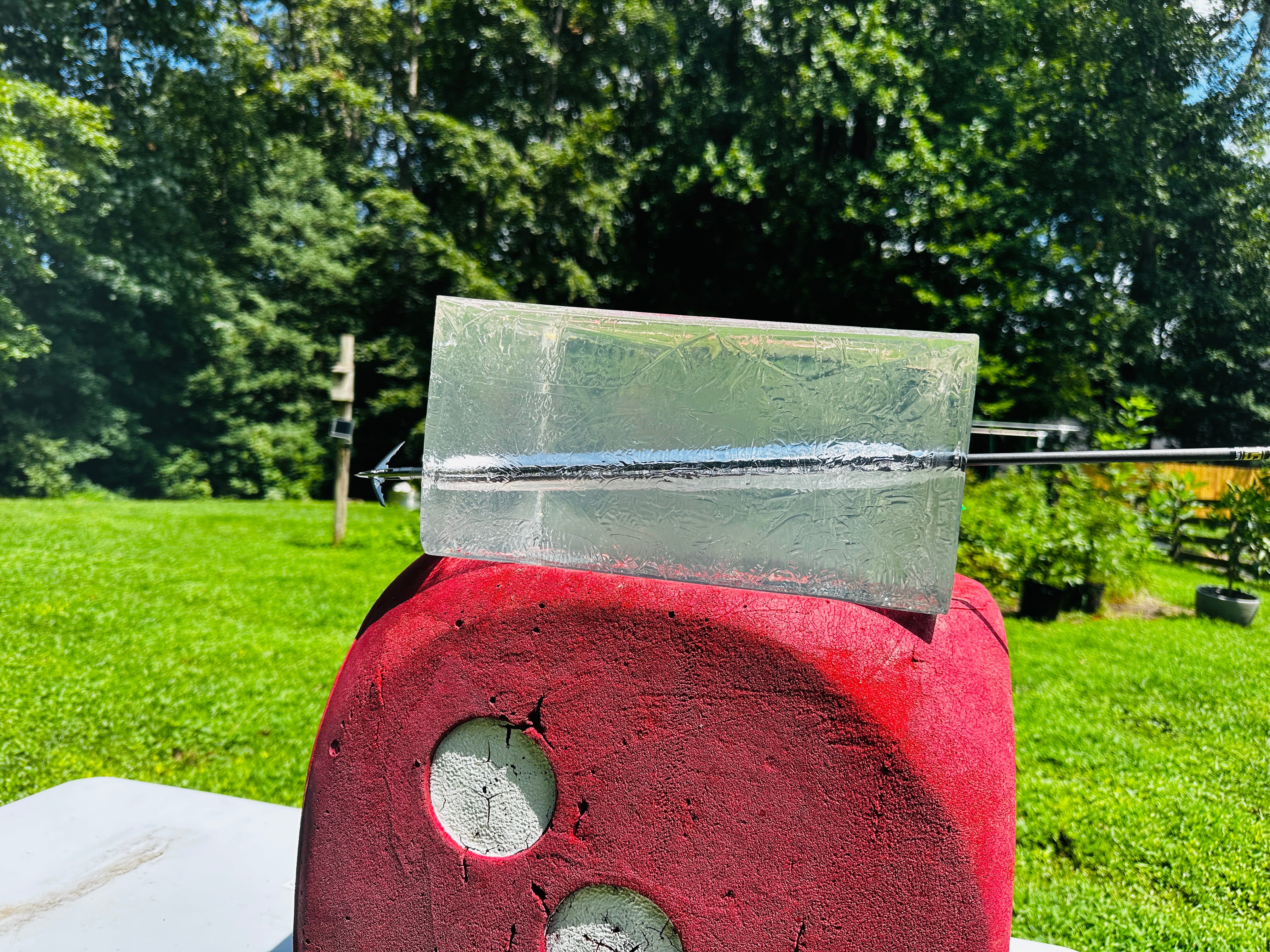
I shot the broadheads into a Clear Ballistics gel block with a thin piece of leather pulled tight across the front. I began this test with a bare gel block, and some heads weren’t opening properly. So I added the leather, which created enough resistance to open the heads on impact.
Durability
- PVC pipe
- One shot per broadhead
I used a PVC pipe as my proxy for bone because it’s consistent, has a curved shape, and has a similar toughness to a rib bone. This is a fairly gentle test, but I also think it’s a realistic one for the type of bone a mechanical is going to get through.
I originally intended to fill the pipe with spray foam, but that plan created more of a mess than realistic results.
I scored each broadhead based on its condition after the durability test.
5: Broadhead is ready to be reused. 4: Minor damage to blades, but they need replacing. 3: Head can be reused, but blades must be replaced. 2: Significant damage to the head. 1: Low confidence in the broadhead’s reliability.
Noise
- Broadhead shot at camera with shotgun mic Subjective noise scores given based on recordings
I shot each broadhead at a target 50 yards away. Next to the target was a camera with a shotgun mic that recorded the sound each broadhead made in flight. I listened to the recordings and gave each broadhead a score from 1 to 5, with 5 being silent and 1 being loud.
Final Thoughts
Broadheads are a lot like hunting knives, at their core they’re just sharp triangles. But, innovation presses on and we now have a huge assortment of mechanical broadheads. I was fortunate enough to test nine and recommend eight of them. The one that’s right for you is ultimately going to depend on your needs and what you trust to work.