
We may earn revenue from the products available on this page and participate in affiliate programs. Learn More ›
Backlashes flat out suck. I’ve yet to meet an angler who enjoys the task of picking out tangled line from a baitcaster after a bad cast. So the advent of digital control (DC) reels that use an internal microcomputer to monitor spool speed and apply magnetic braking was a thing of pure genius.
As Shimano came out with several different DC offerings, I was lucky enough to add a few to my reel collection and start spending time on the water with them. Almost instantly, I fell in love with the forgiving nature of a DC baitcasting reel, and while the whirr of the reel might annoy some, I’ve grown quite fond of it.
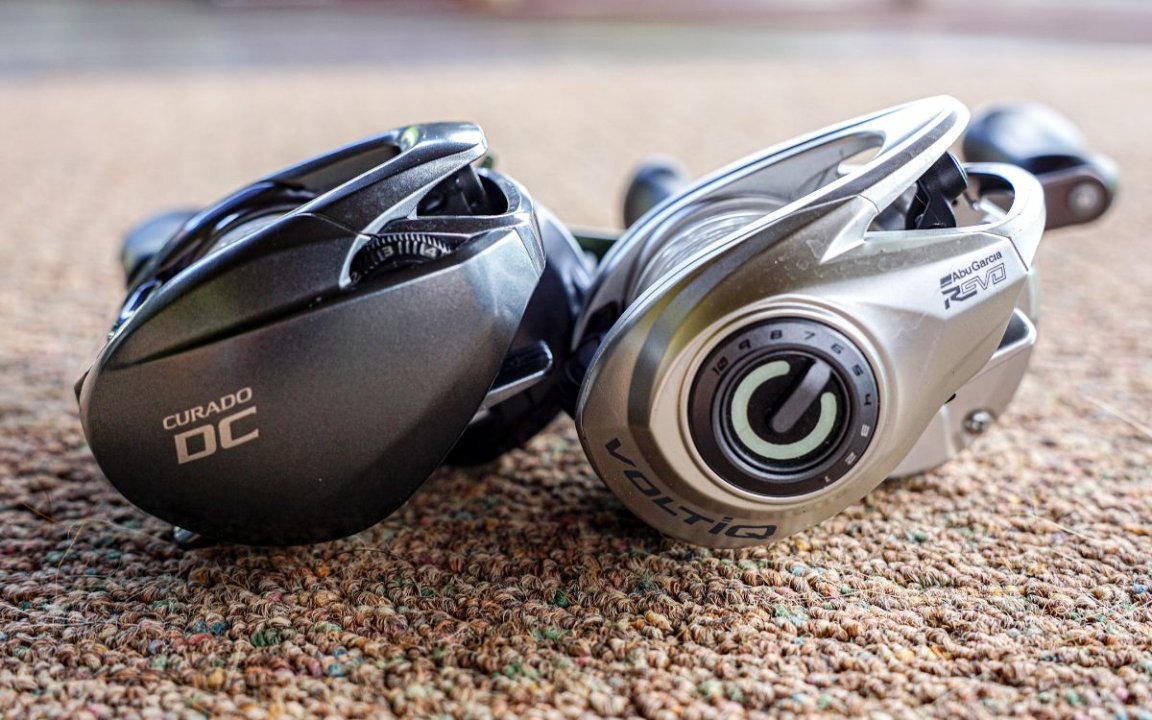
Until recently, Shimano had cornered the market on DC offerings, but a few months ago, Abu Garcia introduced a DC reel of their own, the Revo SX VoltiQ. Naturally, I was giddy with anticipation to get my hands on the VoltiQ to test Abu’s take on a DC reel. After several months of fishing with the VoltiQ alongside the Curado DC from Shimano, I’ve got an in-depth look at what each reel does well, and where each falls a bit short.
Specs and Features:
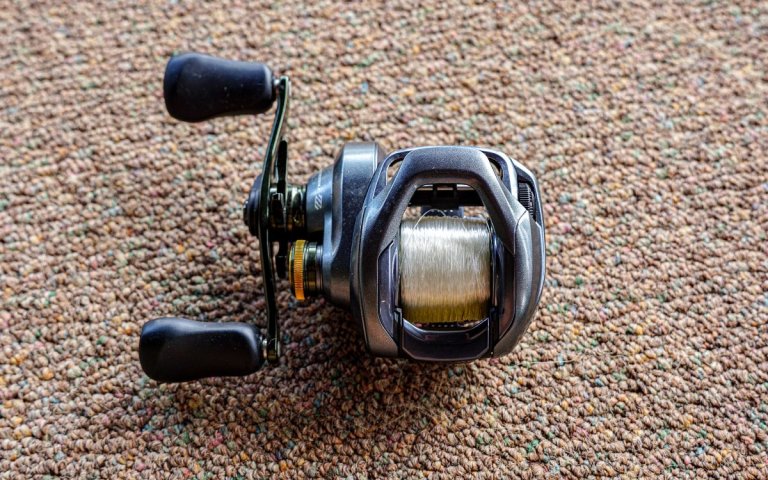
Shimano Curado DC 201HG
Price:
- $314.99
Gear ratio:
- 7.4:1
Bearings:
- 6 stainless steel ball bearings + 1 roller bearing
Max drag:
- 12 pounds
Mono capacity:
- 8/180, 10/155, 14/110
Braid capacity:
- 30/190, 50/120, 65/80
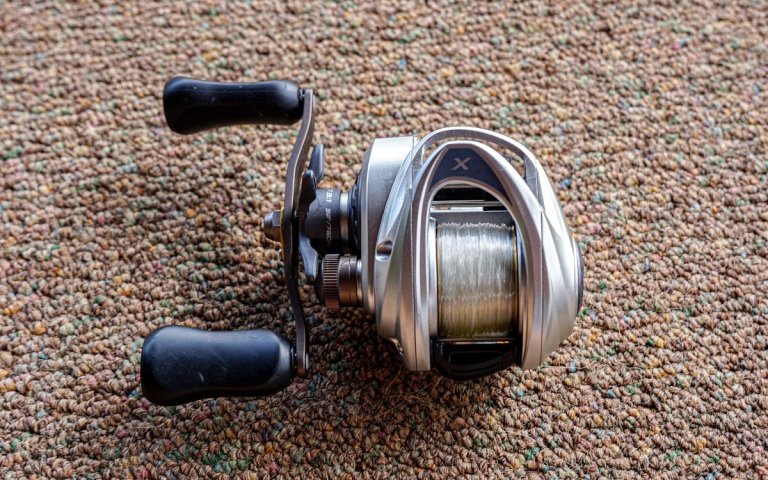
Abu Garcia Revo SX VoltiQ
Price:
- $249.95
Gear ratio:
- 7.3:1
Bearings:
- 9 stainless steel ball bearings + 1 roller bearing
Max drag:
- 25 pounds
Mono capacity:
- 10/140, 12/115, 17/80
Braid capacity:
- 20/150, 30/110, 50/80
Testing the Revo SX VoltiQ and Curado DC
After receiving the Revo SX VoltiQ and spooling it up alongside the Curado DC, I’ve spent hours fishing with each reel on different setups. Personally, I like power fishing, so both were used with spinnerbaits, squarebills, and chatterbaits extensively.
For the sake of a true head-to-head test, I also spent time swapping the reels between one rod, a Fenwick HMG 7’2” medium heavy with a moderate fast tip, to make sure I gave them a fair shake. This rod was perfect for spinnerbaits and chatterbaits and will likely become the permanent home for my VoltiQ now that my testing has been completed.
Aside from fishing with both reels extensively, I also put them head to head in a casting competition using the Fenwick HMG. On a flat surface, I fired five casts with each reel. I had a ½ ounce Z-Man Jack Hammer tied on. I then measured the distance of each cast to provide a general average distance you can expect. While fishing with each reel, I anecdotally noticed that the Shimano Curado DC seemed to cast just a bit further than the Abu Garcia Revo SX VoltiQ, but I couldn’t be certain without truly measuring some casts. So, when I returned home from a recent trip, I broke out the tape measurers and got to casting. Below you can find the casting distances for each reel, and their averages.
Castability
The castability of a reel really boils down to having the magnets set correctly for the weight of your lure and action of your rod. Those dictate how quickly and smoothly the line can be removed from the spool without backlashing, furthering your casts when done correctly. For this test, I fully spooled both reels with 12 pound Berkley Gin Clear fluorocarbon. It’s important to note that I said ‘fully’ spooled, as that undoubtedly increases casting distance. The less line a spool has on it, the shorter you can expect your casts to be.
Shimano Curado DC 201HG Casting Distance
- Cast #1: 118 feet
- Cast #2: 127 feet
- Cast #3: 130 feet
- Cast #4: 122 feet
- Cast #5: 132 feet
- Average: 125.8 feet
Abu Garcia Revo SX VoltiQ Casting Distance
- Cast #1: 117 feet
- Cast #2: 119 feet
- Cast #3: 121 feet
- Cast #4: 119 feet
- Cast #5: 123 feet
- Average: 119.8 feet
Now, based purely on distance, you might think the Curado DC is the obvious winner in the castability category, and it is. But it’s also worth noting the width of the spools do differ. With a larger and wider spool, the Curado has the advantage of holding more line and allowing for the line to come off faster and smoother than the VoltiQ. In the end, the two reels differ by six feet on average, which doesn’t really make or break a cast in most scenarios.
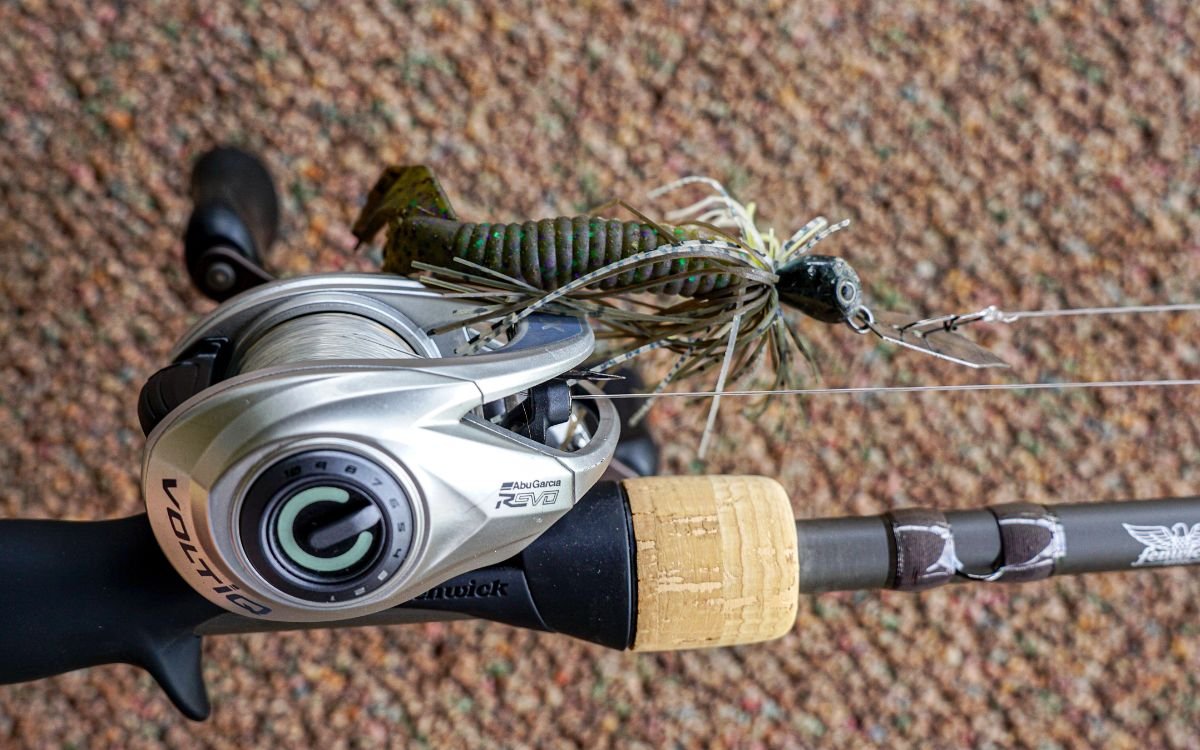
Ergonomics
The build and ergonomics of the reels are also quite similar. Both are smaller profile reels that fit well in the hand and allow for hours of continuous fishing without wanting or needing to swap rods due to fatigue of holding the reel.
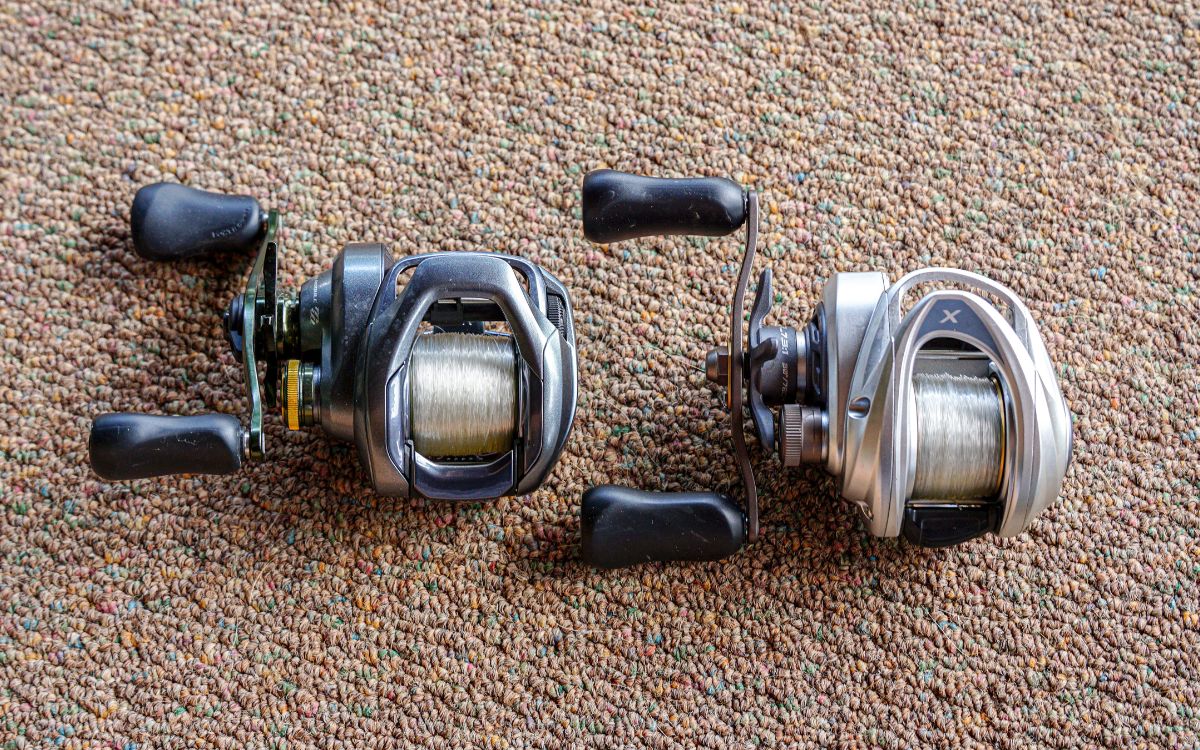
Like I mentioned above, the Curado DC has a larger and wider spool than the Revo SX VoltiQ, but I honestly couldn’t feel the difference in hand. The biggest difference I could notice was the reel handles. The length of the reel handle on the Revo SX VoltiQ is smaller than the Curado DC by ¼ inch, which might not seem like much, but when you’re cranking in a big bass it makes a difference in how you reel.
As for the tuning, I tip my cap to the Revo SX VoltiQ for the easy to use design. The larger side magnet is easy to access and read, while the fine tune magnet near the drag is also easily accessible. One gripe I’ve had with the Curado DC is the location of the large side magnet adjustment knob. It’s tucked away in the top right corner and requires the use of a fingernail to spin and get dialed into place.
While I liked the tuning adjustments on the Revo SX VoltiQ, I do have to say I prefer the thumb bar on the Curado DC. Thanks to the wider spool, it’s simply easier to compress and lock into place when casting. I did have one or two times with the Revo SX VoltiQ where I thought I’d compressed the thumb bar enough to cast, but was mistaken and it caught me off guard. It certainly wasn’t a common occurrence, but one that did make me take note.
Ease of Use
For the general ease of use, I prefer the Shimano Curado DC. Right out of the box I was able to quickly dial in the magnets and get a chatterbait casting long distances with little effort required.
As for the Revo SX VoltiQ, I spent many days feeling like I had it figured out, just to then make a cast with a little too much gumption and have a minor backlash appear. While it’s much easier to access the magnets to make adjustments, it seemed like I needed to have them set perfectly for each bait to really get the most out of the reel. The Curado DC allowed me to switch baits and not immediately need to make fine tune adjustments just to avoid a backlash.
Aside from the minor difficulties I faced getting the Revo SX VoltiQ dialed in perfectly, I really enjoyed using it when it was set correctly. Plus, the 25 pounds of available drag leaves little to be desired when fighting a big fish that takes a dive into a pile of matted grass. I’ve always been a big fan of beefed up drag systems, and the Revo SX VoltiQ didn’t disappoint.
Final Thoughts
While I’ve truly gone back and forth between the two reels with a fine toothed comb, I’ll be the first to admit that both reels are excellent options for an angler looking to join the DC club. I preferred the wider spool and longer reel handle on the Curado DC, but really liked the beefed up drag system and easy to access tuning system on the Revo SX VoltiQ.
But, if I were going to pick just one to build out my arsenal, I think I would have to go with the Revo SX VoltiQ due to the price difference. Being the more affordable option and having so many similar features, the price makes it the better choice if you’re looking at buying several at a time, even if I wish it was a little quicker to get the tuning adjustments set just right. Thankfully, I already have both. Because my true recommendation would be to add both to your arsenal and find which techniques you prefer to use each reel for.