
We may earn revenue from the products available on this page and participate in affiliate programs. Learn More ›
The .22 Long Rifle is the most common cartridge for teaching fundamental shooting skills, but its potential reaches far beyond just new and young shooters. A precision-style 22 rifle, or one that mimics the balance and ergonomics of your hunting rig, can help even high-level shooters and hunters improve their skills. Top-end rimfire rifles can cost upwards of $5,000, which is more than most hunters want to spend on their primary hunting rifle, but there are cheaper ways to reap the benefits that a good 22 provides.
Meaningful, Affordable Repetitions
Using a 22 as a practice or training rifle provides two big benefits. First, the mild little cartridge that’s propelled by just a pinch of flakey gunpowder has minimal recoil. When we discuss recoil in the context of improving your shooting, we don’t mean it as a measure of how hard it kicks — because it doesn’t. We are talking about sight picture disruption and, while the .22 LR does produce some, it’s very little. The lack of that distraction can help you focus on improving fundamental skills like trigger control, but also gives you valuable practice staying in the scope and spotting impacts — something that will benefit you both in competition and hunting.
The second big benefit is that the round’s affordability allows lots of real shooting practice, and actual shooting gives you downrange feedback that dry firing can’t. Quality, and I mean quality, .22 LR ammo is pretty expensive, but still cheaper than most centerfire stuff. My rifle shoots affordable ammo, like CCI Standard Velocity, well enough for practice.
Positions and Equipment
We often use terms like purposeful shooting and meaningful practice, but what do those mean? It’s arguable that any practice can be beneficial, but purposeful or meaningful practice is specifically intended to focus our efforts on certain skills. Spending time blasting away on a range bench or lighting up old TVs, generally, isn’t meaningful practice.
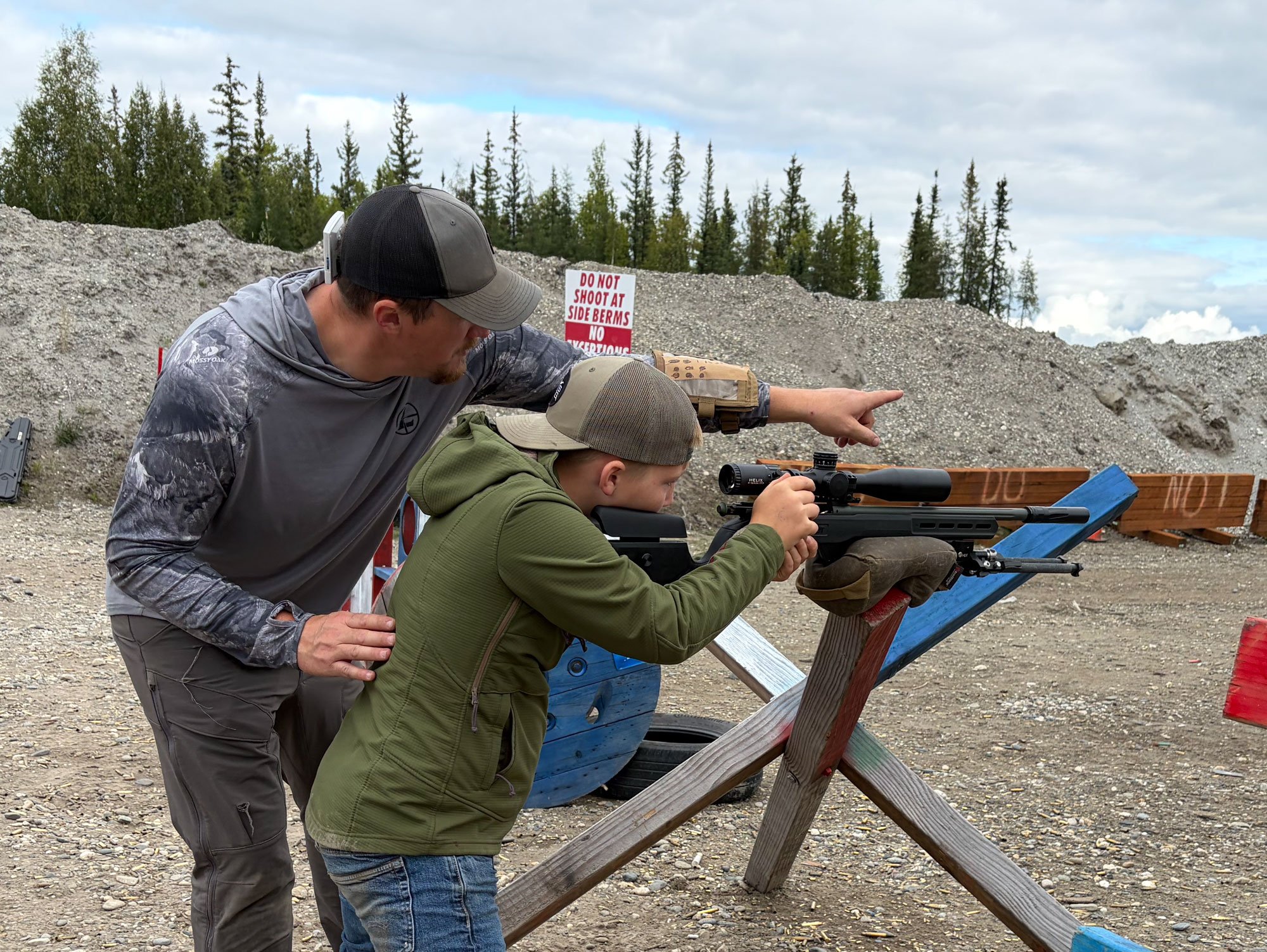
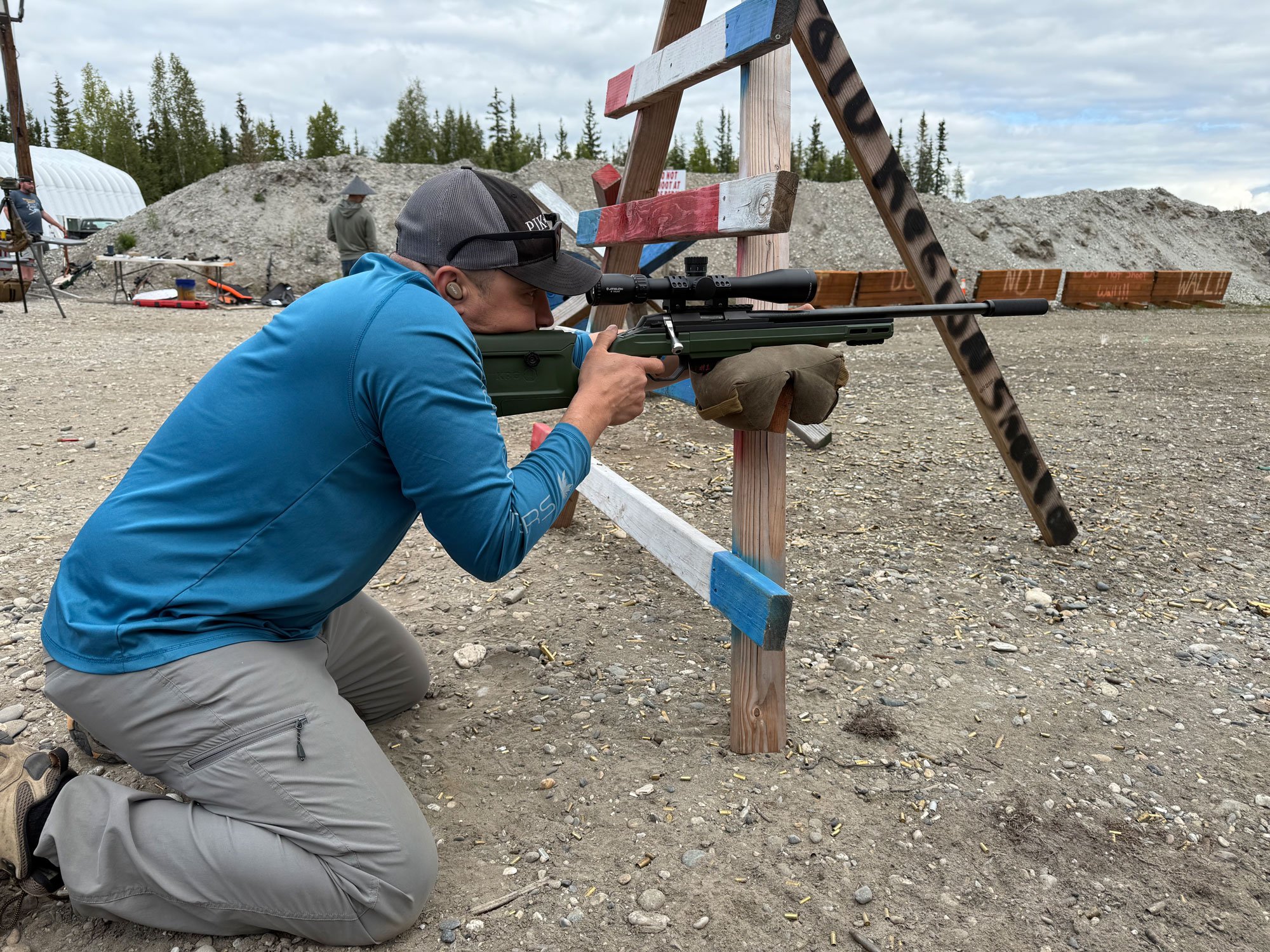
A precision-style 22 rifle gives you the chance to practice a variety of shooting positions and with equipment similar to what you’ll be using while hunting or competing. I constructed a barricade from an old pallet that has several different shooting heights and surfaces. Any seasoned competitive precision rifle shooter will tell you that a big part of building solid shooting positions is identifying certain heights that work well for how you like to shoot. My barricade gives me a good chance to practice standing, sitting, kneeling (my weakest position), and prone. I will frequently set a par time for myself and move between positions while practicing in my back yard.
While your equipment like bipods and tripods can offer incredible stability, if you haven’t practiced with them, you’ll stumble and fumble when the pressure is on — whether in a match, or when an animal steps out in front of you. Using a full-sized 22 rifle is a great way to practice both your shooting and gear manipulation.
Budget Build
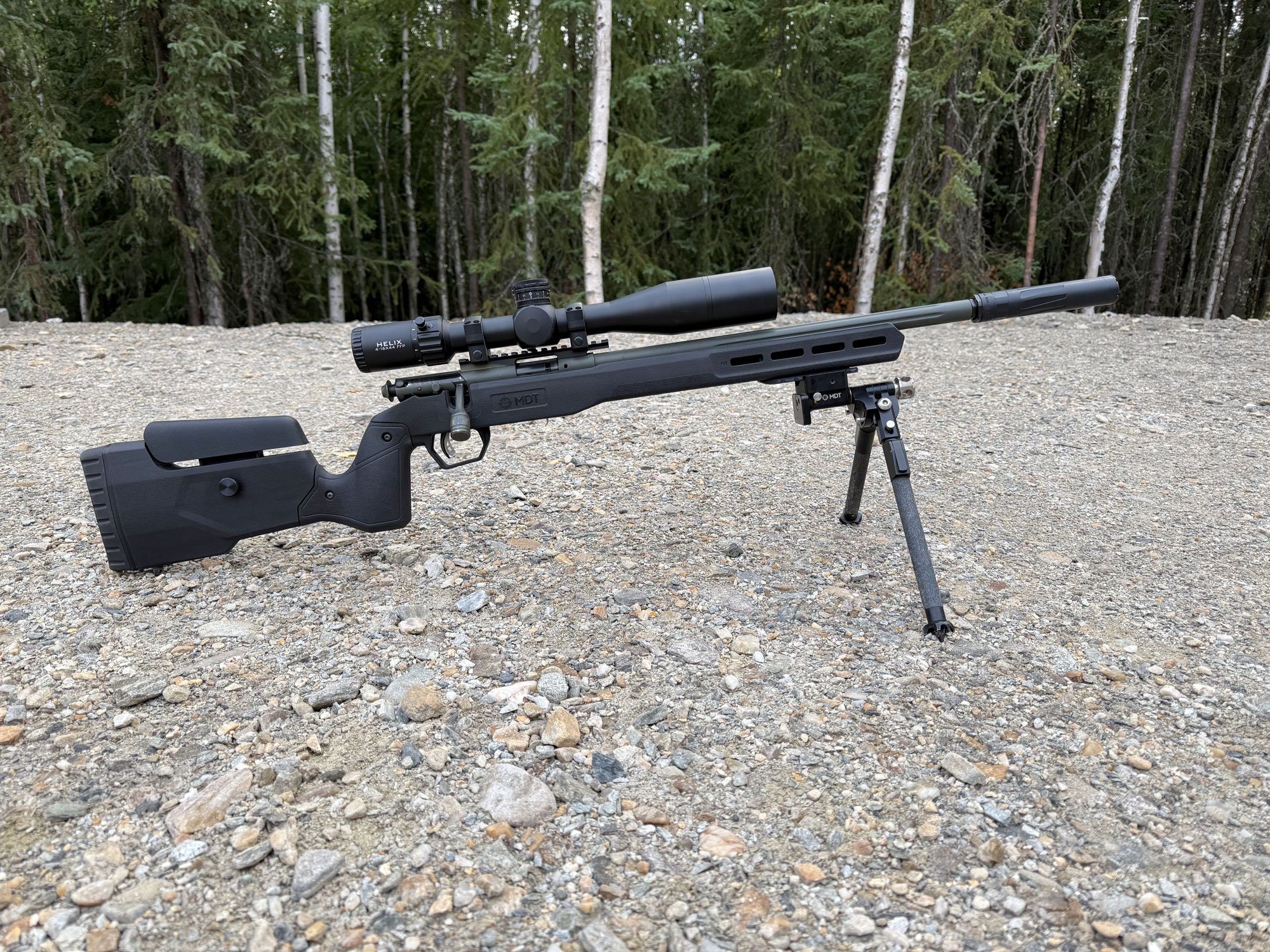
My precision 22 is about as budget-friendly as it gets. Here’s a look at all the components:
Savage MK II FV SR
This is an accurate and affordable little rifle that can be found for less than $300. It comes with a pretty dainty stock, and the magazine design isn’t great for bag-supported shooting. But we have had this gun turn in stellar 100-yard accuracy numbers with SK Long Range ammo. It’s a solid budget option.
Pros
- Affordable
- Suppressor ready
- Oversized bolt handle
- Includes Picatinny rail
Cons
- Some Mark II Actions are stiff/sticky
- Magazine isn’t ideal for positional shooting
- Factory stock isn’t great
MDT Field Stock
The biggest upgrade to my Savage is the MDT field stock. These are pretty affordable drop-in stocks that give the rifle better balance, ergonomics, and accessory compatibility. I fitted mine with a small ARCA plate up front, and could even add weight to the cavity in front of the action to improve balance if I wanted. It has an adjustable comb and spacers to increase length of pull.
Element Optics Helix 4-16×44 FFP MIL Scope
Shooting precision 22 rifles at 100 to 200 yards, in some ways, mimics firing centerfire rounds at farther distances. The time of flight is longer, and wind has a significant impact on blunt little 22 slugs. I really like this scope for the task. It’s affordable, but offers the features I need to get valuable practice that translates to centerfires. I get plenty of practice dialing and holding over with the FFP reticle, as well as holding for wind and staying in the scope to watch impacts at distance.
Ruger RXD22Ti Suppressor
This is a nice little modern 22 rimfire suppressor that uses a thread-over-brake system. The brake is intended to capture a lot of the lead fouling, preventing it from depositing as much in the 3D printed core. Overall, it’s dead quiet, and I don’t see much first round pop or impact shift — not enough to make a difference anyway.
Pick What’s Right For You
My budget 22 precision rifle build has its benefits and drawbacks. While it’s about as cheap as you could possibly put together, the total price isn’t insignificant. Some shooters will find that starting with a higher-level base model is the best option. Most of those will start at around $600. Of course, you can go all out and pick up a Gucci precision 22, but the biggest benefits will come from meaningful practice, no matter which gun you use.