
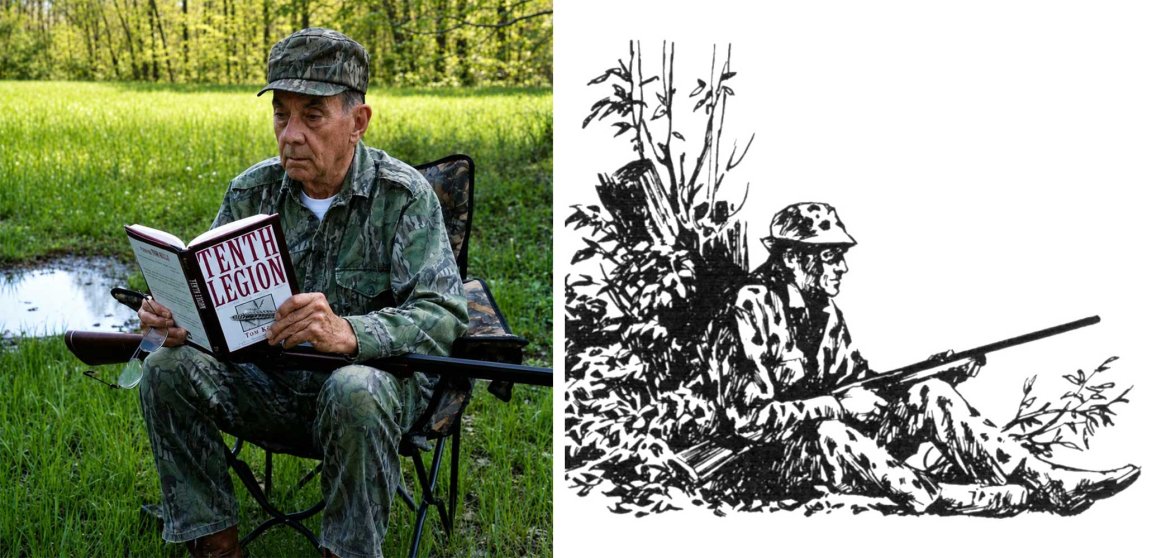
Col. Tom Kelly, the U.S. Navy and Army veteran and legendary hunter whose book Tenth Legion inspired generations of turkey hunters, died Friday Oct. 2. He was 99.
The news was confirmed by Kelly’s daughter, Laura Kelly Bates, in a short video posted to Kelly’s website.
“This weekend we lost one of the greatest of the Greatest Generation, Tom Kelly,” Bates said. “The Colonel, Daddy to me, and Old Tom to his grandchildren. No words can express what he has meant to me, to our family and friends, to his troops, and to his loyal legion of followers in the turkey hunting community.”
Bates did not cite a cause of death, but noted that Kelly hadn’t been able to turkey hunt the last few years. Even so, she said, his writing and family helped sustain him.
“He was 99. That sounds old for a man, but for Tom Kelly, you could almost believe he would live forever,” she said. “This was a man who killed his last turkey three weeks shy of his 96th birthday.”
Bates was with her father on that hunt, says Mossy Oak’s Daniel Haas, who was close with Kelly and ultimately helped create a documentary about the turkey hunter, his own grandfather Fox Haas, and their shared legacy of turkey hunting and conservation.
“The Colonel killed one last turkey with Laura sitting beside him, when she hadn’t gotten to turkey hunt with him in many years. It’s amazing his daughter got to be with him for one last hunt,” says Haas, 36, who also quoted Kelly’s own line that the Colonel was “just glad he got to see it one more time.”

Thomas Henry Kelly, Jr. was born in Mobile, Alabama on May 15, 1927. He grew up around the salt flats of Mobile Bay. He had his first library card at the age of four and skipped kindergarten, according to his daughter.
At the age of 17, Kelly persuaded his uncle to forge his entry into the U.S. Navy against his mother’s wishes. Kelly became an aerial tailgunner and international morse code operator in the final days of WWII. After the war ended, Kelly earned a degree in forestry from Auburn University and later served in Korea, ultimately retiring from the U.S. Army as a Colonel after 30 years.
Beyond his military service, Kelly led a rich and eclectic life while working in the timber industry for decades. He played minor league baseball, sculpted, and built furniture. In 2024 he was awarded The Monroeville Literary Festival Lifetime Achievement Award, which honors outstanding literary contributions by Alabama authors.
“He was as comfortable quoting Shakespeare as he was talking to sawhands,” said Bates. “And despite all his talents and accomplishments, he was grounded and self deprecating. He was just as likely to tell a story about something stupid he did as he was to weave a great hunting tale. He had a kind heart, a generous spirit, a wicked sense of humor, and a sharp tongue.”
While working as a forester, Kelly also turkey hunted and wrote stories about those hunts. His wife, Helen, suggested he turn those snippets into a book. That collection, a slim self-published volume of essays on turkey hunting in the South, appeared in 1973. Tenth Legion is unequivocally the best-known book on turkey hunting ever been written.
To understand how seriously Kelly took turkey hunting, you can start with his book title. The Tenth Legion was the most dedicated, disciplined, and loyal unit in Julius Caesar’s Roman empire. And this is how Kelly viewed the Southern turkey hunters of the day.
“The first turkey that ever came to me on the ground did it a long time ago. I sat there with my hand shaking and my breath short; and my heart hammering so hard I could not understand why he couldn’t hear it,” wrote Kelly. “The last turkey that came to me had the same effect, and the day that this does not happen to me is the day that I quit. The last one that ever does come to me will call forth the same emotion that the second one did. I will sit there waiting, gun up, and heart thundering, and say to myself what I’ve said on every single occasion: I’m glad I live to see it one more time.”
Though Tenth Legion became his best-known work and he’ll be forever remembered as a true turkey hunter, Kelly would go on to write 30 books, many of which were about hunting and which were recently remastered into audiobooks. He contributed at least three stories to Outdoor Life magazine over the years. Those include a column on turkey hunting (which is republished below), a piece on upland bird hunting, and a feature essay in 1979 about teaching Bates to hunt and shoot a shotgun.
After Kelly’s wife passed away, he moved to the Washington D.C. area to be closer to his daughter. In her video, Bates also quoted a passage that Kelly wrote in “Faces in the Crowd,” about serving as a pallbearer at his best friend’s funeral.
“I am feeling the weight of fifty eight years of priceless memories with my dad,” she said. “And I know his friends and followers in the Tenth Legion are carrying the weight of their own memories of him as well. Tom Kelly was truly one of a kind. Irreplaceable. And we will miss him dearly.”
Haas says that Kelly was truly the last torchbearer for the old days of turkey hunting.
“Back when Tom Kelly started writing, there was one hundred percent purity in turkey hunting. There was no clout to be gained, there was no social media for recognition,” says Haas. “You have an entire generation of guys like him, who were down to a few thousand hunters. If it weren’t for them, turkey hunting would have ceased to exist. And because of them there are now millions of turkeys. We take for granted that the old-school woodsmanship he embodied will continue to exist. The biggest lesson with Tom Kelly is the importance of passing on the tradition and culture of turkey hunting. ”
Turkey Trauma, a Story from the OL Archives Written by Colonel Tom Kelly
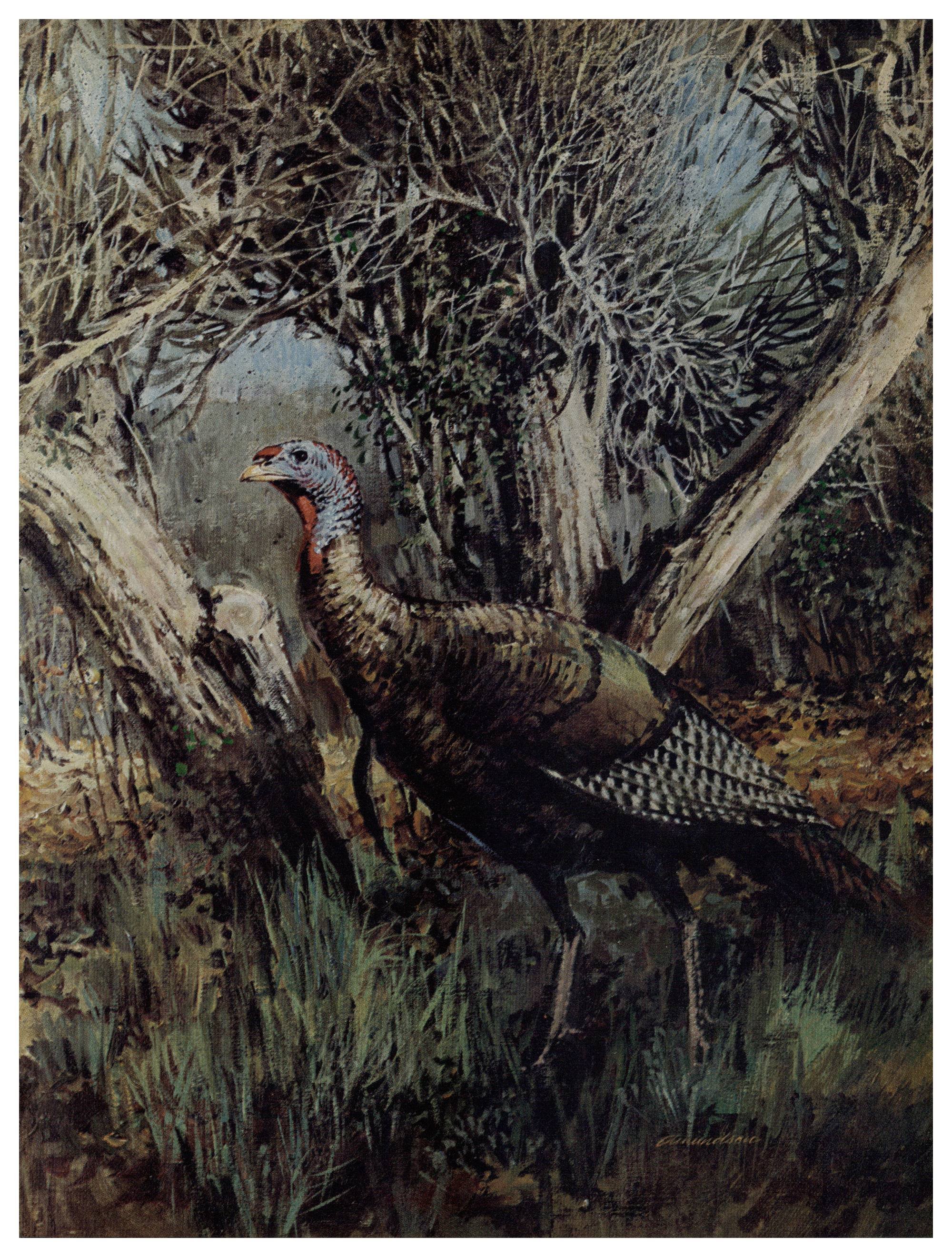
This story, “Turkey Trauma,” appeared in the February 1978 issue of Outdoor Life.
Fall turkey hunting is fun. It is as gay and bright and frothy as light summer literature. It smells good and it looks good and it feels good but, like making love to chorus girls, there’s no depth to it.
Fall hunting is maneuvers.
Spring hunting is war.
In my latitude, 31° north, as the equinox approaches and the earth begins to tilt, increasing day length triggers sexual activity in turkeys. Light indirectly activates the reproductive organs in both male and female by first stimulating the pituitary through the nervous system. The initial stimulus is received through the skin as well as through the eyes.
Yearling gobblers, who by now weigh 12 pounds, are of course affected along with other turkeys. But in this, their first spring, they gobble little if at all. Substantial evidence exists to the effect that they are not yet sexually mature and that they are incapable of fertilizing eggs.
The over-winter droves break up, and the hens begin to go off singly or in small groups. The yearling gobblers break off into little droves by themselves, and they hush.
This group of yearling gobblers, the same turkeys that two months ago were vocal to the point of rudeness, become the most reticent. They creep about like wraiths and, like well behaved small boys, are seen but seldom heard.
Gobblers that are in their second year or older begin to seek out and establish gobbling grounds, areas technically known as leks. And these turkeys, two months previously almost sphinxlike in their silence, become the most vocal of all. They are vocal for exactly one reason. They are thinking of girls.
Dignity not only drops from his shoulders, he uses it to wipe his feet. The wattles at the base of his neck swell and grow red. Instead of standing still he shifts his weight from one foot to the other all the time, as if the ground were hot. The set of his head upon his neck is different — it leans forward, looking for something. If he had eyebrows, one eyebrow would be raised all the time.
His feathers brighten and take on an iridescence they have not shown previously. He approaches the world and everything in it with the thought processes of a 20-year-old who has been at sea for 18 months.
Girls for breakfast, girls for lunch, girls in the middle of the afternoon. Girls for tea and girls for dinner and girls before he goes to bed. And when he does go to bed, he flies up and cranes his neck in all directions to pick out the roosting places of nearby girls so that he will not take a single step in the wrong direction when getting an early start on tomorrow’s girls.
None of this interferes with his native caution or with his ingrained suspicion in any way, rather one set of emotions is overlain upon the other; or one instinct upon the other, if you prefer.
The two emotions experienced concurrently makes him almost vibrate. I suspect that close to, he hums, like high-voltage lines.
So single-functioned and so dedicated is he in his purpose now, he frequently neglects to eat. A gobbler that means it and is tending to his business (and during this time of the year it is difficult to find a gobbler that is not so occupied) will quite often lose two or three pounds during the spring — an amount that approaches 20 percent of his body weight.
He will strut and drum for as much as half an hour at a time. Strutting is technically supposed to be done to attract the female, and to do it he drops his wings until their ends drag upon the ground. I have seen turkeys that had worn off the outer four or five primaries, strutting, as cleanly as if they had been cut off with scissors. When he struts he stands the tail feathers upright and spreads them out in a fan. His head is drawn back in between what would be his shoulders, if he had shoulders, and he walks in a measured and stately manner.
He drums often. This sound, which Audubon calls the pulmonic puff, defies description. It is not, to me at any rate, audible at distances beyond 70 or 80 yards. A poor approximation of its sound is to say shut as quickly and as explosively as you can with the tongue against the front teeth, and then say varoom in two syllables, with the oom coming up out of the diaphragm and drawn out and resonated against the roof of the mouth as much as possible. When I hear it in the woods, I do not so much hear the sound as I feel it under my breast bone. It is ventriloquistic, pervading, and is a sensation partway between sound and vibration.
This sound is far from ridiculous. It personifies wildness and solitude and lonely places. Nothing in my experience approaches it in this respect except the wild, far-off calling of geese at night.
It is at this point that the season opens and it is in this month that you are allowed to seek him out on his own ground and try to kill him. And it is principally because of what he is now that it is so shameful to ambush him at long range with a rifle or to murder him from a vehicle.
He will now stake out his own territory, his lek, and restrict his movements largely to that location. He may move away some from time to time, go off to visit maybe, but it is not at all uncommon to find the same turkey gobbling on the same five acres every morning and roosting there at night too.
He will gobble a little in the afternoon. He often gobbles once after he flies up to roost at night, but he gobbles primarily first thing in the morning. And he will begin to gobble sometimes as much as 15 or 20 minutes before daylight.
River swamp turkeys for some reason begin to gobble noticeably earlier on any given morning than do hill turkeys. And from the standpoint of the hunter it is fortunate that they do so. As clean and open as a big river swamp can be, you would never be able to get close enough to call him if he waited till daylight to begin. He would see you coming, and hush, a long time before you got there, if you couldn’t go to him in the dark.
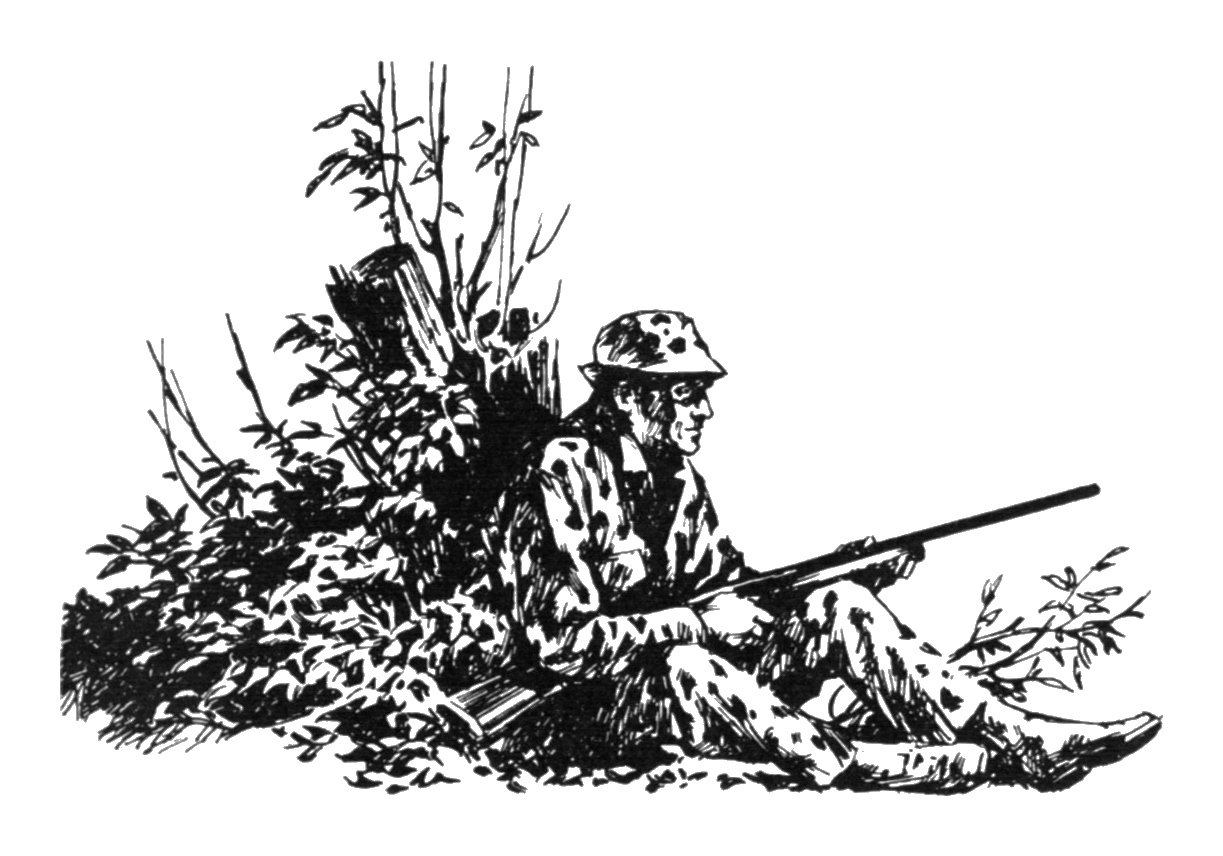
On any morning that you go to hunt you will be in the woods at daylight or preferably 15 minutes before. You will have left your car and will have walked to the place from which you intend to listen. And then you are going to prop your gun up against a tree and wait.
If you have got there as early as you should, the first thing you are going to hear is nothing. Nothing but you is up yet. The only birds awake are a few owls and an occasional tardy whippoorwill that hasn’t knocked off and gone home to bed. Deer are still abroad, and you will hear them shuffling off ahead of you or boiling in herds out of thickets with all the ill bred snorting and blowing of which they are capable. Possums and coons will still be prowling, and you will hear some of these. But all of these things are night creatures that are supposed to be up. The only day creature there is you.
Just as the sky in the east begins to change from black into a steely blue-white, the owls will begin to sound off, and then the cardinals, and late in the spring the yellow-billed cuckoos. These three birds make by far the most of the noise, though there are dozens and dozens of lesser bird noises.
I have no idea how far you can hear an owl — one that is really leaning into his hoot and means it. I sometimes think it is like the folk song, the one that says “you can hear the whistle blow a hundred miles,” but it is a long way, and early in the morning like this, most of them sound as if they were calling from across the River Styx.
It is a lovely time of the year. There is as yet not much color to the woods, but there are some early hints and stirrings, mostly muted pastels or pale chalks with only two or three brights for contrast. The shrub form of buckeye is in full leaf and flower, and the red maple is in fruit. Both the buckeye flower and the maple seed are a bright red — a gaudy, primitive, barbaric red. Blackberry, sweetgum, and huckleberry will be in the beginning of early leaf in the understory, and witch hazel, tag alder, and river birch in the middle story with both stories in pale, pale greens. All the oaks are in catkins, the long fuzzy strings that come before the leaf, and make a background of pale buff and brown. Dogwood shows occasional streaks of sharp white, and in the river swamps the yellow top makes splashes of chromium yellow.
Only rarely, and then only early in the year, is there a hint of frost. Mostly the forest floor is a flat brown. Other than the floor, none of the colors are in masses but the catkins of the oaks. The sharper colors occur as isolated highlights.
When the owls come into full voice, just at daylight, turkeys will often gobble back at them. I don’t know why turkeys gobble at owls but they do, and most men who kill a lot of turkeys have learned to do at least a presentable imitation of an owl, and do it.
Turkeys gobble primarily for girls, either to attract them or to let other turkey gobblers know they are on the job; that the situation is comfortably in hand, and that they need no help in handling anything that comes up. They can handle all the girls in hearing, thank you. But they do have a proclivity for gobbling at sudden sounds. Sometimes I think they may do it for the same reason that a man shouts in the woods. For high spirits, just for the hell of it, to hear it ring down through the trees and hear the echo come back.
Turkeys, for I have heard them, will gobble at saw-mill whistles, at train and tugboat horns, at thunder, at owls as we said, at the slamming of a car door, at crows, and at each other. Once, on an artillery range, I heard two turkeys gobble at the sound of the first round arriving.
The purpose in hooting like an owl (I do not really recommend slamming car doors or firing off artillery pieces) is to get a turkey to gobble that didn’t really mean to.
There are mornings when every turkey in the county will begin to gobble at daylight, and will do it so much it sounds as if he were in danger of choking himself. The very next morning you can go and stand in yesterday’s footprints, so far as you can tell under identical conditions of wind, temperature, and barometric pressure, and you will stand in the midst of silence.
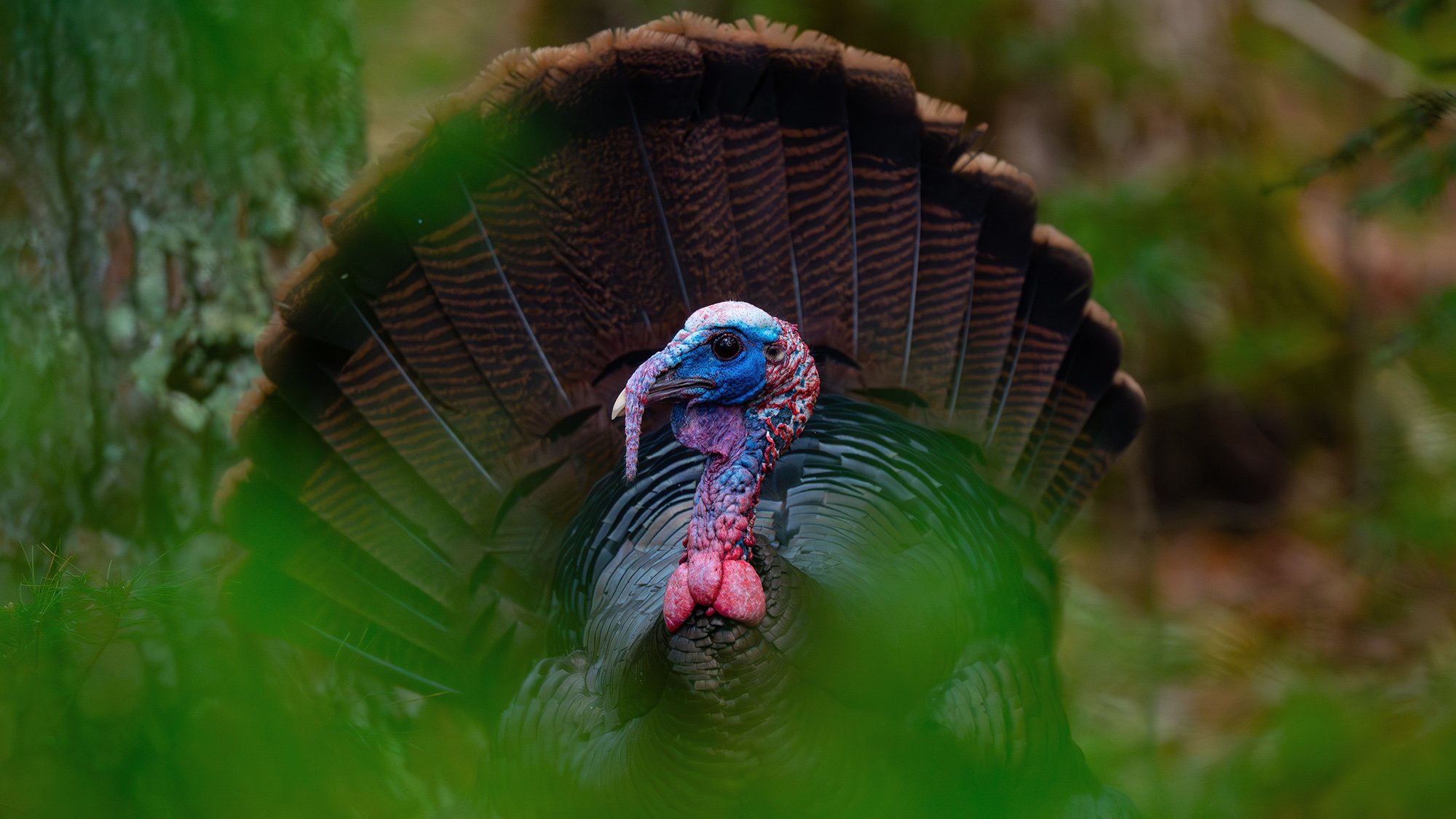
These are the days when you must trick him into gobbling, or surprise him into it, because until he gobbles you do not know where he is and so you cannot get him. You want to get within 200 yards of the tree he is sitting in, gobbling, before he flies down, to try to call him to you from there. You want, very badly, to get there before he flies down if you can, and you have absolutely no idea of how long that is going to be. Sometimes he will stay on the limb 15 minutes, sometimes an hour and a half, and since you never know ahead of time which one it will be you need to get there quickly. Since it is possible for you to hear him at half a mile or better, it makes for an awfully interesting athletic contest conducted at daylight in the woods on calm spring mornings. The fat businessman’s quarter mile dash, with gun.
The point is, though, that until he gobbles the first time, either on his own or until you have tricked him into it, you could be within 100 yards of a turkey in the dark, or be beyond three quarters of a mile from one and not know the difference. When you go into the woods you have the possibility of running turkeys off.
A turkey can gobble only one time and give you direction. But direction is only half of what you need. The other necessary element you need is distance, and unless he is very close when he first gobbles, you cannot tell exactly how far away he is. Experience will help you here to a degree, but a turkey can gobble at different levels of volume. If he is still on the roost when he gobbles he could be facing toward you, which makes it sound one way, or he could be looking in the other direction, which changes the level of the sound and helps to build confusion.
It is generally considered safest to start toward him the minute you hear him, and if he will gobble three or four more times at reasonably spaced intervals, you can get his location fixed and get to the proper place to try to kill him.
All kinds of things can happen during this procedure, which in military circles is called a movement to contact.
You can start toward a gobbling turkey that is so far away he does not gobble regularly enough for you to get there. This can be the most frustrating of all. You go as far as you dare, and then stand there shifting from one foot to the other. You don’t know whether to sit where you are and yelp at imagination, or to keep going in what you think is the proper direction at the very real risk of running him off or hushing him up.
I feel that in dealing with gobbling turkeys you will kill one for every three or four you work.
Some turkeys are just not going to come. No skill, no expertise in yelping, no combination of moves and countermoves is going to make the least particle of difference.
There just happen to be turkeys that will gobble on the roost 100 times. Turkeys you can get to quickly, and hide from easily, and do everything perfectly, and be at the right place at the right time. Turkeys that will then fly down and gobble 300 times on the ground over a period of two hours. Turkeys that will come to within 80 yards of where you sit and not one step farther. Turkeys that will parade and strut and drum there, and that wild horses could not drag that last 20 steps.
And there are 1,000 stories about what you ought to do to kill them.
I have listened to men seriously discuss scratching in the leaves behind them with their hands, to imitate turkeys feeding. I have heard men say with perfectly straight faces that they took off their hat and slapped it repeatedly on their leg to imitate the wing flapping of a gobbler fight. You can get sacks of advice about gobbling back at turkeys, or drumming back at them. I have heard all my life nearly, that if a turkey ever answers you he will come there eventually even if you have to sit until noon to wait for him. Maybe he will, but if it takes him that long the hell with it. I am not about to sit in the woods till noon listening to squirrels and bluejays while waiting for turkeys that may be a mile and a half off.
I have never tried scratching in the leaves either, or hitting my leg with my hat. I have never done so because I am convinced that it is going to sound exactly like a man scratching in the leaves with his hand or hitting his leg with his hat.
Gobbling back, I am willing to admit, may work, may be even rarely worth trying. Drumming is just barely within the realm of possibility. But I regard the large body of all this kind of advice as being in the same category as saying, “Kitty, kitty, kitty,” or standing up and whistling and calling “Here, Rattler, here.”
I am a big believer in moving. I think that unless a gobbler comes in very quickly, one of the most difficult things in the world is to plant your butt firmly under a tree and stubbornly refuse to move an inch until you have called the turkey up and killed him.
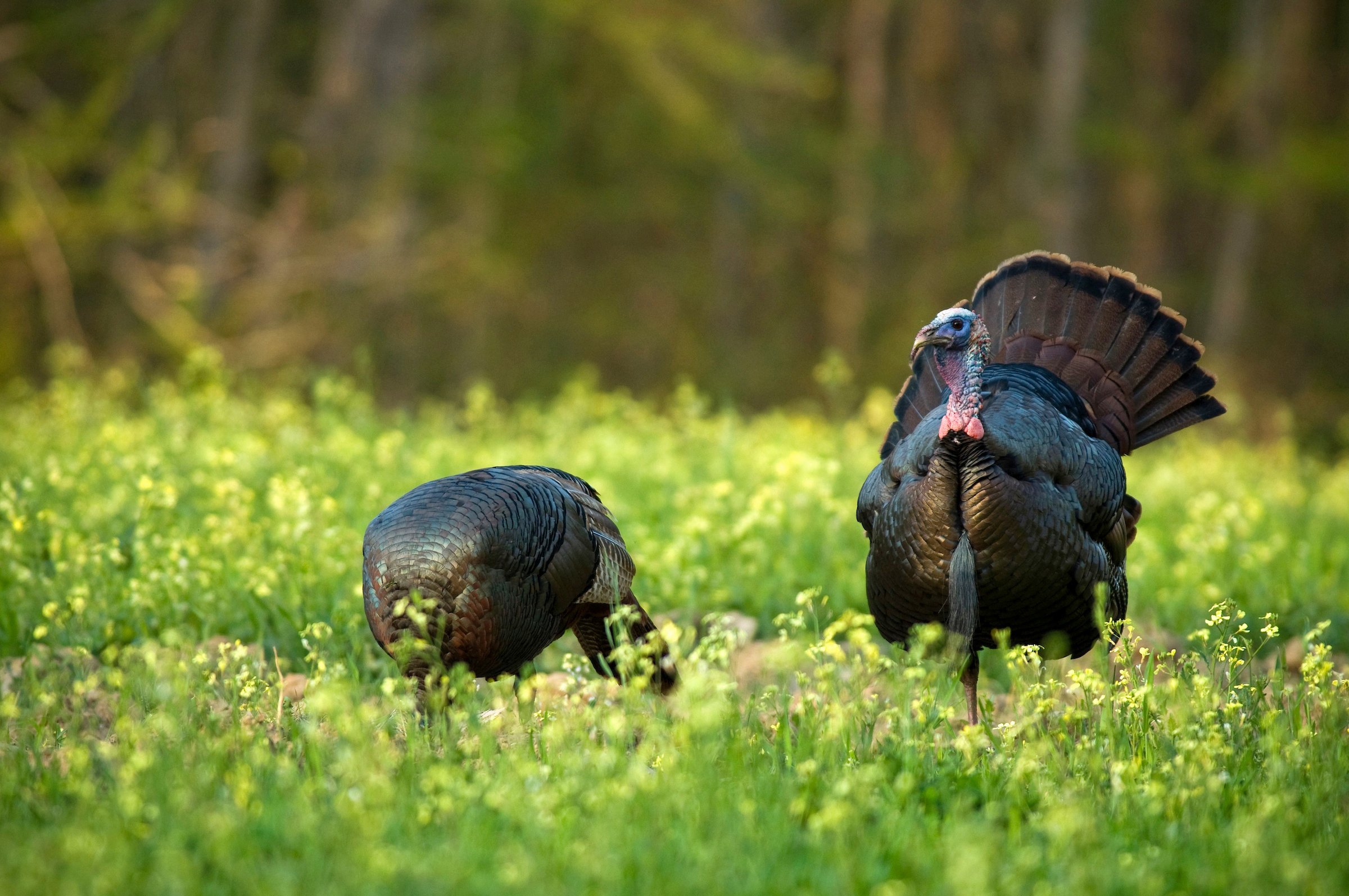
A great many turkeys will come to your calling from the roost and will then take up a regular pattern of movement, first toward you and then away. Never coming close enough to shoot and never getting out of hearing, and all the time gobbling every 30 seconds or so. You know where they are every minute of the time, but a fat lot of good it does you. I have upon occasion waited them out to the other end of their track, yelped once to turn them back, and then got up and ran a fast 40 yards toward them and hidden quickly and shut up. Occasionally they will come back gobbling, and when they do stop they are 40 yards closer than they think they are, and you can point out this error to them with one round.
On just as many occasions, I have jumped up to perform this ingenious maneuver and when I got forward and hid I did not ever hear another sound. This led me to believe that the turkey was not as far away as I thought he was when I moved, and when he saw me move he ran off. I have got up to move, either forward, or to get around turkeys, and have heard them go off on the ground gobbling until they faded out of hearing.
One example will serve.
Some three or four years ago I was in the process of leaving the woods one spring morning, having heard nothing. On the way back to the car I stopped and yelped down a small hollow that ran northeasterly, away from the back end of some abandoned fields.
A turkey gobbled back instantly, no more than 200 yards away. I stepped just out of the edge of the fields, cut three or four huckleberry bushes to stick for a blind, sat down with my back against a big pine, stuck my bushes, and waited. Immediately to my front and running downhill from left to right was a gentle hollow, thickly stocked with young sweetgum eight or 10 inches in diameter. The floor of this hollow was as clean as a park.
Across the hollow, and also running right down to the edge of the backwater, was what is called a two-aged stand of pine. Loblolly and shortleaf of large diameter, but short, limby as hell, and with a bole taper like inverted ice cream cones. Under this overstory was a fairly well stocked stand of pine seedlings, six inches high and up, but clean enough to see through well. The far side of the gum hollow, where it bordered the pine, was about 80 yards away.
It was after 7:30 in the morning, far too late for a turkey to be gobbling that much unless he was alone, and a bright sunny day without a breath of wind.
Turkeys that gobble very much at this late hour generally have not yet gathered up a harem. And if two and a half hours of daylight have gone by without a girl, they tend to consider themselves to be two and a half hours in arrears and are rather desperately anxious to correct what has become a disgraceful situation.
This turkey was alone — because I saw him.
He would approach, gobbling, walk south toward me along the backwater, come to the far side of the gum hollow, stop, drum, strut and pirouette, walk back and forth, turn around and go back north, still gobbling. He would go out of sight among the pine seedlings, keep going until by the sound of him I would judge him to be 200 yards away, and when at this point I would yelp, he would turn around and come back and do the same thing all over again.
Gobbling every minute, he did this four or five times.
Finally, I waited him out to the far side of his range, put all the sex I could scrape up into one yelp, jumped up and ran down to the bottom of the gum hollow and lay flat behind a log. This time when he came back, he stopped 80 yards from where I lay.
Next, I let him get back to the far side of his range again, got up and ran back past my original blind by the pine tree, went 50 yards out into the fields, yelped like Cynthia calling to Propertius, and then did the 100 in a flat 12 seconds to get back to my log in the bottom of the gum hollow. I beat him back all right, and he came back all right, but he came back and stopped within an inch of where he had stopped the first time.
Cursing all turkeys, I let him get all the way out again, yelped, and got up and made a long fast circle back out through the fields, northwest through some mixed pine and hardwood thickets, and then due east down to the edge of the backwater to a point I judged was within gunshot of the northernmost end of his range. I couldn’t yelp when I first got there, having to devote all my attention to breathing.
He raised all sorts of hell down where I had just come from, and when I finally gathered up enough air to yelp, he answered at once and started up toward me. So help me, he stopped 10 yards out of gunshot and went through the same business of strutting and drumming and fanning his tail and walking off.
I stayed up there and got humiliated again a time or two and then yelped again, got up again, went halfway back around him and got down to within range of the backwater and midway along his track. He was passing by when I started down the hill toward him, so I had to wait to let him go by before moving down to wait for him to come back.
I sat there, listening to him gobble, knowing he had to come right back by me, and drowning in self esteem. I felt exactly like the man in Twain’s line, the man “With the calm confidence of a Christian, with four aces.”
He stayed up on the north end, where I had just come from, as firmly as if he had been tied to a tree, and he gobbled until I got tired of hearing him.
At 11:30 I got up and walked up there and ran him off, yelling shoo as loud as I could.
He flew out over the backwater looking roughly the size of a moa. Turkeys that big really ought to be shot with double-barreled lion rifles. They might charge if they were only wounded, and you could get yourself in a hell of a shape if you did not have positive stopping power in the second barrel.
Just because moving works once does not make it a sovereign remedy, and turkeys, no matter what turkey hunters may feel about it, don’t have to do anything.
One final word on the whole subject. As much as I believe in it personally and feel comfortable doing it, and recommend it every chance I get, there are places and instances where moving is impossible.
A big river swamp is one of those places.
In the first place it is absolutely flat in there. There may be six-inch ridges from time to time and there are eight-inch depressions, where overcup oak grows. There are some striking falls of a foot and a half down into tupelo or cypress ponds, but there is no other relief — none. In the fall when the sloughs dry up you can get down into the bottom of the slough bed, some six or eight feet below the normal floor, but only for this particular period of the year. Taking advantage of the terrain to move about in river swamps must be left out of your bag of tricks. In almost every case there, you can sit down and see a man walking a quarter of a mile away.
Except in exceptional instances, attempting to move on turkeys in this area is stupid. There will be all kinds of situations that arise with turkeys 200 yards off and in absolutely plain sight, and no matter how badly you want to do it you cannot move.
If there is a rule for river swamps it may be stated simply that where you sit is where you stay.
In plain fact, the mere selection of a place to hide and call from in there is extremely difficult. There are some blowdowns, of course, and some places where tangles of vines wrap around the bases of trees. After the timber has been cut, if single-tree selection or patch clearcutting were used, there will be clumps of briars and some low seedlings. Yellow top in the spring will make thick clumps of foliage, often too thick, and there are some patches of palmetto. By and large, though, if you hunt in river swamps, whatever you intend to hide behind you must bring into the swamp with you. Whether you use a roll of camouflage netting or intend to cut bushes, you had better have them with you when you go. In there, as in Macbeth, Birnam Wood must come to Dunsinane.
And you have to hide. Hill or swamp, in the spring you have got to do it. There is all sorts of evidence to suggest that a turkey is color-blind. Maybe he is. But he can certainly tell dark colors from light ones, and he is the world’s best at picking out motion.
Perhaps in the early fall, if a man could sit with the utter stillness of a professional naturalist, he could depend upon calling up young gobblers, remaining immobile against a dark background, and raising the gun to shoot in one motion at the last. I say maybe only because I am willing to listen to another man’s point of view, not because I really believe in it.
To go through life in the spring, dealing with old gobblers, attempting to sit out in the open, and depending upon immobility to get the job done, is folly.
Nobody, nowhere, no time, is going to get away with it on anything like a regular basis.