
We may earn revenue from the products available on this page and participate in affiliate programs. Learn More ›
Despite skyrocketing prices on everything from eggs to hunting leases, you can still buy high-quality and even USA-made hunting knives for under $100. Spending more will get you better steel and nicer build quality, but these budget-friendly knives perform with the best of them. Here are my top picks based on head-to-head testing and use in the field.
- Outdoor Edge RazorPro L
- Buck Alpha Scout Select
- Boker M.U.K.
- Gerber EXO MOD Caper
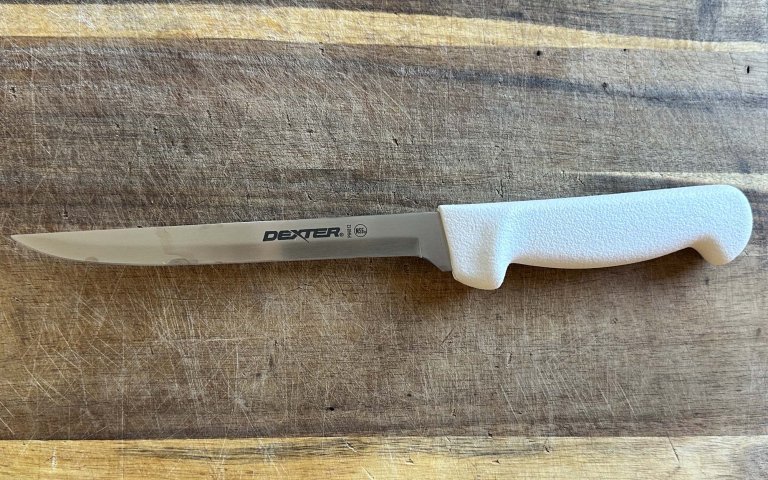
- Dexter Boning and 7-inch Fillet Knife
The Best Budget Hunting Knives We’ve Tested
Outdoor Edge RazorPro L

Pros
- Easy to replace blades
- Good blade shape
Cons
- Heavier than some replaceable blade knives
Key Features
- Blade Length: 3.5 inches
- Blade Steel: Japanese 420J2 Stainless
- Nylon pouch
- Weight: 6.4 ounces
- Price: $40
A few years ago I found myself on the side of a mountain with five others trying to break down two elk as quickly as possible. We were hoping to get out of there before tempting the two grizzly bears just a ridge over. Everyone had different replaceable blade knives, but about halfway through the first elk it was obvious, which of the knives was the best — the RazorPro L. Its blades were the easiest to replace and the mounting system was trouble free. Other knives got gummed up and the blades came off, but the RazorPro L chugged through deboning the two elk flawlessly.
In my head-to-head test, the Outdoor Edge RazorPro L once again rose to the top. One of the most important tests I did with the replaceable blade knives was seeing how easy it was to replace the blades while they were all bloody and had meat bits wedged into the voids. I could change out the blades on the RazorPro L in a fraction of the time of the other knives.
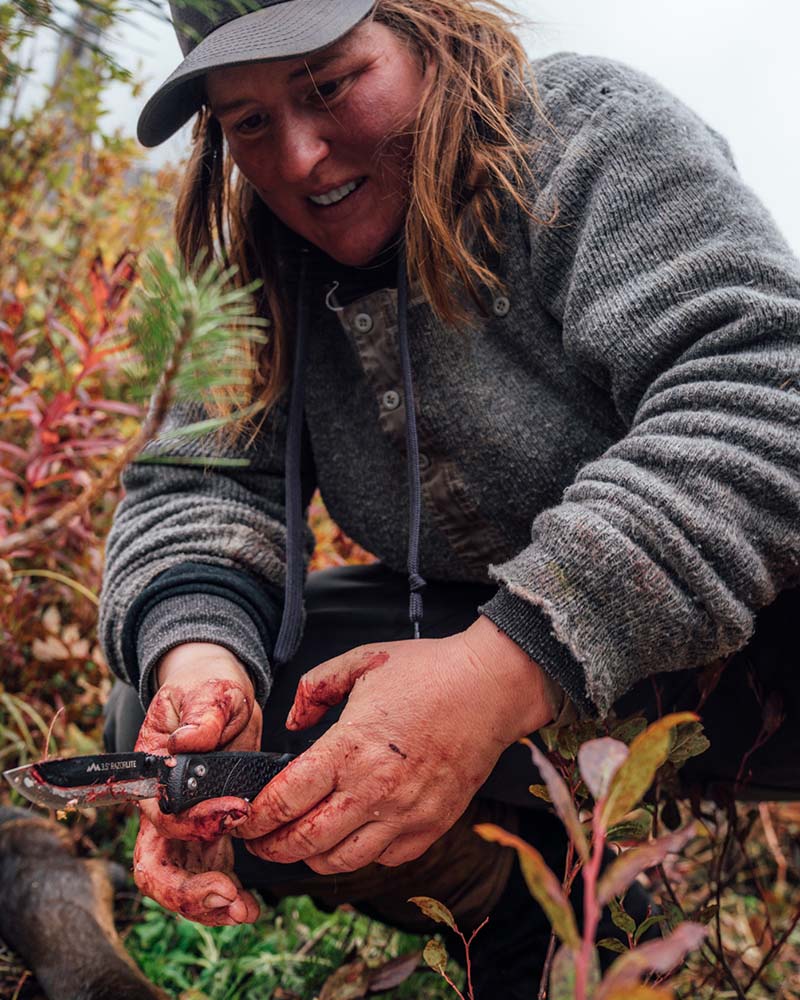
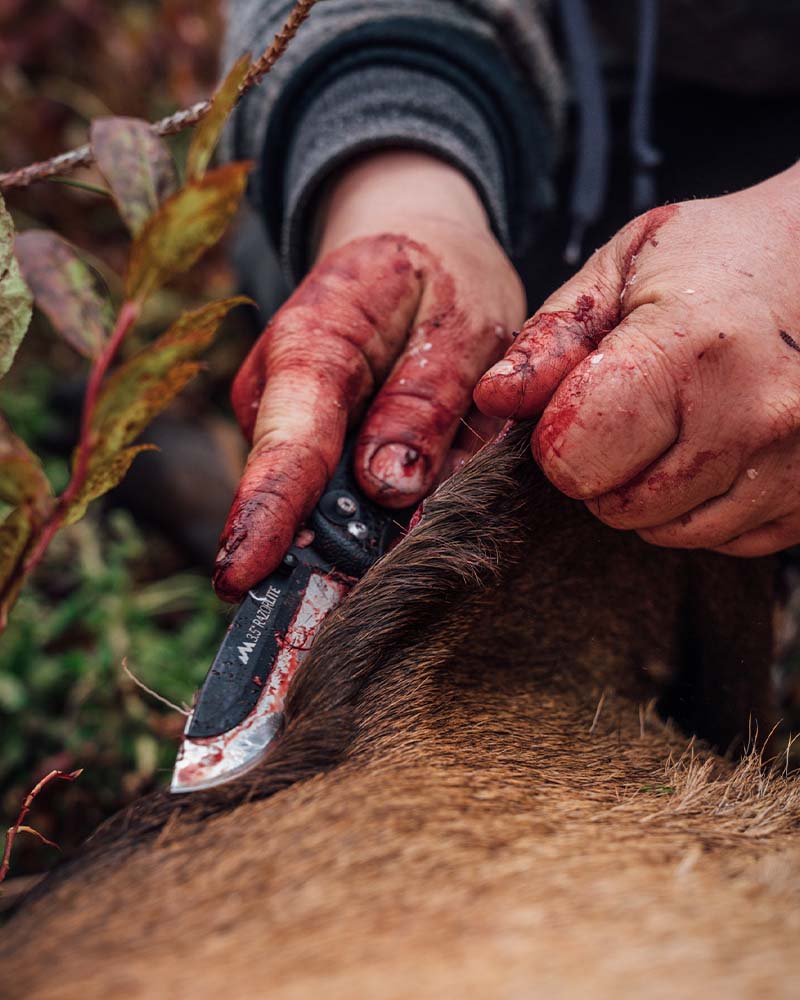
While the RazorPro L isn’t the lightest replaceable blade knife, it’s the most trouble-free design I’ve used. I don’t have blades pop off or break and can make it through an animal on one blade. When it’s time to swap a blade you just press the button, slide the blade out, and slide a new blade in. The rubberized handle stays grippy when your hands are covered in blood. The 3.5-inch blade is a good length for balancing maneuverability and cutting efficiency.
Buck Alpha Scout Select

Pros
- Comfortable handle
- Good value
Cons
- Sheath needs improvement
Key Features
- Price: $68
- Blade Length: 2 ⅞ inch
- 420 HC blade
- Weight: 2.8 ounces
- Made in USA (Imported Sheath)
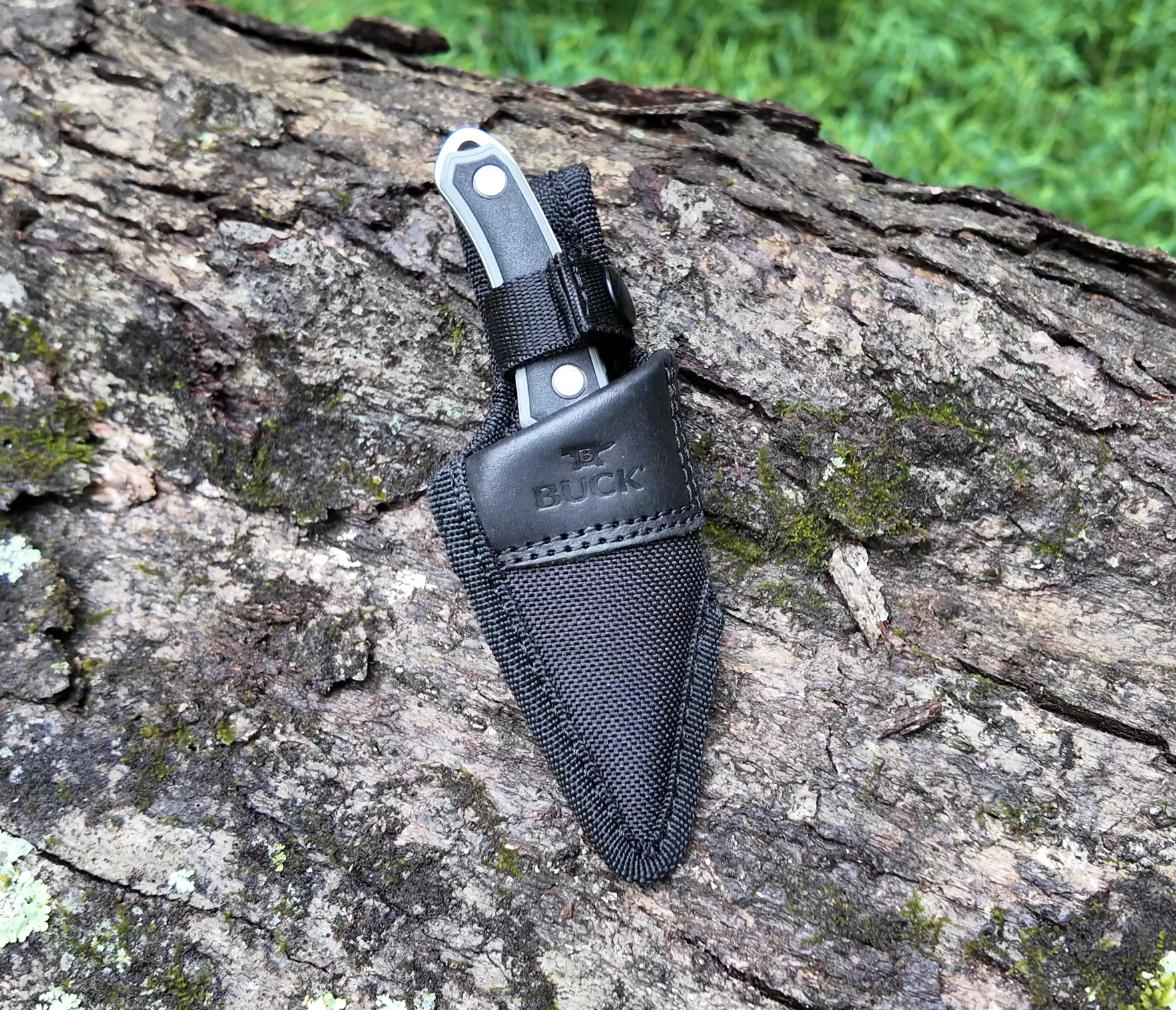
The Buck Alpha Scout Select is made in the USA and costs $68. It cuts well, has decent steel, and I like its ergonomics. Although, the knife can be a little slippery when it gets covered in fat and blood. The sheath is this knife’s weak point. Securing the knife in the sheath takes two hands and I’ve yet to get it buttoned up in one try.
If you like the Alpha Scout’s design but want a larger blade, take a look at the Buck Alpha Hunter with a 3.6-inch blade.
Boker M.U.K.

Pros
- Good sheath
- Good cutting performance
Cons
- Some sharp corners on grip
Key Features
- Price: $50
- Blade Length: 2.4 inches
- Blade Steel: 14C28N
- Weight: 2.1 ounces
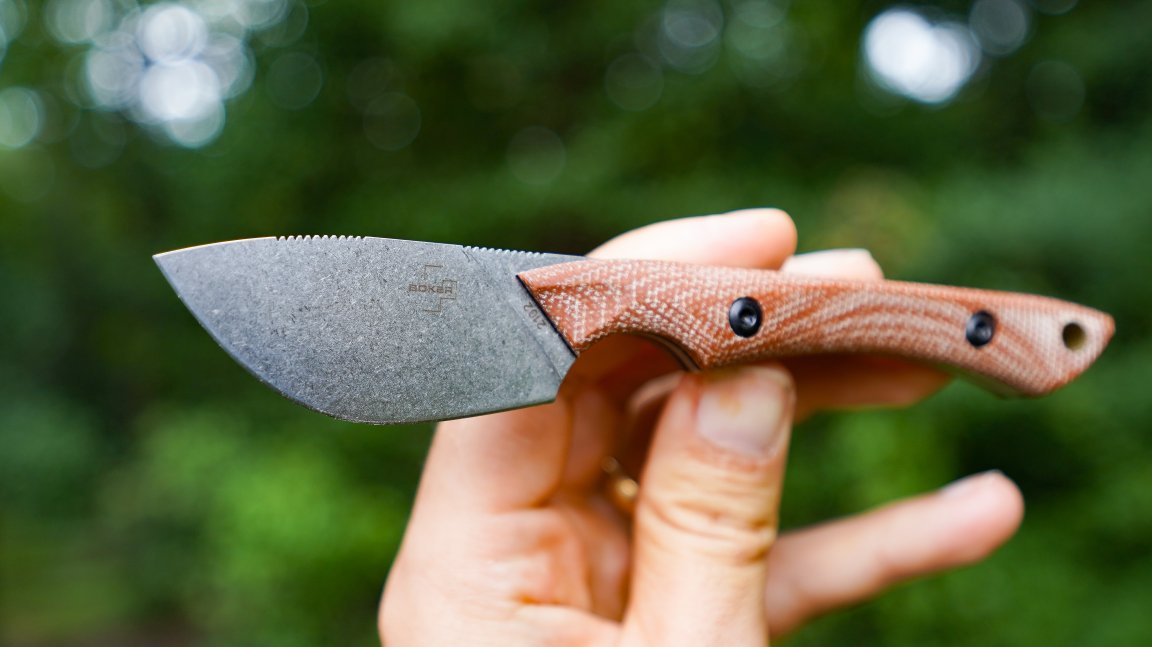
The M.U.K. is an undeniably cool knife, and I was pleasantly surprised it was a performer too. The blade has a ton of belly, which is great for skinning cuts and it worked well for slicing up a backstrap. The ergonomics are good, but the handle could be longer and the back end of the handle comes to a sharp point. The sheath is well made and it comes with a pocket clip, so you can drop the knife in your front pocket.
Gerber EXO MOD Caper

Pros
- Light
Cons
- Slippery handle
Key Features
- Price: $30
- Blade Length: 3.25 inches
- Blade Steel 7Cr17MOV
- Weight: 1.75 ounces (2.95 ounces with sheath)
The EXO MOD Caper is a slippery knife with very little traction. But it is a light knife and a decent cutter. The sheath is exceptionally good for a budget knife.
Dexter Boning and 7-inch Fillet Knife
Pros
- Comes sharp and easy to resharpen
- Just the right amount of flex
- Great value
Cons
- Handle can get slick when butchering animals that have a lot of fat
Key Features
- Blade Length: 7-inches
- Made in USA
- Price: $13
- Plastic grip
I love expensive knives, but my butchering knives are all inexpensive because they work and I don’t have to be precious with them. The Dexter knives are a staple for professional butchers and I’ve adopted them as my preferred boning and fillet knives. They come sharp out of the package and are easy to touch up on a honing rod.
Once I have a deer skinned and deboned, I use the boning knife to get meat off a deer and then the fillet knife to trim up silver skin and cut portions. The boning knife has just the right amount of flex to get close to bones, but not too much flex that you lose control. For $13 you get a USA-made knife that’s practically perfect for the job it was designed for.
How to Choose a Knife

Steel
We could nerd out on metallurgy, but that’s a topic for another day. Instead, let’s focus on the two main types of steel: carbon and stainless. A carbon steel blade is easier to heat treat, it sharpens quickly, it’s less brittle, and it will rust if kept wet. Stainless steel takes more work to sharpen, won’t rust as easily, holds an edge longer, and is typically harder and, therefore, more brittle.
Size
A 2- to 4-inch knife, like a Woodsman Knives Peace River, is ideal for hunting because it’s long enough to efficiently cut while being controllable. The benefits of a longer blade are that it’s more surface area to use, and your blade won’t get dull as quickly as a result. The downsides of a longer blade are that it’ll be heavier and harder to make precise cuts with.
Blade Shape
Clip and drop points are my favorite style for hunting knives because the tip runs in line with the center of the blade, which makes it easy to know where it is. They also have enough belly for slicing cuts. I’d avoid anything with a trailing point because they can easily poke holes in organs while making your entry cut.
Replaceable or Fixed Blade
I used to exclusively use replaceable blade knives and I still use them on occasion. But, I find myself leaning toward a sturdy fixed blade. The reliability of a fixed blade is bonus, and they’re much easier to clean after a long night of butchering. Fat and bits of meat end up in every crevice of a replaceable blade, even the Tyto, and it makes them a pain to clean out. The positives of a replaceable blade knife are that you can go from a dull to a razor edge in seconds. That’s especially beneficial when you need to work quickly due to warm temperatures.
Test Methodology
I put 15 fixed blades and five replaceable knives in a head-to-head test. I evaluated their cutting performance, ergonomics, blade steel, sheath, and design. The bulk of my testing involved cutting and deboning a wide variety of meat, which allowed me to directly compare the knives’ performance. Getting the grips bloody and slicked up with fat allowed me to test their ergonomics and see how easy it is to change a replaceable blade while covered in blood.