
We may earn revenue from the products available on this page and participate in affiliate programs. Learn More ›
A lot of hunting gear has reached a performance plateau, but that hasn’t happened yet for the best trail cameras. The new models released this year are more advanced and easier to use than the previous generation. So, if you’re in the market for a new trail cam you’ll be treated to more features, better photos, and more performance for your money than ever before.
For the most part, cellular trail cameras have taken over the market. These cameras pair with apps and send images and videos directly to your phone. There are now several excellent cell cam options in the $100 to $150 range. This is on par with what a decent standard camera costs (but of course, you also have to pay for the data plan with cell cams). That’s why we focused most of our review on cell cams.
But not all hunting areas get cell reception and not all states allow the use of cellular trail cameras for hunting. With this in mind, we’ve included two great standard trail camera options.
We’ve also noticed that there’s a growing category of security cam and trail cam hybrids. These cameras promise a live video feed from the woods. In our field testing, however, most of these cameras didn’t perform up to our standards, and only one of them made the cut for this review.
Our trail camera testing really never ends. We’ll continue running these cameras and new additions throughout the fall. In this review, we’ve included both brand-new cameras and the top-performing cameras from previous seasons.
Cell Cams (Jump to this section)
- Best Overall: Tactacam REVEAL Pro 4.0 Solar
- Best Value: Stealth Cam Fusion Max 3
- Made in America: Reconyx Hyperfire 2 Cellular
- Great Data Plan: Spartan GoLive 2
Standard Cams (Jump to this section)
- Best Overall: Lone Wolf Custom Gear Undercover Trail Camera
Security Cams (Jump to this section)
- Best Overall: Ebitcam S40
Trail Camera Accessories We Like
- Camera Stand: Stealth Cam Mounting Post
- SD Card: Sandisk Extreme Pro
- Batteries: Energizer Lithium
- Tree Mount: Stealth Cam Screw-In Tree Mounts
How We Tested the Best Trail Cameras
Each camera in this review was tested while selecting the best cellular trail cameras and the best budget trail cameras, and represents the top performers from those tests. We put each camera through a consistent test protocol to evaluate trigger speed, detection range, image quality, and reliability. Here’s how we did it.

Each cellular trail camera was set to its fastest shooting mode and highest sensitivity. Markers were placed at 10 feet, 60 feet, and 110 feet. The tester walked past the camera (from left to right, then right to left) at a medium pace at each distance. The walk-through test was then repeated at night. The test is meant to measure the camera’s detection range, trigger speed, shutter speed, and flash range. We looked for blank photos, failures to trigger, blurry images, and overall photo quality.
From there, we set each camera in the field to see how it performed in real-world conditions. In the field, we evaluated the camera’s photo quality, reliability, and ease of setup. This included the ability to use each camera’s app to review and sort photos. Some of these cameras were field tested for an entire hunting season. Others are so new that they’ve only been in the field for a few weeks. We’re constantly testing the latest cameras and will update this review later this fall.

The Test Team and Locations
- Scott Einsmann, gear editor, Virginia
- Drew Palmer, contributor, Kansas
- Alex Robinson, editor-in-chief, Minnesota and Wisconsin
Cell Cams, Reviews and Recommendations
Read our full cellular trail camera guide for more options.
Best Overall: Tactacam REVEAL Pro 4.0 Solar
Pros
- A $290 package for $200
- Good battery life
- Good image quality
- Capable app
Cons
- Camera is not compatible with previous lithium cartridge models
Key Features
- Warranty: 1 year from activation date
- Photo Definition: 4K (UHD), 2.5K (WQHD)
- Flash Range: Low Glow – 96 feet; No Glow – 80 feet
- Memory: 8GB internal storage with optional SD card slot
- Power: R5 battery and solar panel (included)
- External Power: DC 12V-2A input
- Live video
- Built-in monitor
- Built-in GPS
- Two-axis tree mount
- Includes: REVEAL Pro 4.0, solar panel and R5 battery
- Price: $200
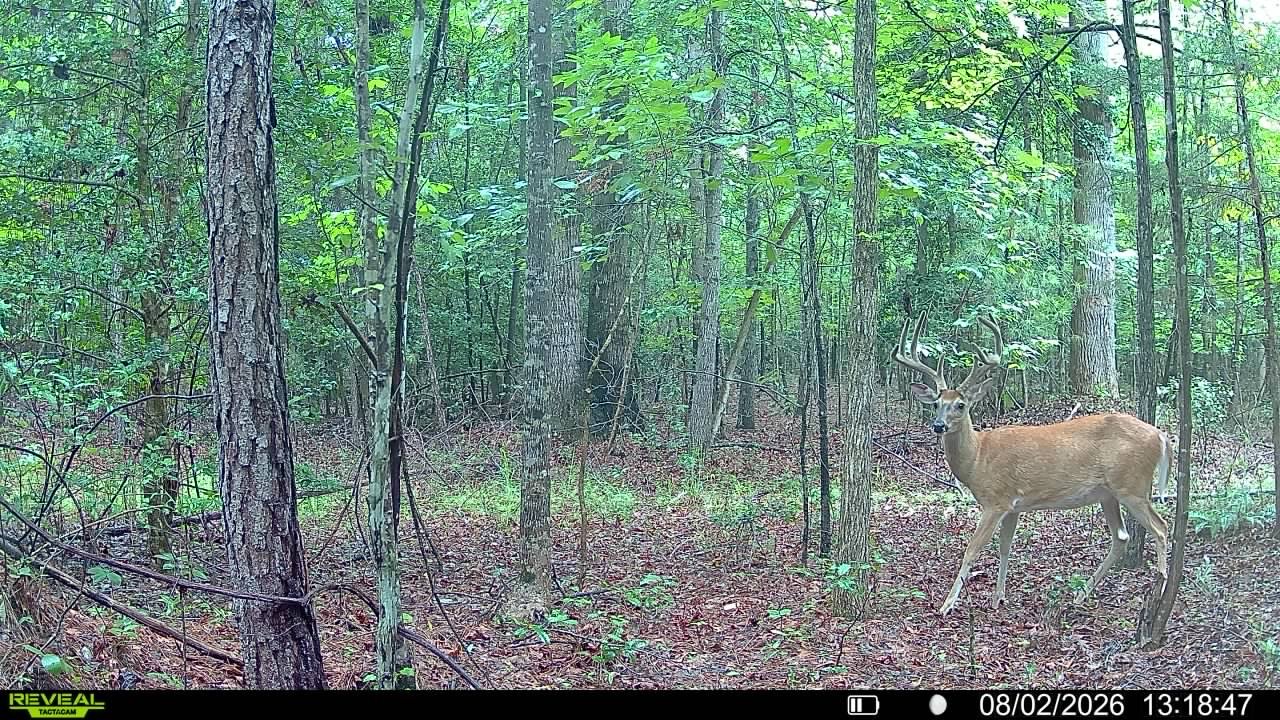
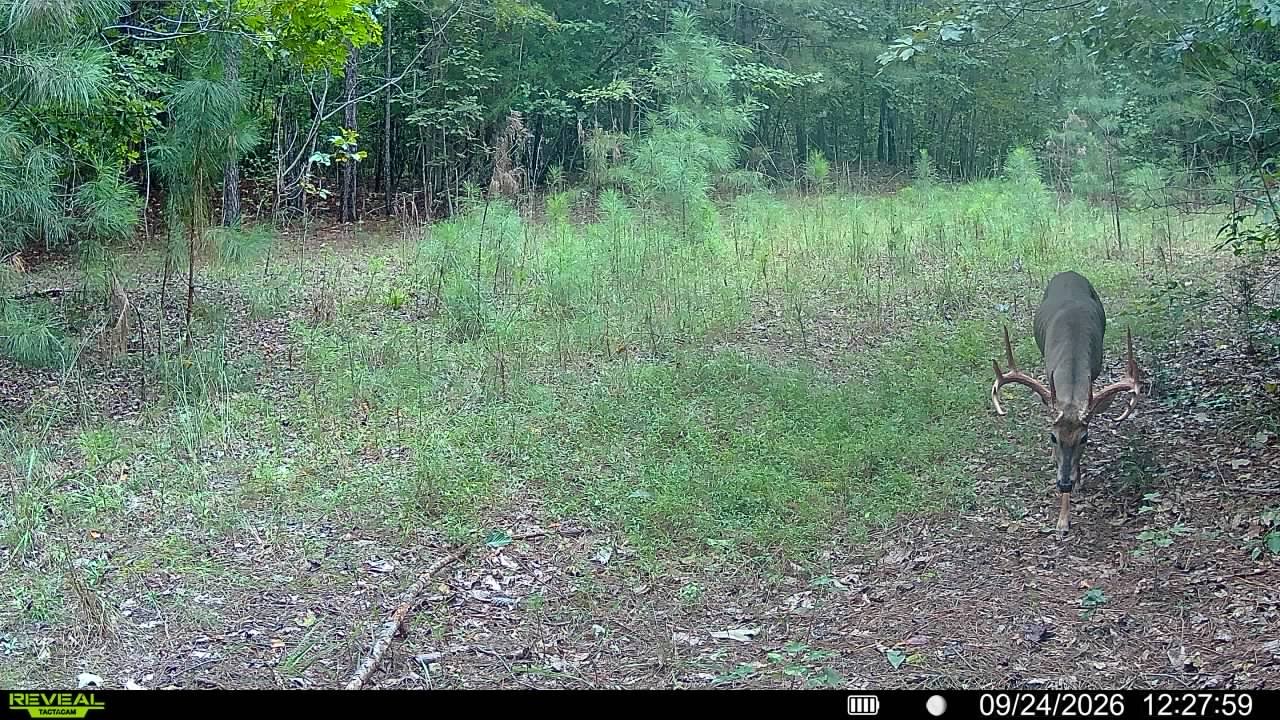
In the walk-through test the Pro 4.0 triggered with 100 percent reliability at 10 and 60 feet, catching me as I entered the frame from both directions during the day and at night. It did not trigger at 110 feet, day or night, which isn’t uncommon. With the camera set to Low Glow, it puts out a nice, even IR flash that illuminates a wide area out to about 100 feet. What I appreciate most is that it doesn’t blow out detail up close and still has plenty of brightness to clearly see animals at 60 feet. Like the 3.0, you can adjust between No Glow and Low Glow settings right in the app.
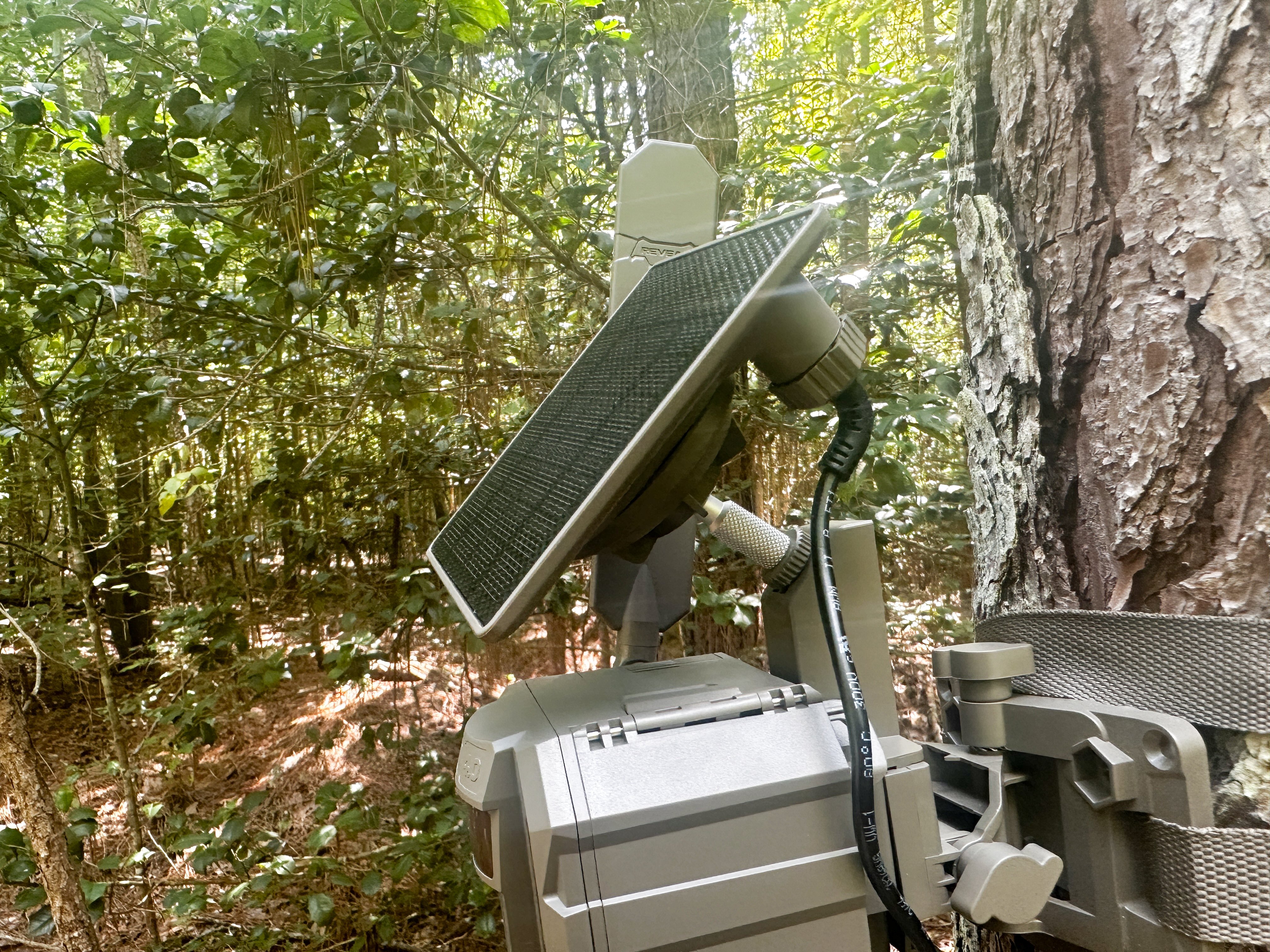
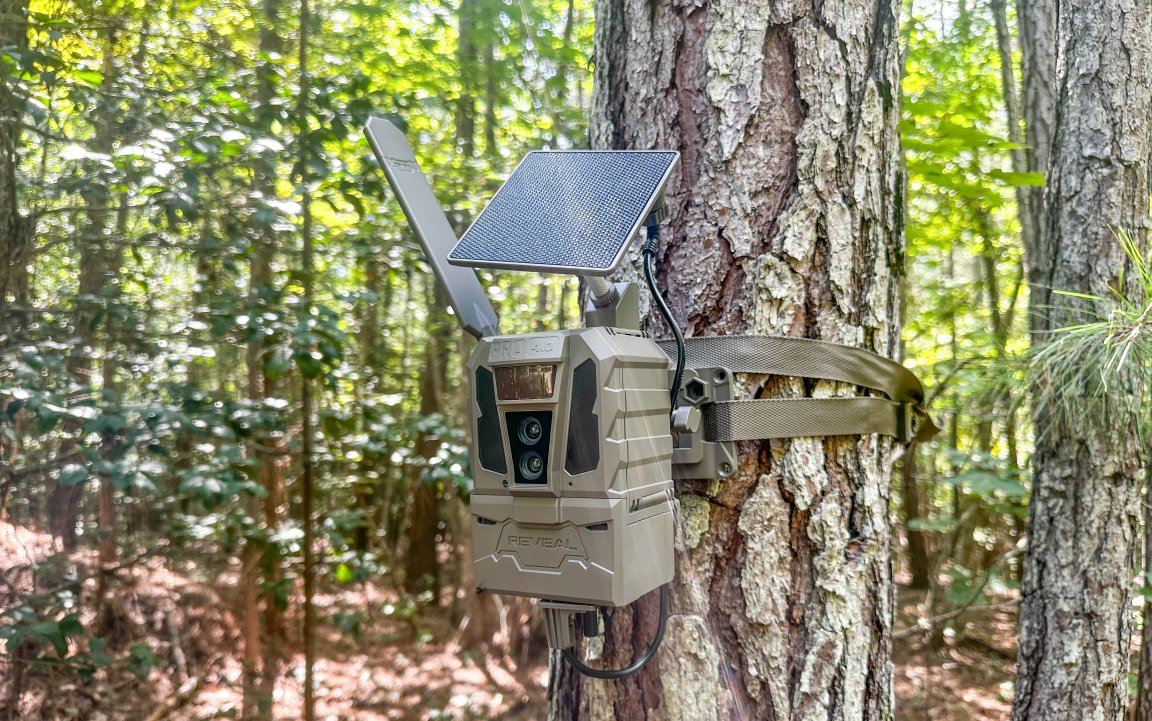
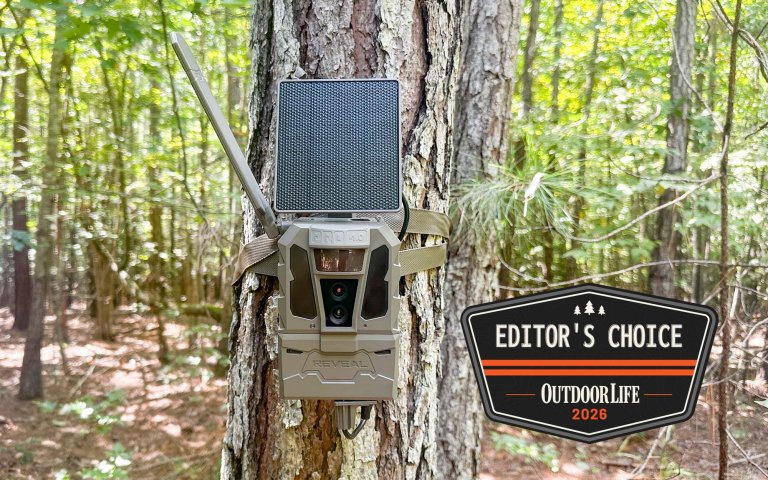
The new Reveal 4.0 cameras come in three models, the 4.0, Pro 4.0, and Pro 4.0 Solar. I’ve tested all three and they all perform great, but I’d recommend the Solar for most people because it’s such a great value. If you were to buy a 4.0 Pro and an R5 battery pack separately, your cart total would be $220. But the Pro 4.0 Solar costs $200 and includes a solar panel — so it’s the better buy for anyone who’s already thinking about getting an R5 for their trail camera. If you want to get the larger R10 battery and don’t need the solar panel then the 4.0 or Pro 4.0 would be the better option — the main difference between the two is the Pro’s built-in monitor.

In the field, the 4.0 Pro and 4.0 Pro Solar are capturing valuable deer intel for me. I have one set up on a travel corridor and it’s grabbing photos of deer at 20 to 25 yards. One of my favorite Tactacam features is that you can have the camera set to take a photo and a video on the same trigger. This is huge in the timber when the deer’s head is behind a tree in the photo or you want to see how deer are entering or exiting a spot.
The battery life on the Reveal cameras is good. The R5 battery is lasting me a little over a month with instant send and several hundred photos per week. If you really want to put a camera out for the entire season, the R10 battery will double the R5’s battery life and you can extend it further with a solar panel.
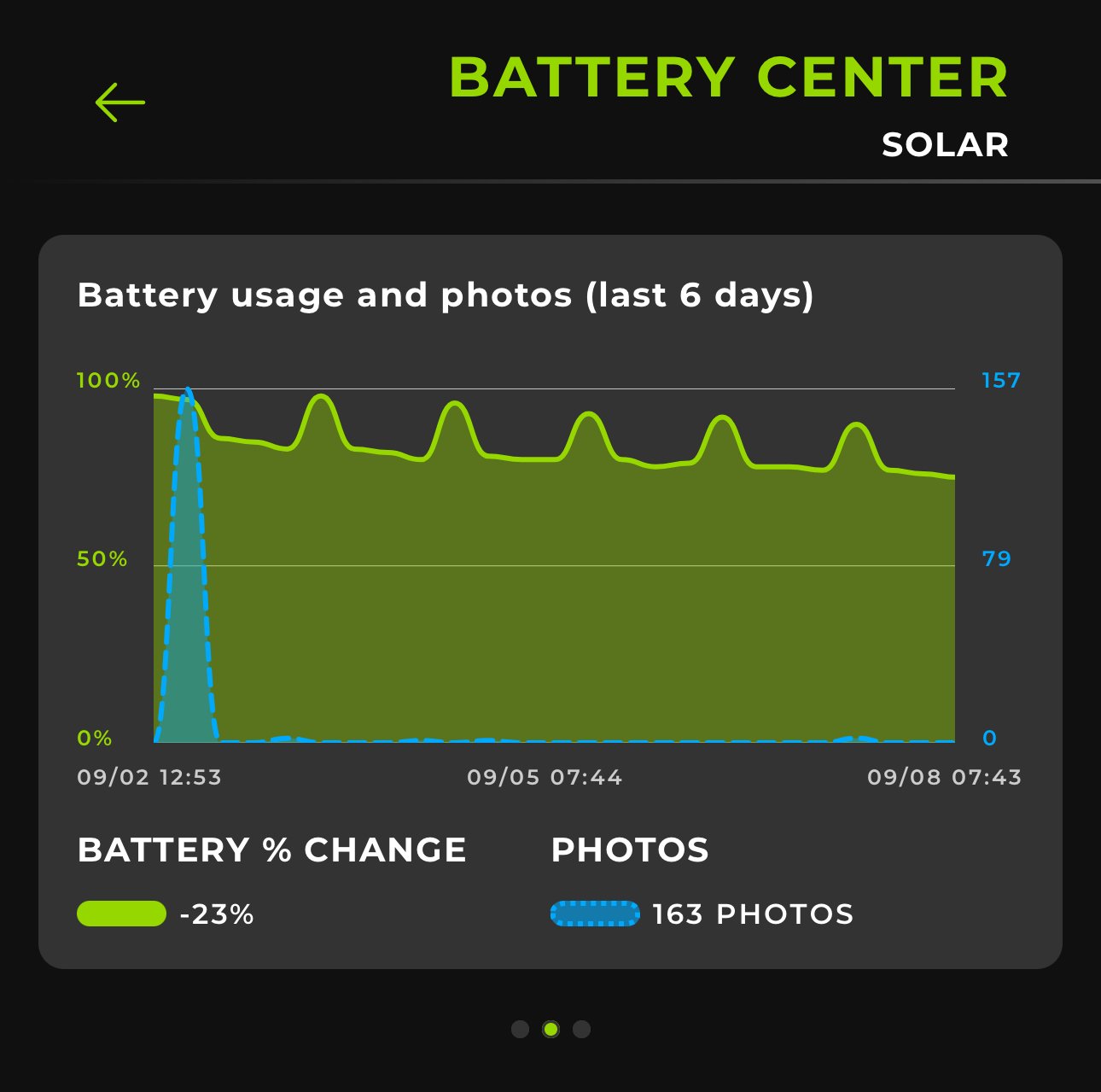
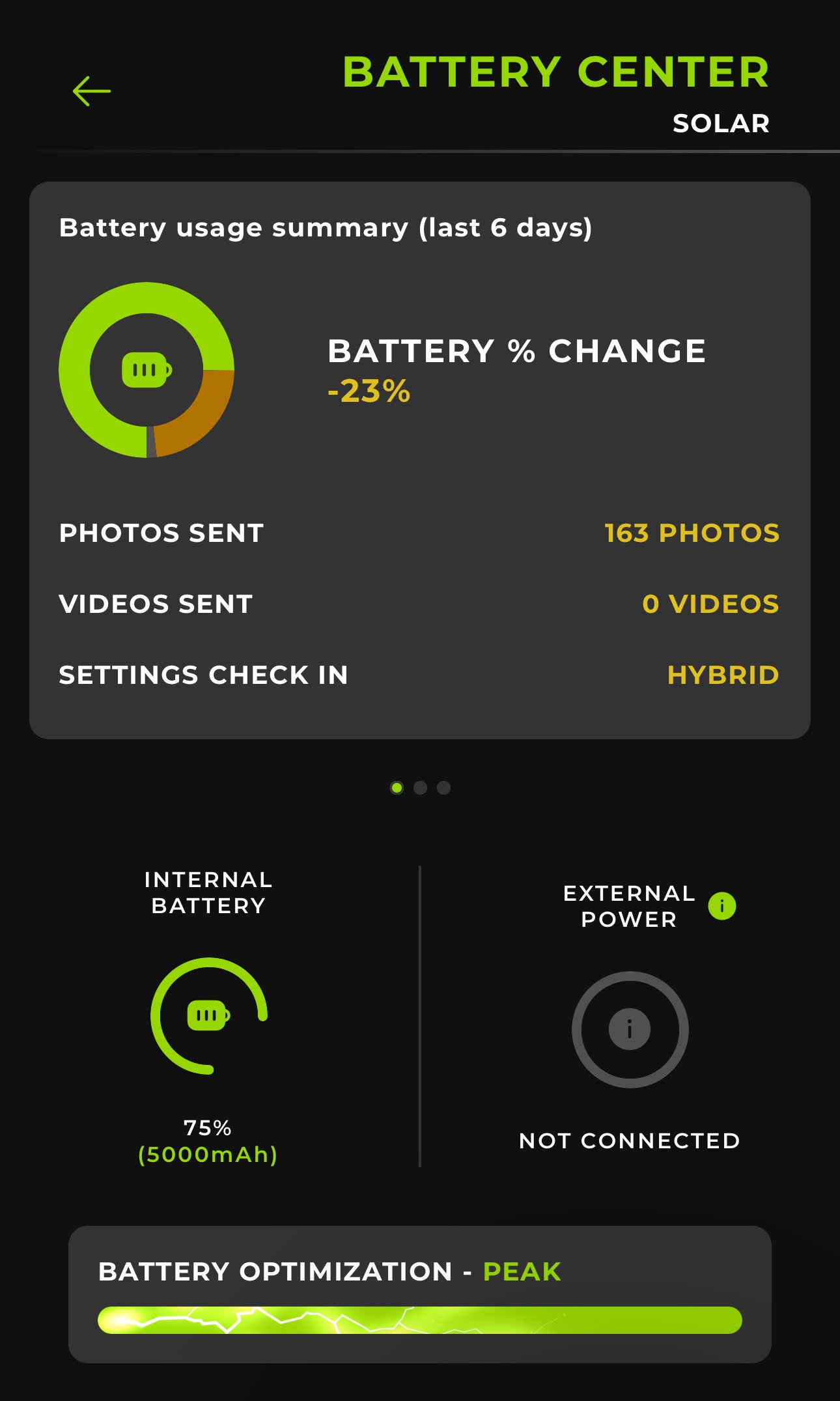
If you’re really into adjusting your camera settings to maximize battery life, there’s a Battery Center feature in the Reveal app. It shows a summary of battery usage, how well the solar panel or external battery pack is performing, and suggested settings for maximizing battery life. You can click the Battery Saver setting and hit Apply to get the most battery life possible — or just keep the settings on Instant if you’re like me.
Best Value: Stealth Cam Fusion Max 3
Pros
- Fast trigger speed
- Feature-rich app
- Excellent battery life
Cons
- Just OK sensitivity
Key Features
- Resolution: 42 MP photos and 1080p video
- Power: 16 AA batteries or rechargeable lithium cartridge
- On-demand photos
- Camera feed can be shared with friends
- Plans from $5 to $20 per month
- GPS App with species filter
- Price: $150 for a two-pack or $80 for one
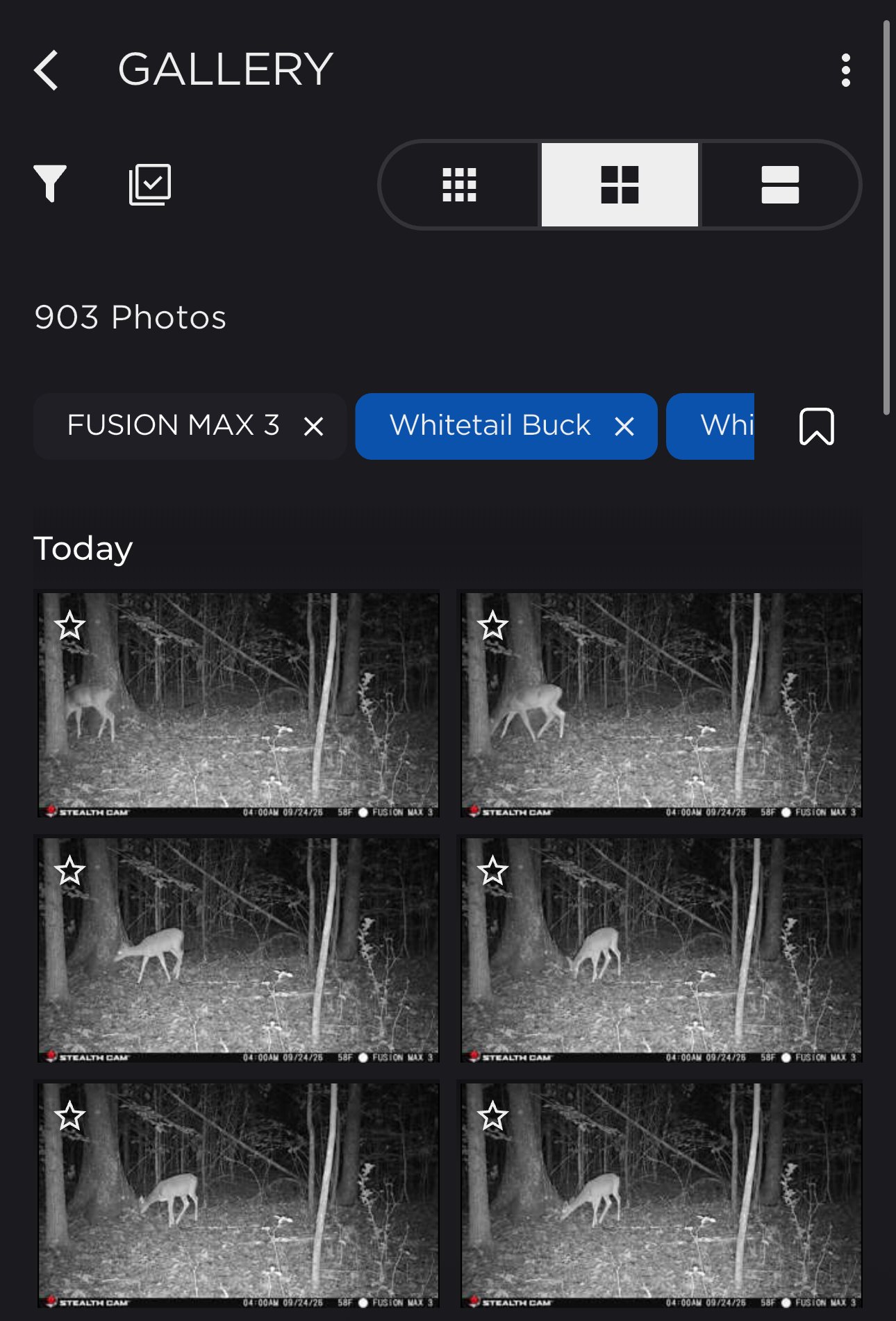
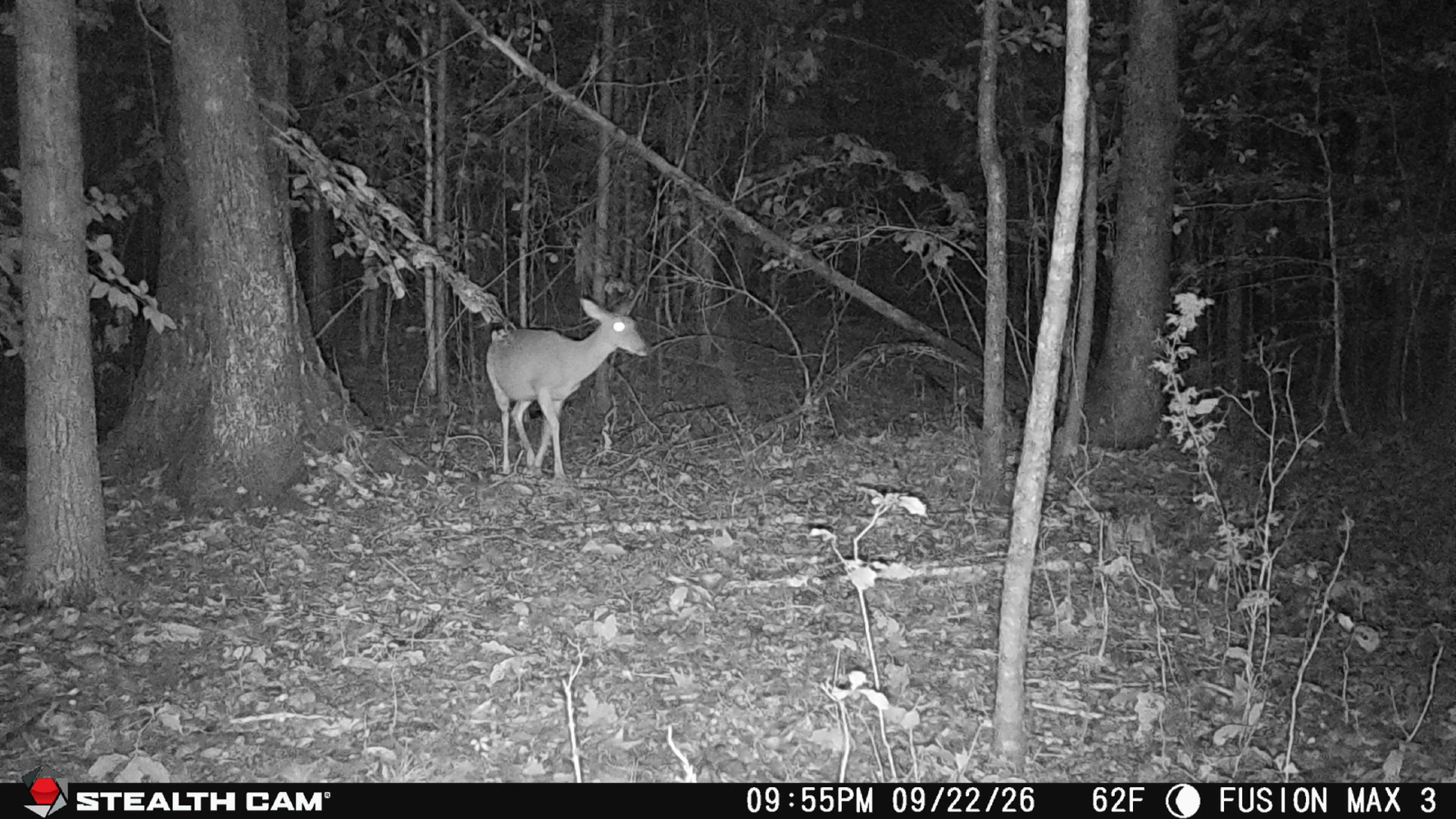
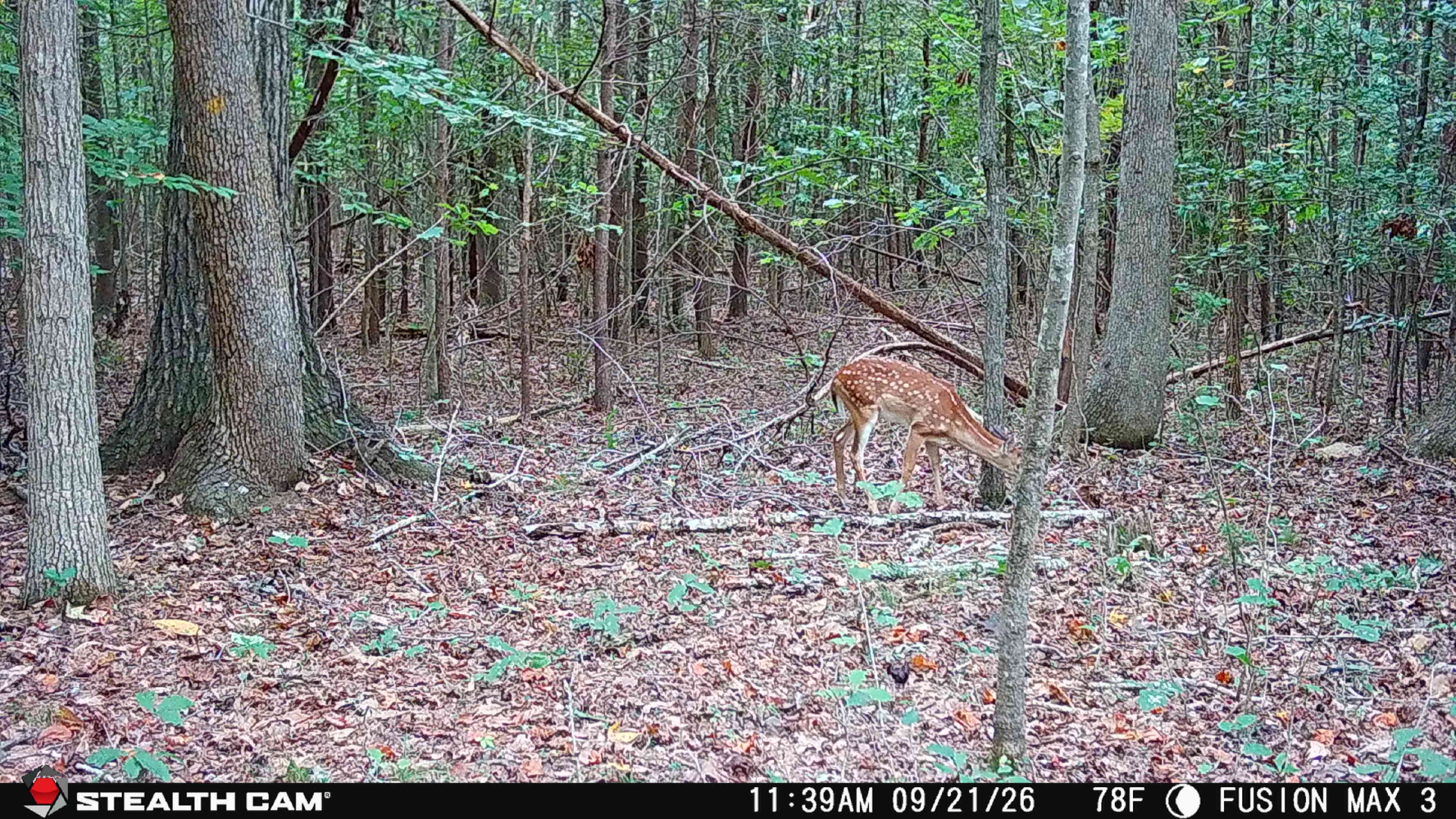
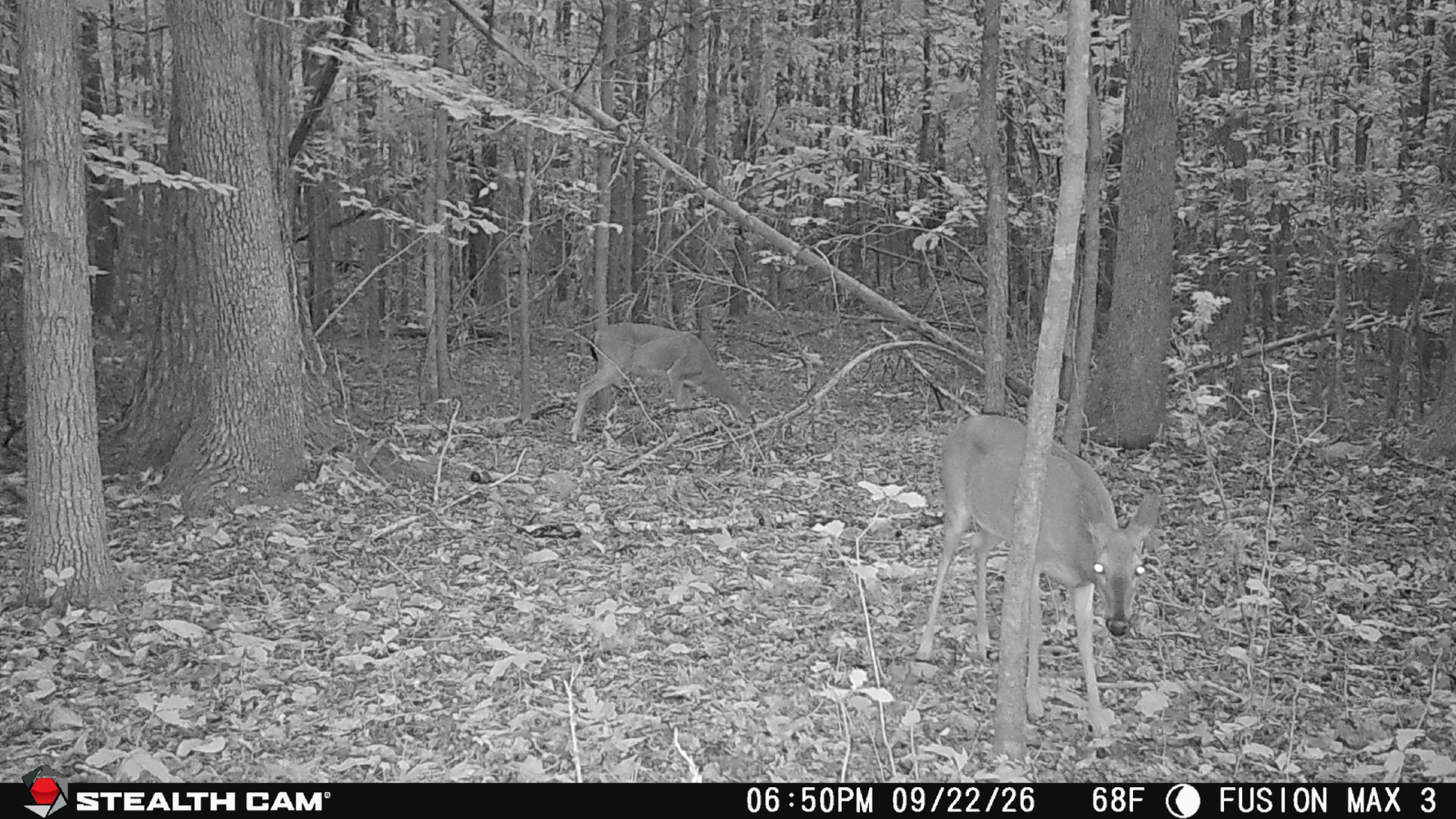
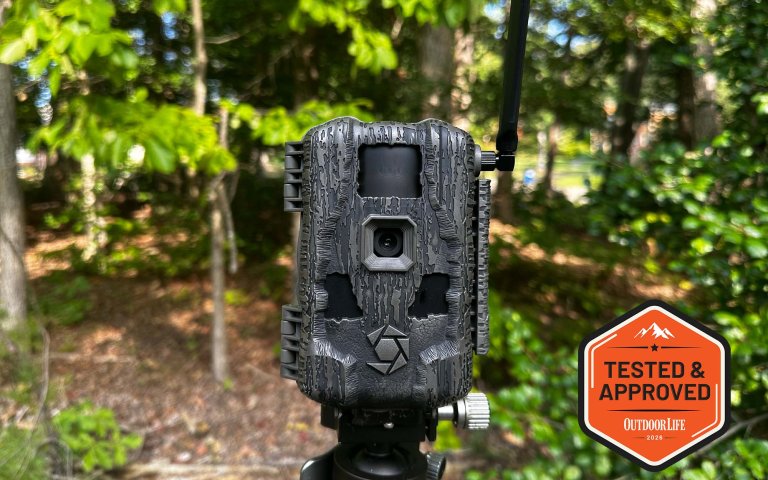
If you buy the Stealth Cam Fusion Max 3 in a two-pack, it costs $75 per camera. It’s packed with features, has a very fast trigger speed and has been reliable in the field with great battery life.
In the daylight walk-through test at 10 feet, it caught me twice while I walked from right to left. When I walked from left to right, I got two blank photos. At 60 feet, it took four photos of me walking right to left and two walking left to right. It didn’t trigger at 110 feet.
The night performance was similar, with multiple captures at 10 and 60 feet and no trigger at 110 feet.
In the field, I aimed the Fusion Max 3 at a cluster of oaks dropping acorns. I don’t have a lot of oaks where I hunt, so several in one spot are a major draw. In a month, the Fusion Max 3 racked up 1,600 photos of deer, squirrels, raccoons and turkeys. The battery is still full with the send setting on instant, though I’m using the optional lithium cartridge upgrade. The photo quality is good overall. The night photos are especially good, with a nice, even flash that doesn’t blow out any details — even when deer are very close to the camera.
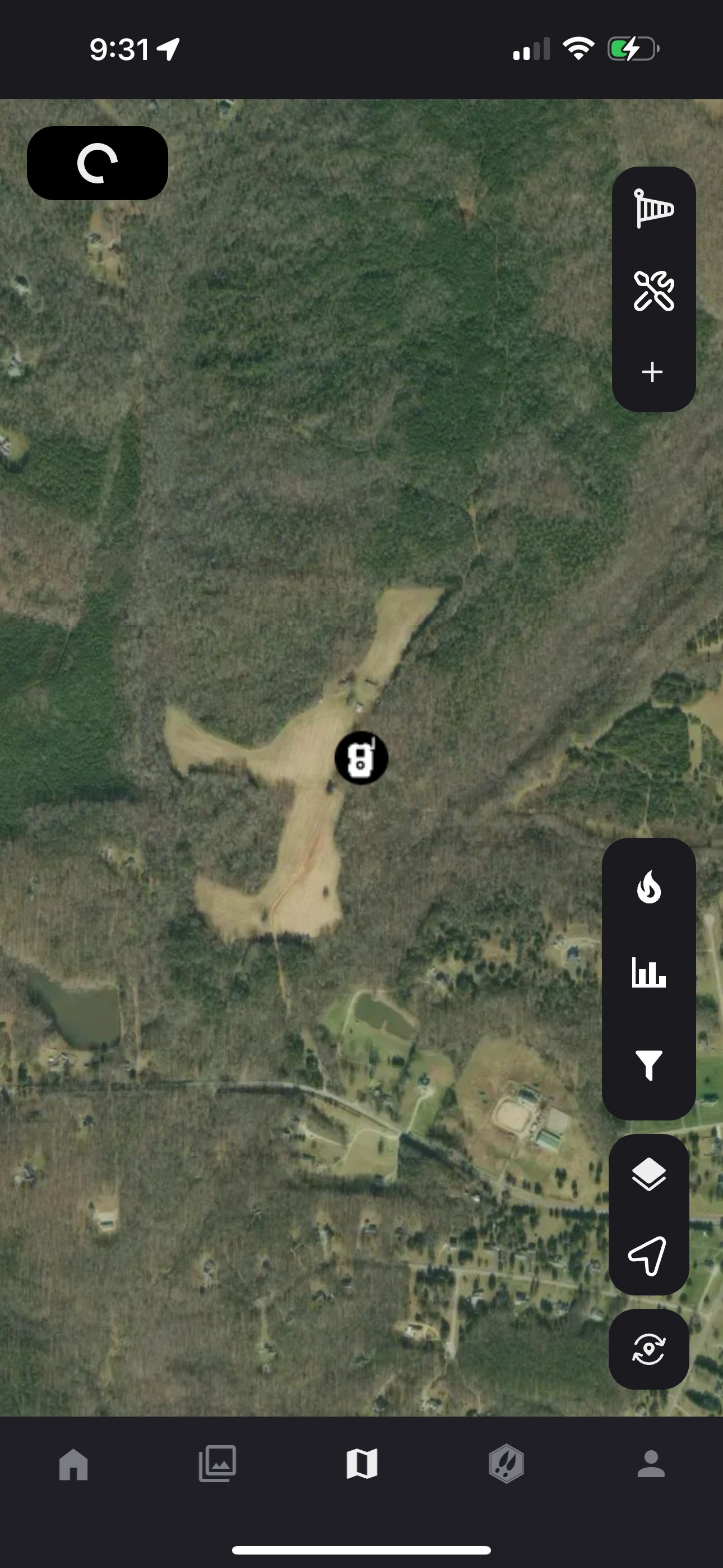
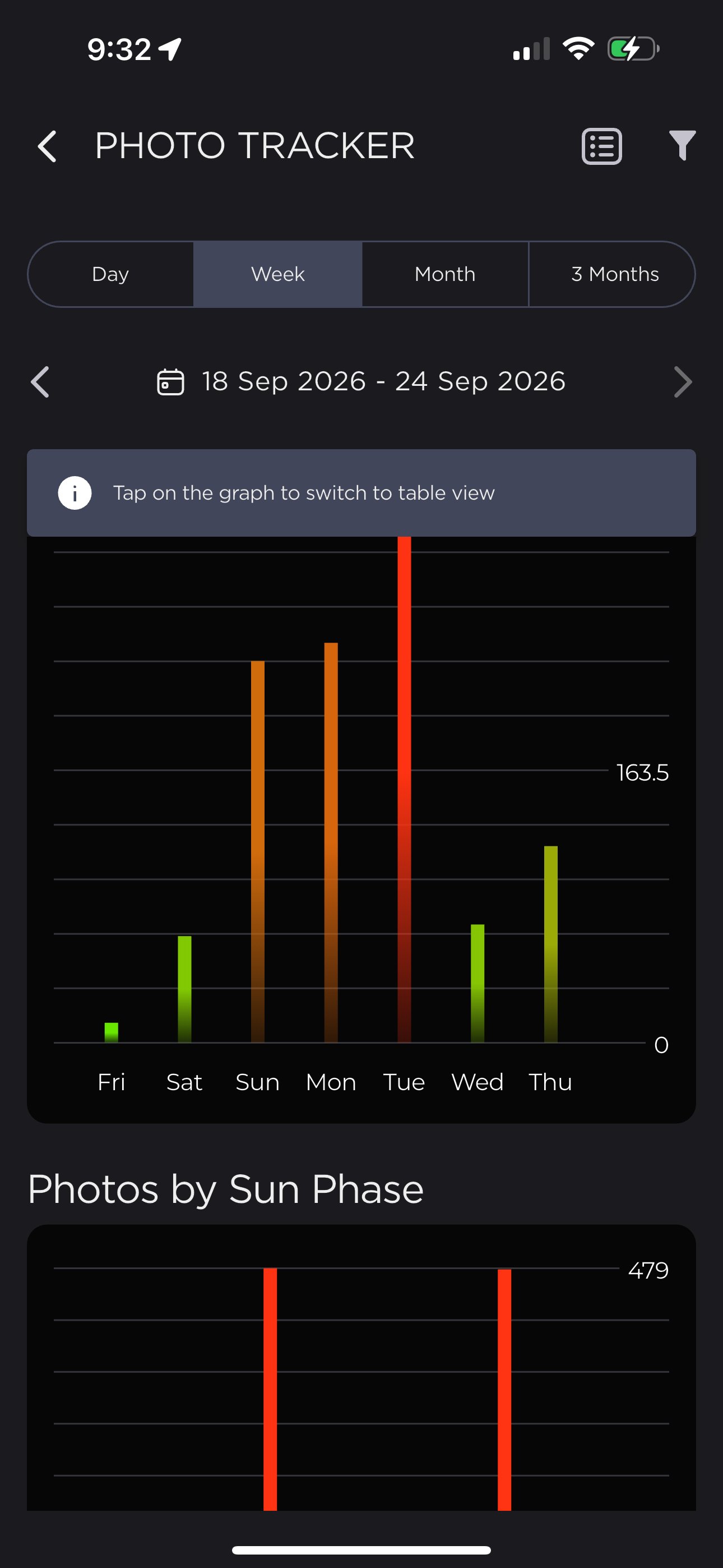
The app lets you filter by species, and it even separates whitetail does from whitetail bucks. You can locate the camera by GPS right in the app. The app also has a huge amount of data on how many photos were taken during different moon phases, wind directions and temperatures.
The Fusion Max 3 has good performance, excellent battery life and a powerful app at a very reasonable price. That makes it my pick for the best-value trail camera of 2026.
Made in the USA: Reconyx Hyperfire 2 Cellular

Pros
- High quality photos and performance
- Excellent warranty and durability
- Fast trigger speed
Cons
- App crashed
- Camera failed in wet weather
- Records video, but doesn’t transmit via cellular network
- Expensive
Key Features
- 12 AA lithium batteries
- 0.2 second trigger speed
- Advertised Detection Range: 100 feet
- Made in the USA
- Five-year warranty
- Price: $600

There’s a reason why most professional wildlife researchers who use trail cameras rely on Reconyx: Their cameras are known for reliably delivering high quality images. Hardcore hunters who want that same type of performance lean toward Reconyx, too. This camera performed well in the walk-through test, triggering out to 60 feet day and night and also catching me at close range. It’s the only camera we tested that’s made in America.
Importantly, it was the only camera that truly stopped motion at close range at night (you can see that image below). The other cameras produced slightly blurry images of me walking close-range at night.

At close range, I could hear other cameras firing, and at night I could see their bright red flashes at 60 feet (the Stealth Cam is the exception here). This was not the case with the Reconyx. There was no visible flash and there was no trigger noise whatsoever.
Surprisingly, I had issues with the camera in the field. First, the app crashed several times when I started using it. I had to delete the app and reload it three different times. In the app store, I saw several reviews with users complaining about the same issue. Happily, all my photos were saved in my profile and Reconyx seems have to solved the issue. Second, the camera fogged up for a few days during the summer. I received several foggy pictures, and when my buddy went to check on the camera, there was a condensation spot inside the housing. We pulled the camera, I opened it up to dry it out, and set it again. The Reconyx went back to capturing clear images. But then a big snow storm hit our area and the camera went down again, with more condensation inside the body.

The camera has a five-year warranty, so this would be a fixable issue. I know several hardcore deer hunters who run Reconyx cameras and never have problems. But still, in our testing and review, we had to ding this very expensive camera for its failures in the field. —A.R.
Great Data Plan: Spartan GoLive 2
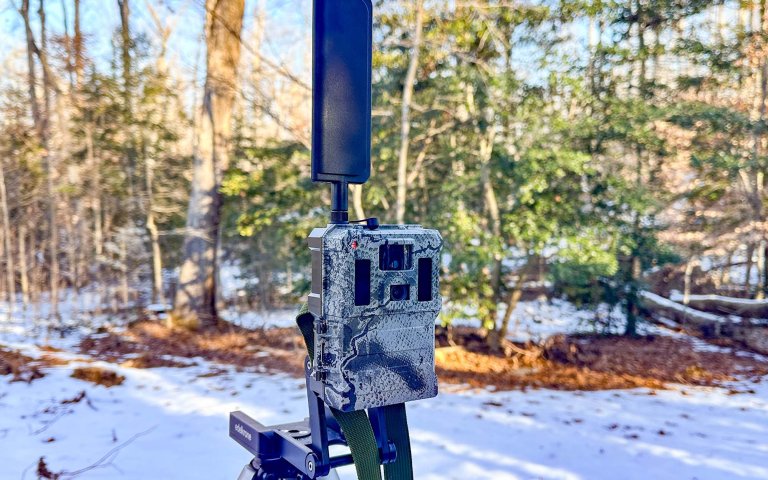
Key Features
- Live streaming up to 30 FPS
- Multi Carrier Transmissions
- 96 degree field of view
- Infrared flash
- Anti-theft GPS
- Uses micro SD cards
- Uses 12 AA batteries
- 2 year warranty
- Price: $172
- Plans from $16 to $33 per month
Most cell cams require users to buy individual plans for each camera. But Spartan allows users to share data plans across multiple devices. So if you have one camera over a food source that gets 20 photos a night and another camera on a trail that gets 5 photos a night, you don’t have to get unique plans for each scenario.
This is a great system for serious trail cam users who run their cameras through the majority of the year (not just deer season).


But beyond the plan structure, the camera showed solid performance in the walk-through test, capturing all distances during the day and out to 60 feet at night. However, it should deliver excellent field performance. I was a little disappointed with the nighttime image quality. But we’ll be interested to see how it performs over the course of several months in the field.
Standard Cell Cams, Reviews & Recommendations
Best Standard Cam: Lone Wolf Custom Gear Undercover Trail Camera

Pros
- The Wi-Fi transfer system is economical and efficient
- The Ultimate Aim Technology and ball joint bracket make setup easy
Cons
- Battery life is below average
- 12MP photos lack clarity
- The night range is average at best
Key Features
- Wi-Fi picture retrieval
- 12 megapixels
- 1080p video at 30 frames per second
- 0.4 second trigger speed
- Flash Range: 20 feet
- Advertised Detection Range: 65 feet
- Accepts an SD card up to 32 GB
Lone Wolf came up with a solution to shimming sticks between your camera and a tree to get the angle just right: their ball-joint mount. The Undercover is also one of the few budget trail cameras that can transfer photos to your phone over Wi-Fi with an app. The app can also organize and store photos based on several filters.


The Undercover’s camera performance was a little disappointing. At 12 megapixels, it’s not going to capture print-quality images for the trophy wall. The battery life on it was iffy past 6,500 images, which is below average compared to many of our other cameras.
The daylight performance of the camera is definitely as advertised with satisfying trigger speeds. It captured me in the center of the frame at the 10-foot distance. The colors were also rich and the image sharp. At night, the camera triggered at 10 feet, but the photo quality was not great. The camera did not trigger at 60 or 110 feet. –D.P.
Security Trail Cameras, Reviews & Recommendations
I tested four of Amazons top-selling security trail cameras, and only one of them worked. Two of the cameras I couldn’t get up and running out of the box, the live functionality didn’t work on the third, and the fourth worked as advertised.
I found that the apps didn’t have the functionality I was used to with name brand trail cameras. It’s pretty obvious that these cameras are being made by people who don’t hunt and don’t understand the features hunters need. The apps are a little sketchy too, and I’m skeptical about who gets access to the data they collect.
For the most part, these cameras aren’t ready for prime time. But, with a little product development they could be the next big trend in trail cameras. —S.E.
Best Security Trail Camera: Ebitcam S40

Pros
- On demand video, white light, and camera adjustment works with just a few seconds of delay
- Triggered consistently at close distances
Cons
- Did not trigger at 60 feet or farther
- Lacks features
- No photo option
Key Features
- 2K video
- Includes solar panel, SIM card, SD card, and mounting hardware
- Night Modes: IR and white light
- Video only
- Records 10 second clips per trigger
- On-demand video
- Can adjust camera view and settings remotely
- Camera Price: $40
- Cellular Subscription: $14.90 (one month), $79.90 (six months), $229.90 (one year, premium package)
- Cloud Storage: $20.59 (one year), $1.99 (one month)

This camera has unique features you won’t find in other cell cams. You can view a live stream through the app and move the camera left, right, up, and down. Unlike the other security cameras I tested, this one had just a one- to two-second delay on the live video and adjustment.
In the walk-through test the S40 triggered at 10 feet from both directions day and night, but didn’t trigger at the farther distances. I tried a few impromptu tests to see how far beyond 10 feet it would trigger and 30 to 45 feet seemed to be its max for consistent captures.
I placed the S40 on a travel corridor, and it captured a ton of deer activity. The deer mostly moved perpendicular to the camera on trails 15 to 30 feet away. The video quality wasn’t great overall, and it was especially poor at night. What makes it worse is that the IR light over exposes the image and then adjusts down to a good setting. That blooming effect cost me a clear look at what I think is a stunner buck. One more knock on the night performance is the IR doesn’t illuminate brightly beyond 10 feet. A unique feature is that you can run a white light in video mode for color video. You can also remotely turn on the white light while viewing the live stream.
I think this trail and security camera hybrid has limited use cases for hunting, but in the right scenario it could be an asset. Probably the best use for it is to position it over a feeder. Before you walk into the stand over the bait site, you can turn on the live feed and use the camera panning feature to scan the area. If you’re in a state with hogs, you could use the camera’s white light as a feeder light. —S.E.
How to Choose a Trail Camera

Cell Camera or Standard Trail Cam?
Cellular trail cameras offer the most convenience because you can hang them and leave them in the woods until the batteries die — all while getting near real-time scouting information sent to your phone. That saves time and gas. More importantly you’re not bumping deer and leaving scent by going into the woods to check camera cards. The main downsides are that you need cell service in the location you’re placing the camera, and cell cams come with additional monthly costs. Cell camera plans typically range from $4 to $15 per month, with additional charges for downloading full-length HD videos or hi-res photos. Cellular trail cameras are more tightly regulated with some states allowing standard trail cams but banning the use of cell cams.
Standard cameras don’t have monthly fees and have longer battery life. They also rival cell cams in photo quality. Of course, the main downside is that you have to physically check the cameras, and the data you’re getting is old.
Trail Camera Accessories We Like
- Camera Stand: Stealth Cam Mounting Post
- SD Card: Sandisk Extreme Pro
- Batteries: Energizer Lithium
- T-Post Mount: Moultrie Multi-Mount
- Tree Mount: Stealth Cam Screw-In Tree Mounts
Trail Camera Prices
Just like cameras used for photography a more expensive camera usually produces a better image and has more features. We’ve provided sample photos for each camera to help you see the difference between a $40 Tasco, a $150 Tactacam, and a $600 Reconyx.
Most hunters will either buy the cheapest trail cam and replace it every few years, or buy one in the $100 to $150 range. We’ve found that above $200 you start to lose value for your dollar, and running multiple cameras becomes very expensive. There are now several great cameras in the $100 to $150 range.
Trail Camera Flash: Low-Glow, No-Glow or White Flash
There are pros and cons for each type of camera flash. Here’s a quick and dirty break down.
White Flash
We’ve looked into if trail camera flash spooks deer and after talking to biologists and hunters, several of them prefer white flash and feel it spooks deer less often. They especially like the color images provided by a flash. However, most of the best trail cameras are not offered with white flash.
Low-Glow
Low-glow IR cameras produce a visible red glow from the infrared emitters when they take a picture or video at night. The red glow is typically faint, but can be seen when looking directly at the camera. These cameras typically take superior night images compared to the no-glow cams. Many hunters and experts believe the flash can be detected by deer.
No-Glow
No-glow cameras like the Tactacam and Stealth Cam have black filters over the infrared emitters to hide the red flash. These cameras are sometimes described as black flash cams. No-glow cams are much less likely to be detected by deer or humans at night, but they typically produce lower-quality nighttime images. However, Stealth, Tactacam, and Reconyx have proven to be exceptions to this rule.
Read Next: Best Deer Attractants
Cellular Trail Cameras and Hunting Ethics

There is some controversy in the hunting community about using cellular trail cameras to hunt big game (make sure to check your local regulations before buying and using a cellular trail camera). In 2022 the Boone and Crockett club revised its policy in regard to cell cams, stating: “The use of any technology that delivers real-time location data (including photos) to target or guide a hunter to any animal in a manner that elicits an immediate (real-time) response by the hunter is not permitted. ‘Real time’ is the key concept. Seeing a photo and harvesting an animal a few hours later, or even the same day, uses this technology to assure a kill. It also takes advantage of the animal, which cannot detect impending danger from a camera. Waiting several days, or even until the following season, to pursue an animal captured on camera is different, and would not be deemed an unethical use of a trail camera.”
Right now, I don’t see many hunters using cell cams to capture images of a buck on a food plot or corn pile and then running out there to kill him that moment. As live-feed video in cellular trail cam technology becomes more advanced and wide spread, however, it could be come a problem for fair-chase standards. More states will likely look to restrict the use of this technology for hunting. It’s up to hunters to use the tech responsibly. At their best, trail cams can provide consistent data on deer movement and hunters can interpret that data when making decisions on where to hunt. Most of us have limited days to hunt, so picking a prime spot is critical. But we must still use our woodsmanship, hunting knowledge, and fair chase principles. I think the trail cameras can only help with that. —A.R.
Final Thoughts on the Best Trail Cameras
With modern trail camera technology, we don’t have to guess if deer are in the area or what time they’re moving. When used consistently, trail cams can paint a vivid picture of deer activity patterns in your area. But trail cameras are also notorious for malfunctioning, bugging, and dying in the field. So if you want to get serious about patterning the deer you hunt, do yourself a favor and get one of the best trail cameras available. Actually, get a few of them.