
We may earn revenue from the products available on this page and participate in affiliate programs. Learn More ›
We live in a world fueled by click bait, outrage, and polarizing extremes. But most of the time, the full truth is actually pretty nuanced and boring. This is also the reality for EDC knives.
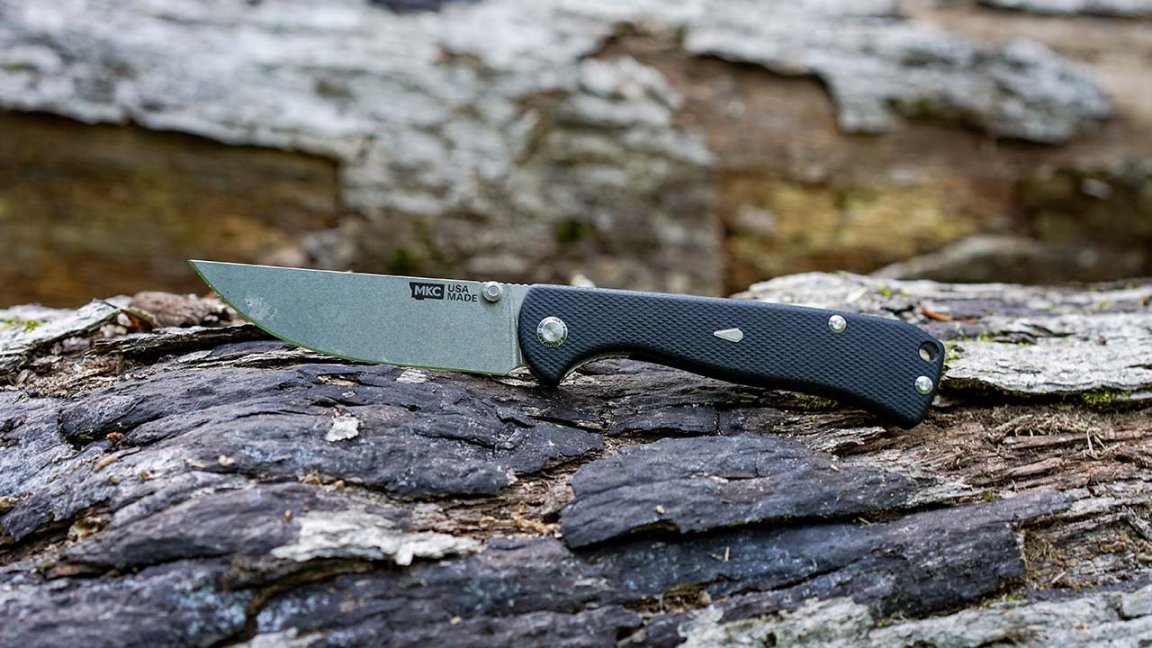
Montana Knife Company is launching its new, highly anticipated folding knife on June 4 at 9 p.m. EST, which they’ve named the “The Montana.” If you live in the black or white, you’ll believe either those who say this is the best folder ever made, or those who argue that The Montana is simply overpriced trash. However if you’re interested in nuance, perspective, and objective testing, you’ve found the right article.
The Montana Specs and Features
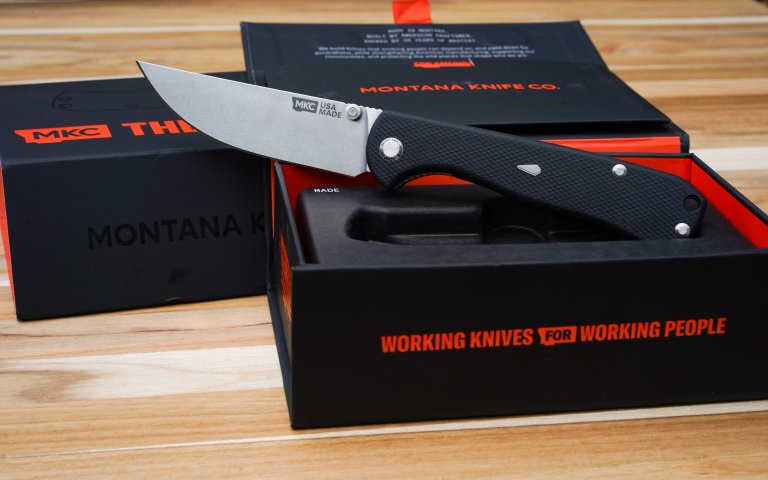
- Titanium Pivot Screw
- Ceramic Bearings
- 420 stainless pocket clip
- Magnacut blade
- 420 stainless inset liner lock
- G10 scales
- Titanium arrowhead insert
- Titanium Thumstud
- 416 SS pivot barrel
- Titanium back spacers
- Titanium hardware
- Price $390
- Made in USA
- Overall Length 7 5/8”
- Blade Length 3 1/4″
- Blade Thickness .118″
- Knife Weight 2.84 Oz
- Blade Finish Stonewash
Blade
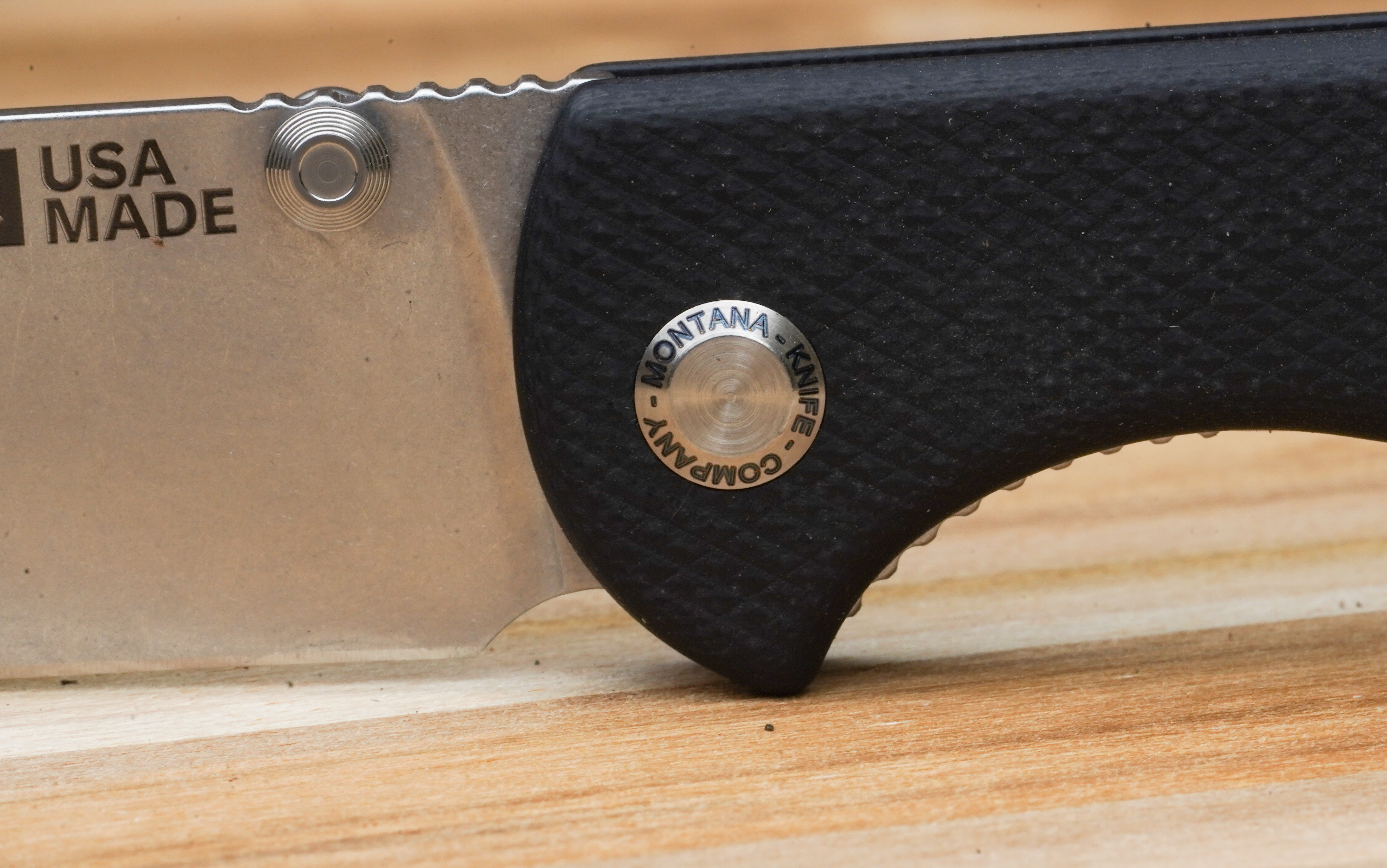
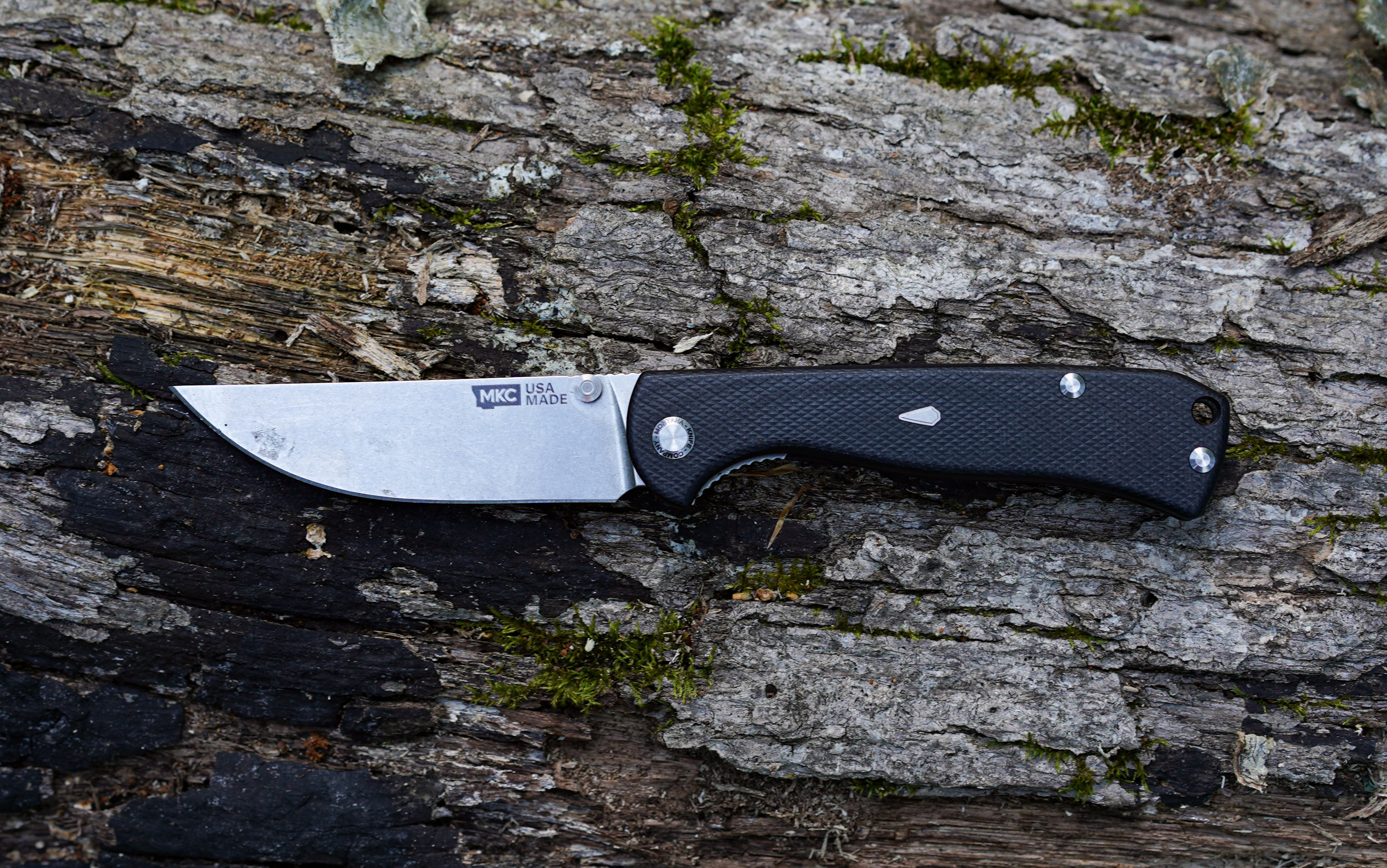
The Montana’s blade is Magnacut with a full flat grind and it has a straight back with no drop. It has a good amount of belly and nice point for making fine cuts. It’s ground to about 0.017-inch behind the edge, which strikes a good balance of stability and cutting ability. It has a sharpening choil that allows you to sharpen the full length of the edge and doesn’t trap material, especially cordage while cutting.
Lock
The Montana uses an inset liner lock, which is a good option for an EDC knife and I generally prefer it over a frame lock and Axis lock. The issue with most frame locks is that you can squeeze the lock bar on the frame lock causing it to create drag as the blade deploys or over compress when in the locked position. A liner lock avoids that issue completely and it will have a better action than an Axis lock — plus no danger of broken Omega springs. There are cooler super locks in existence, but the liner lock is a good choice for this knife.
Testing The Montana
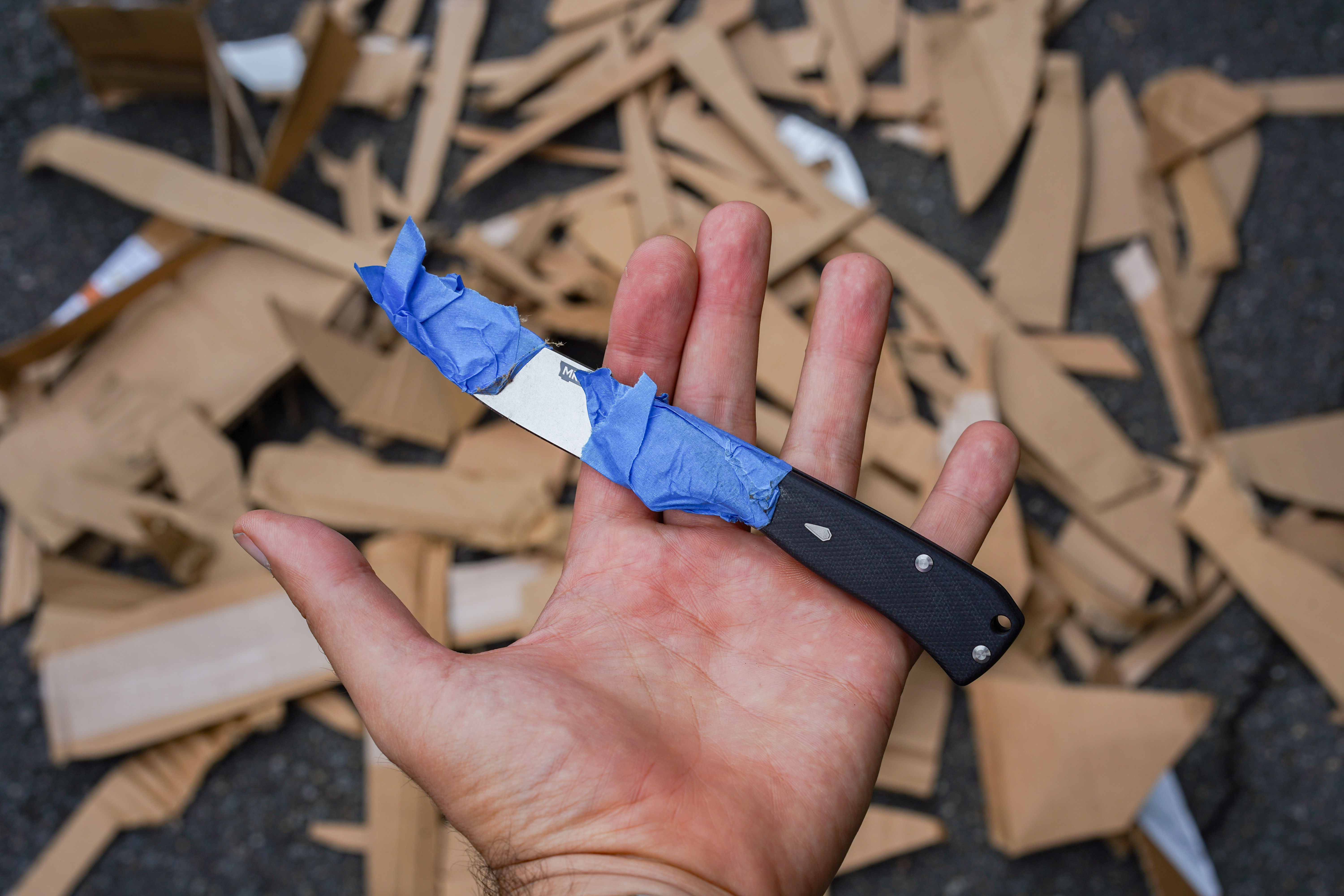
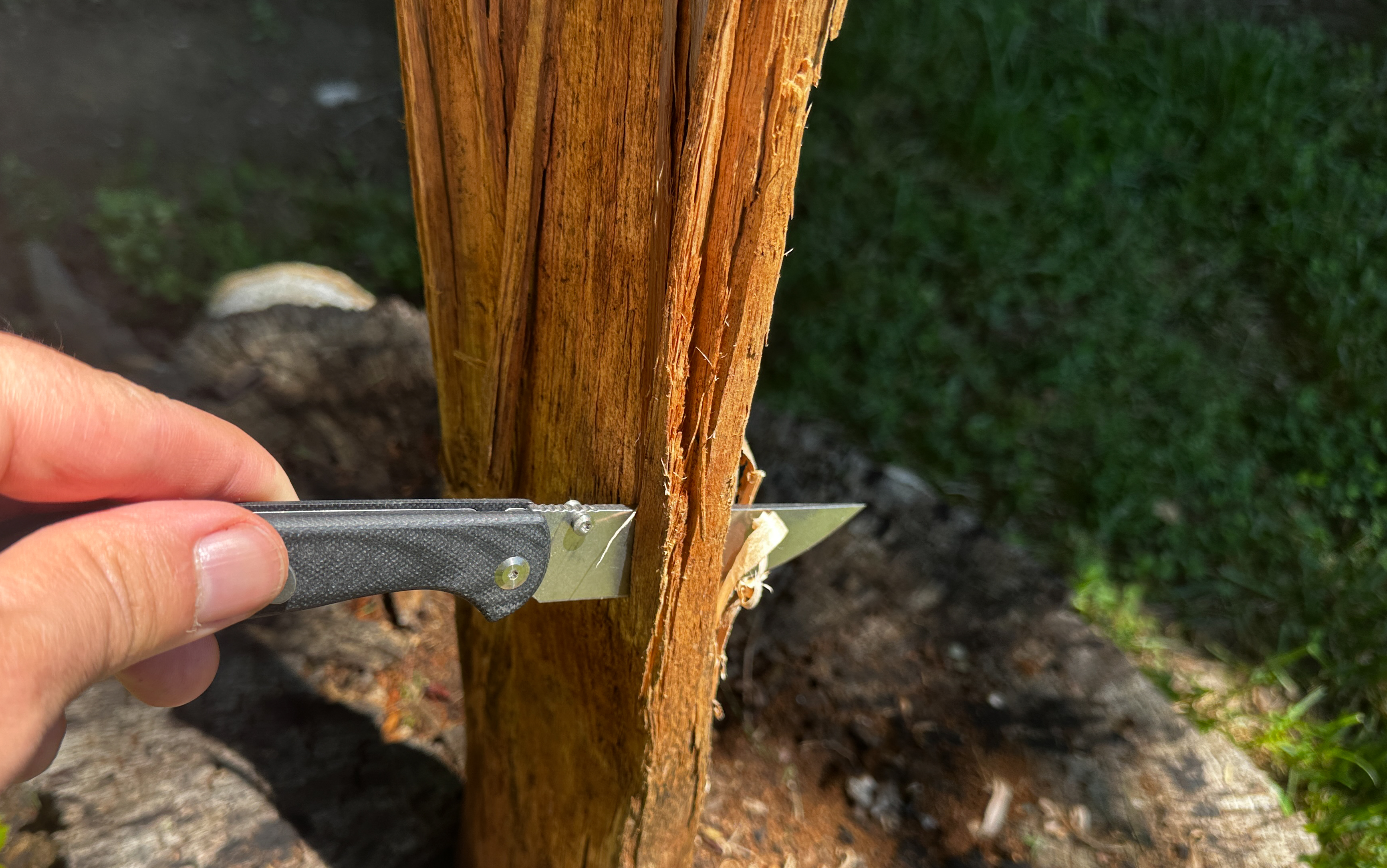
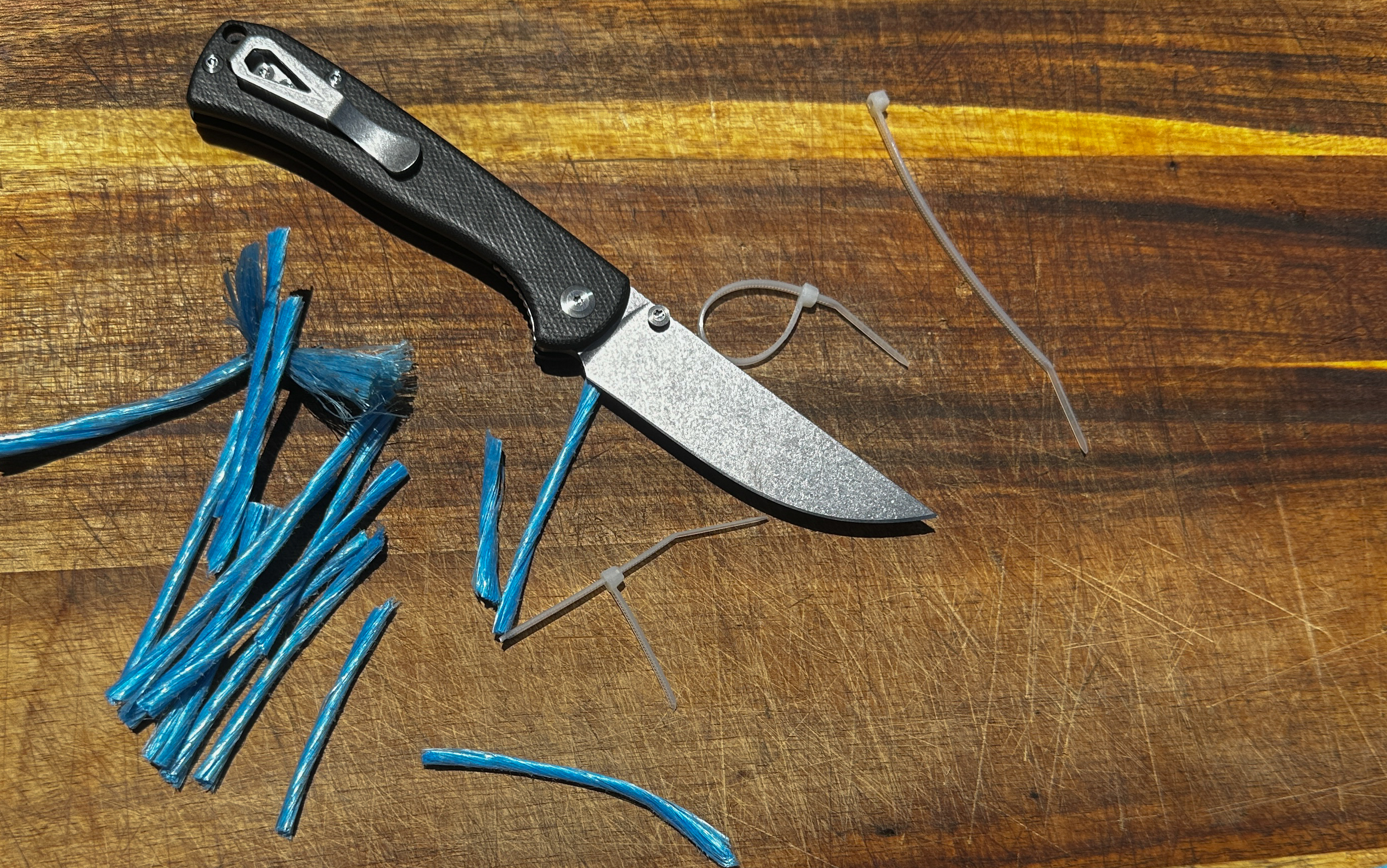
At this point I’ve tested hundreds of knives and I know a good one when I test it. For the Montana’s assessment I cut over 100 feet of cardboard, cordage, zip ties, and even batoned kindling to find its talents and assess its value.
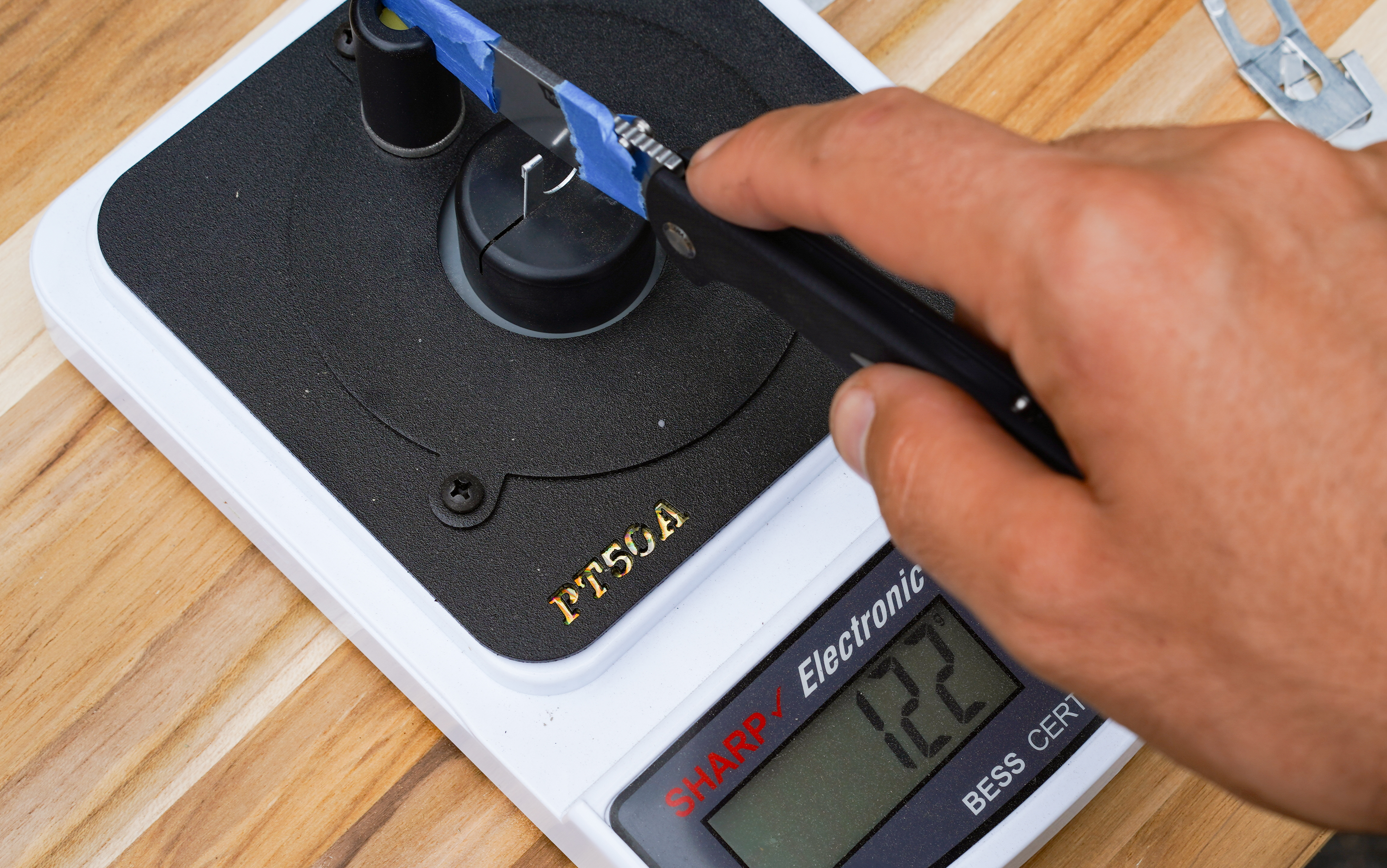
Its cutting performance was impressive. I started by testing the out of the box sharpness, which was 125 grams on my BESS tester — that’s insanely sharp. A BESS Sharpness Tester measures the amount of force in grams required to cut a special filament. For perspective, BESS says that a utility razor blade will require 150-200 grams of force to cut the filament and a knife that exceeds 400 grams requires sharpening.
- Sharpness Out of the Box: 125 grams
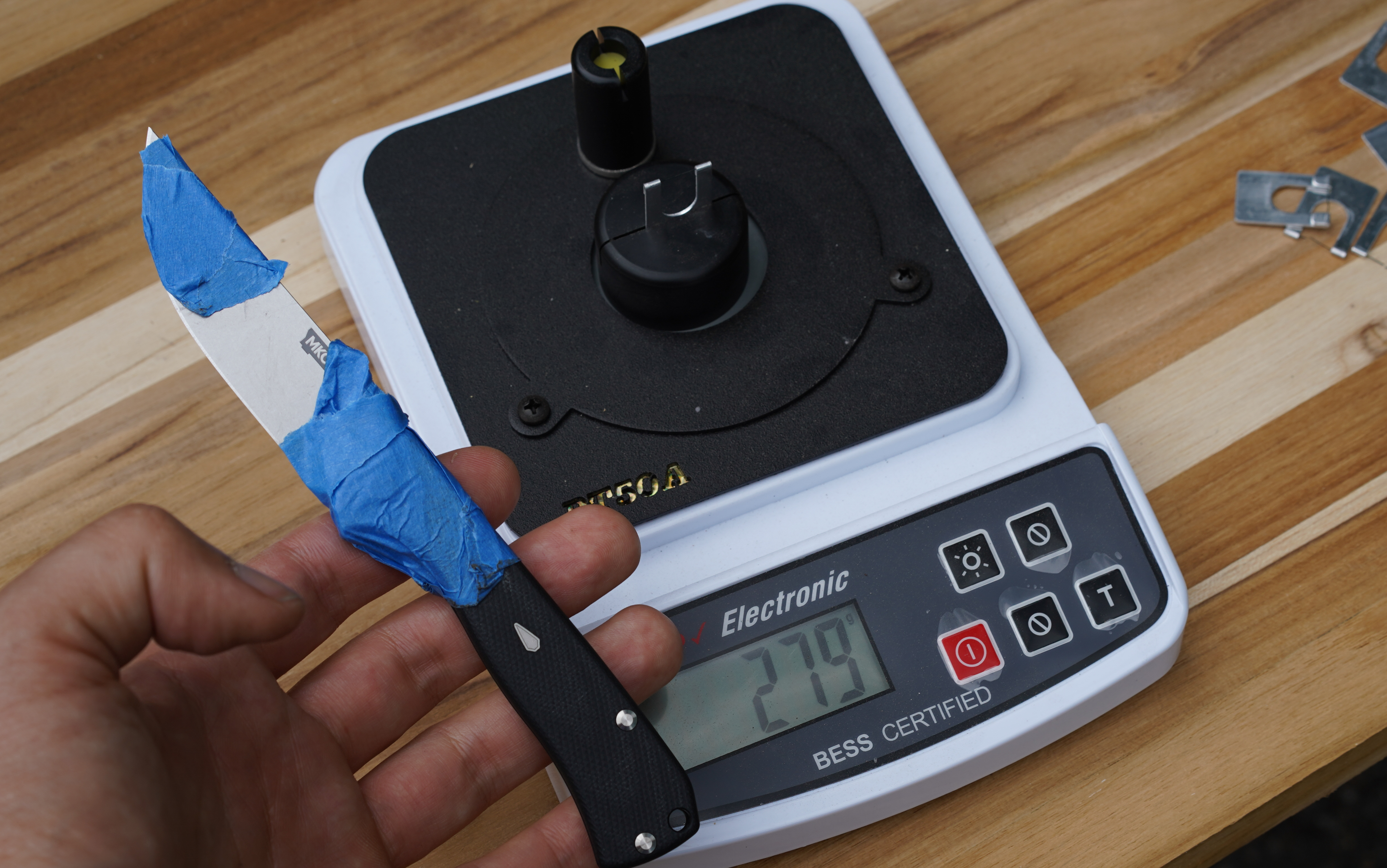
- Sharpness After 100 feet of Cardboard: 275 grams
- Sharpness After Light Touch Up: 130 grams
In practical terms, out of the box the Montana can push cut thin catalog paper and carve it into ribbons with no effort at all. To test edge retention, I isolated a 1-inch area of the blade and used it to cut about 100 feet of cardboard. Then I retested that section of blade on the BESS. It took 275 grams of pressure to cut the filament. It could cut thin catalog paper, but the paper would fold and tear after a short cut. I’d call it functionally sharp rather than razor sharp. I put the knife on a 1000-grit stone for a light touch up and retested the edge. It came right back to 130 grams and glided through paper. This is exactly what I’d expect from properly heat treated Magnacut with a good edge geometry.
My next test was to evaluate the knife’s ability to perform EDC cutting tasks like wire ties, cordage, and packaging. The knife is an excellent all-around cutter. The point is fine enough for cutting cinched down wire ties and the blade/edge geometry makes the Montana a slicing machine through any medium.
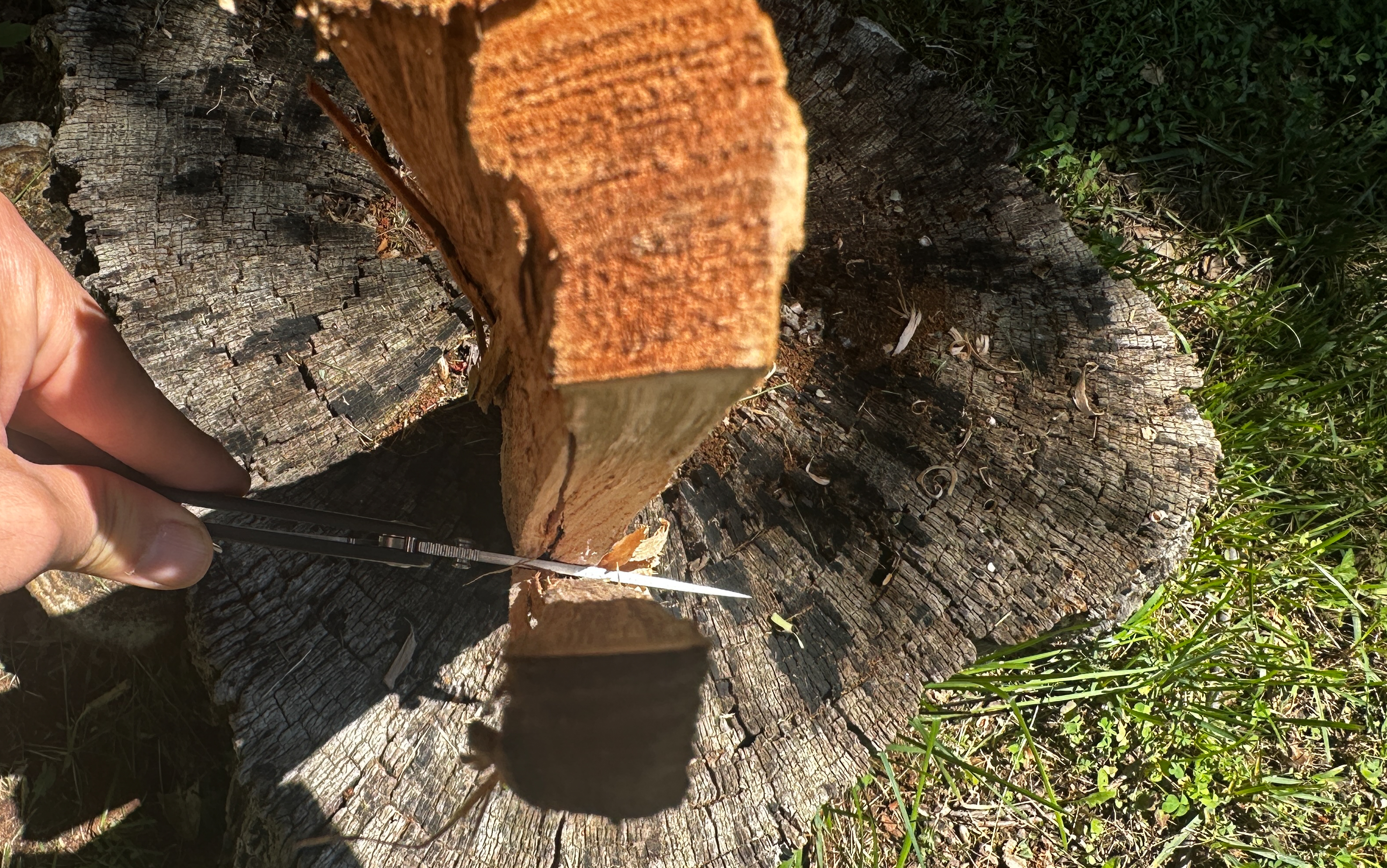
I’d normally stop my evaluation at this point, but I wanted to see how far I could push this folder. Aside from prying with a folding knife, one of the dumbest things you can do is use it to baton with the lock engaged. No one ever accused me of being too smart for my own good, so I batoned some firewood. About halfway through a chunk of oak with twisty grain the lock failed. I removed the blade from the wood and batoned it again, opting for a more bite-sized piece. It batoned through it without the lock failing. After all that abuse the knife still had solid lock up and the edge showed no chipping.
Fit and Finish
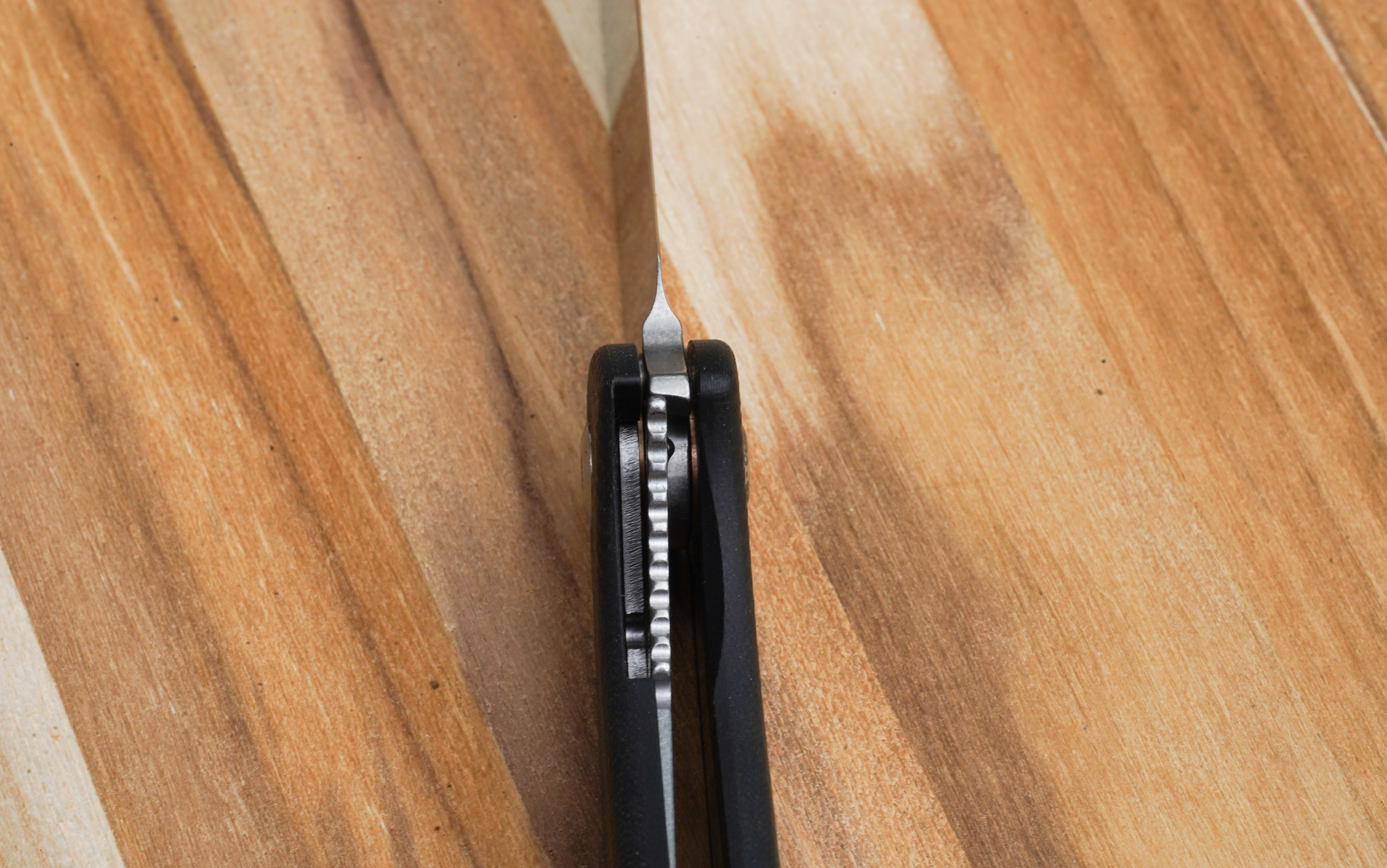
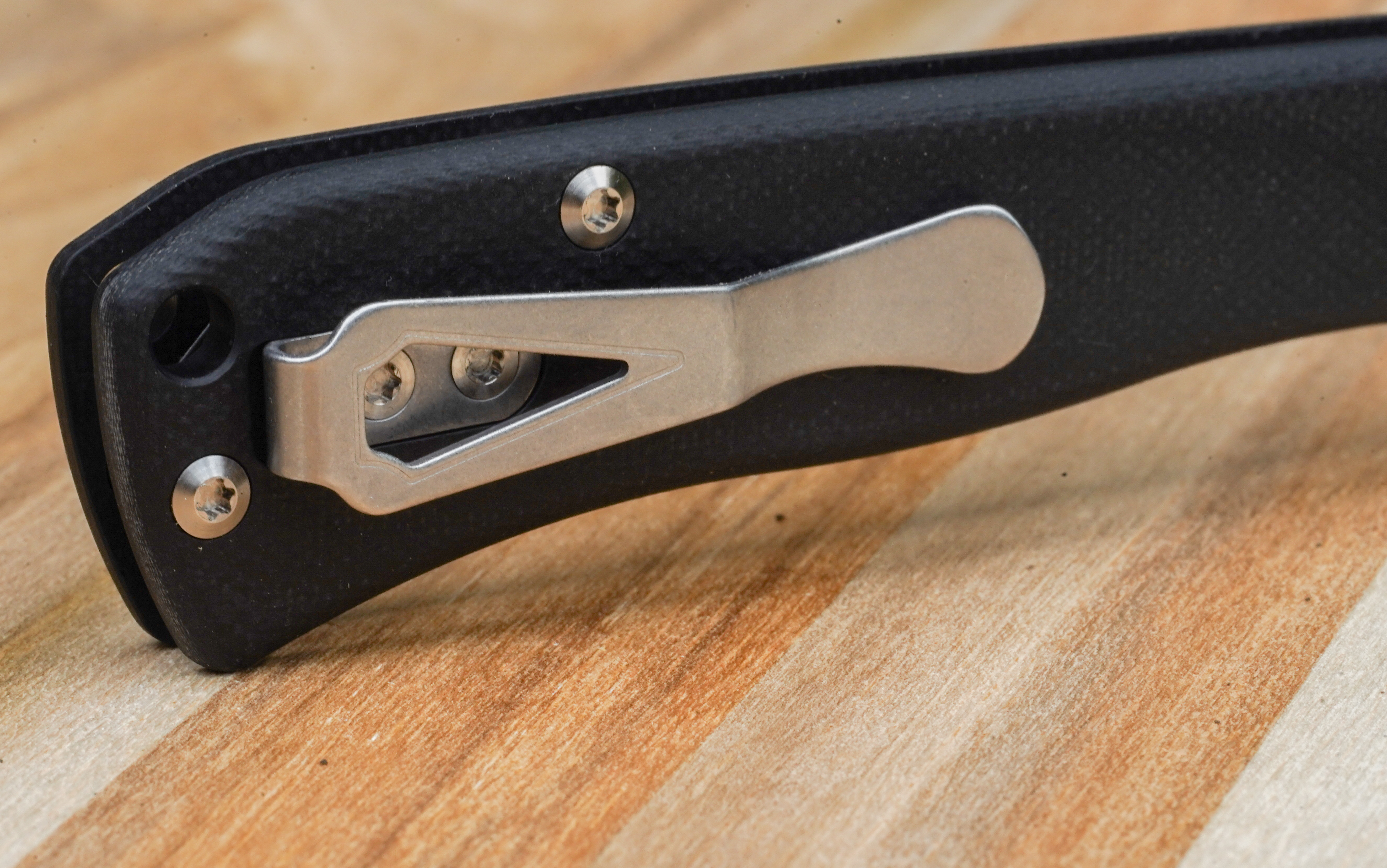
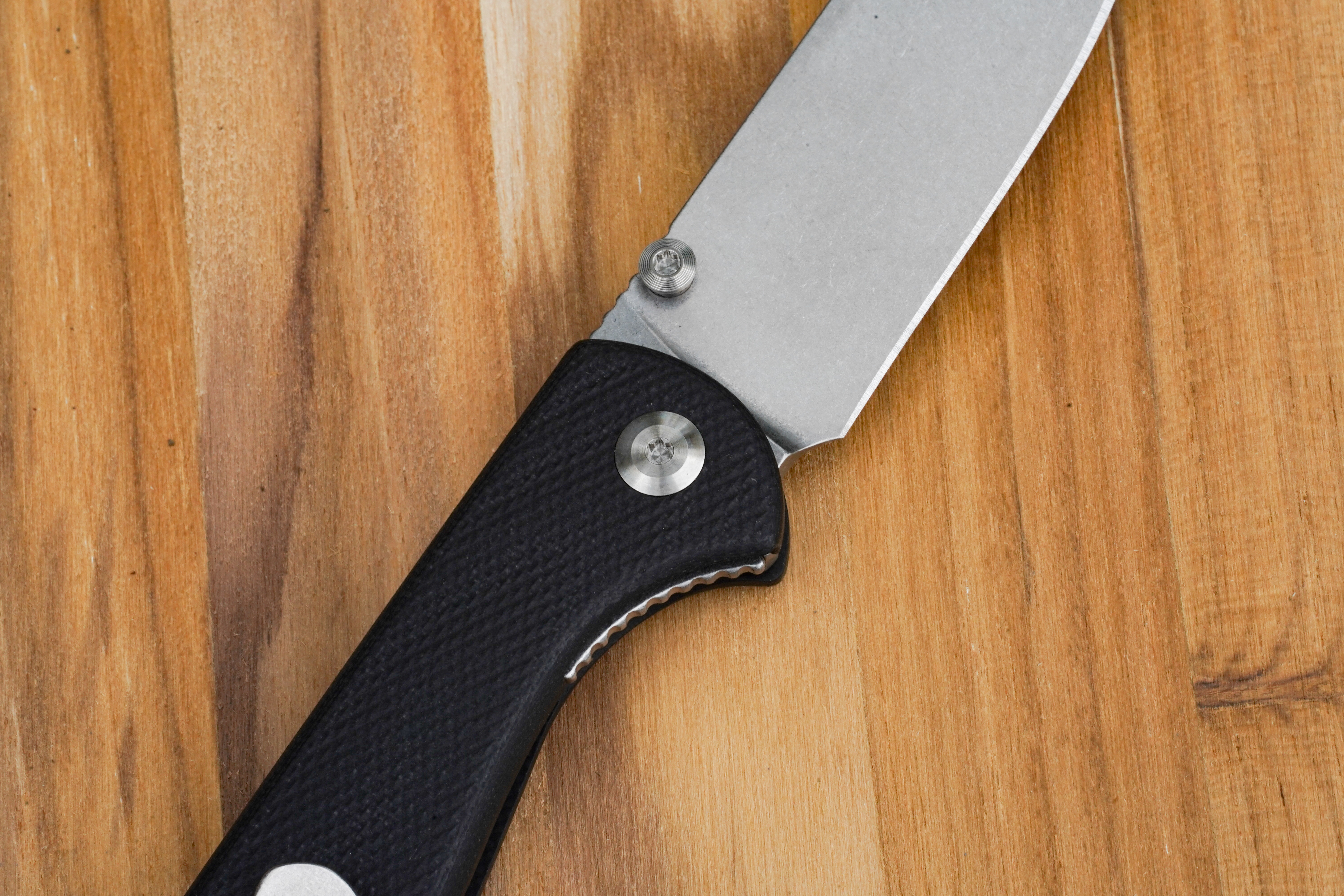
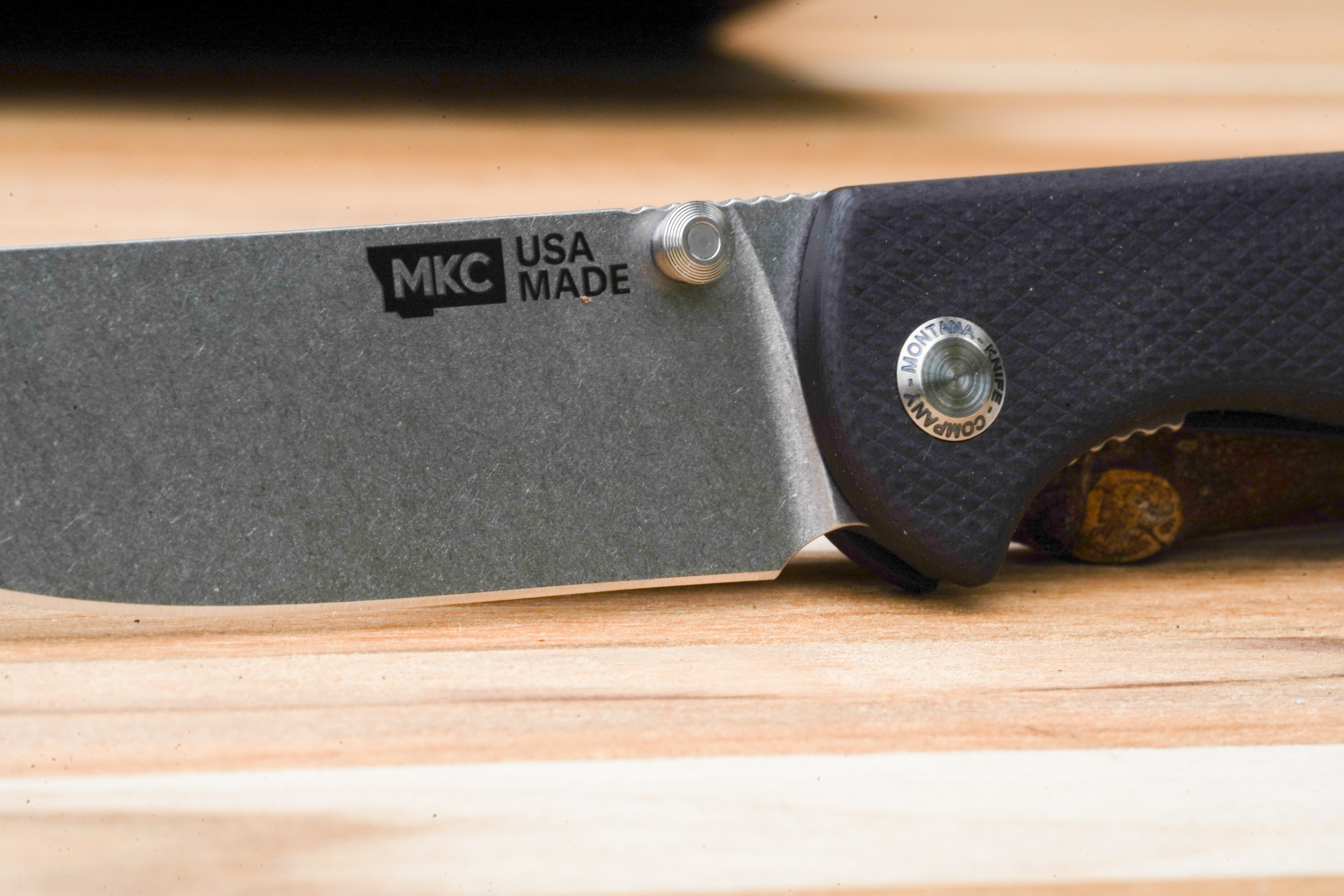
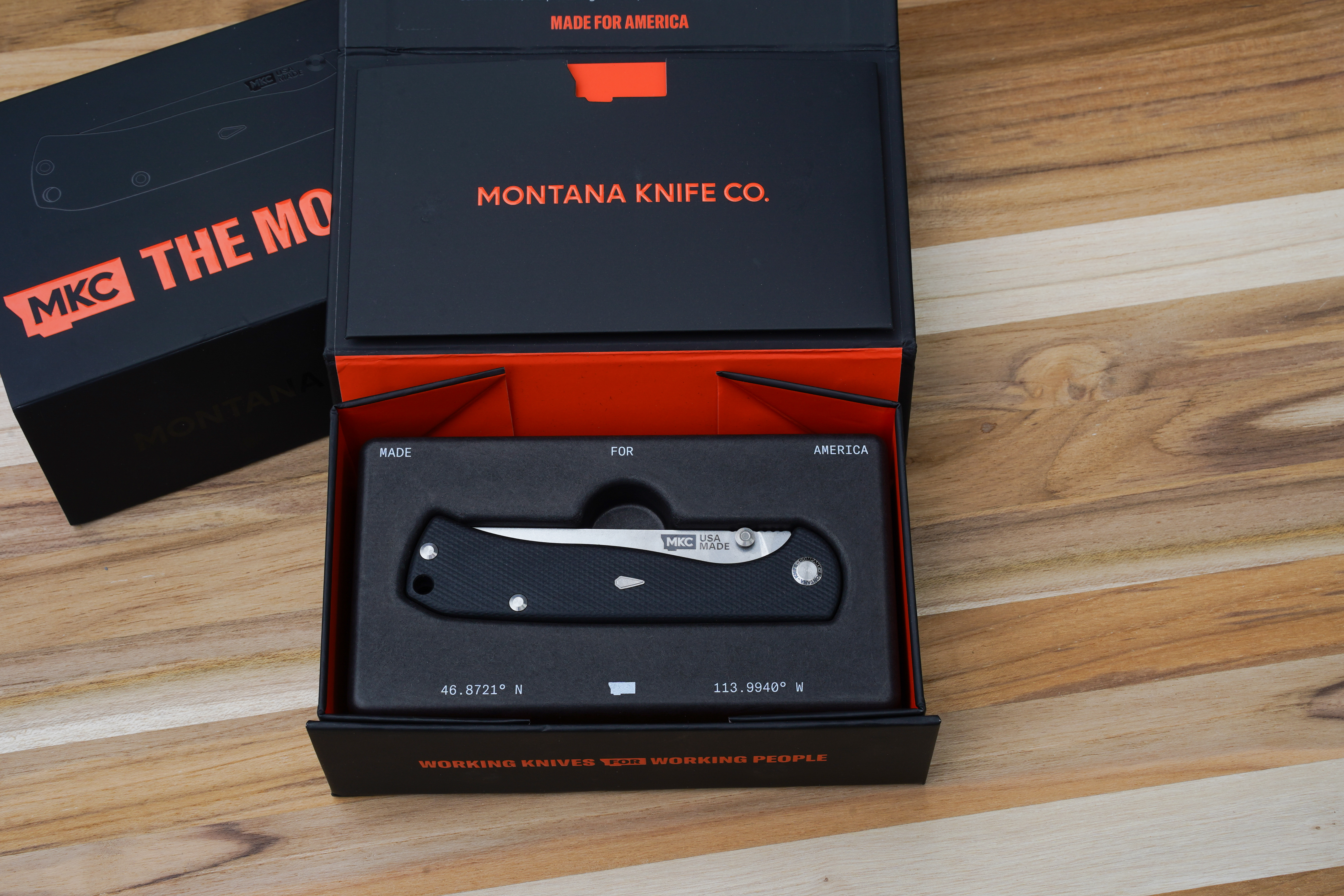
I don’t like to get caught up in a knife’s aesthetics for a review. You either like the way a knife looks or you don’t. But there are some key points of fit and finish any good EDC knife should have.
The Montana’s blade came centered, the lock geometry is right, there are no sharp edges on the grip, the machining is clean, and it has a very nice satin stone-wash finish. The knife also has a great action. The detent isn’t too strong or too weak and the blade shuts closed under its own weight. Overall, it checks all the fundamentals of a well-made folding knife.
I carried the new MKC folder for over a week. It’s thin and light, which makes it comfortable to carry. The pocket clip is well designed in that it has the right amount of tension to be secure on a variety of pant thicknesses but it’s not overly tight either.
The Price
I recognize the Montana’s $389 price tag is going to be a point of contention. It’s easy to say this knife is overpriced — after all you can easily find cheaper alternatives. But there’s more to it than that.
I hand make knives in my garage and I have an academic understanding of what goes into machining a knife with a CNC. Whether you’re hammering hot steel or running a machine, making stuff is hard.
CNC machining isn’t pressing a button and watching a knife get made while you sip coffee. There’s a lot of upfront time and money invested in fixtures and programming before you ever have your first prototype. Free-hand grinding is an impressive skill, but CNC knife grinding is way more complex and difficult than most people realize. If you asked your local machine shop to grind bevels on heat treated Magancut blades, they would most certainly tell you no, or quote you a high price.
Those are all important points to consider when assigning value to a knife. The Montana could be made cheaper at scale and it could most certainly be cheaper if produced in China or Taiwan. But, at what I assume is a relatively small scale and it being made in the USA, I don’t think the price is offensive even though it’s on the high side.
For example, a Magnacut Spyderco Paramilitary 2 has an MSRP of $304 and street price around $230. It has the same steel and handle material as the Montana, but no titanium and it runs on washers versus ceramic bearings. It’s also made at a completely different quantity. If you just want a good knife the PM2 or one of the hundreds of similar spec’d knives is a great option. The person who buys a Montana likes the MKC brand, likes the knife, and can afford to spend a little more to buy the exact knife they want. But they should understand they’re not buying enhanced performance or practicality.
The Montana for Collectors
Montana Knife Company is one of the most successful brands in recent history and most remarkably they did it by making fixed blades. The knife industry is dominated by folders and no one thought it was possible to become a dominant brand by just selling hunting fixed blades. Yet, MKC did it. Their first folder is a significant milestone and this first batch of knives is likely to be a highly collectible item.
Competitive Offerings
Below are knives that are all made in the USA by smaller companies that specialize in high-quality folding knives.
Tactile Knife Co G10 Maverick ($275)
The Maverick is very similarly specced to the Montana: It has G10 scales, titanium hardware, and a Magnacut blade and it’s made in the USA. It’s a good bit less expensive as well.
Hinderer XM-18 ($425+)
The XM-18 is my favorite premium, overbuilt folder and I think it lives up to the hype. For EDC the 3-inch, non-flipper variant would be my top choice. I carry the 3.5-inch non-flipper, which is also a great choice if you don’t mind its size. The genius of the XM-18 is in the Tri-Way pivot, which allows you to swap between bearings, bronze phosphor washers, or Teflon washers. So if you want a rugged knife that’s easy to clean you can run washers or if you want the silky smoothness of bearings you can easily swap to those. Hinderer knives also have a lot of aftermarket support with custom scales, screws, pocket clips, and pivots so you can customize your knife.
Chris Reeves Sebenza ($500)
The Sebenza is a legendary knife and is simply elegant. It’s a design that has stood the test of time and continues to be a favorite of knife enthusiasts.
Demko AD Series ($400+)
If you’re looking for an exceptionally durable locking mechanism the Demko AD 20.5 is the best USA-made option. It’s a pocket knife that will survive the apocalypse and years of pocket time.
Final Thoughts
The Montana is a good knife, it’s just not an exciting knife to me. Instead of breaking into the folding knife world with a new super lock, an innovative design, or an ultra-premium titanium frame lock, MKC produced a well-executed liner lock folder with G10 scales.
The Montana is a highly functional knife due to its cutting performance, materials, and overall good build quality. However, it’s not alone in that realm. There are a lot of high-quality, USA-made folders available with similar practical attributes. What sets this knife apart is the intangibles. For the serious MKC fans this is a must-have. If you’re just stepping into the world of expensive EDC knives, this isn’t a bad option. If you just want a quality knife and don’t care who makes it, then you have more and cheaper options out there.