We may earn revenue from the products available on this page and participate in affiliate programs. Learn More ›
Every fall we assemble a list of the best hunting rifles to consider, whether you’re new to the sport or are looking to expand your gun collection. These recommendations are based on the dozens of guns we’ve shot over the course of the year, as well as the testing we’ve conducted in years past.
As always, my colleague Tyler Freel has contributed mightily to the effort. While I’ve been pulling triggers in Montana and other parts of the Lower 48, Tyler’s been gathering data at his home range outside of Fairbanks, Alaska.
The accuracy data we collect is a key part of this, but isn’t the whole story. How a rifle handles under real world conditions, the quality of its fit and finish, the ergonomics and feature set, its aesthetics, durability, and overall value inform our results as well.
The video that goes with this story dives into more depth with respect to the testing protocol if you’re interested, and also discusses the details of the rifles here.
Best Hunting Rifles of 2026
- Proof Elevation MTR FDX (Editor’s Choice, Best Hunting Rifle)
- Seekins Precision PH3-NRL (Editor’s Choice, Best Crossover)
- Browning X-Bolt 2 Speed SPR
- Weatherby Model 307 Alpine CT
- Christensen Arms Evoke
- Alpine Riflecraft Zenith
- Marlin 336 Classic (Editor’s Choice, 2023)
- Smith & Wesson 1854 Stealth Hunter
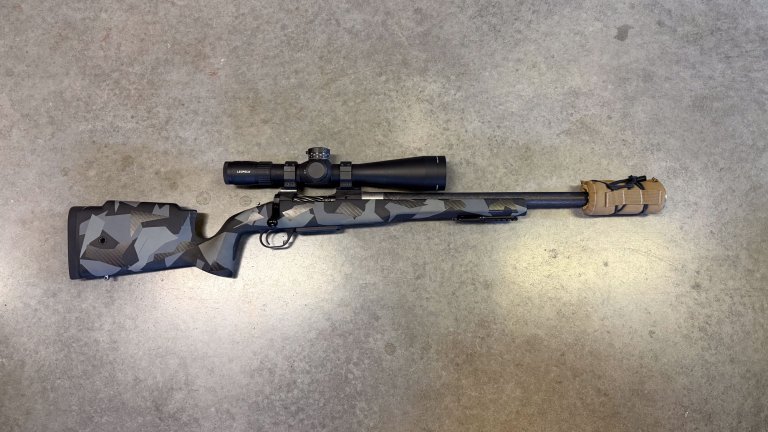
Proof Elevation MTR FDX (Editor’s Choice, Best Hunting Rifle)
Editor's Choice, Best Hunting Rifle
Pros
- Excellent accuracy
- Handles great
- Innovative
Cons
- Pricey
Specs
- Action Two-lug bolt
- Cartridge 6.5 Creedmoor
- Barrel 18 inches, carbon fiber, threaded 5/8-24, PXT Twist
- Magazine Detachable, 4+1
- Stock Carbon fiber
- Trigger 2 pounds, 9 ounces
- Weight 6 pounds, 7 ounces
- Length 37.6 inches
- Price $3,699
Key Features
- PXT exponential gain twist rifling
- Falkor LW7 action
- Combo Pic-ARCA rail
- Timney Field trigger
Some years it can be difficult to settle on an Editor’s Choice award winner, either because the competitors are evenly matched, or because no rifle rises to the award’s standards. This wasn’t one of those years.
This new iteration in Proof’s Elevation MTR series incorporates a radical forward leap in rifle technology. Proof’s PXT barrel design features an exponential gain twist that accomplishes a few things. These include vastly improved barrel life, a more manageable recoil impulse, and the ability to work in conjunction with new high-pressure cartridges to drive bullets at greater velocities from short barrels while reducing the likelihood of bullet failure.
The exponential gain twist barrels start with a very slow rate of twist, like 1:500, and then spin up to their final value right before exiting the muzzle. This is unlike traditional gain twist barrels where the twist increase is more modest (going from a 1:12 to a 1:8, for instance) and progresses in a linear, rather than exponential rate.
With Federal’s Plus Peak 6.5 Creedmoor ammunition, the 18-inch barrel on this Proof delivers an extra 200 to 300 fps compared to traditional brass cased cartridges. And, as we’ve come to expect from Proof’s rifles and barrels, it is also very accurate.
Proof Elevation MTR FDX Accuracy Data (6.5 Creedmoor)
| Ammunition | 5-Shot Group Avg. | 20-Shot Group Size | Mean Radius | Muzzle velocity |
| Berger 130-gr. OTM | .688 in. | .87 in. | .28 in. | 2467 fps |
| Federal 140-gr. CTR | .580 in. | .84 in. | .27 in. | 2492 fps |
| Federal 155-gr. FT Plus Peak | .636 in. | 1.07 in. | .28 in. | 2708 fps |
| Sako 120-gr. PH | .718 in. | 1.22 in. | .36 in. | 2753 fps |
| Winchester 140-gr. SLR | .830 in. | 1.07 in. | .32 in. | 2614 fps |
In addition to gathering a mountain of data at the range with this rifle, I’ve been hunting with it extensively. Under practical field conditions — heat, dust, mud, rain — it has run perfectly and maintained its zero even after bouncing around for hours in a side-by-side and while strapped to my pack and busting through brush and climbing mountains.
The Falkor action runs beautifully, and the rifle balances and handles well even with a suppressor on board.
As a modern hunting tool leveraging the latest in barrel and cartridge technology, this Proof Elevation MTR has no peer.
Seekins Precision PH3-NRL (Editor’s Choice, Best Crossover)
Editor's Choice, Best Crossover
Pros
- Smooth cycling
- Very good accuracy
- Competition ready
- Good value
Cons
- Expensive
Specs
- Action Three-lug bolt
- Cartridge 6.5 Creedmoor
- Barrel 24 inch, fluted, threaded 5/8-24, 1:8 twist
- Magazine Detachable, 5+1
- Stock Carbon fiber
- Trigger 1 pound, 13 ounces
- Weight 8 pounds, 1 ounce
- Length 43 1/2 inches
- Price $2,295
Key Features
- Interchangeable barrels
- Full-length ARCA rail
- 20 MOA scope base
- Toolless bolt disassembly
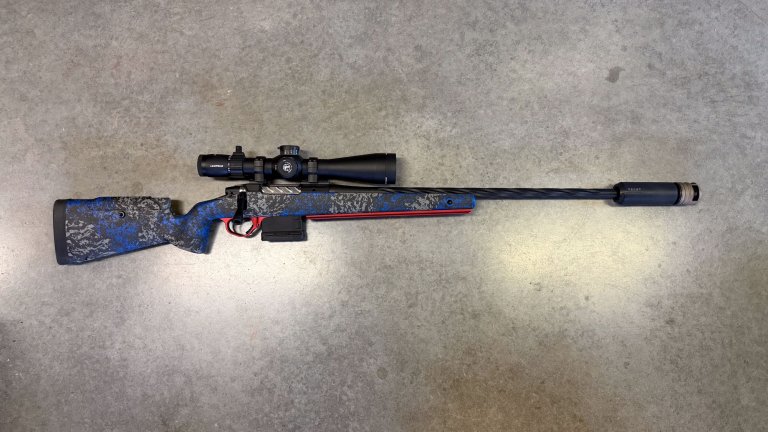
For any shooter who wants to be competitive in the NRL Hunter and PRS PRSuit series without taking out a second mortgage, this rifle is practically a no-brainer. And since it qualifies for the lighter factory and production divisions, which impose a 13-pound limit on the rifle when weighed with scope, bipod and other mounted accessories, it can also be taken hunting — which is kind of the point of these matches in the first place.
The Seekins PH3-NRL has been around for a couple of years but the 2026 models rolling off the assembly line in Lewiston, Idaho, have some meaningful refinements. Specifically, the accuracy of the rifle and the slickness of the action are notably improved.
This newer rifle is turning in 20-shot groups with an extreme spread of 1 inch or smaller with factory match and hunting ammunition and 5-shot groups averaging .640 and .499 inches in the case of match ammo, and .905 inches with hunting ammo.
Seekins Precision PH3-NRL Accuracy Data (6.5 Creedmoor)
| Ammunition | 5-Shot Group Avg. | 20-Shot Group Size | Mean Radius | Muzzle velocity |
| Berger 130-gr. OTM | .64 in. | .96 in. | .28 in. | 2694 fps |
| Federal 140-gr. CTR | .499 in. | .82 in. | .24 in. | 2692 fps |
| Winchester 140-gr. SLR | .905 in. | 1.10 in. | .32 in. | 2773 fps |
The version I tested a year ago, which had a slightly sticky bolt throw typical of older Havak actions, printed 20-shot groups with the same ammo that varied from 1.17 to 1.80 inches with 5-shot groups averaging .750 inches.
Most importantly, the mean radius values, which ranged from .33 to .43 inches (which is pretty good) dropped to .28 inches, which can win matches.
The rifle has a full-length ARCA rail under the fore-end, takes AICS type magazines, has an eye-catching color scheme, and a stock with good geometry.
From an ergonomics standpoint, the only thing I don’t care for is the magazine release inside the trigger guard. I’d rather be able to drop the magazine without having a finger in such proximity to the trigger.
Browning X-Bolt 2 Speed SPR
Pros
- Accurate
- Easy one-hand carry
- Compact and handy
- Excellent ergonomics
Cons
- Swivel studs instead of QD cups
Specs
- Action Three-lug bolt
- Cartridge 6.5 Creedmoor
- Barrel 18 inch, steel fluted, threaded 5/8-24, 1:8 twist
- Magazine Detachable rotary, 4+1
- Stock Composite
- Trigger 3 pounds, 6 ounces
- Weight 6 pounds, 10 ounces
- Length 37 7/8 inches
- Price $1,569
Key Features
- User adjustable trigger
- Adjustable stock dimensions
- Short, suppressor-friendly barrel
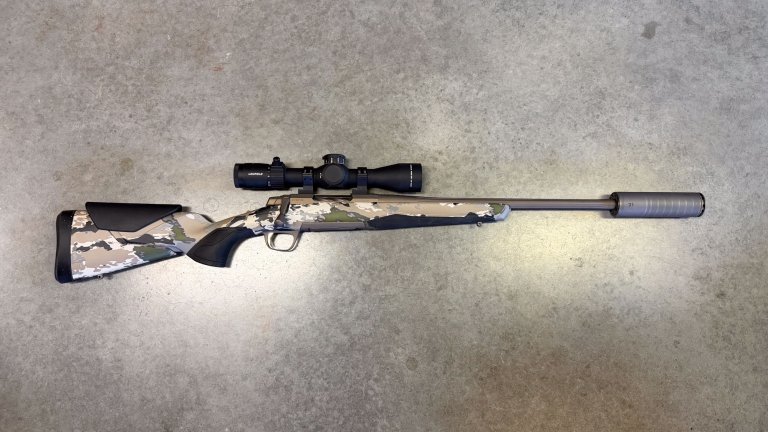
The X-Bolt 2 is another long-time favorite hunting rifle of ours. It’s been offered in myriad models over the years, and recently Browning has added the Speed SPR, which has a shorter barrel to keep the rifle’s length manageable when shooting with a suppressor.
Accuracy with our model chambered in 6.5 Creedmoor was exceptional, with a 20-shot group measuring .81 inches with Barnes Harvest loaded with the 140-grain Sierra Tipped Gamekings. The average size of the four 5-shot groups in that 20-shot sample was .576 inches.
Browning also did a run of these in 22 Creedmoor and 25 Creedmoor if you are looking to shoot something other than the 6.5. It’s also offered in a host of more traditional chamberings as well, including .308 Win., 6.8 Western, 7mm and 300 PRC, and .280 AI.
The three-lug bolt has a short, snappy throw that isn’t stiff, and the rotary magazine loads easily and feeds with rock solid assurance. In all our years of evaluating the X-Bolt 2 I can’t recall a single issue with cycling, extraction, or ejection.
Its Cerakote and camo finish look good and protect the rifle from the elements. The adjustable trigger is crisp and consistent and I was able to adjust mine from over four pounds down to 3 pounds, 6 ounces.
Browning X-Bolt 2 Speed SPR Accuracy Data (6.5 Creedmoor)
| Ammunition | 5-Shot Group Avg. | 20-Shot Group Size | Mean Radius | Muzzle Velocity |
| Barnes Harvest 140-gr. TGK | .576 in. | .81 in. | .26 in. | 2540 fps |
If I had to sum up what I find so appealing about the X-Bolt 2 Speed it is the no nonsense, workmanlike philosophy behind its design.
The rubberized inserts on the fore-end and grip work great in lousy weather. The tang safety is ambidextrous and easy to operate. The bolt locks down when the rifle is on safe and there is a tab on the top of the bolt handle that allows you to open the action without moving the safety to “fire”.
The stock can be adjusted for LOP, comb height and grip angle too.
I wish the rifle came with QD cups as opposed to swivel studs and I’d love it if the trigger pull weight could shed an additional 12 ounces, but these aren’t deal breakers.
Ultimately, this Browning is a serious hunting tool that will stand up to harsh use and serve you well season after season.
Weatherby Model 307 Alpine CT
Pros
- Excellent recoil pad
- Good accuracy
- Good ergonomics
Cons
- Limited ammunition options
- Swivel studs instead of QD cups
Specs
- Action Two-lug bolt
- Cartridge 25 Weatherby RPM
- Barrel 22 inches, tensioned carbon fiber, threaded 5/8-24, 1:7.5 twist
- Magazine Hinged floorplate, 4+1
- Stock Carbon fiber
- Trigger 2 pounds, 14 ounces
- Weight 6.3 pounds
- Length 42 inches
- Price $2,299
Key Features
- Peak 44 ARCA rail
- Hinged floorplate magazine
- Full-length Pic rail
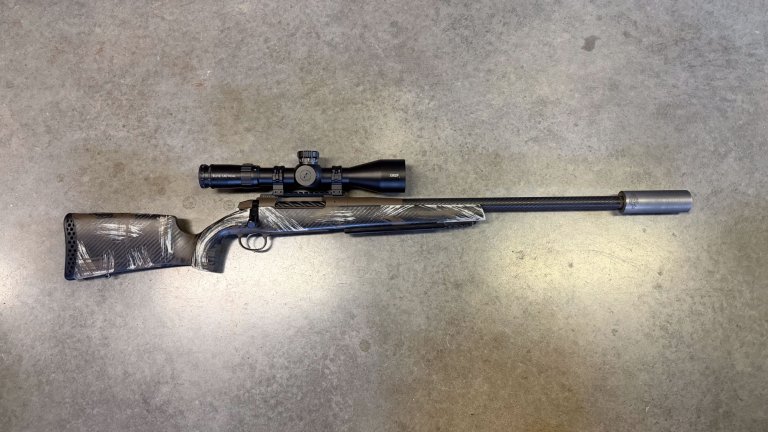
I’ve had this rifle for several months and it continues to grow on me. This iteration of Weatherby’s popular Model 307 embodies a mix of appealing features that are a little quirky, but undeniably effective.
The stock takes some cues from the competition world — like the vertical pistol grip with its slight palm swell, and the flat-bottomed fore-end, which is good for riding shooting bags or, as is the case with mine, to securely mount a rail from Peak 44 with a Picatinny section up front and a long ARCA rail at the rear.
But it also has some traditional features. The slight hogsback shape of the comb and the hinged floorplate magazine are decidedly old-school, yet the combination of old and new manages to work.
The hinged floorplate makes the rifle comfortable to carry with one hand, but limits the magazine to 3+1 capacity.
The newest element of the rifle is the cartridge — the 25 Weatherby RPM, which is a speedy quarter-bore that expands Weatherby’s RPM offerings.
Weatherby Model 307 Alpine CT Accuracy Data (25 Weatherby RPM)
| Ammunition | 5-Shot Group Avg. | 20-Shot Group Size | Mean Radius | Muzzle velocity |
| Weatherby 133-gr. Ber EH | .807 in. | 1.47in. | .35 in. | 3026 fps |
Among the initial loads is a 133-grain Berger Elite Hunter. In my rifle it averaged 2,996 fps and produced five-shot groups averaging .793 inches.
Until other ammo makers adopt the 25 RPM, hunters will be limited to Weatherby’s offerings or handloading, but that’s a price generations of Weatherby fans have been willing to pay to march to their own drumbeat.
Read Next: The Ultimate .25-Caliber Shootout: Newcomers vs The Classics
Christensen Arms Evoke
Pros
- Good value
- Feeds well
- Inset Pic rail on fore-end
Cons
- Stiff trigger as set at factory
Specs
- Action Two-lug bolt
- Cartridge 25 Creedmoor
- Barrel 20 inches, steel, threaded 5/8-24, 1:7.5 twist
- Magazine Detachable, 3+1
- Stock Polymer
- Trigger 4 pounds,13 ounces
- Weight 7.7 pounds
- Length 39 1/2 inches
- Price $948
Key Features
- Cerakoted metalwork
- Long-action receiver for all cartridges
- User adjustable trigger
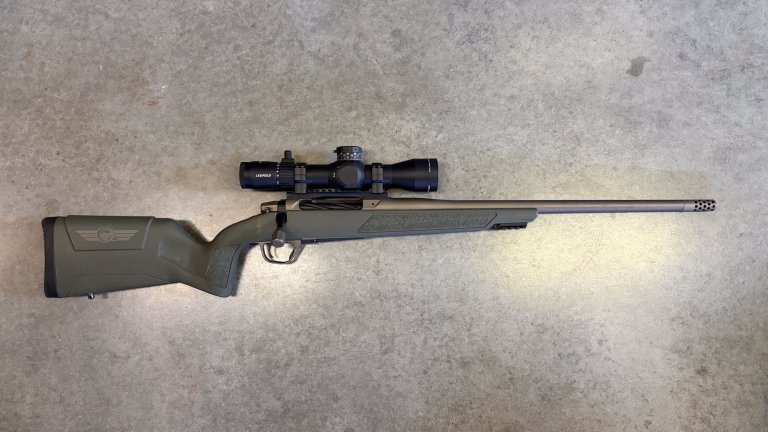
The Evoke is a solid, all-around bolt action at a reasonable price. It has some thoughtful touches that elevate its performance and make it one of the best values in the sub-$1,000 market.
For instance, the recessed section of Picatinny rail at the tip of the fore-end is a terrific feature. Compared to a traditional swivel stud, which is the default hardware on rifles in this price range, it is a much sturdier way to attach a bipod. This, in turn, enhances the rifle’s accuracy potential at the bench and in the field.
The synthetic stock has effective texturing molded into the surfaces on the grip and fore-end and a slightly raised cheek piece. The OD green stock contrasts nicely with the golden-bronze Cerakote on the barrel and action, providing the Evoke good looks and corrosion protection.
We’ve tested a handful of Evokes over the years and have generally liked them a lot. One thing that drew me to this rifle is that it is chambered in 25 Creedmoor, the new quarter-bore hotness from Hornady. (We’ve previously tested it in 6.5 Creedmoor as well.)
Christensen Arms Evoke Accuracy Data (25 Creedmoor)
| Ammunition | 5-Shot Group Avg. | 20-Shot Group Size | Mean Radius | Muzzle velocity |
| Berger 135-gr. LRHT Handloads | .705 in. | 1.00 in. | .31 in. | 2640 fps |
Accuracy with the couple types of factory ammo I shot was okay, but not jaw-dropping. I suspected the ammo was more the issue than the rifle and after reloading some of my empty cases that was confirmed.
With Berger 135-grain Long Range Hybrid Target bullets over N555 powder, the rifle delivered 5-shot groups averaging .705 inches, with the best at .328 inches.
Alpine Riflecraft Zenith
Pros
- Excellent craftsmanship
- Ultralight
- Fine accuracy
- Smooth action
Cons
- Prohibitively expensive
Specs
- Action Two-lug Mauser CRF
- Cartridge 6.5 Creedmoor
- Barrel 22 inches, carbon fiber, threaded 1/2-28, 1:7.5 twist
- Magazine Blind,4+1
- Stock Carbon fiber composite
- Trigger 2 pounds, 4 ounces
- Weight 4.7 pounds
- Length 39 3/4 inches
- Price $9,995 as tested
Key Features
- Three-position wing safety
- Mauser style controlled round feed action
- Mechanical ejector
- Sleeved carbon-fiber barrel
All I knew about this rifle the first time I picked it up is that my colleague Tyler Freel had very good things to say about it. He told me this high-priced ultralight bolt gun was special and that as an experienced sheep hunter — more than a dozen DIY Dall sheep to his credit and counting — it was ideally suited for extreme mountain hunting.
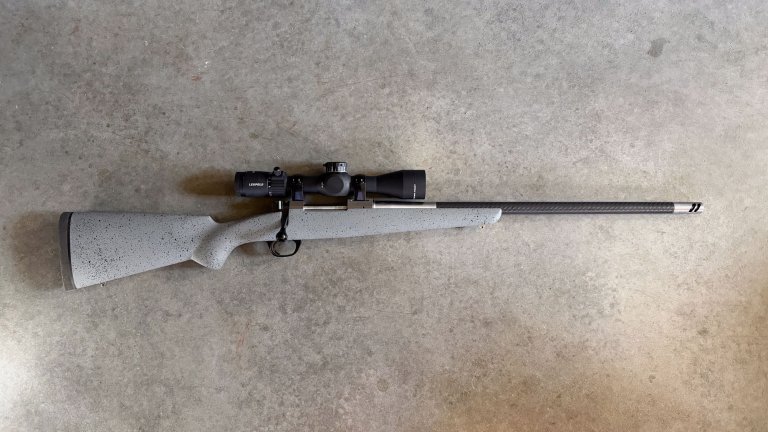
Before I even shot it, I could appreciate his take. Its workmanship is next-level. The tight fit between the barreled action and stock, the seam between the muzzle brake and barrel which disappears when the brake is tightened, the silky operation of the Mauser-style action and classic three-position wing safety, and the rock-solid connection between the proprietary scope rings and receiver all signify that whoever built the rifle is a master of the craft.
With its carbon fiber stock, cut down dimensions, and internal blind magazine, it weighs less than 5 pounds without a scope. Even with an effective brake and chambered in the mild 6.5 Creedmoor — one of the best sheep cartridges out there — the rifle bucks.
But if you drive it with a firm grip and solid shoulder pressure it is quite manageable and, as Tyler’s data demonstrates, delivers excellent accuracy.
Alpine Riflecraft Zenith Accuracy Data (6.5 Creedmoor)
| Ammunition | 5-Shot Group Avg. | 20-Shot Group Size | Mean Radius | Muzzle velocity |
| Barnes Harvest 140-gr. TGK | .734 in. | 1.04 in. | .27 in. | 2654 fps |
| McGuire 114-gr. Copper Rose Handloads | .635 in. | .85 in. | .27 in. | 2866 fps |
The rifle isn’t without its quirks. Its beautiful old-school sling attachment points — perfectly inletted like every other place on the rifle where metal and carbon fiber meet — won’t work with any bipod, let alone accept a section of M-Lok or Picatinny rail.
Instead, it has a Spartan Precision magnetic adapter, which is a good system, but it limits you to that style bipod.
Likewise, the American Classic silhouette of the stock is undeniably traditional and attractive. But given the demands that an ultralight rifle places on accurate fire, a stock with a more vertical grip, a way to clip into a tripod, and other modern touches, would be more capable in the field.
That said, this rifle is marvelous. It is a fresh and effective take on a classic Mauser style turn bolt. In a world of high-end rifles that can be monotonously similar, it occupies its own, distinctive niche.
It’s difficult for new companies to make a name for themselves, but if Alpine Riflecraft continues to deliver rifles like this, it will have a bright future in the high-end hunting realm.
Marlin 336 Classic
Editor's Choice (2023)
Pros
- Beautiful workmanship
- Compact and balanced
- Flawless function
Cons
- Pricey
Specs
- Action Lever
- Cartridge .30/30 WCF
- Barrel 20 inches, 1:12 twist
- Magazine Tubular, 6+1
- Stock Walnut
- Trigger 8 pounds
- Weight 7 pounds, 1 ounce
- Length 38.5 inches
- Price $1,359
Key Features
- Walnut stock and blued metal
- Receiver drilled and tapped for scope
- Buckhorn open sights
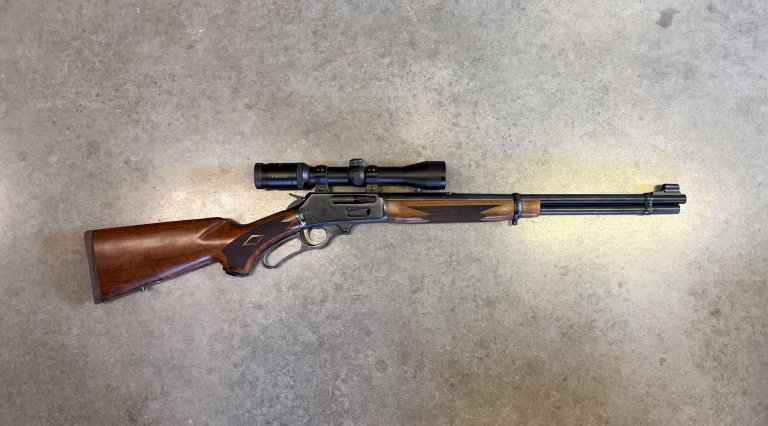
This is a perennial top hunting-rifle pick. These modern Marlins are the finest production factory guns to bear that name in the last half century. Since Ruger took over the brand and reestablished Marlin in Mayodan, N.C., the iconic lever-gun company has flourished.
The Classic was the first 336 model introduced after the company’s reincarnation and it was designed to appeal to our collective nostalgia. Its deeply blued metal, checkered walnut stock, buckhorn open sights, and .30/30 Winchester chambering harken to deer camps in the distant past.
It has since been joined by the 336 Dark Series, a blacked-out .30/30 Win. with a tactical look and feature set.
Either way, you won’t go wrong if you like to hunt in dense cover.
The action is slick, it balances beautifully, it delivers very good accuracy, and the Classic, at any rate, exhibits gorgeous lines.
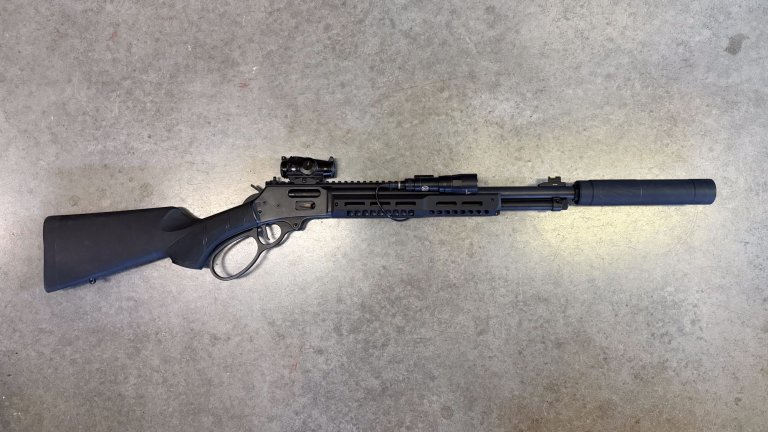
Smith & Wesson 1854 Stealth Hunter
Pros
- Fast and handy
- Good trigger
- Suppressor ready
- Quality ghost-ring sights
Cons
- Handguard gets cold in frigid weather
Specs
- Action Lever
- Cartridge .44 Remington Magnum
- Barrel 16.3 inches, threaded 11/16-24, 1:20 twist
- Magazine Tubular, 8+1
- Stock Aluminum fore-end, synthetic butt stock
- Trigger 4 pounds, 5 ounces
- Weight 6 pounds, 7 ounces
- Length 33.4 inches
- Price $1,399
Key Features
- Aluminum handguard with M-Lok
- Extended Picatinny rail
- Oversized lever loop
- Hi-Viz front sight
- Unloads from front of tubular magazine
The S&W Model 1854 was one of the stronger new rifle introductions in recent years. Lever actions are complicated to produce – the intricacies of the interplay among all the moving parts and their timing have to be nearly perfect for one to function correctly and run well.
Based on how solidly the Model 1854 works, you’d think Smith & Wesson had been producing them for decades. It is well balanced, reliable, handy, and easy to carry. You can watch it in action with another Model 1854 in this .44 Magnum versus .45/70 shootout.
The Stealth Hunter brings a more modern, tactical vibe to the platform. The aluminum handguard and its plentiful M-Lok slots allow for easy mounting of a weapon light, the long Pic rail that extends forward of the receiver can accommodate any scope you like as well as night vision or thermal devices, and the muzzle is threaded for a suppressor.
Smith & Wesson 1854 Stealth Hunter Accuracy Data (.44 Remington Magnum @ 50 yards)
| Ammunition | 5-Shot Group Avg. | 20-Shot Group Size | Mean Radius | Muzzle velocity |
| Hornady 200-gr HH | 1.44 in. | 1.69 in. | .52 in. | 1692 fps |
| Hornady 200-gr XTP | 1.77 in. | 1.9 in. | .58 in. | 2046 fps |
| Federal 270-gr HmmrDwn | 1.30 in. | 1.79 in. | .52 in. | 1670 fps |
My original model, pictured here, is in .44 Remington Magnum, a great close range deer round given the abundance of bullet options in the cartridge. S&W has since expanded the line to include .30/30 Win., and .45/70 Gov’t as well.
Its compact profile makes it a great choice for still-hunting in thick cover, discreet carry in a vehicle, or maneuvering within the confines of a deer blind or atop a treestand.
The Stealth Hunter demonstrates why, despite the radical changes in rifles over the last 150 years, lever actions are still relevant to today’s hunter.
How We Test Rifles
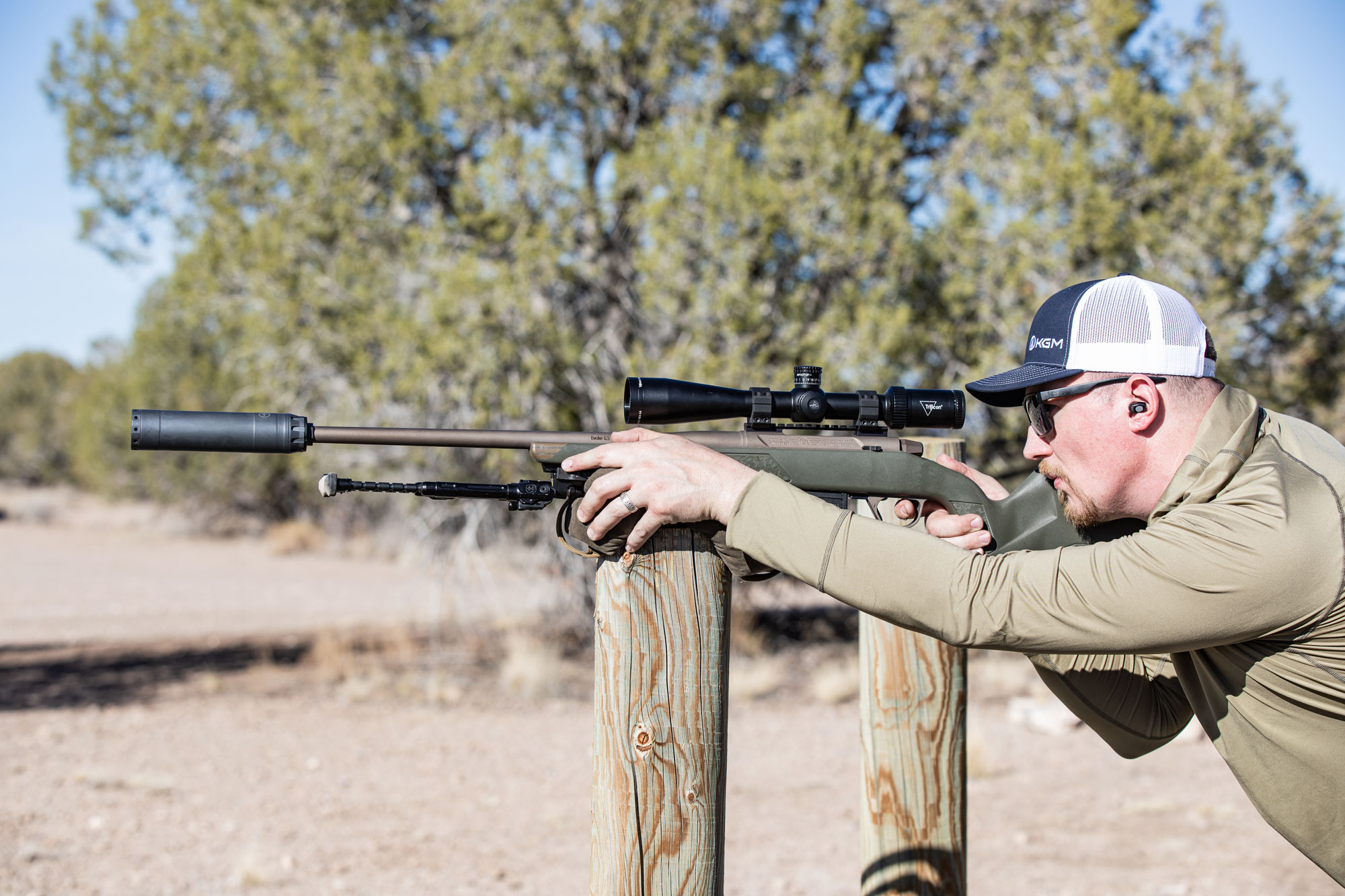
As you might guess from the data in this story, we put these rifles through a hell of a workout, shooting them for accuracy at the range with multiple types of ammunition, but also using them in dynamic situations. That includes shooting them in classic positions — standing, sitting, kneeling — as well as running them off barricades and with other means of support. We get the rifles dirty and push them to their limits to see when they might falter. We also inspect them with sharp, experienced eyes, looking for clues in their fit and finish and other details that reveal their sterling qualities or their shortcomings.
Our accuracy protocol is unique. You’ll see we still publish 5-shot group data, but we’ve also calculated much more meaningful 20-shot group sizes and the subtle, but important mean radius value.
Final Thoughts on the Best Hunting Rifles
Rifle hunters are a spoiled lot. We have such a variety of options to pick from when it comes to fielding an effective hunting rig that it is easy to take the performance we see from the rifles in this story (and others not mentioned here) for granted.
It is worth remembering that this wasn’t always the case. While hunters hotly debate whether new cartridges live up to their hype or if nothing much has improved since the .30/06 was trotted out during Teddy Roosevelt’s administration, we run the risk of missing the bigger picture.
A generation ago a hunter couldn’t count on a new rifle delivering the accuracy and reliability documented above. The chances of ending up with a mediocre performer 25 years ago were vastly higher.
Every now and then I still come across duds — that’s why we test everything the way we do — but throwing down for a new rifle today is a much safer bet than it’s ever been.