
We may earn revenue from the products available on this page and participate in affiliate programs. Learn More ›
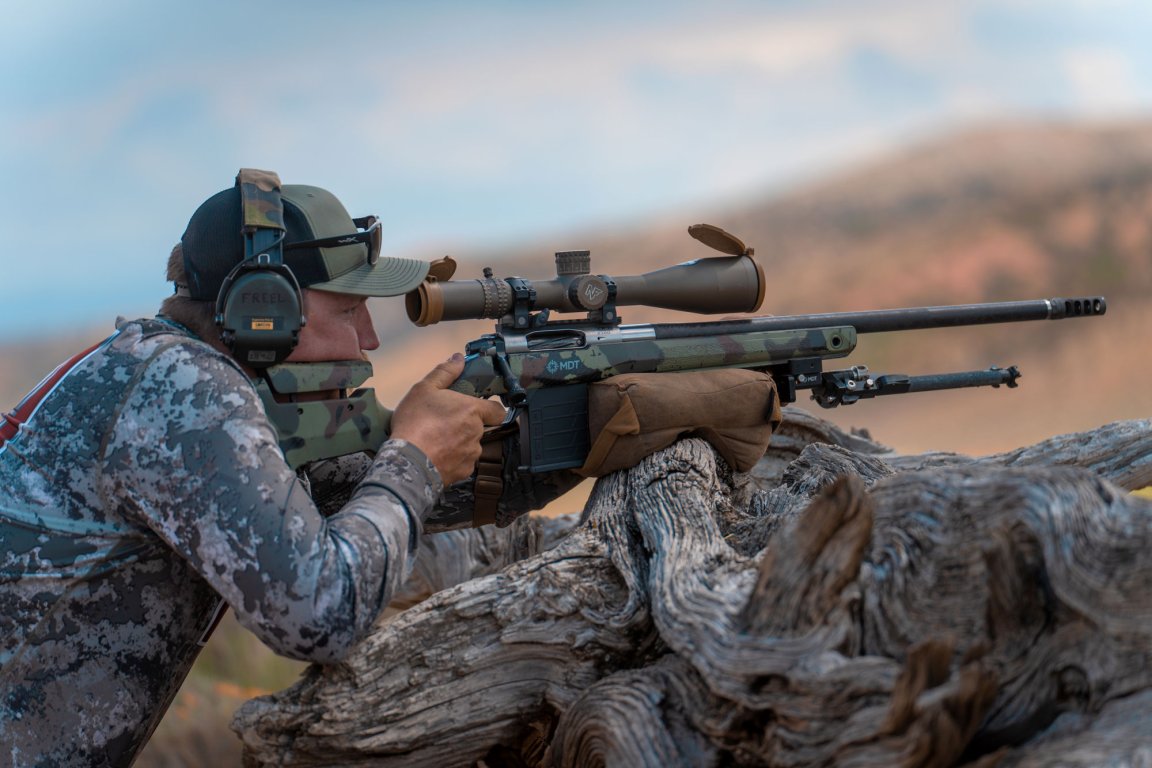
Competitive shooting is one of America’s oldest sports, and it’s always served dual purposes. Some dyed-in-the-wool comp shooters are in it purely for the love of the game. But others intentionally use it to hone their shooting skills for hunting and, historically, combat. Lots of shooting disciplines can make you a better killer in the woods — competing in service rifle was one of the best things that ever happened to my skills as a hunter — and that’s just as true of modern shooting sports like NRL Hunter and PRS.
I shot my first NRL Hunter match a few years ago and it has substantially changed how I approach shooting situations in the field. While NRL Hunter is most related to a hunting-specific competition, PRS — the Precision Rifle Series — has been around longer. This type of competitive shooting sometimes gets the side-eye from hunters as the stages and scenarios and equipment are usually not like anything you’ll see in the field. I just shot my first PRS match and, after that experience, I can tell you that if you think it won’t benefit you, you’re dead wrong.
NRL Hunter vs. PRS: What’s the Difference?
Both NRL Hunter and PRS are competitive circuits that have seasons, finales, and lots of shooters who jostle for rank and points. They have several things in common, and some big differences, too. Here’s some ways that they’re similar:
- Match structure is similar; two-day matches often have around 20 individual stages that shooters move through in groups or squads
- Each stage has a time limit
- Shooters are using precision rifles to shoot steel targets (animals and other shapes) at varying distances
- All stages have a specific order of engagement the shooter must follow
- In both series, each stage has specific marked shooting positions that must be used
- ROs cannot tell you where your shots impact, only call out hits
There are some big differences in the way NRL Hunter and PRS matches are shot, too. Let’s look at some of those.
NRL Hunter
- 4-minute time limit per stage (6 minutes for teams)
- Shooters must locate, range, and shoot all targets within time limit
- Blind stages with fixed target and position format — 1 target/4 positions; 4 targets/1 position; 2 targets/2 positions
- Up to 8 shots per stage
- First-round impacts count for 2 points. If missed, a second round impact is worth 1 point, then the shooter moves on.
- Three rifle divisions, including factory, open light, and open heavy, with a maximum weight limit of 12 pounds for open light and 16 pounds for open heavy. Allowances for suppressor weight have recently been added.
PRS
- 90-second to 2-minute time limits are common, but it depends on the match
- Shooters are given target descriptions, ranges, and locations, as well as exact instructions on shooting positions or spots you can shoot from
- Various target and position formats
- Up to 12 shots per stage
- Usually one shot, one point, hit or miss
- Multiple divisions including Open, Tactical, Production, Gas Gun, Suppressor, and Sportsman
My First PRS Match
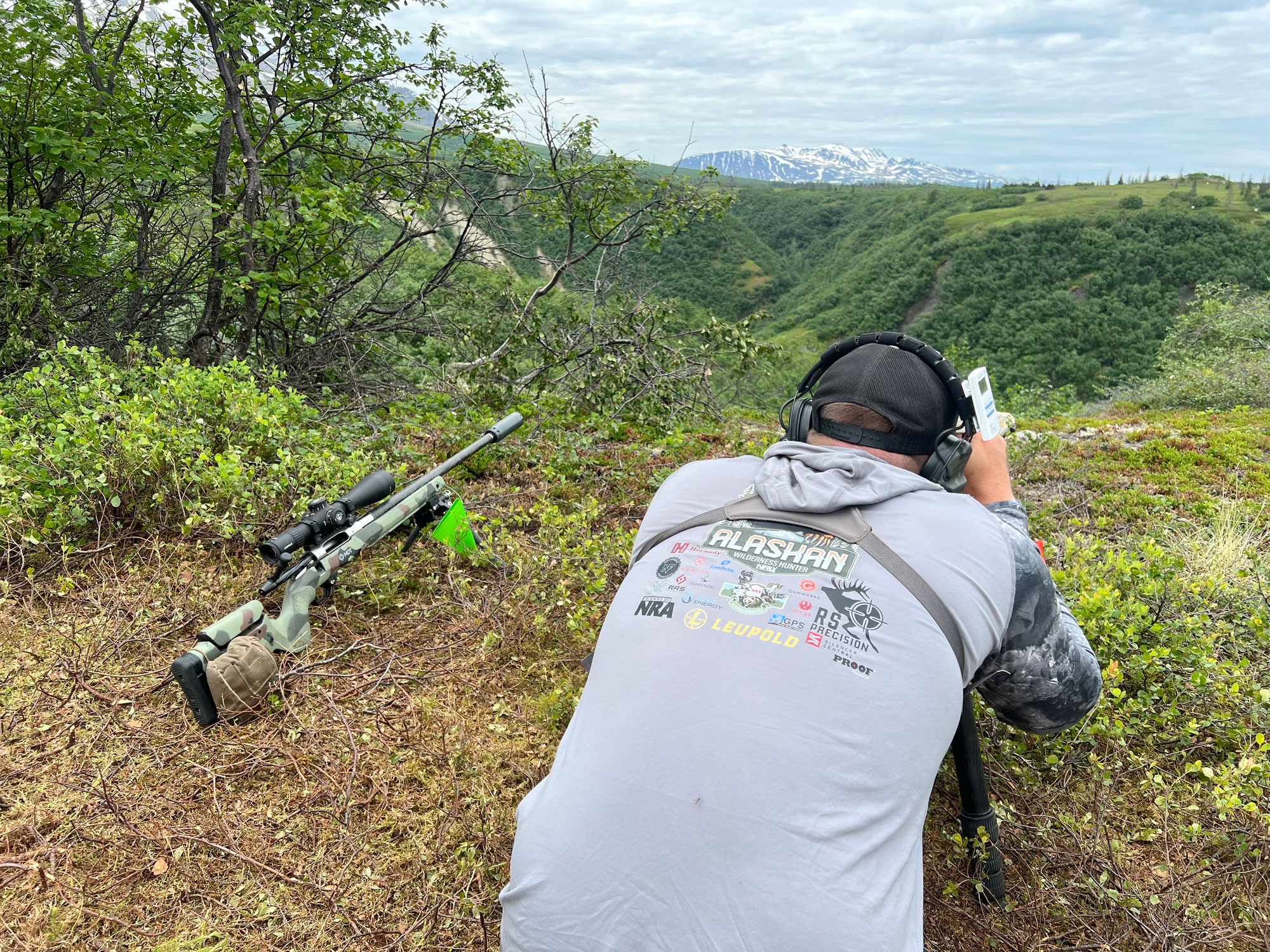
I showed up to shoot my first PRS match, the 2026 Hornady Precision Rifle Challenge, with the same rifle I used to compete in NRL Hunter’s Open Light division last year. This is a sub-13-pound gun, as configured, and qualified for the Sportsman’s Division. Most people associate PRS with 20- to 30-pound rifles with truck-axle barrels, diving boards, on-board chronograph mounts, and all the other bells and whistles. That’s what most people were shooting, but I was comfortable with this rifle and wanted to see how well I could run it under — what a lot of shooters would call — a more hectic match. And the Hornady PRC is generally considered to be one of the most difficult PRS matches in the country. I would be happy if I simply didn’t embarrass myself.
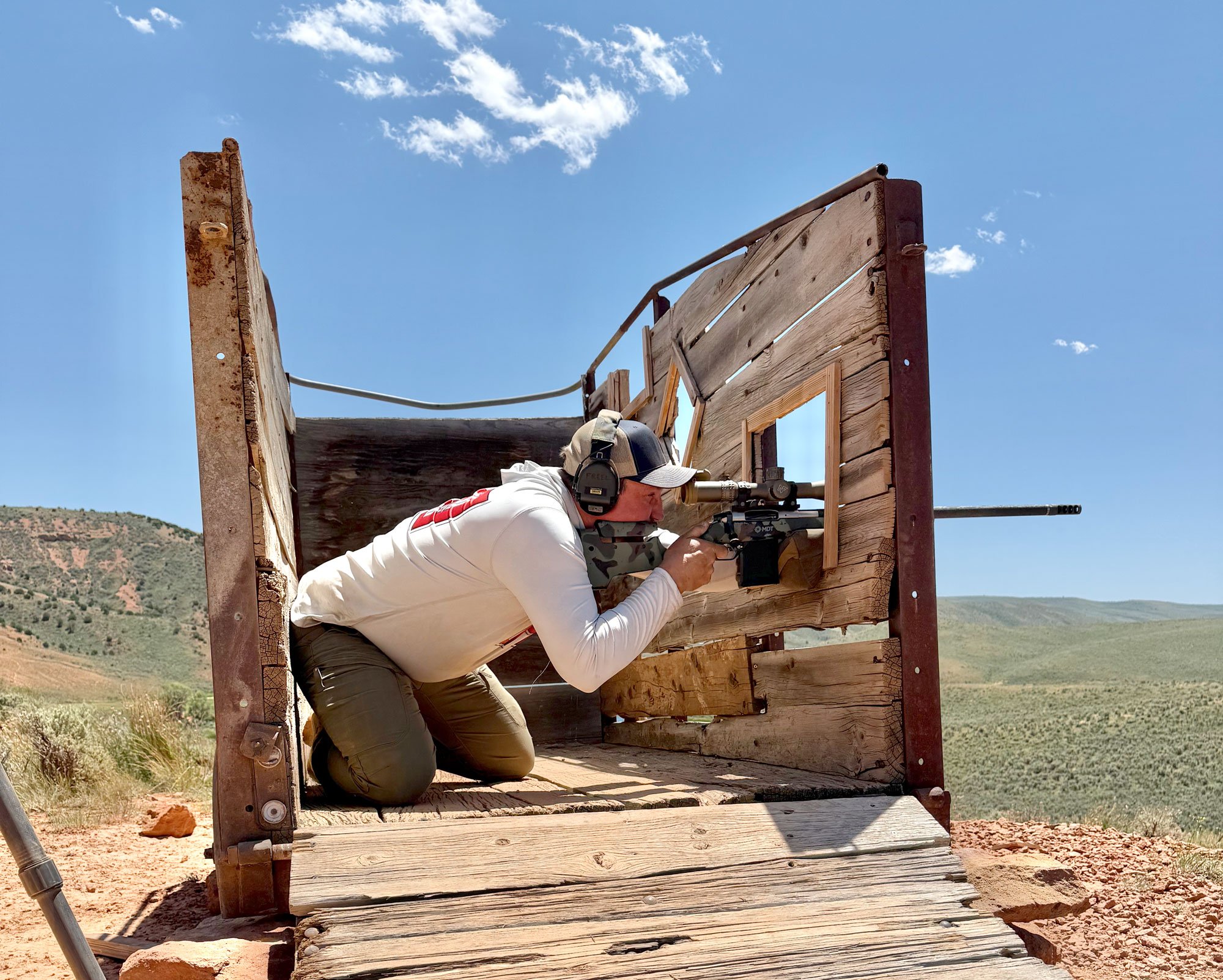
I started off pretty shaky. I felt good about my stage planning and how well I was moving between positions, but I had a hard time really settling down and reducing the wobble of my crosshairs — which led to me snatching up the trigger too many times. After a couple stages, though, I settled down just as the wind picked up. On the first day, we dealt with some winds of 20 to 30 mph, with gusts faster than that. Even shots of 400 to 600 yards required dramatic wind corrections and stability was tough to establish in many positions. Still, I fought through it and left satisfied with how I finished the day.
On day two, we had more favorable conditions, which helped everyone, but I was able to get in a groove and break clean shots, wasting little time or movement establishing solid positions and transitioning between targets. There was still plenty of room for improvement, but I managed to jump 20 spots overall, finishing middle of the pack and second in my division.
After shooting that match, I’ve changed some of my opinions about just how relevant PRS competition is to hunters, and gained clarity on just what it will do for you.
What PRS Is So Good For
Both NRL Hunter and PRS challenge us and are beneficial, but in slightly different ways. Just because NRL has “Hunter” in the name doesn’t mean that PRS doesn’t offer compelling benefits for sportsmen, too. Both put stress on the shooter by requiring them to do their job on the clock and under the watchful eyes of the RO. A lot of that anxiety and pressure in NRL Hunter is related to approaching a blind stage and attempting to locate targets, then quickly decide which body position and gear to use in order to shoot them effectively. In PRS, it’s all about repetition and economy of movement — and you’ll get a lot of repetition.
A complaint I’ve heard from some frustrated new NRL Hunter shooters is that it can be so challenging to locate the targets and get set up that they hardly get to shoot at all within the allotted four minutes. In a PRS match, you have detailed descriptions and time to look at the targets and decide how you want to shoot the stage before your turn.
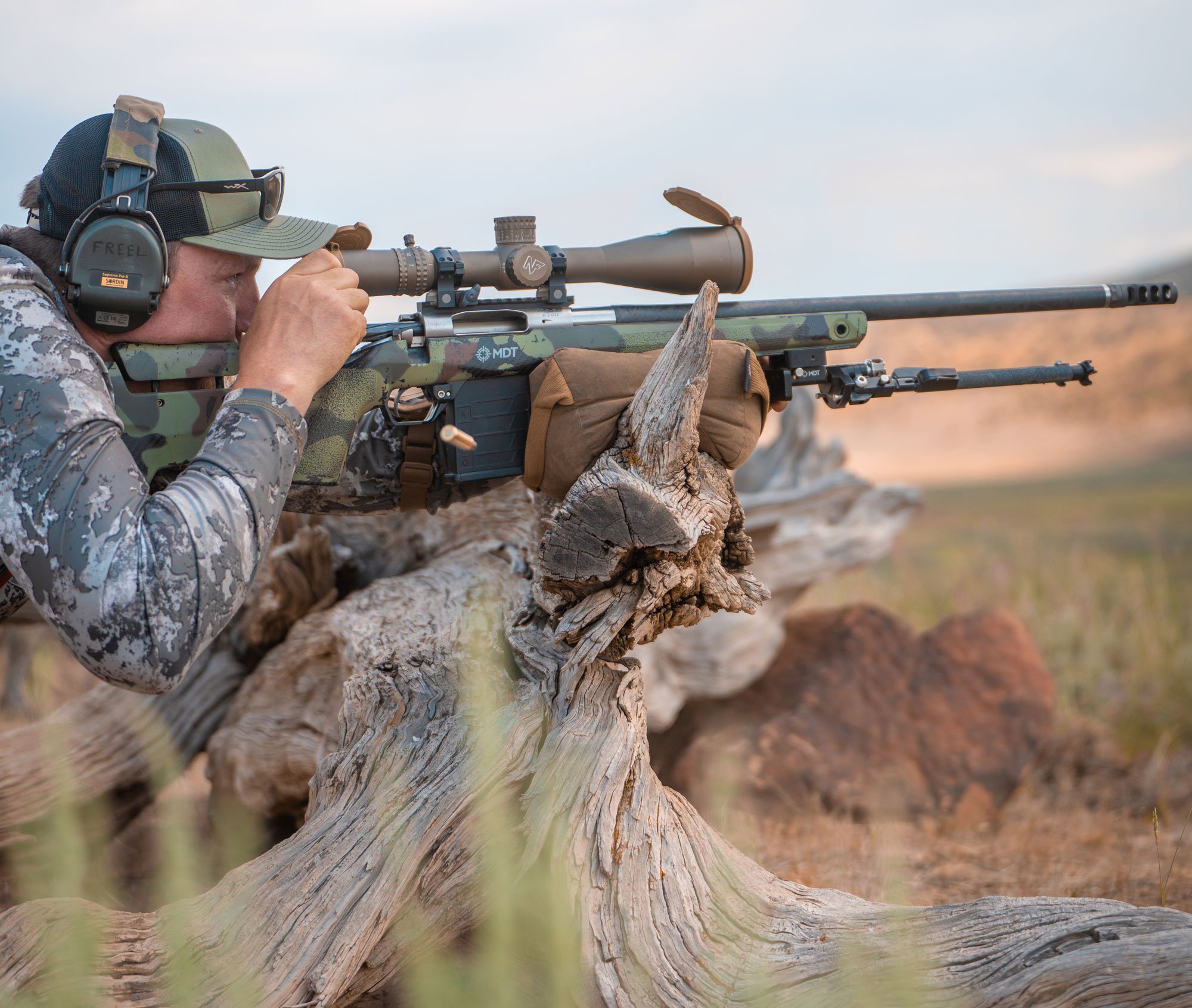
The challenge here is that you have much less time and more shots to fire. You may have to fire from five different positions, or alternate between two, or engage targets in various orders. You’ll get a lot more shooting in a PRS match, and it will drill you on the fundamentals of shooting, position building, and mental acuity. In shooting and preparing for a PRS match, you’ll also get valuable reps just shooting and cycling your rifle. Hell, you’ll get more quality shooting reps in from a PRS match than most hunters fire in two years. It’ll make you quicker and deadlier, make you better at setting up stable positions, and you might even take some competitive tools and techniques hunting with you — like a quality shooting bag.
A Note on Ammunition
One big difference between the two series is that NRL Hunter has a power factor requirement that prohibits the use of some of the smaller cartridges common to PRS. Except for the Sportsman’s Division, which requires a 6.5 Creedmoor, you can use what you like in PRS. Lots of 6mm cartridges are regularly used, but the 25 and 6.5 CM are frequently fielded, too.
An exception for the power factor rule in NRL Hunter is with factory loaded ammunition. Some factory loads fall below power factor, but are exempt from the rule — making power factor only a tie breaker. This can give factory ammo a slight advantage, especially in cartridges like the 25 Creedmoor which are sometimes borderline for making the cut.
While good factory match ammo is certainly suitable for PRS, you’ll find most serious competitors are using their own reloads. Generally speaking, the targets are going to average smaller, with more technical and challenging shooting positions in PRS than in NRL Hunter. Every advantage a shooter can give themself is worth it in this game.
Final Thoughts
Both NRL Hunter and PRS are games, sure. And if you enjoy competing, you will likely do some things to play the game that might not directly apply to your hunting. Participating can be intimidating, but you’ll likely find that there’s not a friendlier, more helpful bunch of people than those you’ll get squadded with at a PRS match. Don’t let the jerseys and fancy space rifles keep you from enjoying this sport and improving your skills as a result. We can buy rifles, cartridges, and hunts, but improving our skills should be at the top of every hunter’s list.