
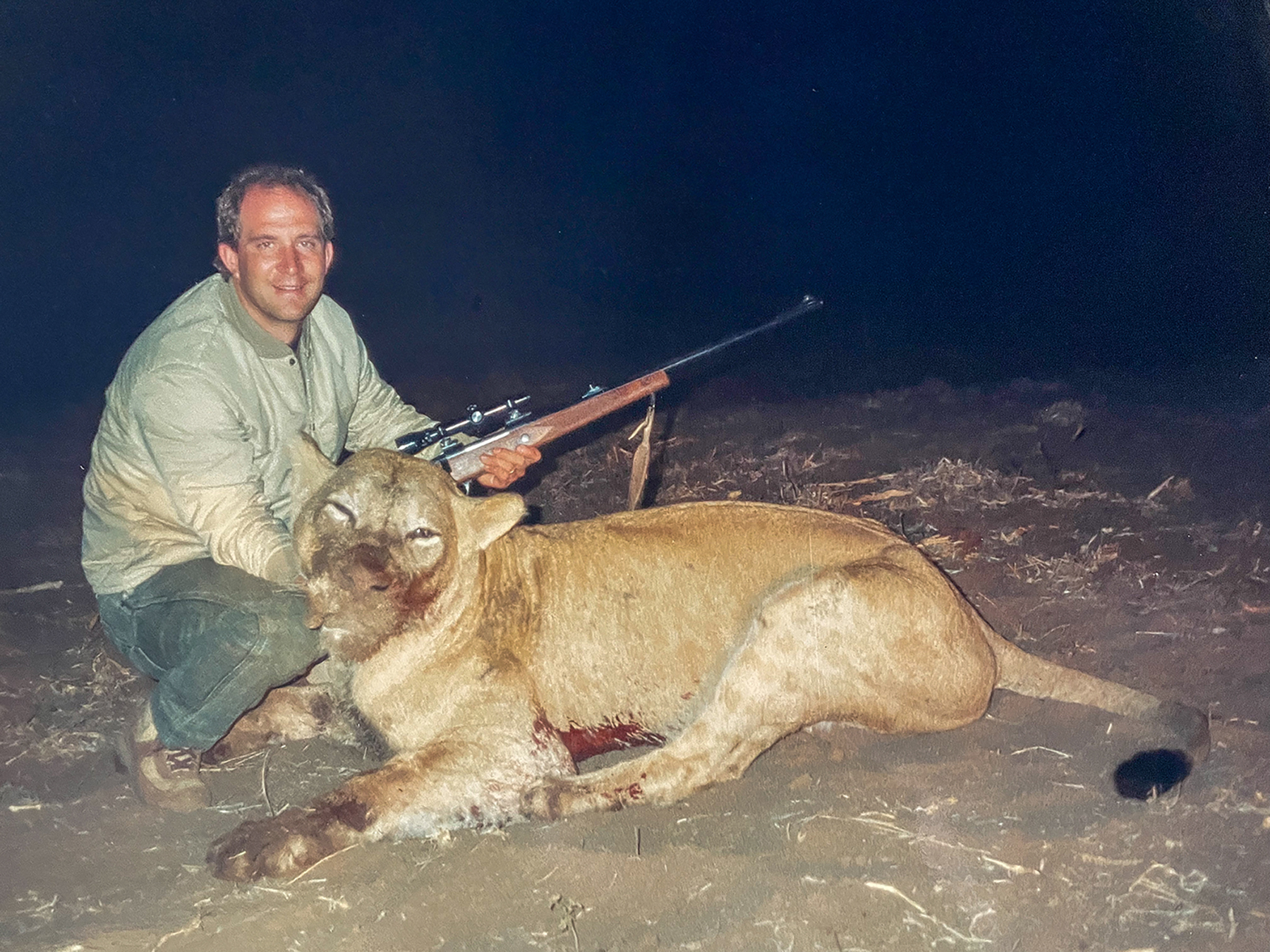
The first African lion I ever shot was a man-eater. The year was 1993. It was a lioness. I actually shot two of them. I had been working with government officials in South Africa, and one night we killed four problem lions that had been wreaking havoc on villages for weeks.
I skinned out those two lions and one is now mounted life-size in my office, while the other was crafted into a rug. But those weren’t the only mementos from the marauding felines. We ate some of their meat. And that man-eater lion meal is just one memory I have of many wild game culinary adventures through the years. I’ve had the opportunity to hunt wild critters all across the globe, and I’ve always tried to eat everything I harvested. That has lead me to some strange, and wonderful, meals.
Big Cats
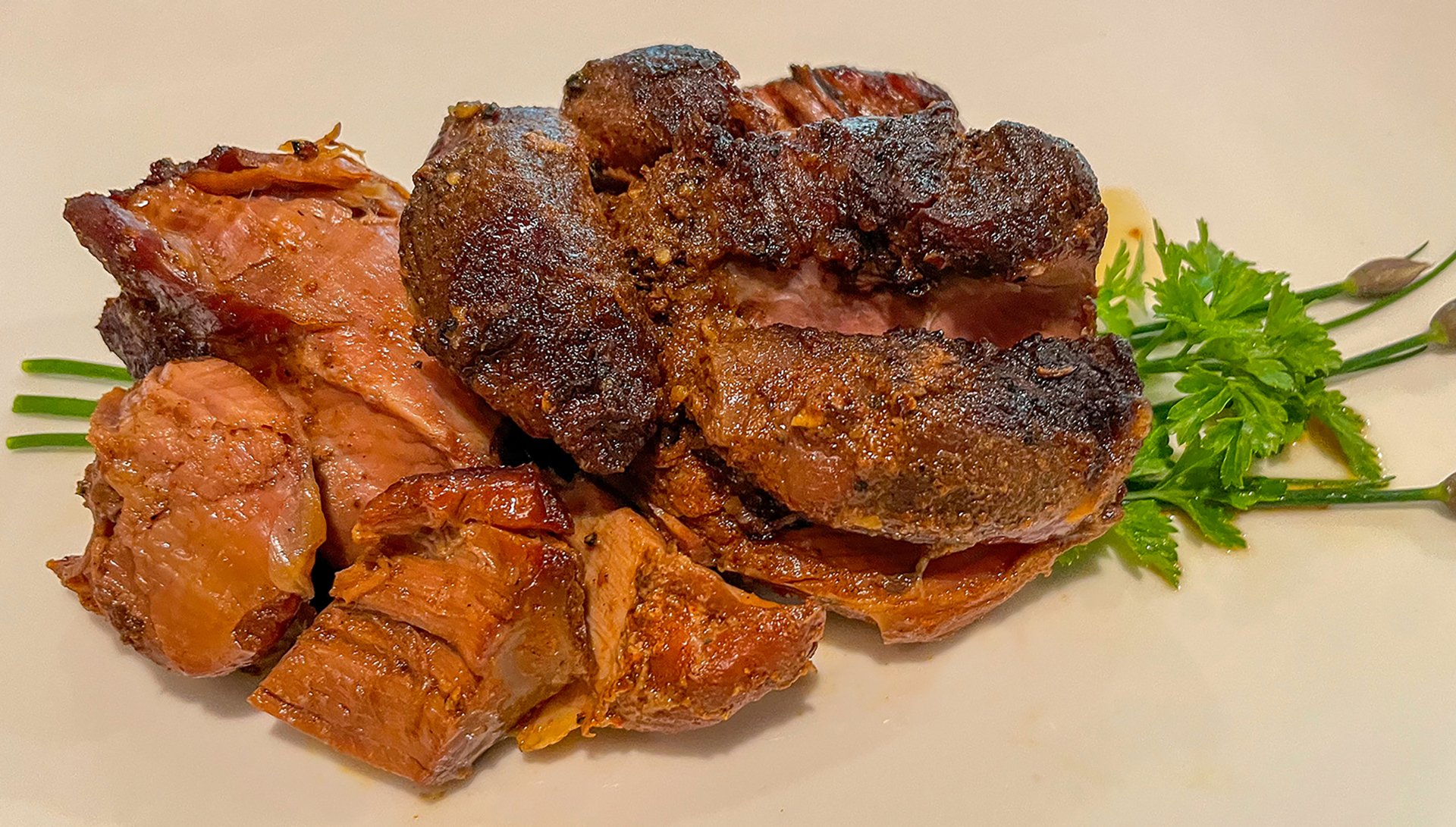
From one of the man-eaters lions I removed the backstraps and a hind quarter. My wife, Tiffany, was with me on the trip and she’s one of the best game cooks I know. Her and a friend cooked up delicious backstraps and slow-cooked the roasts. We had steaks, too. We were in Africa for a month and ate many meals from the lion. The white meat is mild and delicious, similar to all big cats we’ve eaten.
We donated the rest of the lion meat to a food bank. They didn’t know the lions were man-eaters and they were happy to have it.
At the time, we were living in Arctic Alaska where I ran a 200-mile trapline for wolves. I caught a number of lynx and those, too, were delicious. Lean and tender, cat quarters when slow cooked, are hard to beat.
Last spring I called in and shot two mountain lions near our Oregon home, about a month apart from one another. Outdoor Life made a social media post on one of the hunts I wrote about and the number of comments from people scorning me for killing something I wasn’t going to eat, was puzzling. Why assume that just because it was a predator, it wasn’t eaten? It was. Every bit of it. As was the big male cougar I called in and shot, and shared recipe photos of in 2024 on OutdoorLife.com.
Slow-cooked cat shanks are incredible. Backstraps in a stir-fry are a delight, as is any cat meat cooked hot and fast. And the roasts are tender and tasty. Many folks we’ve shared cougar meat with swore it was pork. I always like seeing the reaction of dinner guests when Tiffany unveils what they’re about to eat.
Bears
Bears garner much the same reaction. When Tiffany wrote her popular book, Cooking Big Game, she had test cooks and taste testers. Four cooks received the meat, all the ingredients, and the recipe. They weren’t told what the meat was until later. The goal was to make sure the recipe instructions were clear and the final product was pleasing. Tiff didn’t want the cooks or the tasters to have any preconceived judgements of the meat they were cooking and eating.
Not one of the test cooks or tasters ever guessed they were eating bear meat. Many thought beef had been slipped into the mix. That’s how good bear meat can be.
When our boys were young and living at home we often shot three or four bears a year. We ate a lot of bear meat in those days. When Tiffany and I lived in Alaska’s high Arctic in the 1990s, we ate grizzly bear. Fall grizzlies feeding on high mountain blue berries are hard to beat. We ate a coastal brown bear one fall, even polar bear when we lived in Point Lay, Alaska. Polar bear meat is strong, tough to choke down, due to their sea mammal diet.
We’ve eaten dozen of bears, including an old one I shot this past spring. The key with attaining good tasting, tender bear meat is getting the hide off as soon as possible after the kill. Once a bear is shot, you must quickly snap your photos and start skinning. When the quarters are removed, get the meat off the bone, fast. Bear hide and their big boned legs retain a lot of heat. The meat has to get cooling as soon as possible, as the greasy fat can quickly taint the meat. We don’t age bear meat. We cut, wrap, and freeze it that day. Prior to cooking, roasts can be taken from the freezer and dry-aged in a refrigerator for a few days.
We’ve never gotten sick from any bears we’ve eaten. The paranoia of contracting trichinosis leads many people to overcooking bear meat. This makes it tough and gamey, and gives it a bad wrap. Like all big game, overcooking bear meat will result in dry, tough meat that people will not like. They will mislabel bear meat as inedible and talk poorly about it for eternity.
With fall bears, we render down the fat for cooking. We’ll freeze large chunks of it in two-gallon sealable bags. It’s as good as the old timers say, making the best pie crust you’ll ever sink your teeth into, and bear fat is healthier than other red meat fats.
Read Next: Everything You Need to Know About Eating Bears
Arctic Cuisine
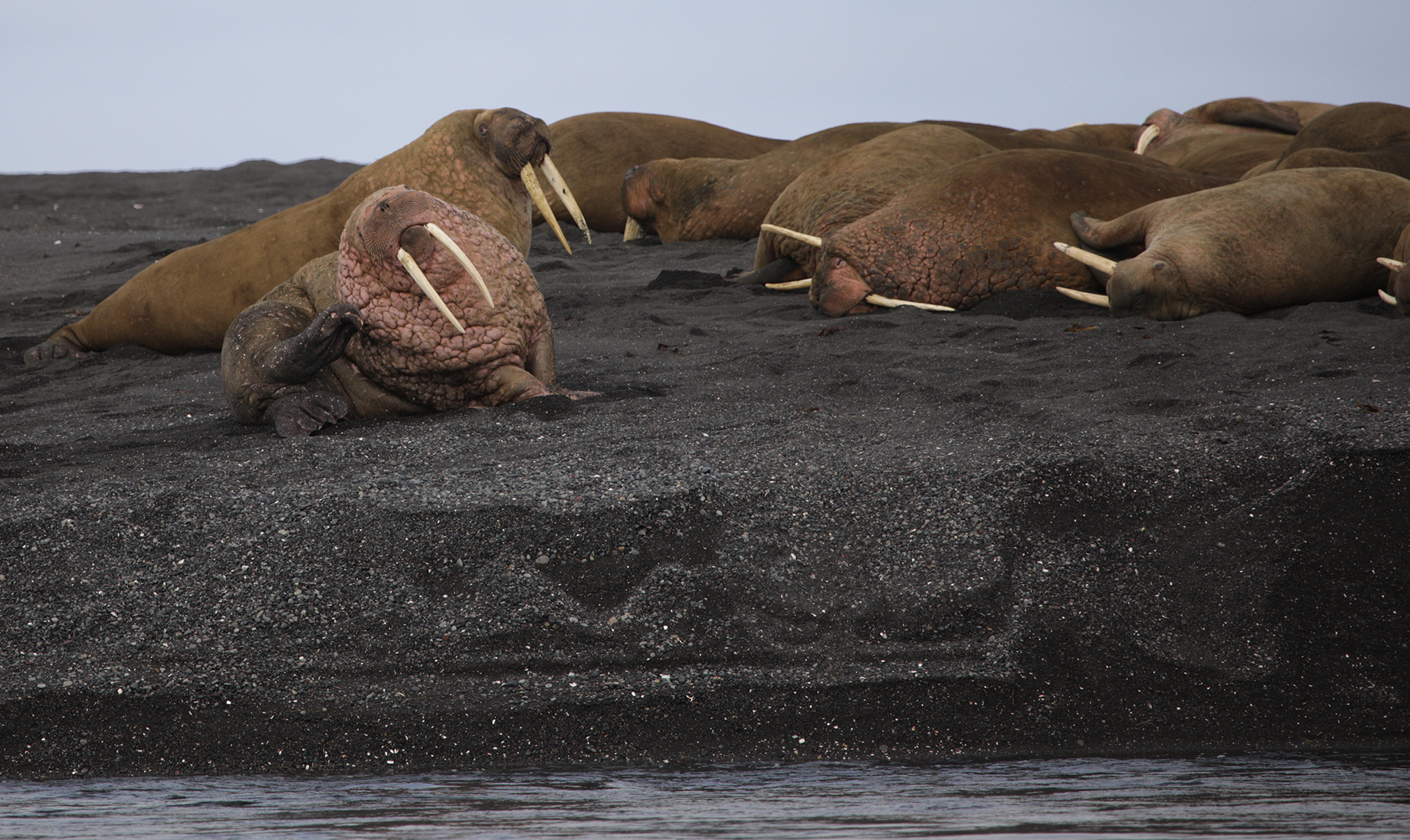
While living a semi-subsistence life in the Arctic during most of the 1990s, we also ate pinnipeds (seals) taken by my Inupiat hunting partners. Even under subsistent rules I couldn’t hunt sea mammals due to the federal Marine Mammal Protection Act, but they made up a big part of the indigenous people’s diet. Bearded seals, spotted seals and beluga whales were a mainstay of Point Lay Natives — and they still are. Other coastal villages in the Arctic relied heavily on bowhead whales.
The pinnipeds and whales weren’t to my liking, especially the meat and blubber that had been soaking in fermented seal oil all summer. The meat was very strong. The fat, unless fresh, was overpowered by a strong flavor and smell. A new teacher once tried fitting in with the locals by devouring a large chunk of fermented beluga whale meat at a village gathering. After that he missed a week of work and lost 25 pounds. Some of us don’t have the stomach to handle such a meal. The Inupiat people, even the small children, gobbled it down like candy. We didn’t mind eating the skin next to the fat on both beluga and bowhead whales, as long as it was fresh. It has an appealing texture and not too bad of flavor.
What I did like eating from the seals were the intestines. The intestinal walls were thick, and when the contents of the inside were squeezed out, boiled intestines were very sweet and tender. I’d often coil-up a foot of it to take as a snack while hunting or trapping.
Boiling caribou heads was a big thing on the North Slope of Alaska. Picking meat off the skull, it was tender and mild. The fat surrounding the eyeballs and filling the eye sockets was also sweet. I drew the line at eating the actual eyeballs and brains, but the kids loved ‘em. They also loved cracking up the leg bones with rocks and eating the raw marrow. I tried that, but wasn’t too fond of the greasy film it left in my mouth.
Sadly, I never drew a musk ox tag when living there but some of the locals shared meat with us. The large-grained meat is some of the best tasting big game on the planet.
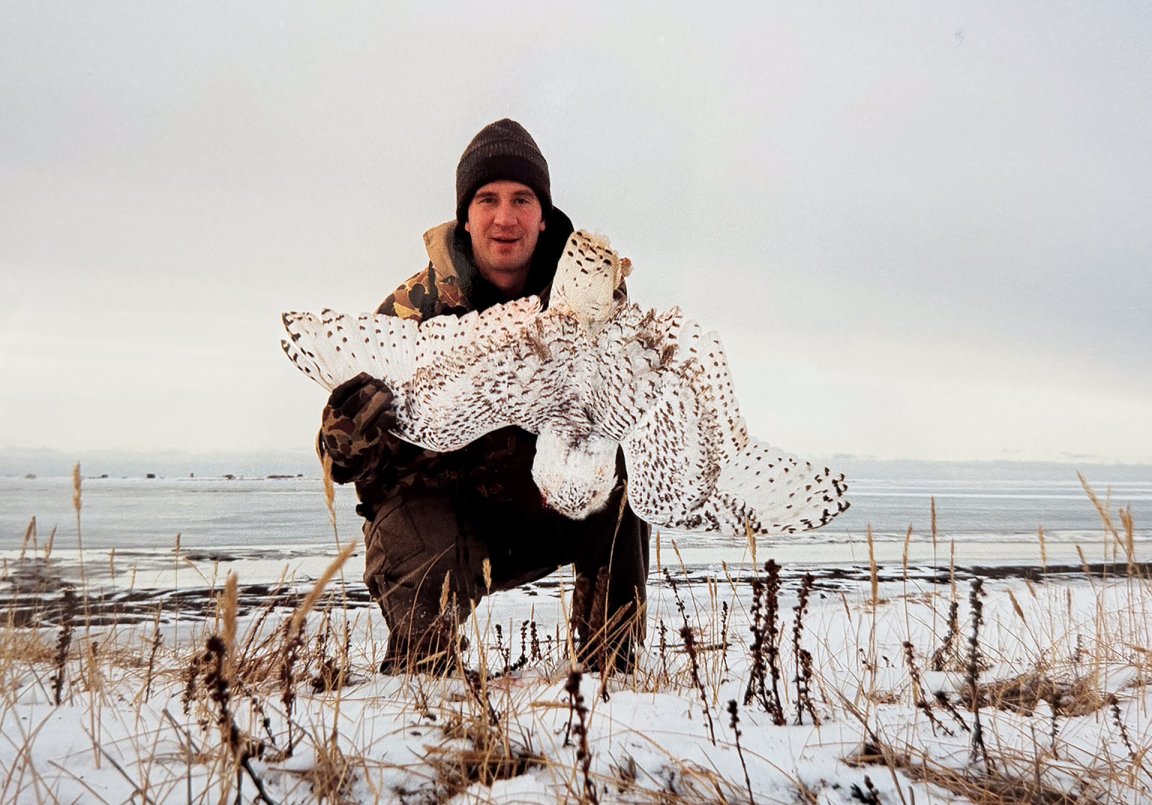
While living in Point Lay I taught my high school students how to trap. Trapping had become a lost art and no adults in the village did it anymore. We mainly trapped Arctic fox, as wolves and wolverines almost never passed through. We also trapped a handful of snowy owls. I called in and shot a few of them, too.
Snowy owls are North America’s largest owl. One I weighed tipped the scales to more than six pounds. They’re round and plump, like a store-bought turkey. An elder had told me how good snowy owls tasted; that’s what piqued my interest in them.
We lived in Game Management Unit 26A. Today, Alaska’s hunting regulations classify snowy owls as legal to take by residents in five GMUs. Interestingly, there’s no bag limit for residents, and the owls may only be taken for food or clothing (think traditional Native attire).
Using rodent distress sounds with a mouth call, I called in some of the white owls in the fall. We skinned, cooked, and ate the owls. Their fat turns greasy when made into jerky, but prepared in a slow-cooker, whole, these raptors are great eating. The meat, sliced thin, is very good in a stir-fry.
We prepared a scientific study skin for our school and had another one mounted for the entry way display case. Two of the snowy owls we got had been banded in Utqiaġvik, formerly, Barrow. We ate those owls and sent their skins to Utqiaġvik, one of which was made into a study skin at the local college, the other, mounted for a museum. Every snowy owl we got, we ate and preserved the skins of for educational purposes; they were not allowed to leave the state of Alaska. We also shared some owl meat with elders, who loved it. It reminded them of growing up. Since there was no store in Point Lay when we lived there, the owls provided an occasional taste of variety to our fall diet.
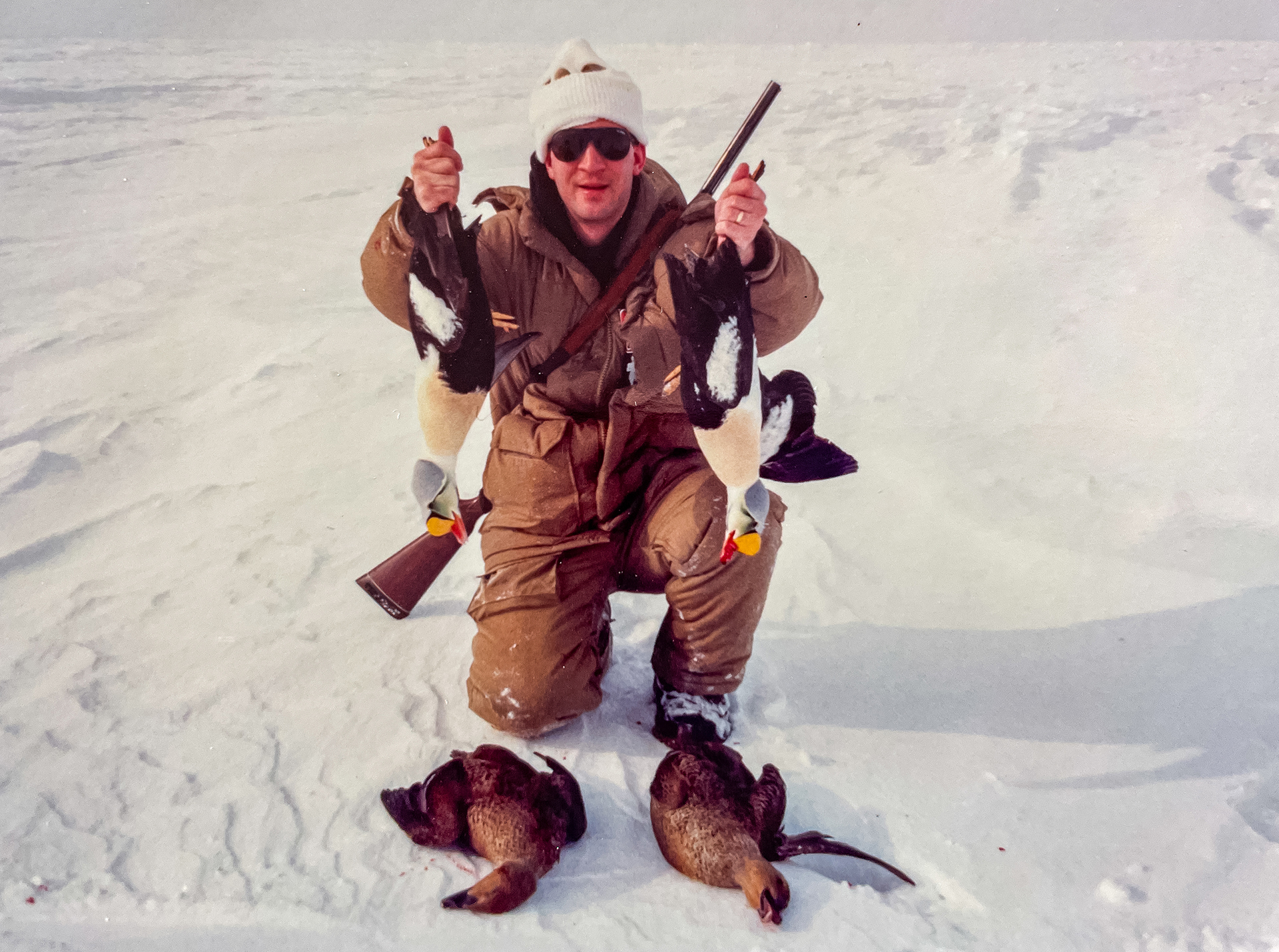
By the time the September 1 waterfowl season opened in Alaska, all that remained so far north of the Arctic Circle were Pacific black brant. I only got a few days worth of limits before they were gone, migrating down the coast. But under spring subsistence laws I could hunt waterfowl, and I did with the locals. A few white-fronts showed up on the leading edge of the snow melt, but eiders flocked up the coast by the tens of thousands.
We’d ride our snowmobiles onto the pack ice of the Arctic Ocean, set up near an open lead (a break in the sea ice), and pass shoot king and common eiders that cut the inside corners. Sometimes we’d lay out a big, blue, plastic tarp to trick the eiders into thinking it was open water. It worked.
During our time in Point Lay we ate scores of eiders. It’s where Tiffany perfected the art of cooking waterfowl. Slow-cooking eiders was by far the best way to eat them, as other cooking methods simply locked in their gamey flavors.
South Pacific Delights
From the fall of 1997 until the spring of 2001 Tiffany and I worked as school teachers on the Island of Sumatra, Indonesia. Singapore was our hub city and this opened the way to easy travels throughout Asia and the South Pacific — and some interesting foods.
Pickled monkey brains had an okay flavor, but I didn’t like the film it left in my mouth. I shot wild pigs with my bow, and they were excellent eating. Some I hunted in the jungles, others were taken from rubber tree plantations where they destroyed the trees to get at the cambium layer. Hunting pigs with hounds was a huge deal on Sumatra, and I tagged along for many hunts.
The weekend events often found hundreds of hounds running plantation fringes. The goal was to wipe out all the pigs that were a menace to rubber tree farmers. Because the houndsmen were Muslim, they didn’t eat the pigs. They wouldn’t even touch them. Dogs would routinely catch and kill the pigs. Sometimes a houndsman would step in with a dagger to finish the job. I did that a few times. It was intense, and I received some crazed stares every time I paused to quarter a pig and load my pack with the delicious meat. It was the only wild game we could get in Indonesia.
One morning we hunted the edge of a palm oil plantation. A swarm of fruit bats funneled into the orchard to feed. There were thousands of them, with some gliding right overhead. Their five-foot wingspans and fox-like heads were a sight to behold. A local man I was with reached into his satchel and gave me a pinch of dried meat. It tasted good, like shredded jerky. He pointed to the sky, then back to the dried meat. I’d just eaten my first fruit bat. I would have never known had the man not said something; I thought it was beef.
While on a water buffalo hunt in Australia, a buddy and I ran out of food and water. We’d followed a big buffalo into a brackish swamp we couldn’t drink from. After two days in 113-degree temperatures we were forced to eat green ants. We found multiple nests and couldn’t pop their green, lemon tasting abdomens into our dry mouths, fast enough. Along with wild nuts that had the texture of small rocks, these snacks got us through for a few days — until I shot a buffalo. Backstraps cooked over an open fire never tasted so good.
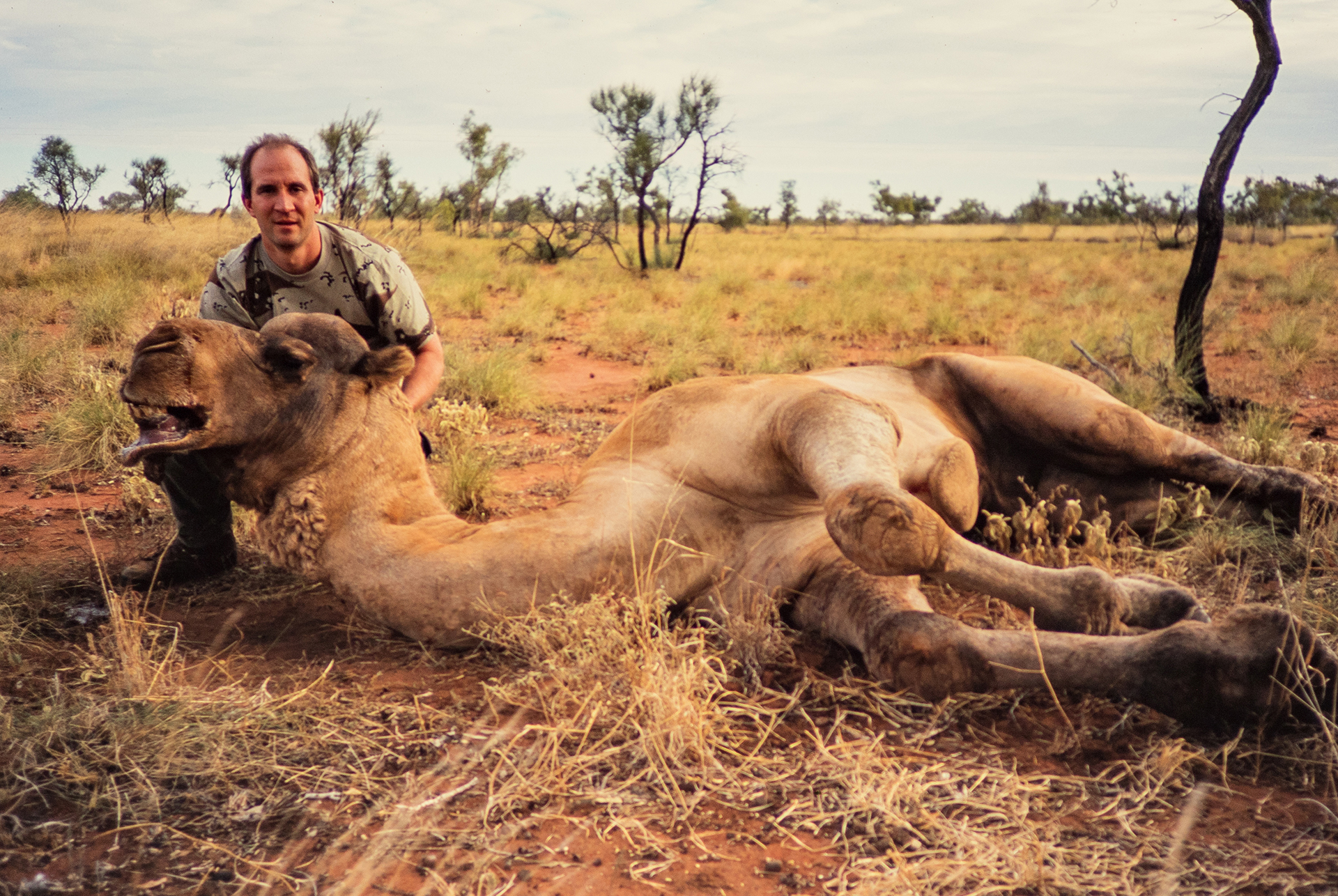
On another hunt in Australia, camels and kangaroos were the targets. The camels were feral with no bag limit. I shot three big bulls. It took me several months to secure kangaroo permits. The flavor of the camel meat was okay, but it was tough. Perhaps it was because the steaks from the old bull were beyond saving. More than likely, it was because of my poor cooking skills over an open fire. But the kangaroo meat was incredible, especially the tails when cooked skin-on in hot coals. Tender and tasty, the mild meat is some of the best I’ve ever had. It’s a delicacy in many countries, with good reason.
African Game
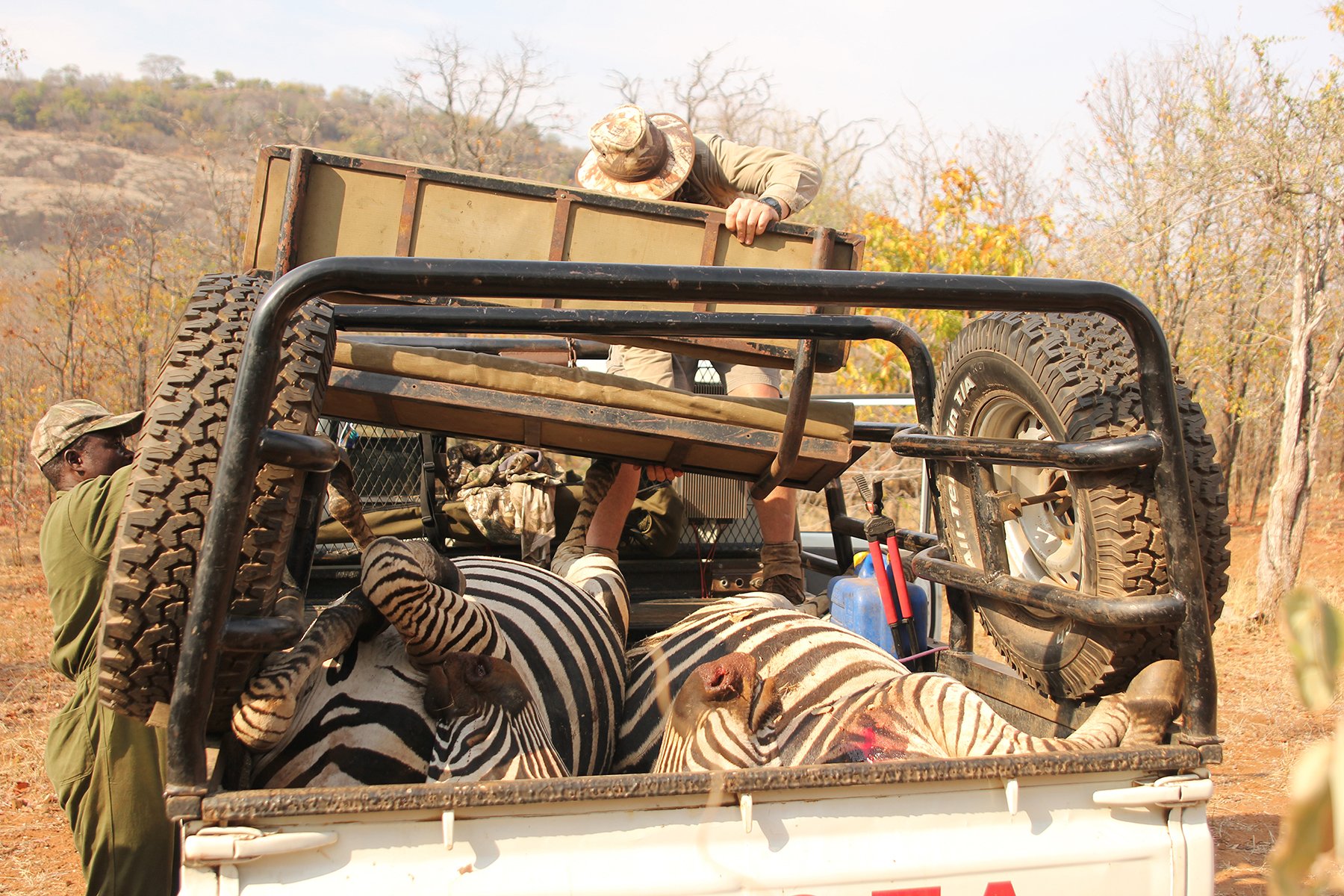
If you were to ask my wife about the best tasting big game she’s ever had, anywhere in the world, she’d answer, zebra. I agree. On our first of several African safaris, the zebra meat was used as predator bait. It wasn’t even given to local villagers to eat. We were always told the orange fat made the meat inedible.
“That’s bunk!” shared good friend and PH, Jonathan Collet the first time I shot a zebra with him in Zimbabwe. “It’s the best eating meat there is. People who claim the fat is bad have no idea what they’re talking about,” Collet said. He was right. Ever since then, whatever camp we go to in Africa, we request zebra meat. It’s the perfect combination of texture and flavor. The mild meat takes on the flavors it’s cooked with, but it is not so mild that it’s bland. I’ve had a some folks tell me it tastes like horse meat. I’ve never eaten horse, but hope to one day.
We also love African biltong —— their version of jerky. This jerky is air-dried, not cooked at low heat like ours. As long as it’s cut into thin strips and there’s little fat on it, it’s excellent to eat. Some folks put spices on the biltong, which can enhance the flavor. I’ve enjoyed biltong from many antelope species in Africa. It’s far better fresh, than from packages we’ve tried in the U.S. and international markets.
One night for dinner on the Zambezi River, the family ate fried mopane worms. They weren’t bad. They’re an important source of protein for many rural villages, which are commonly eaten raw. We also ate roasted and salted locusts. The crunchy morsels were very good, reminding us of crickets back home.
Home Turf
This month Tiffany and I celebrate 36 years of marriage. From the start, we lived on wild game and fish. First was a subsistence life in remote Alaska, and then later by choice.
When our sons were growing up we’d average eating two elk, five deer, a few bears, and pronghorns, along with numerous birds, fish and other wild critters in a year’s time. For more than a quarter century we’ve made our living from the outdoors, me as a writer, photographer, and TV host; Tiffany as a cookbook author and recipe developer. About the only times we’ve purchased non-game meat was when Tiffany was developing recipes for companies who requested it.
Tiffany has written several cookbooks focusing on big game, upland birds, waterfowl and seafood. Some of the oddball things she’s cooked haven’t made it into her cookbooks, only magazine cooking columns and special features.
She once raised crickets. We ate thousands of the high-protein morsels for a couple years. She’s cooked rattle snake, beaver steaks and more. Nutria and crows attract the most attention from folks.
Every time I tell someone how delicious crows are, I get the same response. “Ew, you eat those things after what they dig out of dumpsters?”
Yeaaaah, riiiight, that’s precisely where I hunt them, in back alley dumpsters, I thought. Sometimes the words of fellow hunters leave me scratching my head.
I hunt crows in the mountains and farmlands. Crows have a diet very similar to wild turkeys. Many folks we’ve shared crow steaks with swore they were eating venison tenderloin. It’s a firm, tender, incredible cut that’s worth trying.
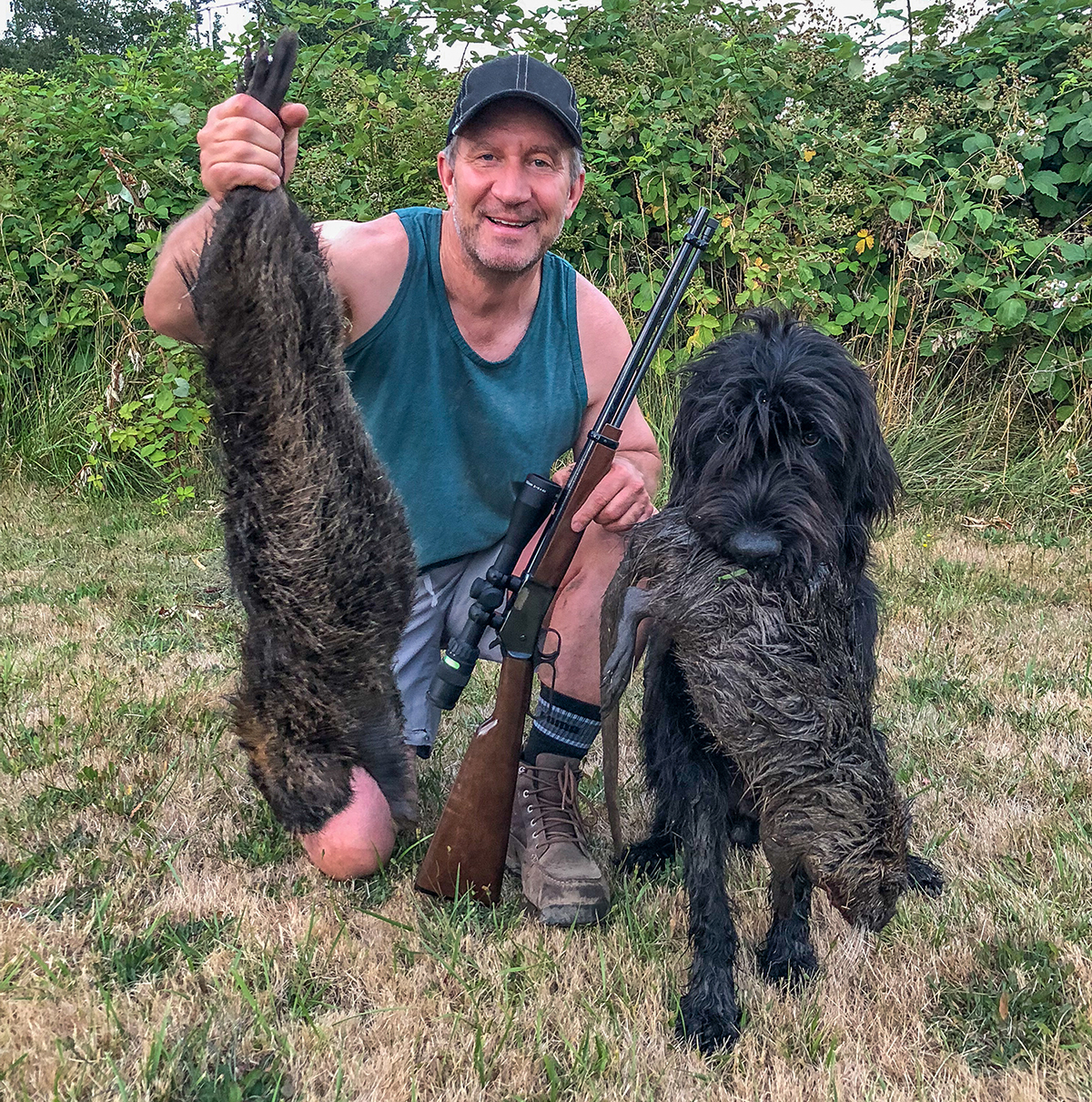
Nutria is another excellent eating meat. If Tiffany served it to 100 outdoorsmen and didn’t tell them what it was, they would all claim it to be venison. I know this to be true, she’s done it, most recently at a wild-game potluck where everyone thought they were eating deer.
Nutria are vegetarians, grazing on lush grass and new blackberry shoots where I hunt them. They’re a menace to farmers and duck clubs. Some years we’ll shoot over 100 of the pests; our dogs love retrieving them. Ground for burger or prepared in a slow cooker, nutria is lean, clean, and full of flavor. There’s a reason many restaurants, even state agencies where nutria are overpopulated, promote eating them. But, like most things out of the norm, people often misjudge nutria and pass it off as terrible table fare before even trying it.
Beyond the standard big game and fowl, there’s a host of great eating, healthy, wild game options out there. Many cultures have survived on it for generations. And the only way to find out if a wild game meal is for you, is to try it.
Editor’s Note: For signed copies of Tiffany Haugen’s popular cookbooks, visit scotthaugen.com. Follow Scott’s adventures on Instagram and Facebook.