

We may earn revenue from the products available on this page and participate in affiliate programs. Learn More ›
Big, gas-burning outboard motors are sexy, but most serious anglers spend more time on their trolling motor than they do at wide open throttle. That’s why choosing the best trolling motor for your particular set of circumstances is so critical – without it, you can’t get to the fish stealthily, or you won’t have enough power to keep going all day.
Indeed, the trolling motor market has broadened in recent years, going from two main players to at least five, with some smaller, more targeted brands as well. All that competition means we’re in a golden age of electric propulsion. Of course, it’s easy to spend too much, or to get the wrong set of features, so careful shopping is a must.
- Best All-Around: Minn Kota Ultrex Quest MEGA DI/SI Trolling Motor
- Best for Anglers with Bad Backs: Garmin Force Pro Trolling Motor
- Best for Heavy Vegetation: Lowrance Ghost X
- Best for Bigger Boats:Minn Kota Riptide Instinct Quest
- Most Durable Trolling Motor:Power-Pole MOVE ZR Trolling Motor
- Best for Saltwater Kayaks: Minn Kota Saltwater Kayak Terrova Trolling Motor
- Best Under $400: Newport NV-Series Trolling Motor
Trolling Motor Comparison
| Motor | Price | Pounds of Thrust | Volts | Shaft Lengths | Built-In Transducer | Spot Lock | Saltwater Rated |
| Minn Kota Ultrex Quest | $3,700 – $4,100 | 80, 112, 115 | 24, 36 | 45”, 52”, 60” | Yes | Yes | No |
| Garmin Force Pro | $4,000 – $4,100 | 80, 100 | 24, 36 | 50″, 57″ | Yes | Yes | Yes |
| Lowrance Ghost X | $3,899 | 120 | 24, 36 | 47″ | Yes | Yes | No |
| Minn Kota Riptide Instinct Quest | $4,100 to $6,100 | 90, 115 | 24, 36 | 60″, 72″, 87″, 100″ | No | Yes | Yes |
| Power Pole Move ZR | $5,000 – $5,600 | 78, 100 | 24, 36 | 45”, 52”, 60” | Yes | Yes | Yes |
| Minn Kota Saltwater Kayak Terrova | $1,900 | 55 | 12 | 36″ | No | Yes | Yes |
| Newport Vessels NV Series | $170 – $360 | 36, 46, 55, 62, 86 | 12, 24 | 30″, 36″ | No | No | Yes |
How We Chose the Best Trolling Motors
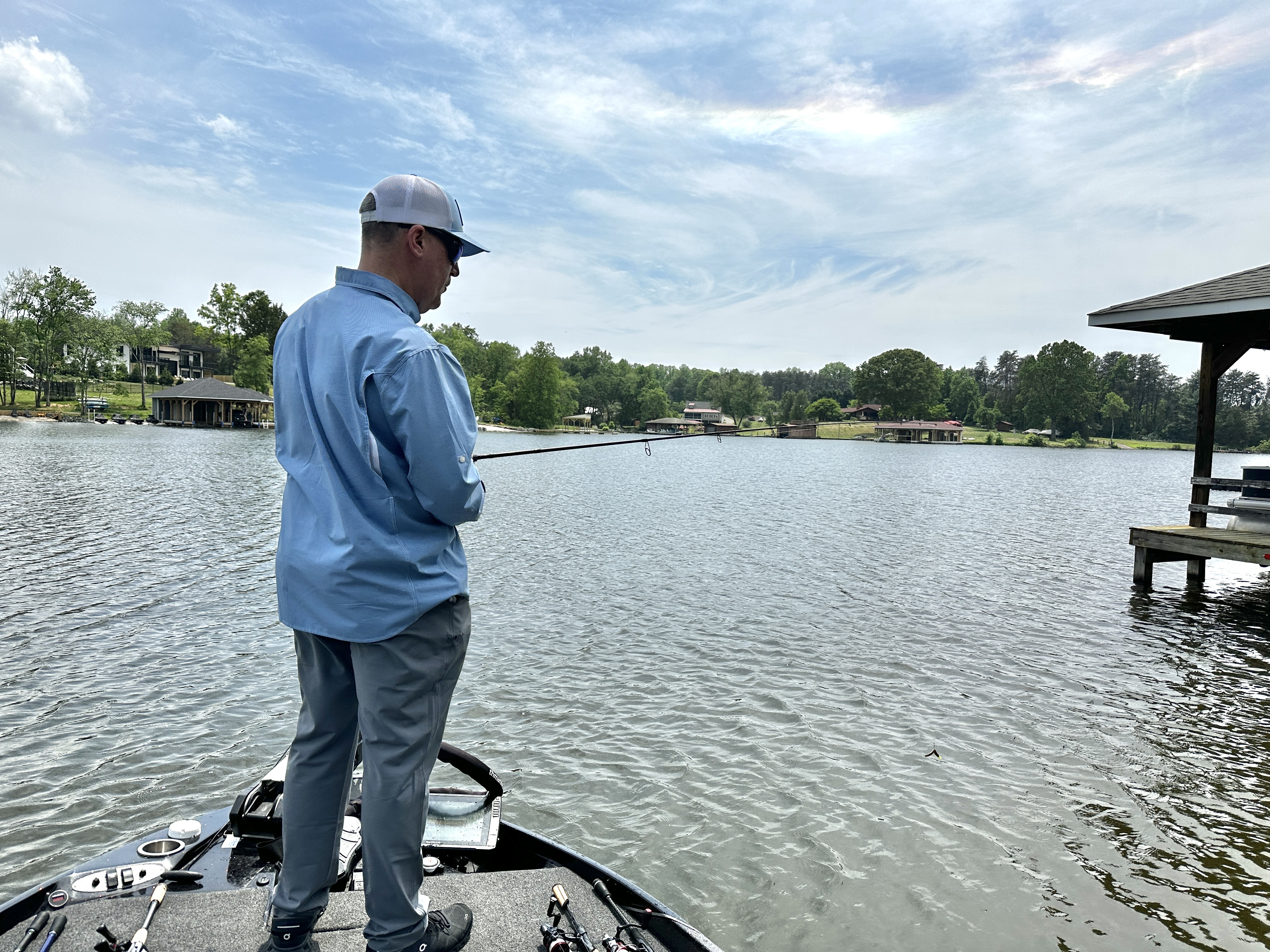
I spent hundreds if not thousands of hours over the past couple of years in trolling motor-propelled boats, mostly on bass boats, but also in a range of jon boats, smaller craft, and even saltwater skiffs. I also work closely with most of the top pros – who are only too eager to tell me when they’re boat accessories help them win, or to blame them when they fail. A dead trolling motor, or the wrong trolling motor, can ruin an otherwise good day, while the perfect one can turn a good day into a great one.
The difference between the trolling motor I ran in 1996 and the one I run 30 years later is substantial, but when it comes down to it, I’m less concerned with tech features than I am with reliability, durability, and power. I want to get where I’m going with a minimum of trouble, and without spooking my prey. That’s why all of that time standing on one foot (or, alternatively, operating a remote or tiller) has made me a more efficient angler.
The Best Trolling Motors: Reviews and Recommendations
Best All-Around Trolling Motor: Minn Kota Ultrex Quest MEGA DI/SI Trolling Motor
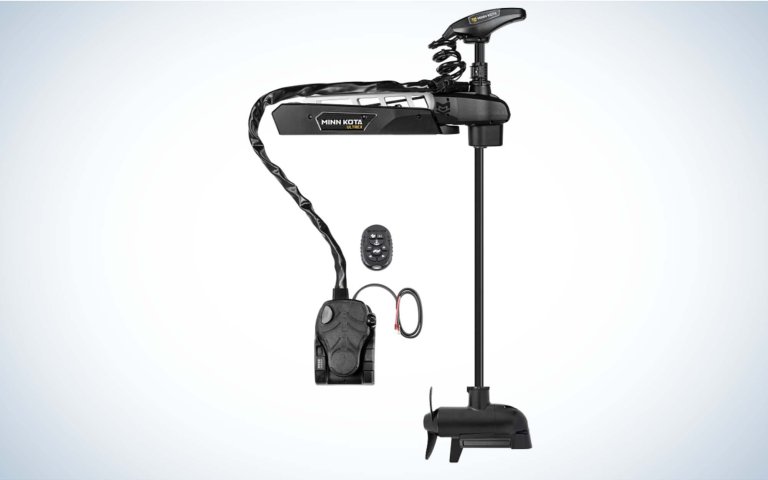
Pros
- Incredibly refined steering precision
- Uses power judiciously
- Very quiet
Cons
- Not inexpensive
- May be too much motor and too many features for some anglers
- Some anglers may prefer wireless foot pedal
Key Features
- 115 pounds of thrust
- 45”, 52” and 60” shafts
- Micro remote
- 30’ ethernet cable
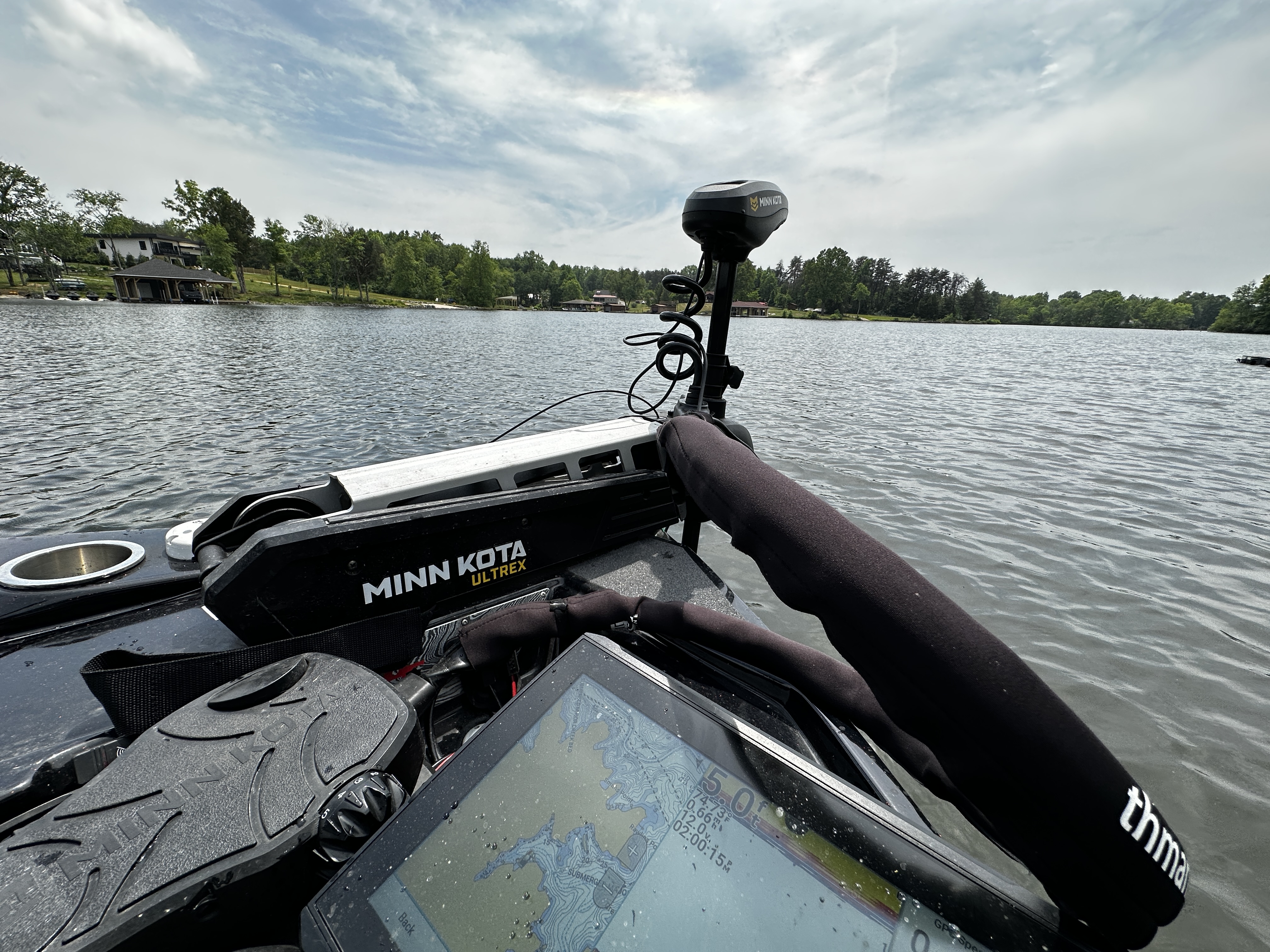
While the trolling motor market has improved and tightened up significantly over the last decade, when it comes to my own hard-earned cash, I’ve continued to put Ultrexes on my boats. I beat the crap out of them, they perform well in all conditions, and the buttons and features simply make sense to me. As one boat dealer told me, despite the increased competition, “Minn Kota is a trolling motor company. That’s what they do.” It’s obvious in this newest model, which has ultra-precise steering, ideal for users of forward-facing sonar. Beyond that, it’s set up to handle down-imaging and side-imaging out of the box, provides ridiculous power, and gets through grass with ease. They’ve even upgraded the propeller. It’s why you see it on so many bass pros’ boats – not that they get a deal, but that they choose to run it.
Read Next: Best Trolling Motor Batteries
Best for Anglers with Bad Backs: Garmin Force Pro Trolling Motor
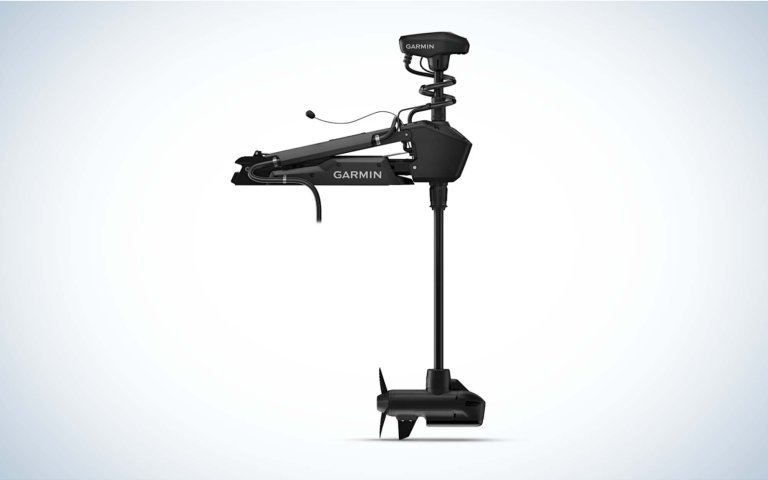
Pros
- High tech built-in transducer
- Auto forward position on deployment
- Two propeller options
Cons
- Not inexpensive
- No short shaft length
Key Features
- 50” and 57” shafts
- 24/36V operation
- 100 lbs. max thrust
- Gas lift assist
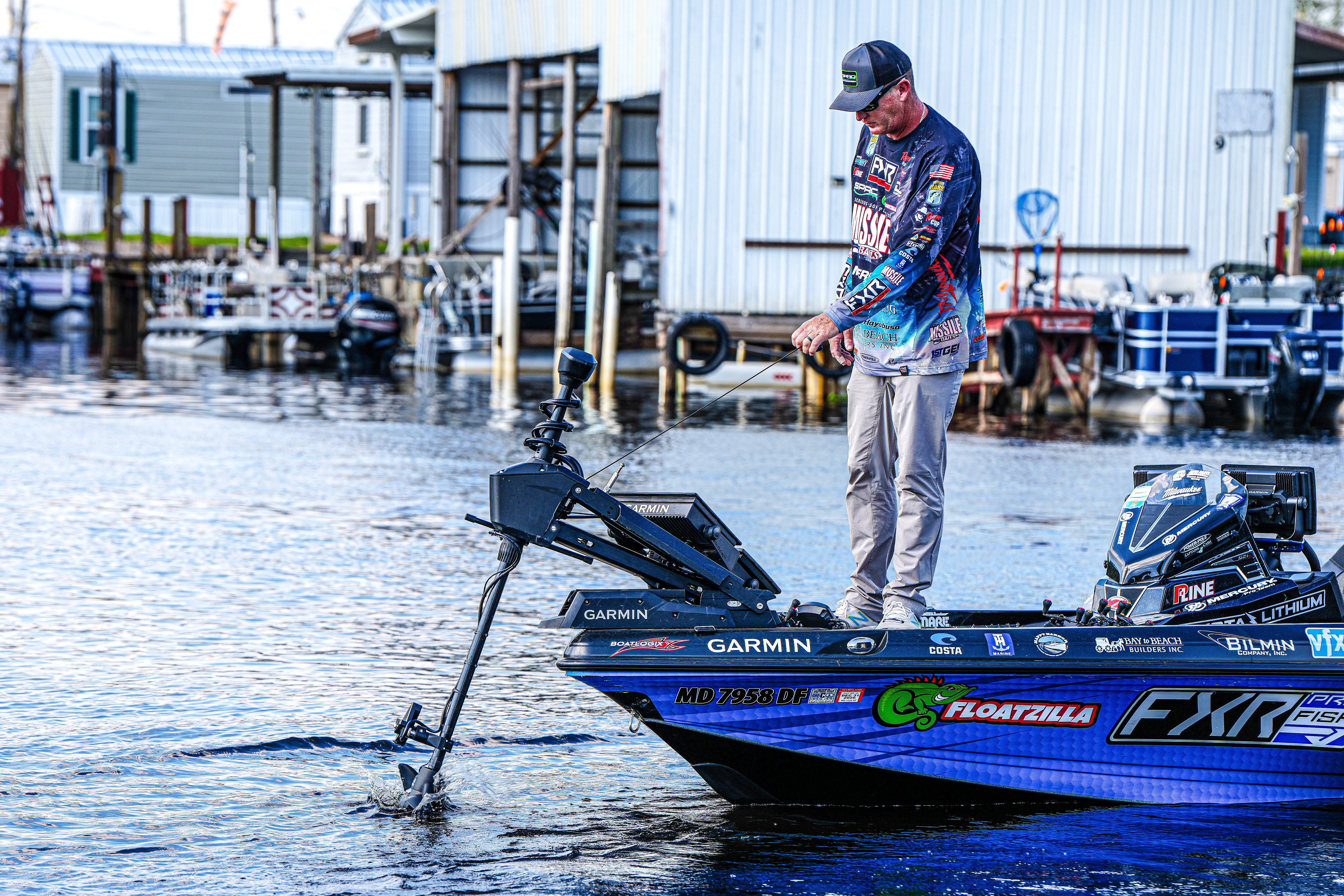
On my most recent boat, I purchased Garmin graphs front and aft, and I’m glad that I did because they’re the easiest to use of any electronics I’ve owned, and by far the least buggy. I expected the same from their trolling motors, but what I’ve really come to appreciate is how easy they are to operate in all conditions. The transducer is excellent, and it has features like anchor lock, auto-forward, and two different propellers. It’s also high-powered, but it’s the pedal and steering that I liked the best. I really like the wireless foot pedal, operated using AA batteries. If you have a bad back, the factory pedal setting might not be ideal, so this allows customized locations. I appreciate that, and so does my back. If you really don’t like standing all day, there’s also a remote control with gesture control. You can connect it to a chart plotter and draw a route that’ll allow it to automatically navigate while you fish.
Best for Heavy Vegetation: Lowrance Ghost X Trolling Motor
Pros
- More power with less interference than its predecessors
- Integrated 3-in-1 transducer
- Silent but powerful, with 360-degree breakaway mount
Cons
- Only one shaft length (original Ghost available in 52” and 60” models as well)
Key Features
- 45” shaft
- 24/36V operation
- 1 degree steering adjustments
- Brushless motor
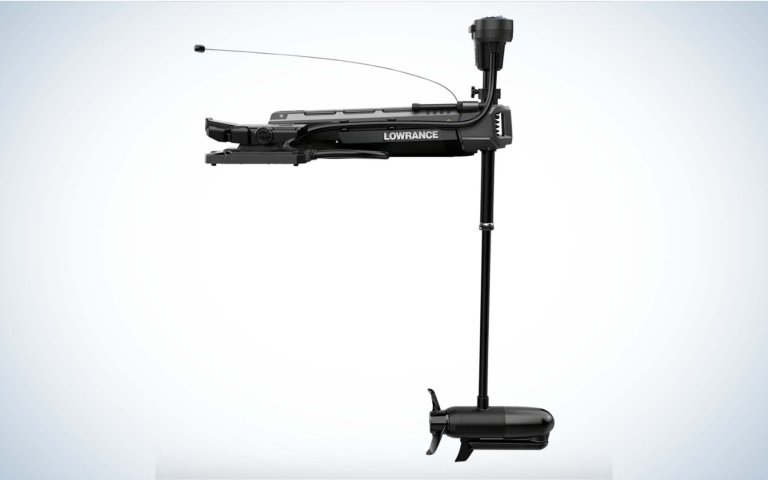
Again, it was unscientific, but I started to notice that many of my guide friends on grass-laden lakes like Rayburn, Guntersville and Okeechobee ran the Lowrance products, and once I spent some time with them I understood why – this bad boy chops salad at the most efficient rate possible and still has juice left to give at the end of the day or the lily pad field, whichever comes first. They also changed up the rear housing in a way that’ll keep line and stringy stuff off the prop shaft, saving you time and possibly a repair bill. If you hit a stump in the middle of the grass, the breakaway mount will save your bacon, too. What I found most impressive is that it saved so much power. I could chop through the slop all day and still get top speed with plenty of battery life left over.
Read Next: Best Fish Finders
Best for Bigger Boats: Minn Kota Riptide Instinct Quest
Pros
- Saltwater-ready
- Shafts up to 100” for big boats
- Automatically stows and deploys
Cons
- Not inexpensive
Specs
- 24/36 V (90 or 115 lb.)
- 60”, 72”, 87” and 100” shafts
Features
- White or black
- Wireless remote
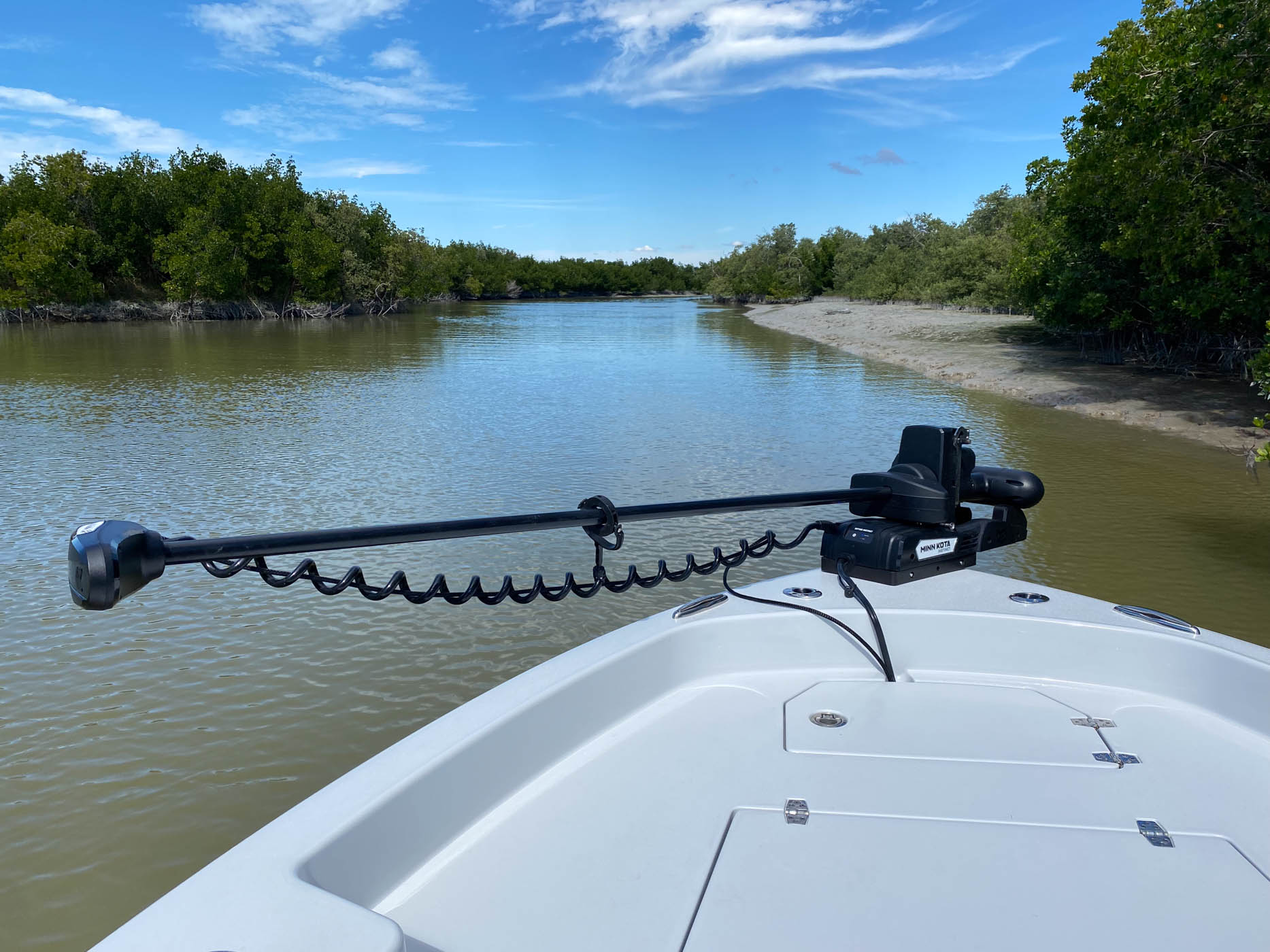
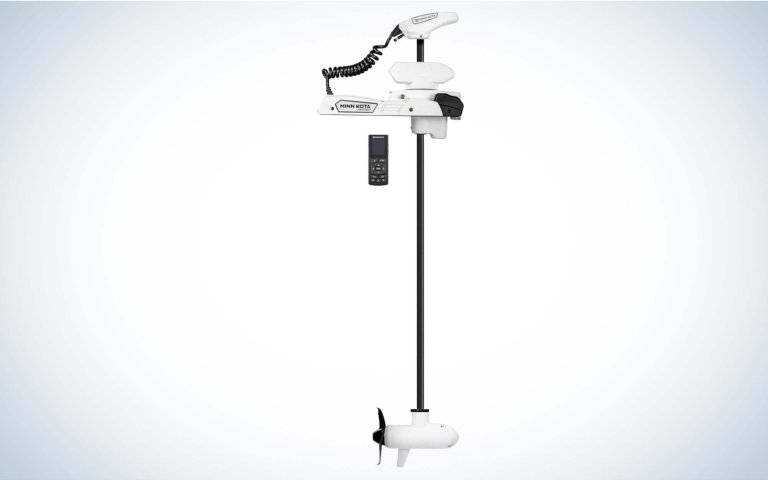
From muskies on St. Clair to tarpon in the Florida Keys, the Riptide is the premier choice for anglers who need greater shaft lengths to deal with high sides and occasional big waves. For guides in particular, it’s a lifesaver because the wireless remote control is both easy to use and quite responsive, meaning that they can run the One Boat Network from anywhere in the boat. That frees them to rig lines, land fish, and stay out of the way when necessary, without any loss of function. They’ve reinforced the bracket to take a beating and the motor will stow and deploy automatically with the push of a button, which takes the strain off of the angler, too.
Most Durable Trolling Motor: Power-Pole MOVE ZR Trolling Motor

Pros
- Titanium Shaft
- Extremely quiet
- Incredibly strong pull cord
Cons
- Price tag higher than its competitors by a large margin
- Multiple wireless systems may scare some tech-fearing anglers
Key Features
- 45”, 52” and 60” titanium shafts
- 100 lbs. of thrust on 36V system, 78 lbs. on 24V
- Wireless remote and cradle
- Built-in info display

I’ve run Power Pole’s shallow water anchors for nearly two decades, not just because they’re an innovative and exceptional product, but because they’re virtually unbreakable. The company entered the trolling motor market that same way, overbuilding components and creating “backup systems on top of backup systems.” In fact, the only complaint I’ve ever heard about them is that they took too long to come to market because they were intent on getting things right. In my unscientific survey of the bass pros, I’ve noticed that lots of the anglers who choose to run this powerful model are the guys who tend to tear things up. It’s powerful and quiet, but also beefy. Hit a stump, it’ll bounce right back. Pound through 6-foot waves, and you don’t have to worry about the mount working free. The ZR is definitely not cheap, but you know they’ll have your back if you can do any harm to it.
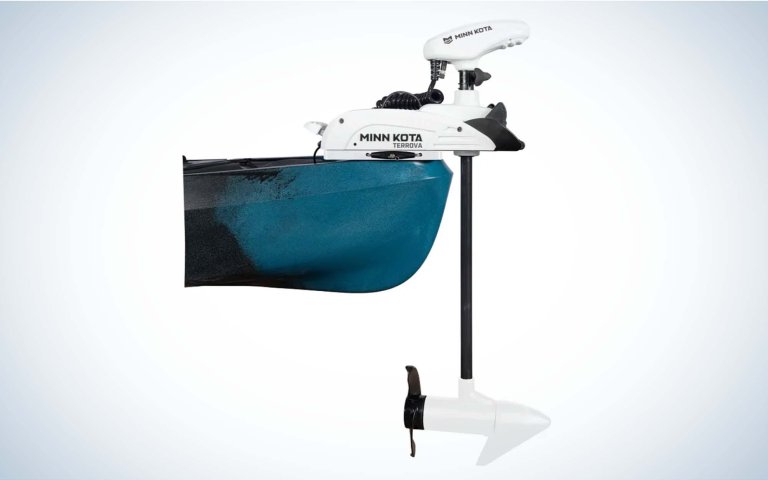
Best for Saltwater Kayaks: Minn Kota Saltwater Kayak Terrova Trolling Motor
Pros
- Runs a long time on a 12V battery
- Reasonably priced for a premium product
- Simple lever to stow and deploy
Cons
- Only one set of specs
Key Features
- 36” shaft
- 55 lbs. thrust
- Included micro remote
With kayak fishing getting increasingly popular, there’s no reason to stand for subpar power systems or even just pedal power when you want to cover water. Inn Kota shrunk the shaft on their high-end Terrova, but kept it every bit as tough for hardcore kayak anglers who won’t settle for anything but the best. If you want to keep your hands free to fish, you can use the provided micro remote, which adds Autopilot, Drift, and Follow modes, as well as Spot-Lock. It even includes a digital maximizer and a battery meter, so you’ll preserve power and never get caught without when you’re far from the dock. There’s a slightly less expensive non-salty model that’s just as good, but without as much corrosion protection.
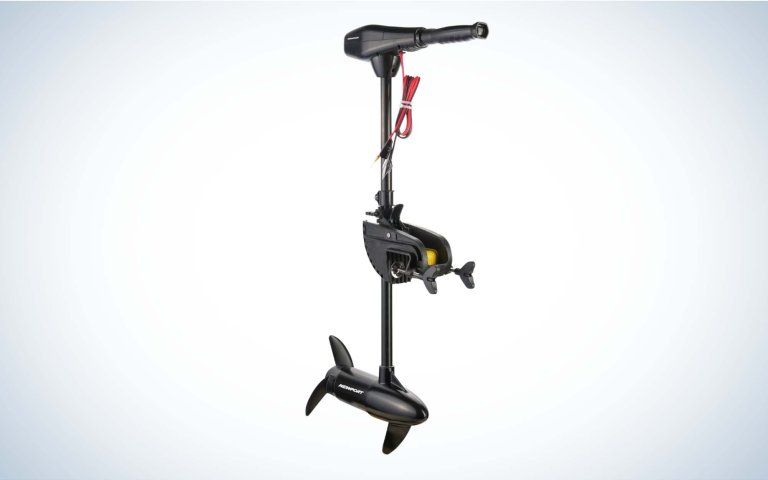
Best Under $400: Newport NV-Series Trolling Motor
Pros
- Incredibly low cost
- Works on a wide range of smaller watercraft
- Lightweight and portable
Cons
- May struggle in big water
Key Features
- 12V and 24V models
- Up to 86 pounds of thrust
- Multiple shaft lengths
- Included battery meter
If you’re just looking for an entry-level motor that you can throw in the trunk of your car or the bed of your truck and then affix it to a canoe, kayak, pond prowler or jon boat on site, this should get the call. Add a quality 12 volt battery and you’re still only in it for a few hundred bucks, but it’ll open up a world of options. Unlike “bargain basement” basic motors of the past, this one is built to last and easy to operate. It has five forward speeds and three in reverse, and can even be used in saltwater. It might not get big boats to faraway places, particularly in rough water, but it goes on quickly, can be carried easily, and gets you places that others can’t or won’t go.
How to Choose the Best Trolling Motor
Shaft Length
You’ll want to keep the prop in the water at all times while fishing, so it would seem that longer would be better, but that’s not always the case. Put an 87” shafted-motor on your bass boat or aluminum boat, and you may be able to adjust it for shallow water, but it’ll prove to be a nuisance, with the head of the motor affecting your casting, and possibly preventing you from opening compartments when stowed. When in doubt, err one size up, particularly on bay boats or multi-species models, but consult with your boat manufacturer on their recommendations.
Battery Power
Batteries, from AGMs to lithiums, are more powerful and reliable than ever, but you still may only have room for two versus three. That might mitigate in favor of a 24-volt system instead of the more powerful 36. Alternatively, running on the same speed and spreading out the load over three batteries can keep you powered longer. Some of the trolling motors will now run on either 23 or 36 volts, giving the angler the option of how best to use it.
Budget
A generation ago, you could get a tournament-ready trolling motor for somewhere in the range of a grand. Now it’s possible to spend $5,000 across multiple brands. Really consider which features you need and which product best coordinates with your electronics and your boat. Although quality is generally better, more features means more things to go wrong, too. Spend your money wisely because for most of us there’s a finite budget, and what you spend on a trolling motor may cause some other component or feature to be sacrificed.
FAQs
According to pro bass angler Chad Morgenthaler, the Garmin Force is the most powerful trolling motor. He believes that the supposed 100 pounds of thrust is a vast underrating. “I can’t prove it, but it’s way more powerful than anything else I’ve ever used. Even with my 21 foot Phoenix boat loaded heavy, with the trolling motor wide open I’ve run it as fast as 4.1 miles per hour,” he said.
12 to 16 foot boats need a 55 to 70 pound thrust trolling motor. 16 to 21 foot or longer boats need a trolling motor with 70 to 100 pound thrust.
Trolling motor speed depends on your boat design and weight. Top peed for a trolling motor can be 2 to 4 mph.
Final Thoughts on the Best Trolling Motors
Ultimately, choosing the best trolling motor is a very personal decision based on a number of factors, the two most important being the size of your boat and the size of your budget. By choosing a more powerful motor, you may also be choosing to add another battery, so factor that into the equation. Beyond those initial considerations, there may be value in buying the brand that matches your marine electronics, to ensure compatibility and to minimize interference. Just remember, while their overall reliability has increased substantially in recent years, when you add more features, you add more complications, so don’t bite off more than you can chew.