
We may earn revenue from the products available on this page and participate in affiliate programs. Learn More ›
Every crappie angler loves the spring. All across the country crappies go through their spawn-season progression at various times depending on region. And during certain parts of the spawn, crappies can be found in large schools, feeding aggressively. Target crappies at the right time and anyone can feel like an expert crappie angler. But when do crappie spawn where you fish? Where do you find crappie in the spring? And, most importantly, how do you catch them?
To help you put more crappies in the boat, I’ve written a guide to tracking the crappie spawn and the tactics to use to catch crappies in spring.
Topics Covered
When Crappie Spawn
Regardless of waterbody, water temps anywhere in the 50s indicate prespawn, with fish staging closer and closer to shallow nest sites as the water warms. The first fish arrive in waves. Black crappies spawn slightly earlier than white crappies. With polarized sunglasses, you can see early crappies in shallow water. They resemble aquatic ghosts, exceedingly flighty, yet willing to bite if they don’t spot you first. Contrary to conventional wisdom, this early shallow-water push is driven by food rather than reproduction.
As surface waters ascend into the low 60s, fish begin setting up nest sites on hard bottom substrate, typically close to visible cover in depths of about 3 feet or down to 10 feet in extra clear water (however, crappies can also move to nests as temps climb into the low 70s). In natural lakes, good cover includes the rhizomes (root systems) of white water lily or open cavities within curtains of hardstem bulrush. Lacking vegetation, reservoir crappies set up to spawn around cypress trees, stumps, brush piles, or a nice quiet boat dock.
The males arrive first, build nests and grow increasingly aggressive, often striking at anything that moves. Then a female joins the party and spawning commences. A few days later, she’s gone, leaving the male to guard the nest and eventually, a cloud of baby crappies. Lighter colored females, which may spawn multiple times per spring, will expel as many as 60,000 eggs.
Low water levels often derail the crappie spawn because it leaves good cover high and dry. With low water, fish divert to alternative locations, including the aforementioned docks. Ultimately, extreme low water can wreck an entire spawn season and leave a gap in a fishery’s crappie year class. From a fish-catching standpoint, you can still find waves of springtime crappies; they’ll typically station just outside usual spawning flats or shorelines, often amid the closest shallow cover.
Regional Breakdown
Well before bass or other species even think about shaking off the winter blues—weeks ahead of blooming dogwoods and the first biting mosquitos—crappies are already on the chew. In the south, reservoirs in Arizona, Tennessee, and Arkansas harbor catchable black and white crappies all through the winter, huddling among submerged brush piles. In the North, crappies exhibit late winter movements, already active and catchable a few days after ice-out.
If you had the time and the funds, you could follow the species’ entire spawn-season progression, from Florida and Texas north to the Canadian border and beyond.
We might start just after Thanksgiving on the St. Johns River, where black crappies would already be close to performing the first of two spawns (a second spawn often occurs beginning in late February.) From there, we might cross into Georgia, Alabama, and Mississippi. With good weather, we’d find those first shallow prespawn movements at places like Grenada and Sardis lakes in early- to mid-March. During the month of March, we might be pitching slip bobbers and minnows in Florida, targeting emergent pennywort and water lettuce. Just to the north, we’d likely be spider rigging or jig-poling around brush on reservoirs. We’d station near creek mouths, working further back into the coves as waters warmed into the 50s and low 60s.
READ NEXT: How to Catch Crappie
We’d next travel to Arkansas, Tennessee, and then Missouri, Illinois and eventually, the far North. My plan would take us to Lake Ouachita, Arkansas in late March to early April, in hopes of finding fish spawning on shallow brush or boat docks. Then, in early May to early June, near the northern edge of the nation’s natural crappie zone, we’d find male-female crappie tandems making babies in Minnesota, Wisconsin, and Michigan.
How to Catch Spawning Crappie
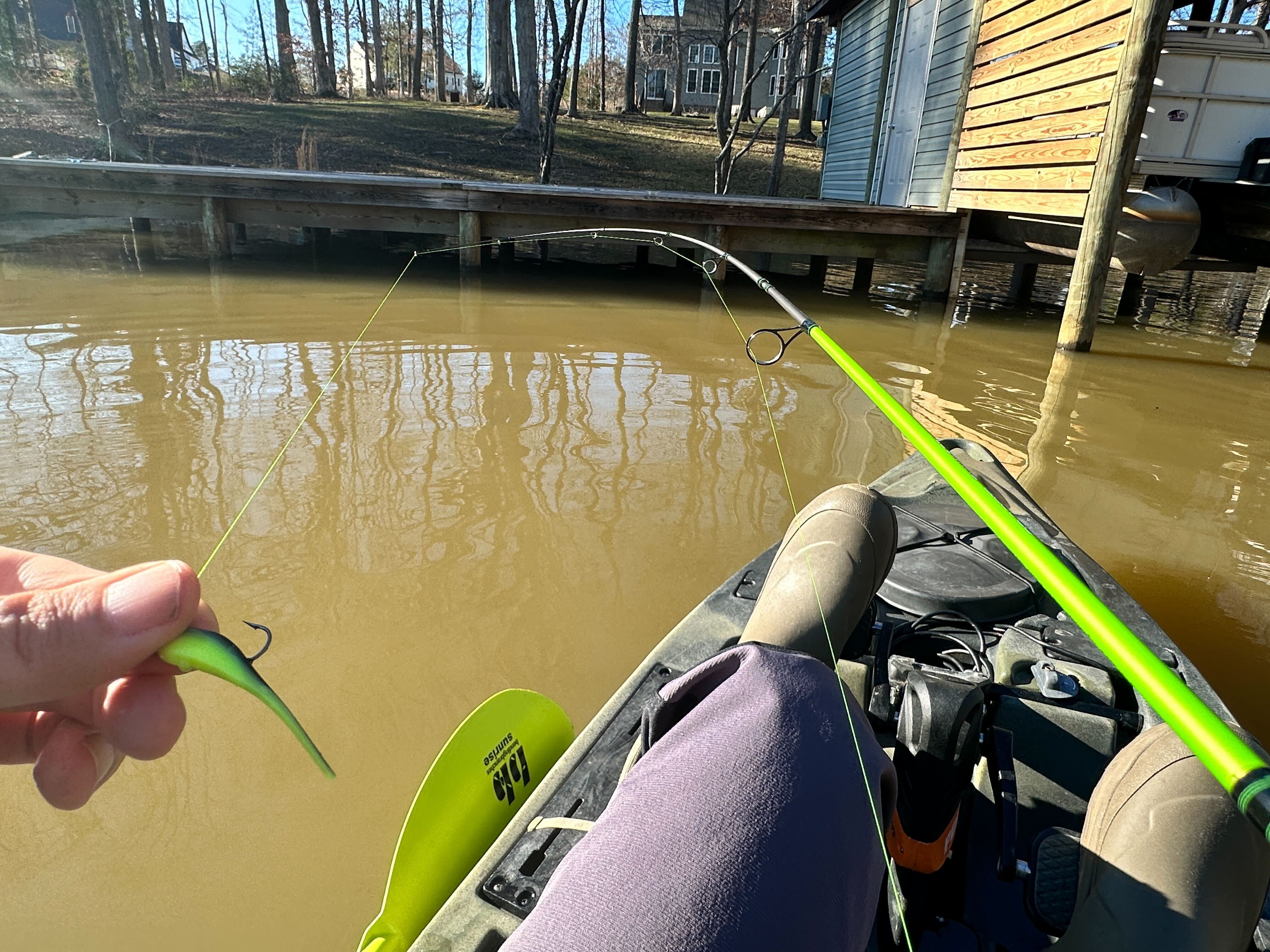
Once you have an idea about when crappies spawn, use these tactics to catch a pile of them.
Target Shallow Backwaters
Some of the coolest crappie fishing of the year occurs in backwaters that are easily accessible by foot. Starting about the time hardwood trees sprout buds and baby foliage (or shortly after ice out in the North), crappies gather near the mouths of creeks, shallow bays, manmade canals, and marinas.
For anglers like Maryland based trophy crappie and panfish authority Jim Gronaw, shorelines and small waters are where it’s at for early crappies. “We fish quite differently from most panfishermen,” says Gronaw, who’s garnered a well-earned reputation for catching and releasing crappies up to 18-inches. “I’m fishing almost exclusively from shore, wading or occasionally from a kayak. No boat, no GPS, forward-facing sonar or other electronics. Most of our spots are small 5- to 20-acre lakes or ponds, both public and private, often isolated and remote but sometimes right in plain view of crowded highways. You can’t believe the sizes of fish—giant crappies, sunfish and bass— living in some of these overlooked waters.”
For Gronaw and other top anglers, shore fishing isn’t just about simple accessibility of near-shore crappies. “A shorebound approach offers a tremendous amount of stealth, allowing you to sneak right up on big fish you’d likely spook with a boat and a trolling motor,” he notes.
“Some of the biggest springtime crappies can be pretty tight to the bank, particularly amid shoreline grass or a beaver-chewed, downed tree. It’s amazing how well they’ll often blend into their surroundings, too. A great pair of polarized glasses is a must.”
Fishing Docks
In many lakes, docks hold crappie throughout the year. The key for the spring is targeting docks in the right locations. As water temperatures rise fish move from open water to mouths of creeks and then move to the back of coves and creeks to spawn. If you know what phase of spawn your crappie are in, finding the right docks to target is easy. If you’re not sure, dock hop your way from the mouth to the back until you find success.
Fishing a dock can be as simple as float and jig twitched alongside the platform and around the pilings. If fish are holding tight to the dock, you can shoot your bait under it. It’s a simple technique, but it takes practice. You’ll pinch your bait in one hand, pull an arc into the rod, and release the bait like you’re shooting a bow. You want the bait to fly low, and practically parallel with the water to get it deep under the dock. It’s very likely a fish will eat your jig right after it hits the water, so be ready for those sudden strikes. Another great bait for fishing docks is a Blakemore Road Runner fished slowly around the permitter. It’s flash and vibration will pull fish to it and it’s a faster way to find fish than slowly working a jig.
Fishing Shallow Wood
Shallow wood like laydowns, stumps, and standing timber are excellent places to find crappie. Just like docks, location is everything. Fish wood near creek mouths in the pre-spawn and move your search farther up creeks as the spawn progresses. Big fish don’t always hold tight to cover, so don’t overlook fishing the outer permitter. — Scott Einsmann
Use Floats to Catch More Spring Crappie

Crappie like to hover below their prey, fining in place and examining slow-swimming invertebrates such as damselfly, dragonfly, and mayfly nymphs, as well as small leeches. Because of this, a float rig remains a primo bait delivery tool.
It’s a big mistake to think that bobbers are only for beginners. Not only does a float add casting weight for propelling tiny jigs and live baits a greater distance, but the little balsa or foam cylinders also hover your presentation at a set depth, giving crappies all the time they need to study your offering—and then eat it. Float rigs are even effective for covering water. A float such as a Mr. Crappie Weighted Float or Double X Tackle A-Just-A Bubble stationed one to five feet above a leadhead jig with live bait or a soft plastic critter can be slowly swum across the surface. Pause to let the bait glide, stop, and hover. This works especially well near likely holding areas around cover. Give the float a few twitches with your rod tip to add dancing motion to the bait, and eventually, a crappie will eat.
READ NEXT: Best Crappie Rods
One key to detecting bites and hooking cool-water crappies lies in understanding the way the fish feed. Crappies are quite capable of inhaling your entire jig without even nudging the float. Just as often, a crappie will execute an up-bite, approaching and eating the bait with an upward swimming motion, rather than eating and swimming back toward the bottom.
When this happens, the float may simply lay over on its side and stop moving. Gronaw and other top anglers match float to bait, properly weighting or “loading” the bobber—either with the right weight jighead or additional split shot pinched onto the line. The key is to load the float with just enough weight to make it stand straight up. When the full weight of your bait bears on the float at rest, it should stand upright in the water. Thus, an upward feeding crappie will tip the float on its side, indicating a strike. Moreover, a properly loaded float will sink without resistance during the lightest bites—all without offering resistance and causing a feeding fish to reject the bait.
Keep Spring Crappie Baits Simple
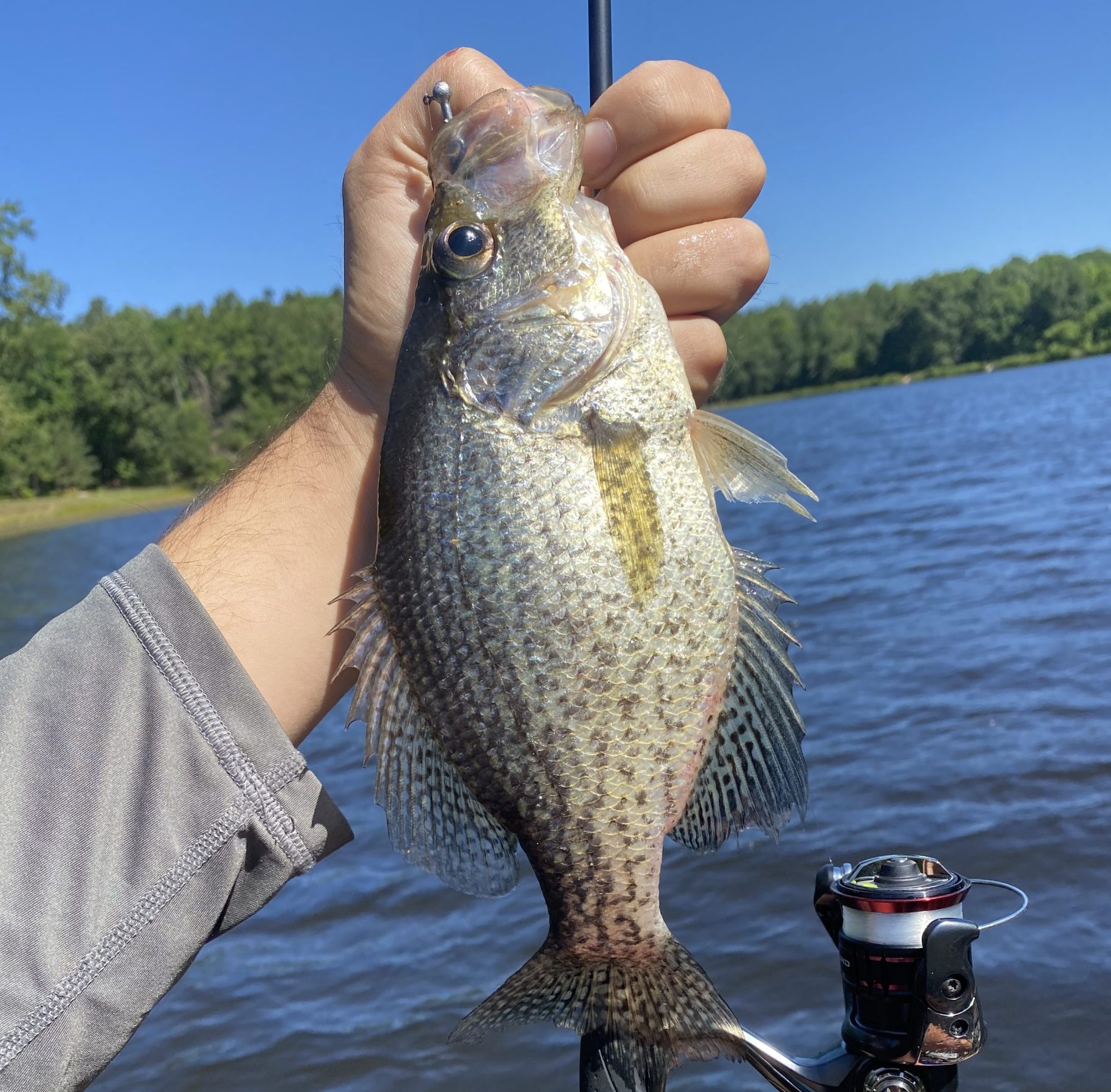
Baiting a float rig for spring crappies should be simple. The classic offering is a 1/16- or 1/32-ounce jighead dressed with a 1.5- or 2-inch Puddle Jumper. Other anglers prefer tube jigs or a jig with a tiny minnow impaled through its dorsal fin. Fresh runs of shallow crappies aren’t selective, though heavy fishing pressure justifies smaller baits, particularly natural-colored baits in plain black and brown hues. Make sure to check out my review of the best crappie lures.
For casting without a float, a black 1/16 to 1/64-ounce marabou jig remains an exceptional early season offering — typically presented with 2- to 4-pound test monofilament or Sufix Nanobraid. For covering more water across expansive areas, a small paddletail swimbait like Z-Man’s Shad FryZ or a micro jerkbait such as a Rapala X-Rap XR04 are great (and often overlooked) search baits, spring through fall.
Spring Crappie Rods, Reels, and Lures
Rods
- Best Overall: St. Croix Avid Panfish – 6 foot 9 inch
- Best Budget Rod: Ugly Stik Elite Spinning Rod
- Best Combo: Lew’s Crappie Thunder
- Best Combo for Dipping Cover: Shakespeare Crappie Hunter
Reels
- Best Overall: Daiwa Ballistic MQ LT Spinning Reel
- Best Budget: Abu Garcia Max Pro
Lures
- Southern Pro Lit’l Hustler Tube
- Blakemore Road Runner
- Bobby Garland Slab Slay’R
- Berkley Gulp! Alive! Minnow Jar
- Round Jig Head
- Best Float: Thill Floats Wobble Bobber
- Live minnows
For spring crappie fishing a simple approach is best. You don’t need a ton of rods, fancy gear, or a special bait. The key is getting the bait in front of the fish (without spooking them) and a proper presentation. That means approaching cover stealthy, getting your bait to the right depth, and keeping it in the strike zone for as long as possible.
A float with a bobber stop, a light jig head (1/16 or 1/32 ounce), and one of the soft plastics recommended above is a proven system for catching crappie. If you need to cover water, you can ditch the float or use a Blakemore Road Runner. The key to fishing a Road Runner is to move it slow, painfully slow.
Most of the rods recommended above are ideal for casting, which is my preferred technique for catching spawning fish. Long casts beyond the school will ensure you don’t spook fish. An ultralight or light power rod that’s around 7 feet in length is ideal for casting light crappie rigs. Another great technique, especially around vertical wood, is dipping. This technique uses a long rod that’s 9 to 16 feet long to precisely place a bait. You don’t need to cast with a dipping rod, just drop the bait where you want it and lift the fish when it strikes. — Scott Einsmann
Final Thoughts on Catching Spawning Crappies
No matter when crappie spawn where you fish, getting in on a hot crappie bite is simple fishing at its finest. Intercepting a pod of spawning crappies—including dark-mottled males flaunting full territorial regalia—can provide some of the most pleasant fishing of the year. But in order to enjoy great fishing in the future, anglers need to respect the resource and release most of the larger crappies over 12-inches. Bringing home your share of keepers while releasing the biggest specimens and most prolific breeders helps ensure there’s great spawn-time fishing next spring.