
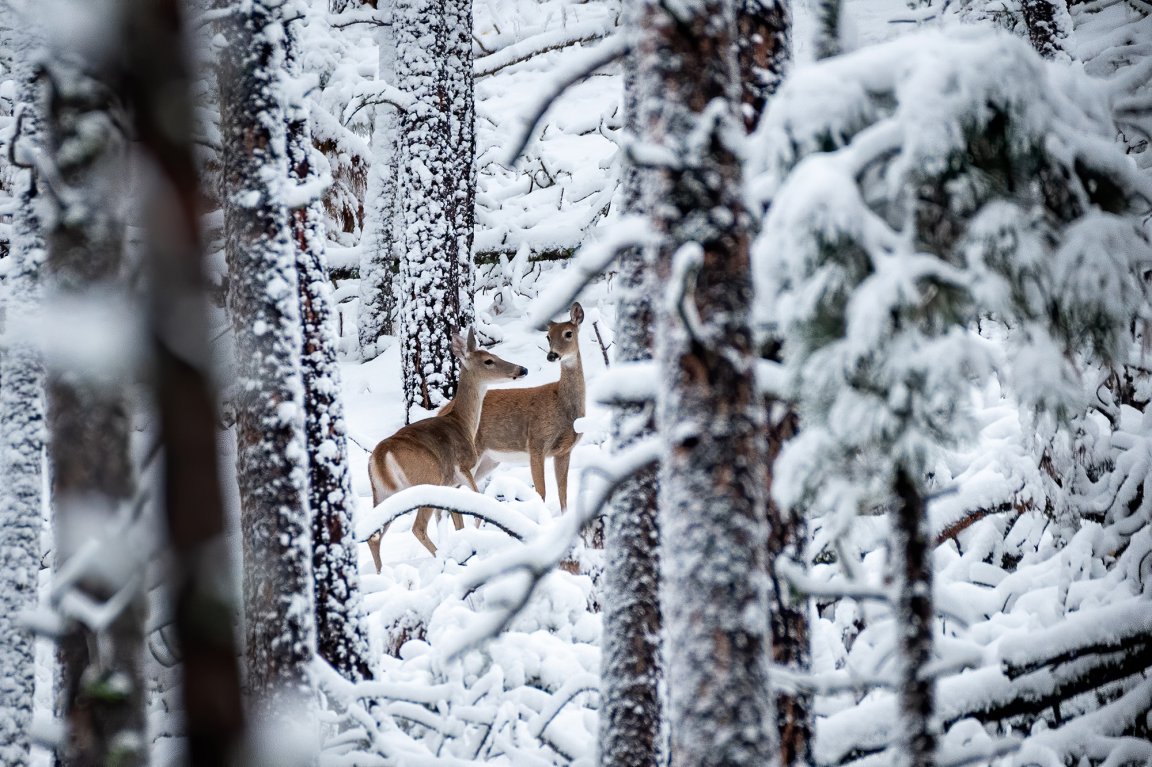
Most whitetail hunters agree that a snowfall is nice for hunting deer. “Look at all the tracks you’ll see with snow covering the ground,” they chorus.
I used to have a recipe for deer tracks, only it wasn’t very filling.
Hunters tend to forget that tracks show where whitetails have been — not where they are. And tracks may not necessarily indicate where deer are likely to be again. One deer can make a lot of tracks.
But if you know how snowfall changes a whitetail’s daily routine, you are starting to understand where you will find tracks — and the deer that made them.
Let’s rehearse some basic facts.
First, snow normally comes late in most states’ deer seasons. That means whitetails already have been harassed by other hunters. Unless you hunt private land, all deer you are likely to encounter may be wary, even downright spooky. They are moving little during daylight hours. Rutting bucks are probably limiting much of their roaming to the darkness of night.
Second, snowstorms — and most other storms — are accompanied by periods of intensely low barometric pressure. Whitetails tend to roam wide in search of food prior to a storm. But they hole up when snow actually starts to fall. And they stay holed up until the storm passes or at least until it eases off.
Third, while snow means hunters can see deer moving much more easily, it also works the other way around. Deer see the hunter coming a lot farther off. The fact that snow silences the woods forces deer to use their eyes more. Ever spend an hour or two watching a band of deer bedded down after a snowstorm? Their heads are lifted much more often to eyeball the surrounding terrain. Eyes must assume a vigil which ears can no longer accomplish and must provide the essential early warning. Incidentally, your own hearing abilities aren’t helped by snowfall, either. Deer that rustled the crisp frozen leaves of a frosty fall morning won’t be heard walking through a soft cover of new-fallen snow.
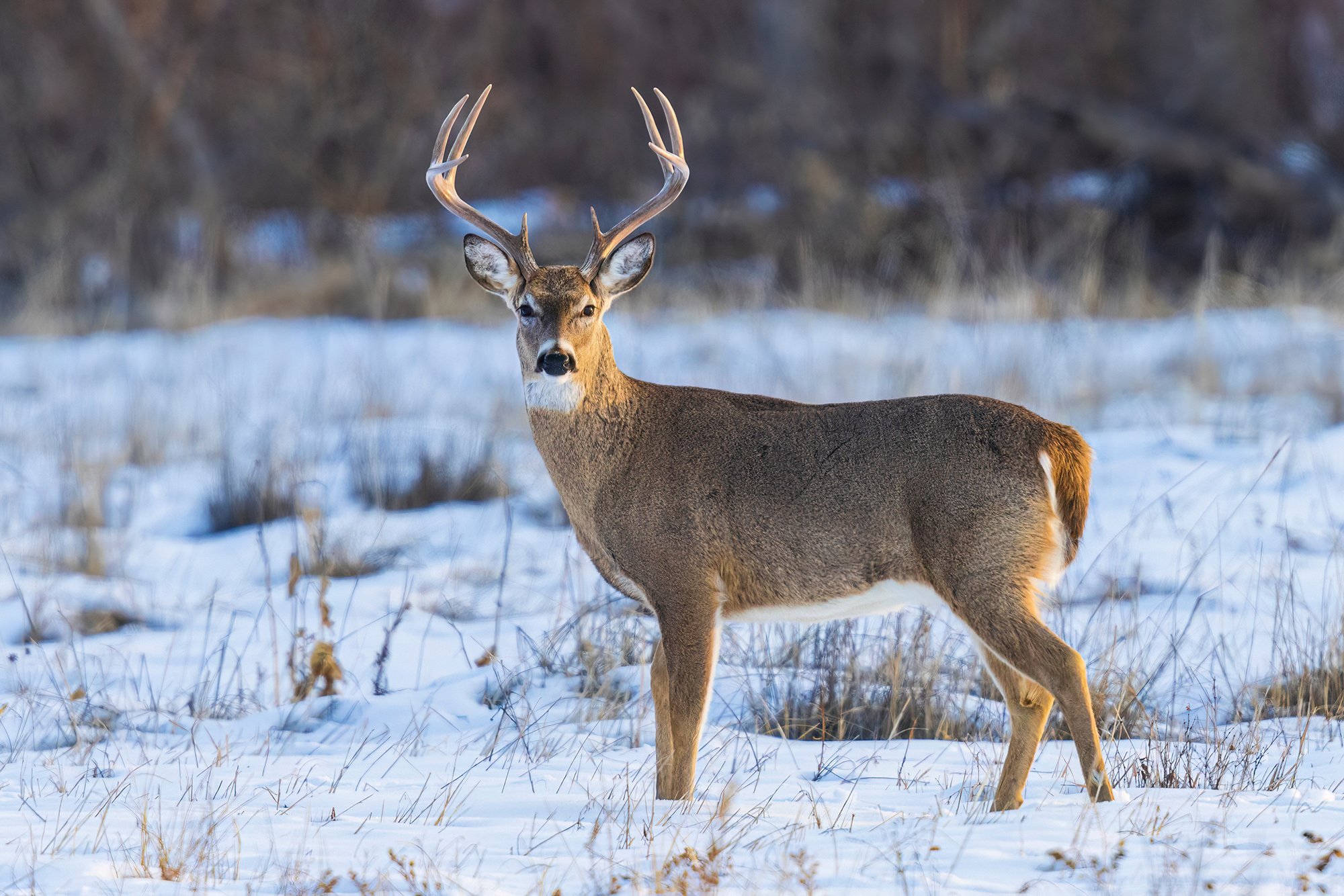
Fourth, snow changes whitetail eating habits — particularly heavy snowfall. Meadow grasses may not be pawed at again until spring. Buds, twigs and surviving leafy vegetation take its place. These plants are less nutritious for deer but they are easier to obtain. Waste grains in fields blown clear of snow may promote a concentration of feeding whitetails.
So now you are thinking that snowfall might not be such a boon to hunting?
Actually, it is — if you know how to use it to your advantage.
Whitetails, like all wildlife, are creatures of habit. You can predict a deer’s general reaction to things that impact on its environment. Maybe your predictions won’t be precise but they can be close enough to cut down on the number of fruitless hunting efforts you make.
Pay attention to the weatherman. Be sure you are out hunting on the day before a storm is forecast to arrive. Through changes in barometric pressure, deer sense the oncoming storm. They often move out to feed as heavily as possible — even in the middle of the day — forgoing the usual bedding hours in their hasty urge to stock up before the storm. So be sure to hunt all day.
Pre-storm is the time to concentrate on checking food sources for whitetails. Hunting pressure earlier in the season may have forced the animals to visit open grainfields only at night. If hunter numbers have dwindled — as they do in most states after the first four or five days of the season — start checking those fields again at dawn and dusk. The urge to fill up before a storm may have deer less cautious.
In woodland areas, check hidden openings or meadow edges where wild herbaceous cover remains. Don’t overlook timber cuttings where saplings provide cover and the lack of an overstory promotes the undergrowth that deer savor. Try the creek bottoms where frost may not have killed the green grasses yet.
In farmlands, glass the local hay fields or even vegetable patches where potatoes, sugar beets, carrots, turnips or other root-type plants have not all been harvested yet. And visit abandoned orchards where fallen fruit may provide an attraction.
More than once in a late deer season afternoon, while driving the back roads of farm country near where I live, I have become aware of more and more deer suddenly appearing where few were before. The back edge of a cutover hay field will hold five or six deer, all feeding near a heavy hickory and oak woodlot. Harvested cornfields may have a few animals wandering along, plucking up the waste dumped by corn pickers before it can be plowed under.
Does tend to move farther from cover than bucks, particularly when feeding in daylight hours prior to a storm. But expect surprises. Once, while walking across a partially harvested cornfield to reach a gun blind in the woodlot beyond, I stumbled across a fine eight-point buck. This lone deer, feeding in a 12-row patch of standing corn, was fully 80 yards from the nearest heavy cover. He evidently felt safe among the withered cornstalks. And their rattling in the wind had probably masked the sound of my approach.
I was so startled, in fact, that I never got off a shot from the slug-loaded 12-gauge that I was carrying. The buck wheeled and bounded away before I could shoot.
Don’t be caught unprepared. You never know where a deer will suddenly appear. I’ve had does dart from brushy drainage ditches — deep ones that were mostly dry or had the damp patches frozen solid by late fall’s icy weather. Ditches provide perfect cover routes to reach open stretches with food. Shelterbelts do so, too.
Once a storm of some magnitude starts, deer simply disappear. Whitetails of both sexes will head for the thickest most protective cover around. Conifers are ideal (pine plantations or cedar swamps in the North Country). In farmlands, overgrown brushy woodlots or thick river bottom or creekbottom cover is an alternative. Here deer will lie down and, unless disturbed by a hunter wandering around in the storm, they will not get up for hours — maybe days.
The hollow hair in deer’s coats provides superb insulation from the snow’s cold and dampness. Curled up into a small oval (judge for yourself how compactly a whitetail can curl up by the sizes of the beds you’ll find a day or so later) deer will ride out the storm, sometimes allowing the snowfall to almost literally cover them. They don’t seek food and they don’t move much — even to stand and stretch.
Because hunters don’t normally slog around in heavy storms, deer are usually undisturbed until the snowfall begins to lessen. If a storm lasts more than a day, deer may move around close to their bedding areas but they won’t venture far.
It is an ideal time, once the storm begins to subside, to mount a deer drive.
Pinpointing whitetail cover won’t be difficult, even with the lack of tracks on new-fallen snow. Just pick the heaviest thickest junk around. Match the size of the cover to the number of drivers and standers you have with you, and you should be able to fill several tags for your group.
There is a farmland county near my Michigan home which is a mixture of cedar swamp, brushy woodlots and grainfields, plus some pastureland. Every other season or so, myself and about five of my hunting buddies drive over there on a Saturday. At this time, we’ve all just come back from the North Country’s season opener; perhaps half of us have been fortunate enough to have scored on a buck already. The lucky ones drive for their less successful counterparts.
Through the years, we have secured hunting permission by telephone and by long acquaintance with the local landowners, some of whom join us for these drives. Because this area is open to the use of high-power rifles, it takes only about three or four standers to cover all downwind and sidewind exit routes in the cover we visit.
The remainder of us cast back and forth in a line — more or less — of drivers, working silently in the belief that noise startles deer even more than human scent and sends them into headlong flight. We want the whitetails to break cover in a nervous trot, glancing back over their shoulders, not fleeing at top speed.
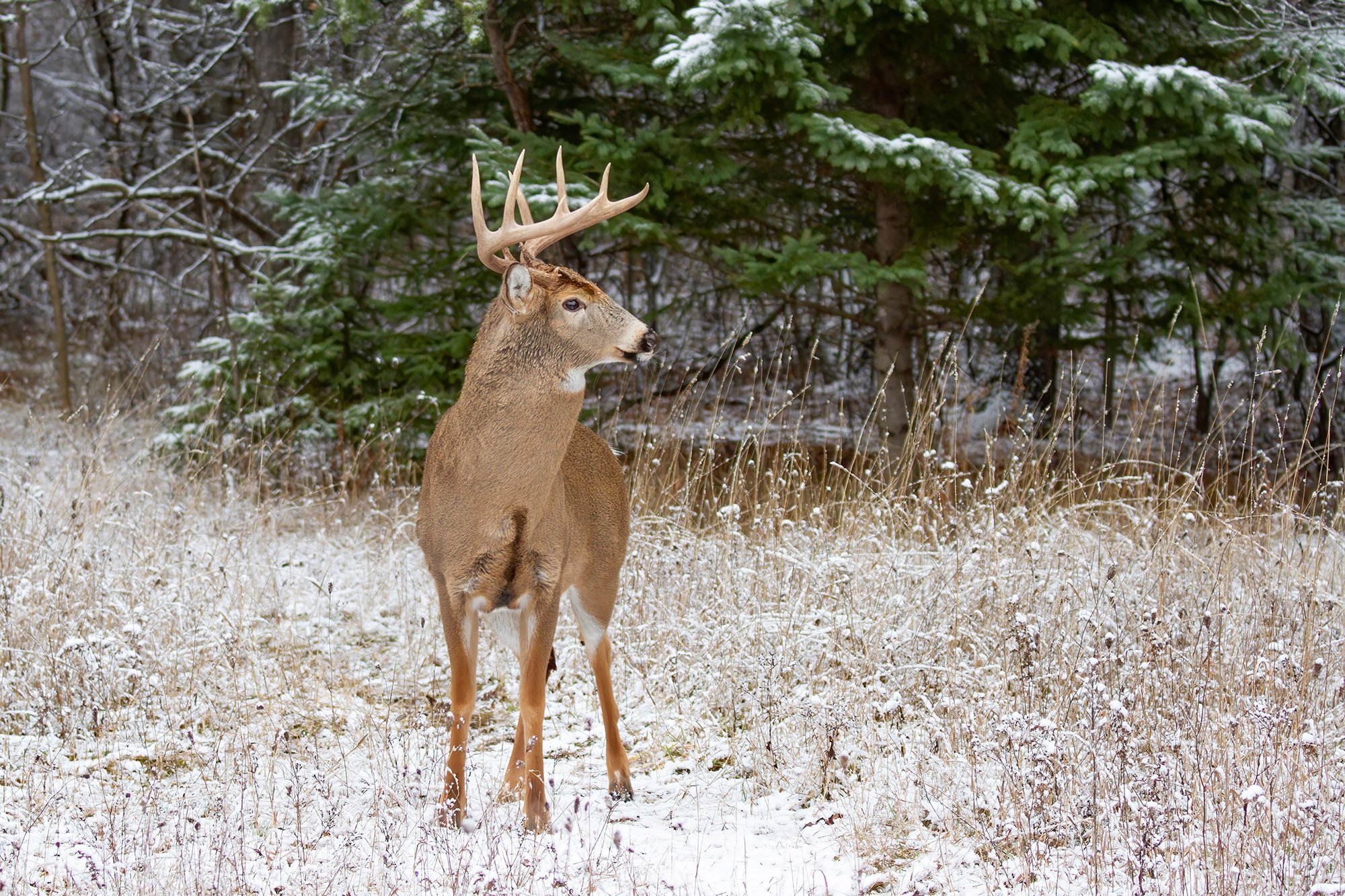
Because the drivers move and the deer focus their attention on them, the standers get some easy shots. Standers are urged to find natural blinds that will camouflage just a bit of the brilliance of the Blaze Orange garments they wear.
Drivers wear as much Blaze Orange as possible for high visibility. They don’t carry firearms, either, on our drives.
Such minidrives have proved extremely successful. In those years when we all fill tags up north and don’t plan to visit this county, local landowners call us to see if we’re coming over to help them. It has become a social event. We do go, of course.
Well-conducted drives, frankly, are one of the best ways to kill whitetails all season long — early or late, in snow or without it. If you develop a compatible group of hunters who are all safety conscious, driving may well be the best way to hunt.
For the single hunter, stillhunting in the snow can prove difficult. The muffling effect snow has on sounds is appealing to stillhunters but they should remember that whitetails bedded in snow can be extremely watchful. That’s true at least while a storm is waning or before the sun reappears with warmth enough to prompt more movement of deer. Whitetails scan their surroundings intently. And because they are not likely to be moving, spotting them will prove that much tougher.
If a stillhunter is extremely patient and slow moving, maybe he has a chance. But the average hunter who enjoys some success stillhunting on bare ground may find snowy days beyond his capability.
There is another factor making things tougher: wind. Snowstorms are often accompanied by high winds, ones that don’t die off when the snow stops falling. Wind makes all wildlife nervous. Their hearing isn’t as useful. Add that problem to the noise-muffling effect snow already has and you come up with doubly watchful whitetails.
So what about doing what you sometimes hear old-timers describe? Just plant yourself on a big buck’s track and walk him into the ground.
Unless you are a true woodsman, which most of us have neither the time nor the inclination to be, forget it. It sounds rather romantic, as the old sporting books told it, but the method isn’t likely to be very rewarding for the hunter of average skill. Oh, it can be done. And every so often you could be lucky enough to actually walk up on a buck — if you can first figure out which tracks belong to bucks and which belong to does. No, the average lone hunter faced with a snowstorm is better off doing just what the deer do: Wait it out.
Once the storm passes, whitetails will begin to circulate once again. Hunger drives them from their beds but sunny weather after a storm seems to invigorate deer, too. No scientific facts back up this phenomenon and I claim no insight into the psychology of deer. It’s just a gut feeling I have about whitetails based on observations of the ways yearlings almost cavort after a storm passes. Young bucks, not part of the serious breeding process that is probably about over when snow begins to fall, seem to want to spar. They push each other around rather good naturedly. The older does concentrate on finding food. Now’s the time for the smart single hunter to be on his stand or in his blind.
Surprisingly, there’s little need to hurry in the morning, either. Deer must feel the cold to some degree because they seldom stir at the crack of dawn after a very cold night. That fact doesn’t mean a hunter shouldn’t be out before daybreak — as he would be earlier in the season. Some whitetails may be stirring. But many times after a storm I’ve witnessed deer waiting until the sun was shining full upon them, waiting for an hour or more after daylight, before moving out to feed. It’s as if they were lying there, soaking up the warmth of the sun.
As a result, deer will often be feeding — or moving to and from feeding areas — in the middle of the day after the return of good weather conditions. For the man in a blind, deer moving on snow in full daylight are easy to spot.
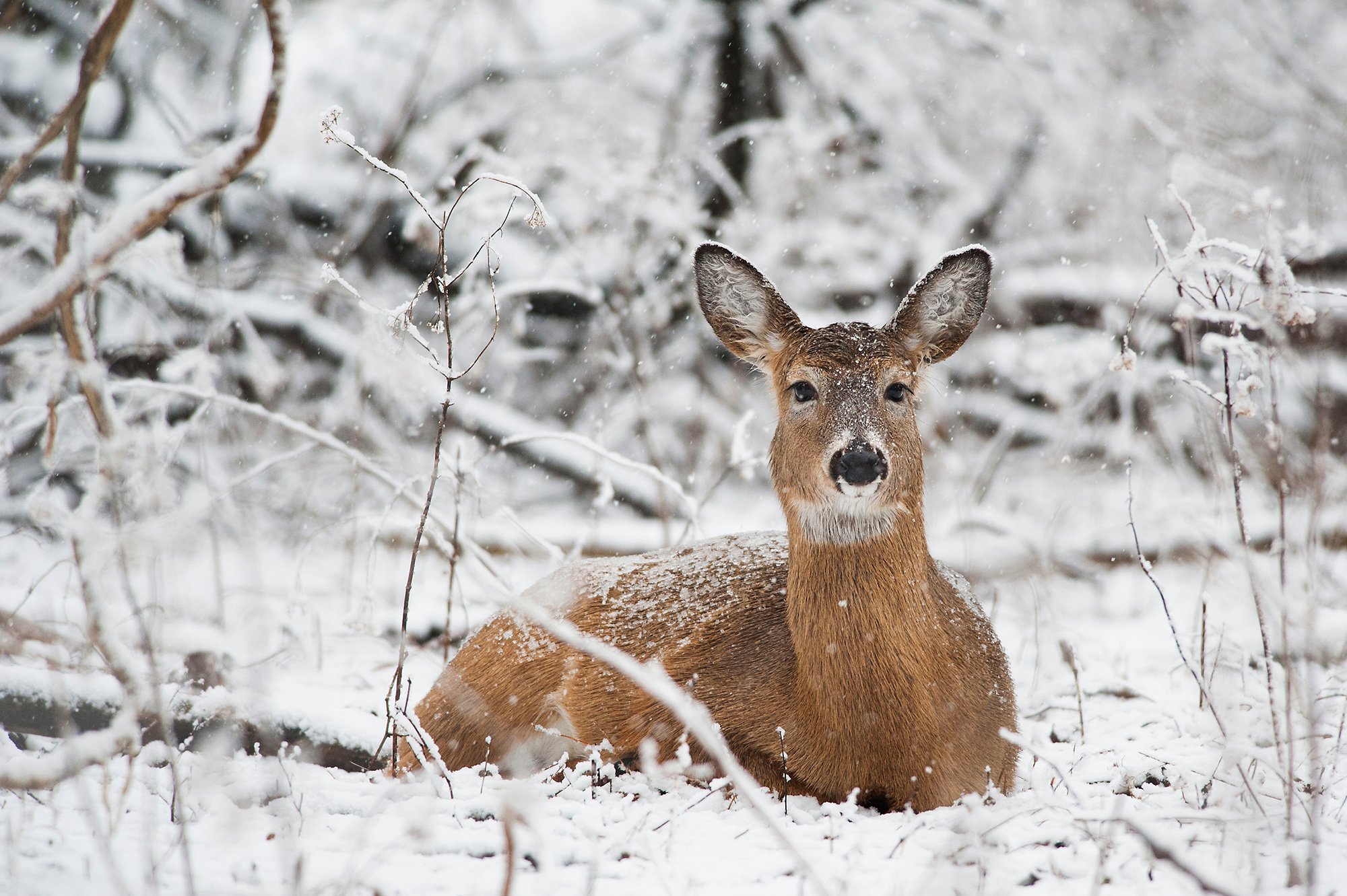
Remember, also, that bedding areas on southern exposures — places where the effects of the warm sun are felt the most intensely — will be favored by deer. Anytime the temperature is under 35°, deer seem to prefer places where the sun can hit them in the morning. If it is out of prevailing winds, so much the better.
Unlike the majority of Western mule deer, which must move from higher mountain summer range to the valleys each winter, whitetails normally find everything they need to survive in a year-round home. One exception is Michigan’s Upper Peninsula where deer summering in the Lake Superior watershed tend to wander southward toward the more temperate climate of Lake Michigan in late fall and early winter, often before deer season ends. Snowfall prompts even greater movement.
A few of these whitetails travel quite a distance — 40 or maybe 50 miles. Some don’t move at all but take their chances in the deeper snowfall and reduced winter food conditions of the northern watershed. If you are aware of such a migration where you hunt, take advantage of it. The routes traveled are not always as predictable as the game trails muleys use to move downhill but various general routes are used year after year. Spot blinds accordingly.
The best advice for winter stand hunting, I think, is to stay put and to stay as comfortable as possible. Dress to remain warm in below-freezing temperatures. Make sure that your blind is well situated and that it is constructed in such a way that it blocks out any stray winds. Get a back rest and sit on a patch of canvas or plastic to keep the snow from soaking through.
I always make sure that I have a Thermos of hot coffee, tea or cocoa handy. A blind means you can move around a little without being seen and a few gulps of warm liquid can brighten a dreary day.
And be patient. Deer won’t move as often or as far in snowy weather — unless it’s a bright warm day with temperatures rising above freezing. If you are hunting alone, be prepared to wait them out. And do it in a place where they’re likely to be: near a food source or along (or in the midst of) the heavier cover where they’re certain to bed down.
Read Next: Old-School Whitetail Wisdom for Deer Hunting When the Weather Finally Turns Cold
Winter hunting doesn’t have to be a case of survival against the elements. You can be comfortable and successful and see more than just tracks.
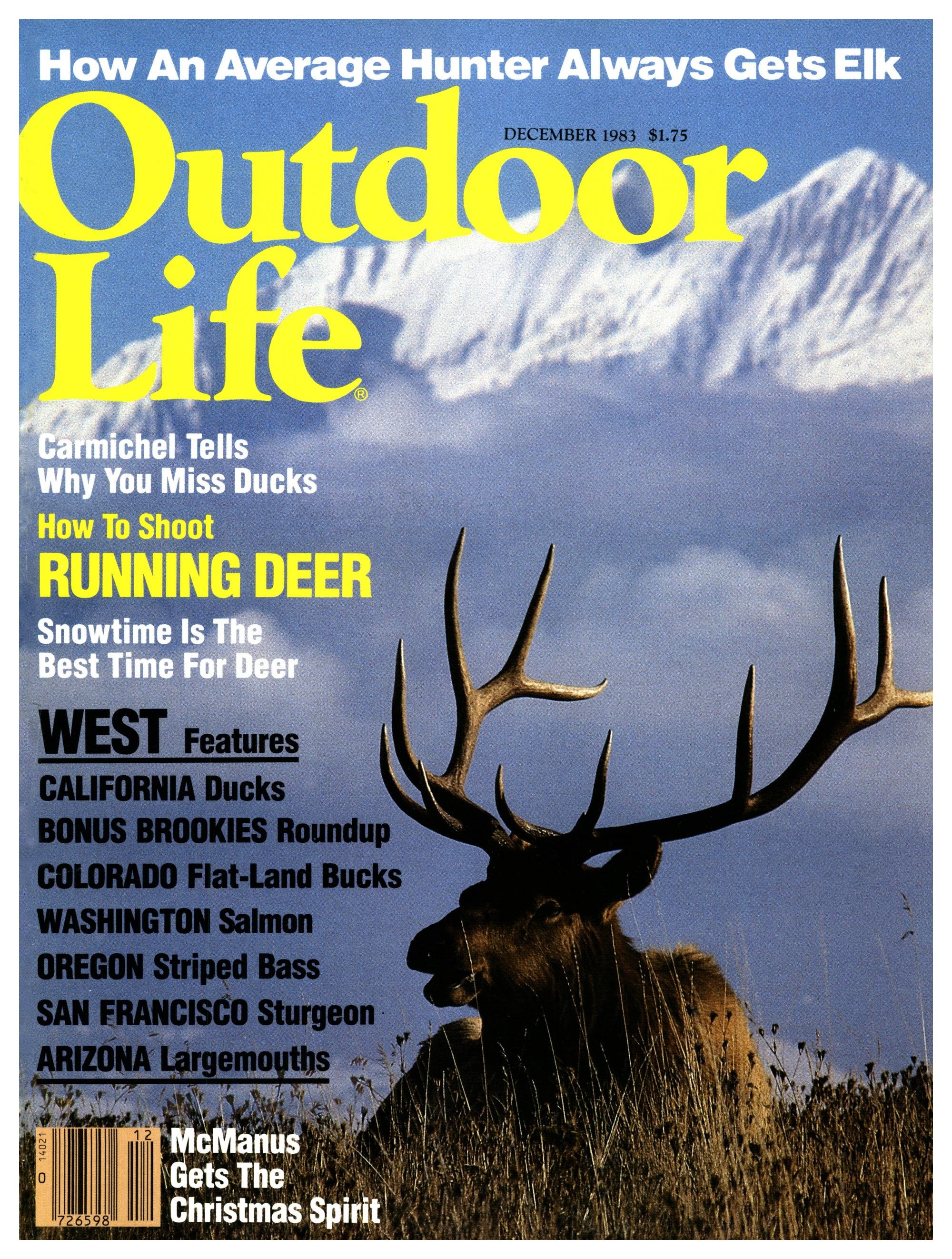
This story, “Snowstorm Whitetails,” appeared in the December 1983 issue of Outdoor Life.