

We may earn revenue from the products available on this page and participate in affiliate programs. Learn More ›
Choosing the right RV battery setup can make or break your time on the road. Whether you’re boondocking in the desert or topping off your devices at a full-hookup campground, your power source needs to be reliable, efficient, and suited to your style of travel. To find the best options, I researched dozens of batteries and portable power stations, connected with leading brands and experts, and brought a shortlist of finalists on a series of weekend field tests in Oregon.
The products below stood out not just for their specs but for how they performed in real-world scenarios: charging devices, running lights and water pumps, starting the fridge up, and keeping the Starlink powered. From house batteries to portable power stations, here are the best RV batteries of 2026 in every category:
- Best Lithium House Battery: OPTIMA ORANGE TOP Q31M-DC150
- Best Lead-Acid House Battery: Renogy Deep Cycle AGM
- Best Portable Power Station: Ampace Andes 1500
- Best Solar Generator: Anker SOLIX F2000 Solar Generator
- Best Lightweight Power Station: PECRON E1000LFP
- Best High-Capacity Power Station: Goal Zero Yeti PRO 4000
How I Tested the Best RV Batteries
I started by diving deep into spec sheets, online reviews, and expert recommendations, narrowing the field to top contenders across five major categories. Then I hit the road for a weekend field test in Hood River, Oregon, where I was able to test most of them out in person, using my own Lance truck camper to evaluate performance and see if they lived up to the hype.
Testing factors included:
- Ease of setup
- Portability and real-world usability
- Charging options
- Runtime and power delivery
- Technical features
For house batteries, I looked at installation ease, charge cycles, and overall value. For power stations, I tested how well they powered essential appliances and devices, noting each unit’s strengths and trade-offs, as well as things like weight, size, output, and number of ports.
Best RV Batteries: Reviews & Recommendations
Best Lithium House Battery: OPTIMA ORANGE TOP Q31M-DC150

Pros
- Huge capacity and strong discharge
- Smart diagnostics via Bluetooth
- Excellent low-temp performance
Cons
- Higher price tag
- May require converter if replacing lead-acid
Key Features
- Bluetooth app for real-time monitoring
- Integrated BMS and auto-heating
- 450A peak/150A continuous discharge
If you want the best of the best for your RV house battery, the Optima Orange Top delivers big time. The lithium iron phosphate battery (LiFePO4) is built for serious off-grid use with enough juice to run demanding appliances or support long boondocking stretches. It’s built with an advanced Battery Management System (BMS) that automatically monitors the battery’s condition and shuts it down if it gets too low. That means you never have to worry about accidentally draining it and causing permanent damage, like with many lead-acid batteries. It also eliminates the need for ongoing maintenance like checking fluid levels and adding water.
Designed with advanced features like Bluetooth connectivity and internal cell heating for cold-weather charging, it’s a smart, rugged choice for year-round adventures. I loved the fold-out dual handles, which made a huge difference when I was lifting and maneuvering the battery into place myself, especially compared to the flimsy single-strap grips on some models that dig into your hands and make heavy lifting awkward. It’s a pricier option, but if you’re going for the absolute best, this battery is definitely worth the splurge.
Best Lead-Acid House Battery: Renogy Deep Cycle AGM

Pros
- Affordable
- Reliable performance
- No off-gassing
Cons
- Significantly heavier
- Fewer charge cycles
- Slower recharge
Key Features
- Maintenance-free
- Vibration-resistant design
If you’re looking for a reliable RV house battery at a budget-friendly price point, Renogy’s Deep Cycle AGM is a solid choice. It’s sealed and maintenance-free, so you don’t have to worry about checking water levels or dealing with off-gassing like with traditional flooded lead-acid batteries. It charges reliably in cold temperatures, even below freezing, though it doesn’t have the self-heating feature found in the Optima or other lithium models. It’s also safe to use indoors thanks to its vibration-resistant housing and no-spill design.
That said, this battery doesn’t offer the high-tech features or extended lifespan of a lithium option. It lacks things like Bluetooth monitoring, internal heating, or a battery management system, and recharges more slowly. That said, with durable plate construction and a high discharge rate for short bursts of power, if you don’t need all the bells and whistles it’s one of the most dependable AGM batteries in its class.
Best Portable Power Station: Ampace Andes 1500
Pros
- High capacity design
- Lightning fast charging
- Excellent value for the output
Cons
- Heavy for its size
- Slightly awkward to carry
Key Features
- Powerful 2400W AC output
- Can run most appliances
- Multiple AC and USB outputs
- Solar, AC, and car charging supported
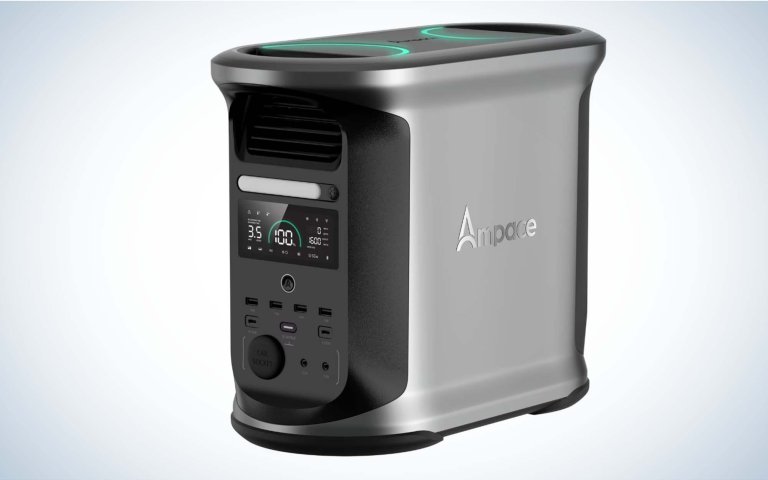
While your house battery powers essentials like lights and water pumps, it can be limiting when you’re away from shore power, especially if you need standard outlets, fast charging, or extra capacity outside the rig. That’s where a portable power station like the Ampace Andes 1500 comes in. This unit is a powerhouse among portable options, delivering serious performance while still being compact and lightweight enough to travel with. I got to test this one on the road, taking it out to the desert where I camped in heavy dust, and it held up like a champ. With 2,400W of output and a 1462Wh capacity, it’s strong enough to power everything from laptops to full-size appliances, including most microwaves. The 13 built-in ports (including AC, USB-C, DC, and car outlets) give you tons of flexibility, and it charges lightning fast — juicing up in just 55 minutes via AC (or 3 to 5 hours on solar).
Read Next: Best Portable Power Stations
Best Solar Generator: Anker SOLIX F2000 Solar Generator
Pros
- Heavy-duty wheels excel on tough terrain
- RV plug
- Potential to add three more solar panels with connector cord
- Fully featured app
Cons
- Heavy
- Less powerful than other solar panels I’ve tested
Report Card for the Anker SOLIX F2000
- Stated Capacity: 2048 watt hours
- Max Output: 2400 watts (2800 watt surge)
- Max Solar Input: 1000 watts
Report Card for the Anker SOLIX 200W (Package Includes Two)
- 158 watts generated by one panel in direct sunlight
- 42 watts generated by one panel in cloudy conditions
- Weight: 20 pounds
- Portability: Great
- Ease of Use: Excellent
While several power stations that I looked at incorporated handles for ease of transport, the Anker SOLIX F2000’s were by far the most useful. While the Jackery’s telescoping handle never extended far enough to allow me to stand upright, it was comfortable to pull the Anker SOLIX F2000 by its handle for short distances. This included over very muddy ground during one of my early tests in the summer of 2023. If you regularly move your power stations more than 50 feet at a time, then the ease and comfort with which you can maneuver the Anker SOLIX F2000 makes it a smart choice.
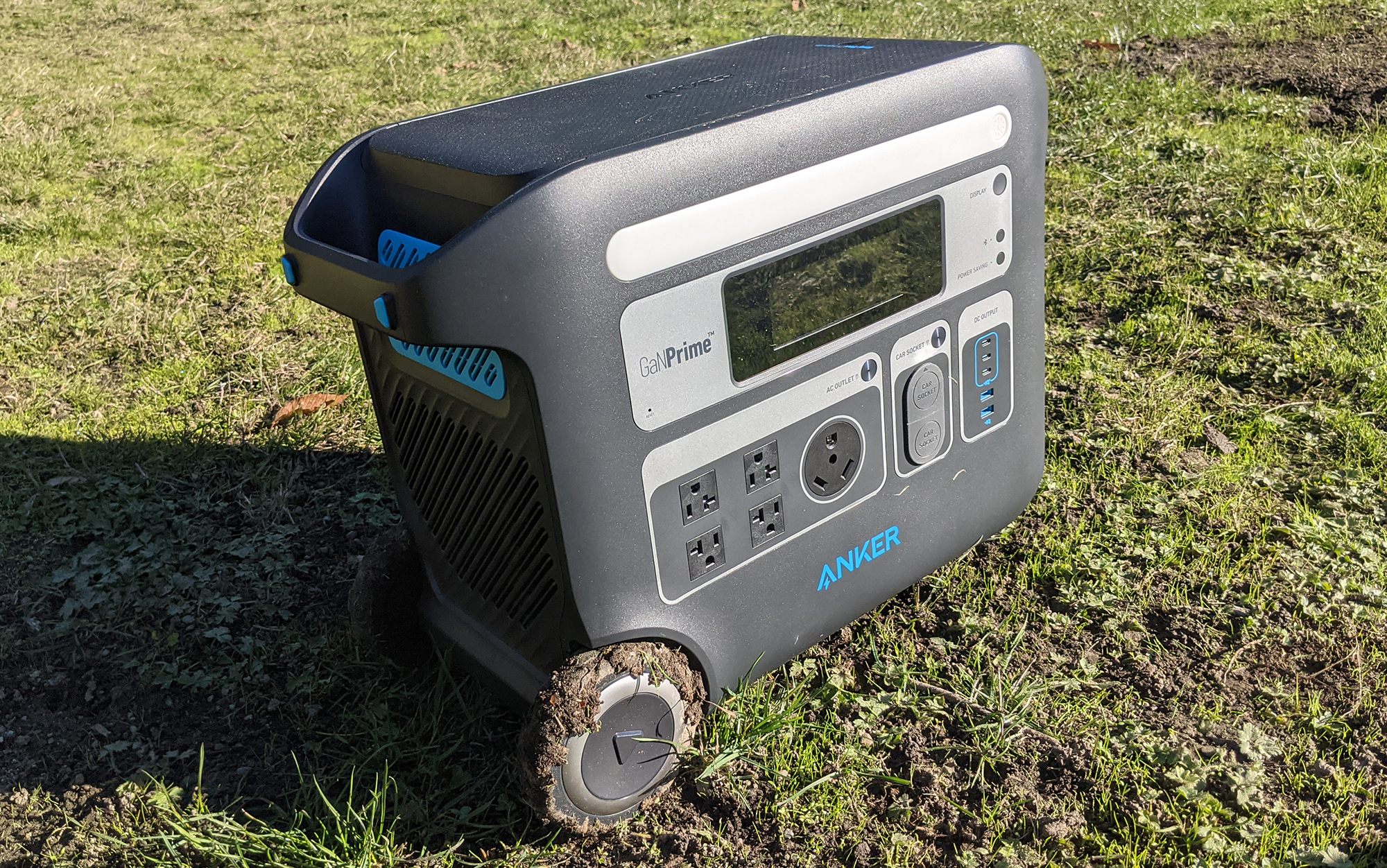
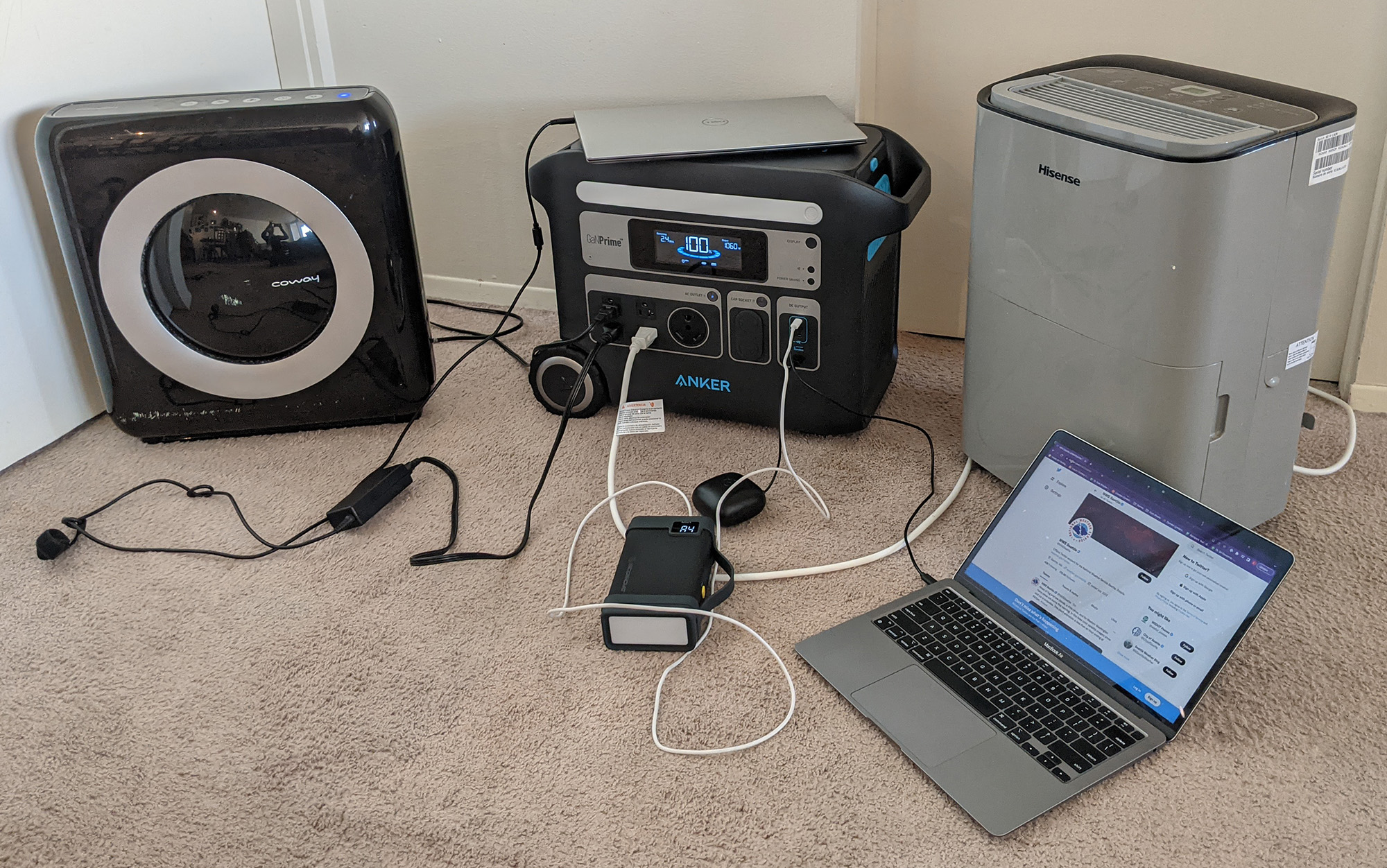
In my test of the best portable power stations, the Anker SOLIX C1000, which uses the same battery chemistry as this model, was a top performer. It was very efficient at delivering large and small amounts of power. Unlike the C1000 model, the Anker Solix F2000 comes with an RV plug built in and a max wattage of 2400 watts (which I did test), equivalent to what a typical RV uses in a day.
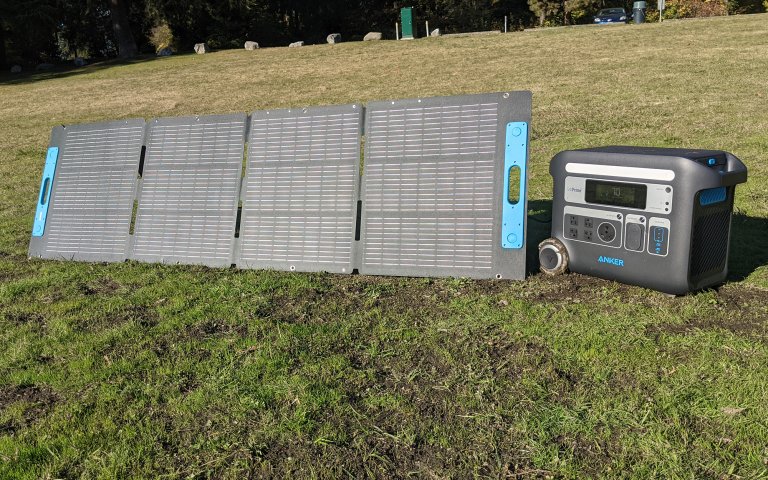
The Anker SOLIX 200W Solar Panel was the simplest to use of the larger solar panels I looked at. I liked that it didn’t have a separate carrying case to mess with, and a simple carabiner and mesh bag combo did the trick to stash the relevant cable and ensure it didn’t become separated from the larger unit. Like all of these kickstand solar panel setups, it was a little cumbersome to use, but extra reinforcement on the three kickstand legs were useful, to an extent, when adjusting the panel to a lower angle.

While this solar panel isn’t quite as powerful as the Jackery SolarSaga 200W, it easily produced over 75 percent of its 200-watt capability during my tests — and the Anker SOLIX F2000 can support up to five of these chained together. Strangely, this panel does not have the same sundial component that the Anker SOLIX 100W does. However, after I set up the Anker SOLIX 100W, I adjusted the Anker SOLIX 200W panel to match its angle and immediately saw a 23-watt difference in the power input. Hopefully, Anker will simply add this accessory onto the 200W model in the future, but in the meantime, you can purchase a clip-on sundial separately.
Best Lightweight Power Station: PECRON E1000LFP

Pros
- Lightweight and easy to transport
- Simple interface
- Fast recharge time
Cons
- Less output power
- Can’t run bigger appliances
Key Features
- 1800W output
- Temperature management
- Compact and travel-friendly
The Pecron E1000LFP is a great pick if you want the convenience of a portable power station but don’t need to run heavy appliances. It’s not meant for microwaves or A/C units but for charging laptops, running fans, powering Starlink, or topping off devices, it’s a solid, dependable option. I took it on a camping trip in my Lance and loved how lightweight yet rugged it felt. The rectangular shape with smooth, rounded corners made it easier to tuck into corners, and it held up well outside, even in dust and rougher terrain. Despite its smaller size, it still packs 1,800W of output with a 1,024Wh capacity, and features 12 versatile output ports, including USB-C, standard wall-style AC outlets, car ports, and DC ports for flexible charging options. It also has smart features like app and Wi-Fi control, adjustable charging speed, battery temp management, and a built-in UPS. It’s an excellent mid-range pick for weekend adventures, off-grid workdays, or anyone who wants reliable portable power without the bulk. — Laura Lancaster
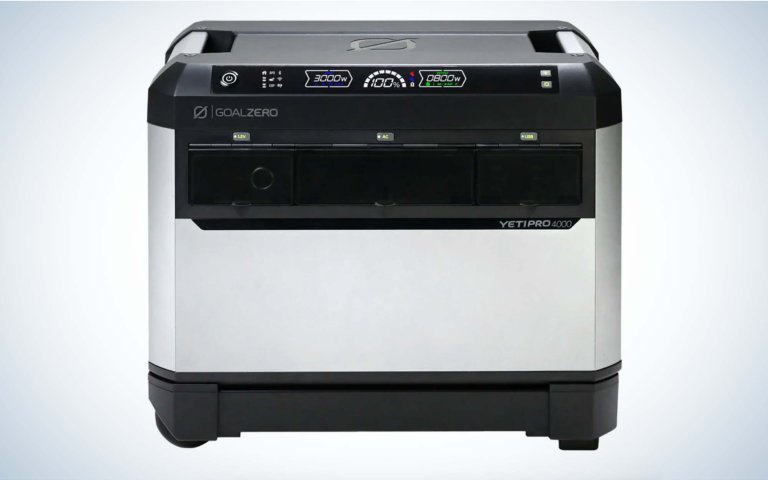
Best High-Capacity Power Station: Goal Zero Yeti PRO 4000
Pros
- Monster capacity for serious setups
- Clean, quiet, solar-compatible
- Great for both RVs and home backup
- Slick app-based monitoring
Cons
- Heavy (115.7 lbs)
- Expensive
- Wheels and handle feel under built for the size
Key Features
- 3600W output
- 3,994Wh capacity
- Wi-Fi + app control
- Modular and expandable
The Goal Zero Yeti PRO 4000 is the beast of the bunch — a massive, expandable power station designed for serious off-grid setups and crossover home backup. With almost 4,000Wh of capacity and a 3,600W output, this tank can easily handle power-hungry devices like portable A/C units or power tools, making it a reliable choice for extended off-grid stays or backup power on the road. I tested it while camping on a vineyard in Oregon and used it to run an electric grill during an outdoor cookout, and it performed flawlessly: quiet, fume-free, and dependable the whole time. At 115 pounds, it’s not something you’ll casually toss in the back of your camper for a quick weekend, but for more stationary setups or longer trips where serious capacity matters, it shines. It’s a big investment — in both size and price; however, if you’re looking for a high-capacity, self-contained system that pulls double duty for RV and home use, it’s hard to find one better than the Yeti PRO 4000.
How to Choose the Best RV Battery
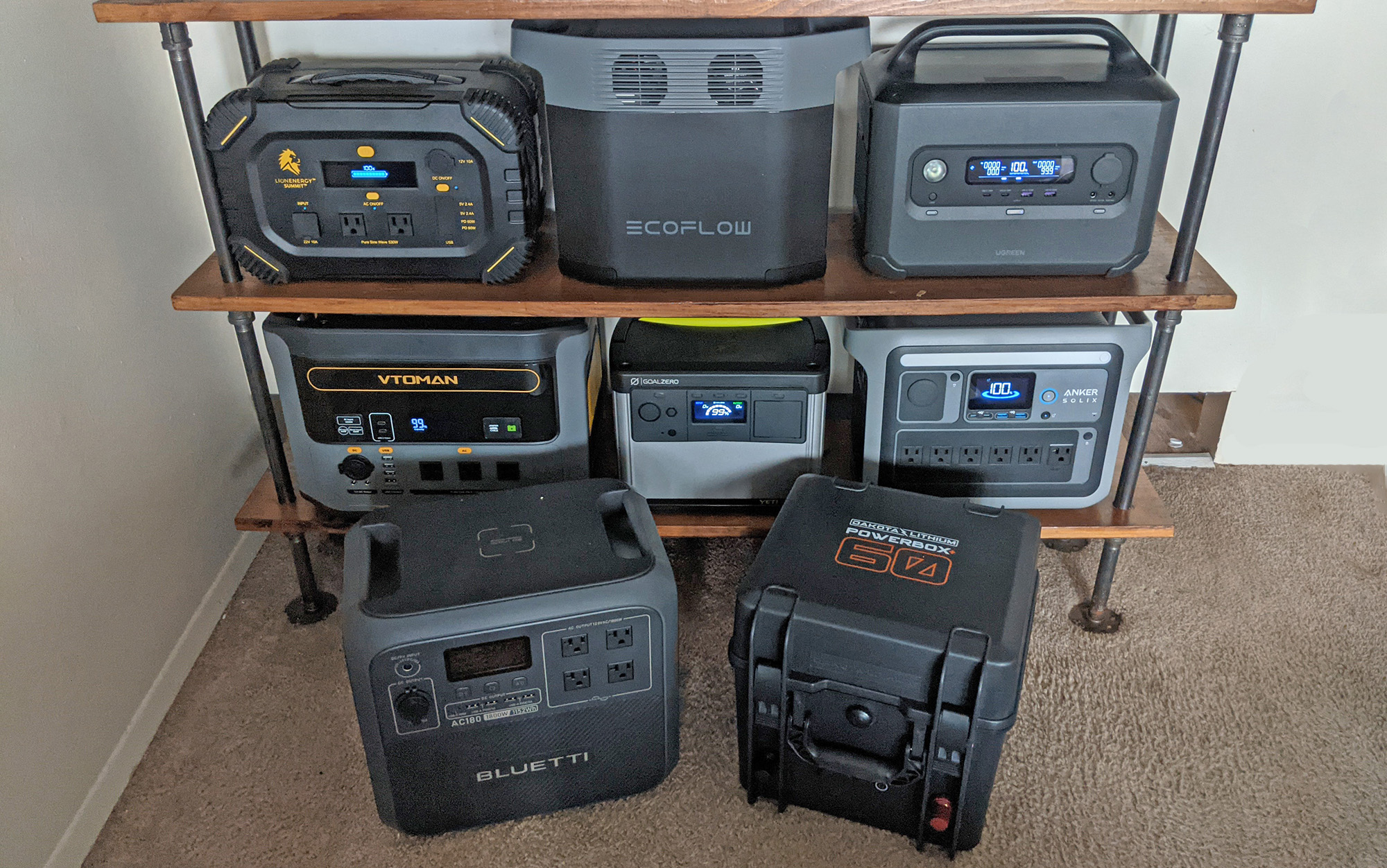
When it comes to RV power, there are two primary battery types to choose from: house batteries and portable power stations. They serve different purposes, and in many cases, RVers may want both. Here’s how to shop for each.
House Batteries
Your house battery is the main power source that runs your RV’s built-in systems when you’re not plugged into shore power. This includes things like lights, water pumps, furnace fans, fridges, and other 12V appliances that are wired directly into your rig. Most RVs come with at least one house battery pre-installed, but you may want to upgrade for better performance or longer runtime.
The big decision: Lithium vs. Lead-Acid
- Lithium: Lightweight, long-lasting, fast-charging, and maintenance-free. Perform well in extreme temperatures and allow deep discharge without damage. It’s a higher upfront cost but better long-term investment for frequent campers or ongoing off-grid use.
- Lead-Acid: Cheaper upfront and widely compatible with older RV systems. That said, they’re heavier, slower to charge, and degrade faster over time. Some types require regular maintenance like checking water levels.
What to look for when shopping:
- Capacity (Ah): How much energy the battery can store. More amp hours gives you more runtime.
- Compatibility: Make sure your RV’s charger or converter can handle lithium if upgrading.
- Durability: Look for deep-cycle batteries rated for hundreds of charge cycles.
- Temperature tolerance: Critical for boondocking or winter use.
- Expandability: Some setups allow you to connect multiple batteries for more power.
Portable Power Stations
A portable power station is a self-contained battery unit that provides electricity through built-in outlets like standard AC plugs, USB ports, and DC car-style ports. Unlike house batteries, these are external and don’t wire into your RV’s electrical system. They’re perfect for charging laptops, phones, fans, lights, camera gear, and even some small appliances, either inside or outside the rig.
Think of it as a high-powered accessory that gives you more flexibility, especially if you’re camping off-grid or working remotely from your camper.
What to consider when shopping:
- Capacity (Wh): The total energy storage. Like with house batteries, it reflects how long your devices can run but instead of amp-hours, it’s measured in watt-hours.
- Output: Determines what you can power. For example, 1800W can run many appliances while 1000W is better suited for smaller electronics like tablets and laptops.
- Port types: Make sure it has the AC, USB-C, and DC outputs you need.
- Recharge time: Some models can charge in under an hour, while others take much longer.
- Weight & portability: Consider how often you’ll be moving it in and out of your rig.
- Extra features: Bluetooth or Wi-Fi app control, UPS (uninterruptible power supply), expandability, and solar input can all be handy.
Best RV Batteries FAQs
Q: What’s the difference between lithium and lead-acid batteries for RVs?
Lithium batteries are lighter, more efficient, and last significantly longer than lead-acid batteries. They can be discharged deeper without damage and recharge much faster but they cost more upfront and require a lithium-compatible charging system. Lead-acid batteries, on the other hand, are heavier and less efficient but more budget-friendly and widely compatible with most factory RV setups.
Q: Can I run my RV off just a portable power station?
Not entirely. A portable power station can handle smaller tasks like charging phones, powering laptops, or running low-wattage appliances, and in some minimalist setups, it may be enough. However, most RVs still require a dedicated 12-volt house battery to power essential systems like lights, water pumps, and propane ignitions. Many travelers use a power station as a supplement — not a replacement — for their RV battery setup.
Q: How long will an RV battery last?
It depends on the type and how you use it. Lithium batteries often last 8 to 10 years or more with 3,000 to 5,000 cycles while lead-acid batteries typically last 3 to 5 years. Runtime on a single charge depends on battery capacity and what you’re powering.
Final Thoughts on the Best RV Batteries
After weeks of research and field testing, it became clear that choosing the right RV battery isn’t just about raw specs. It depends on how you camp, where you go, and what your setup requires.