|
December 23, 2011
New Book Suggests Revolutionary Approach to Blood Trailing Deer - 15
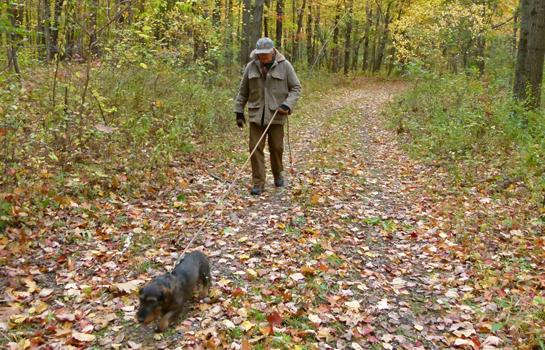
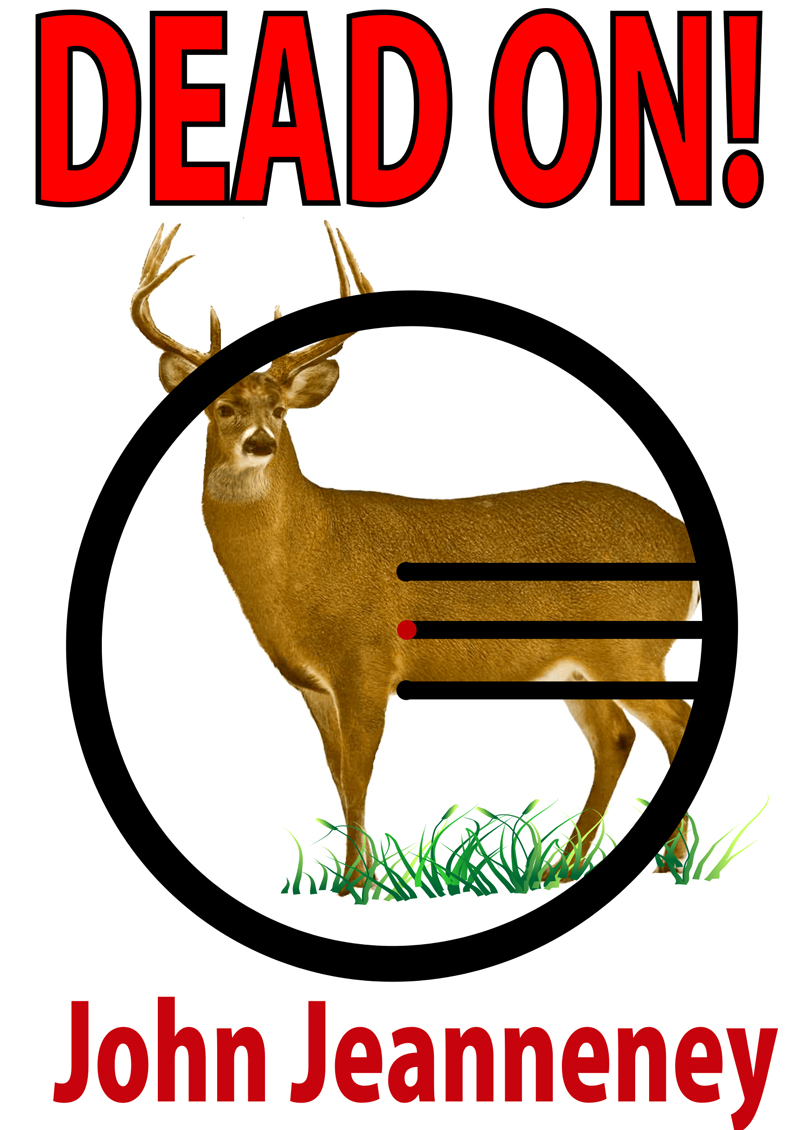
John Jeanneney tracks more wounded deer in a season than most bowhunters do in a lifetime. He is widely respected within the hunting community as one of the top trackers and blood trailing dog breeders. That’s why his recently released deer tracking book Dead On! raised more than a few eyebrows. The book covers blood trailing and tracking from top to bottom, but one of Jeanneney’s most interesting points is that he encourages bowhunters to re-think the conventional wisdom of waiting (at least a half hour) after the shot to follow up on a deer. No more automatically sneaking out of the woods to let bowshot whitetails “lie down and stiffen up.” No more coming back after supper to pick him up. Jeanneney admits that his “don’t wait” advice flies in the face of conventional bowhunting wisdom. Wisdom that is still taught in bowhunting education classes. But he has solid reasons for his recommendations. Wait or Don’t Wait? Only Dead Deer Stiffen Up Initial Shock Favors the Hunter Transfer the above condition to a wounded deer and: “we can see that the time immediately following a traumatic injury is the time when a deer’s survival instincts are most likely to be most muddled …this is the time to approach carefully for a finishing shot rather than stay in the stand and hope for the best … it doesn’t make much sense to do what combat medics recommend for survival”. Moving Deer Bleed More Than Bedded Deer The Coyotes Will Get There First When to Wait Food for Thought If nothing else, Dead On! forces us to think more carefully our recovery strategies. With deer hunting season winding down, this is a good time to look back on our recovery rate. Did we lose more than we should have? Did we employ the right recovery strategies? John would be the first to tell you that answers to these questions are never absolute and the only definitive answer is a recovered deer. But I can assure you that Dead On! can make your tracking decision a whole lot easier. About the Book and the Author His secret? Years of experience and a kennel full of superbly trained tracking dogs. His dogs are worked on leash and are capable of following wounded deer for miles. Run out of blood sign, no problem, they will key on body scent. Rain, snow or a day old trail no problem, John and his dogs can generally work it through. Like the Energizer Bunny they just keep going and going until the deer is recovered or John decides the deer was not mortally wounded and reluctantly calls a halt to the search. And this is what makes Dead On! truly unique. It is written from the point of view of a person who can stay on a wounded deer with no visual sign present. He can advance the line well beyond where a normal sight tracker must quit. Because of this he has been able to figure out what hundreds of wounded deer have done after being wounded. It’s this extra knowledge of following deer with no visual sign, (along with a lifetime of study and experience) which qualifies Jeanneney to write books, present papers (across the U.S. and abroad) and challenge conventional wisdom on recovering wounded deer with unparalleled authority. The book should be required reading for anyone going afield with bow or gun and should be standard “reading room” material in every deer camp in America. At a little over 100 pages in length with a cost of $13.95, it’s both a quick read and easy on the pocketbook. Order on line at http://www.deadonbook.com/
|
Most Viewed Most Commented Top Rated ADVERTISEMENT |
Comments (15)
THE BOOK? anyone that has spent any amount of time hunting doesn't need THE BOOK .common sense rules. chase'm if you think you can catch a wounded deer before it expires. If he's been given a mortal hit he won't go far. the only thing that limits finding it is your tracking skills or will to recover the animal from a shot you probably shouldn't have taken in the first place.
I agree with the author regarding not waiting to track a wounded deer. When it comes to dangerous animals such as bears or cougars, I think I'd want to wait a while.
The book is clearly written with the stated intent that it pertained to blood trailing DEER. To think that a thought out and proven( over 1000 blood trails) approach to blood trailing deer isnt valid because it doesn't pertain or apply to other animals...bear and cougar is totally absurd. Check that convoluted is better word.
The right approach on wounded deer should relate to all types of hunting,so if I cripple a mountain lion or a bear the right tactic would be to hurry to the spot I seen him last? I think maybe I'll stick to the old tradition of waiting a bit,as for the rest of the new revolutionarie's. YOU MIGHT WANT TO GIVE IT A SECOND THOUGHT.
I agree mostly with what he says about tracking wounded animals quickly. Even the shock theory. They are still animals and as a biologist, animals will respond similarly whether wild or not. Why I agree with him even more is that I have seen several renown national whitetail leaders (will not mention names) who shoot a deer, and the video shows the animal drop, surprise me by saying,"We are going to quietly back out of here and come back for this animal tomorrow morning" Heck, I can see it laying dead over there with its head down. If a deer is shot through the lungs it is dead. Even a liver shot deer is going to die within an hour-- its dead.
This fall I did something I usually never do with tracking. I stalked a large doe and gut shot her with my arrow. Instead of backing off and coming back 10 hours later, I quietly trailed her, 20 yards down the hill. She bedded in 80 yards, and I made a final killing shot 10 minutes later after my initial bad shot. Maybe this is evidence for the shock theory. Still, most gut shots should be left alone.
Would like to read more about wild animals and whether or not they do go into shock. Seems a wounded wild animal is going to have a lot of adrenalin pumping. I know domestic animals expreince shock after trama, but wild animals are in survival mode!
I am also surprised no one has argued against this advice.
I have tested the immediate follow-up theory over the years with very poor success. A wounded deer which is not pushed often has a predictable path(into the wind or back the direction he came from) and a desire to bed shortly after being shot. If you wait an hour, the deer will still be there.
A wounded deer which is pushed is less predictable. He will change directions, trails and begin to circle.
Many deer will stop bleeding regardless of where it is shot. Fatty tissue, organ material and skin movement can stop a blood trail cold at any distance. Keeping the deer close, not pushed, will make him easier to find if circling is necessary to spot the animal.
Not saying this fellow does not have a good argument, he just does not have the best argument.
DSMBIRDDOG HAS IT RIGHT,Each circumstance is different and should be handled accordingly,On the other hand a lot of hunters either don't have access to tracking dogs and some places it remains illegal to do so,I've tracked wounded deer also after waiting up to an hour or so,often they will go through seversl properties before expiring and if pushed e arly w ill go through even more.A lot of unseasoned hunters lack the skills of following wounded deer over vast distances on thier own.A well hit deer is easy to find,one thats not generally goes only a few hundered yards . What works for John is up to him,as for me I'll choose to wait.
I agree with beginning the tracking fairly soon. But it depends on two things. First did I see where the shot hit and second what kind of blood do I find. I believe the blog also states that if there is evidence that a deer was hit too far back you should wait for a time to start trailing.
I am floored that there are no dissenters. Seems most people have been so indoctrinated to wait that they take it as gospel and vehemently defend the tactic ... one to the point where he won't let people hunt on his property unless they follow this philosophy. I don't hunt there.
Al Hofacker, in a late 1980's Deer and Deer Hunting article (The Philosophy of Waiting), concluded from a survey that, "Bow hunters ... recovered a noticeably higher percentage of the deer they wounded when they began trailing immediately or shortly (within 15 minutes) after wounding a deer. ... ultimate conclusion that trailing wounded deer immediately or very shortly after shooting represents the best strategy for bow hunters."
Sounds like the book is worth reading and passing along.
I completely agree with John. I see both ends of the spectrum and prefer an immediate call any day (ruling out intestinal shots).
John is the best in the field and has seen more then most trackers ever dream about. I would bet my money on Johns knowledge :o)
I do the same thing with a bow as I do with a gun. After shot I make sure I know exactly where I shot from, where the deer was when I shot, and where I last saw it. When I am confident I know those three things I get up and look right away. Has always worked for me. EVERYONE I hunt with always tells me to wait 30 minutes or more after shooting something with a bow. Glad to see some people agree with me.
I've tracked a few wounded animals and I agree with the logic John's got. I'd rather have a moving animal freely bleeding, vice an animal that's lying down with the wound slowly closing up. I know the classic argument is that an animal can go a long distance if they get the adrenalin up, but I think I'd rather take the extra bleeding.
Good article!
I have tracked several deer with John and NO one has more skill and and understanding of tracking wounded deer them him. Further more
is ability to articulate that knowledge in his books are second to none. This book along with his others on tracking dogs should be required reading before your handed a deer hunting license.
I've always thought that tracking should begin as soon as possible, and it's good to have affirmation. I'll have to get this book.
Post a Comment (200 characters or less)
I've tracked a few wounded animals and I agree with the logic John's got. I'd rather have a moving animal freely bleeding, vice an animal that's lying down with the wound slowly closing up. I know the classic argument is that an animal can go a long distance if they get the adrenalin up, but I think I'd rather take the extra bleeding.
Good article!
I've always thought that tracking should begin as soon as possible, and it's good to have affirmation. I'll have to get this book.
I have tracked several deer with John and NO one has more skill and and understanding of tracking wounded deer them him. Further more
is ability to articulate that knowledge in his books are second to none. This book along with his others on tracking dogs should be required reading before your handed a deer hunting license.
I am also surprised no one has argued against this advice.
I have tested the immediate follow-up theory over the years with very poor success. A wounded deer which is not pushed often has a predictable path(into the wind or back the direction he came from) and a desire to bed shortly after being shot. If you wait an hour, the deer will still be there.
A wounded deer which is pushed is less predictable. He will change directions, trails and begin to circle.
Many deer will stop bleeding regardless of where it is shot. Fatty tissue, organ material and skin movement can stop a blood trail cold at any distance. Keeping the deer close, not pushed, will make him easier to find if circling is necessary to spot the animal.
Not saying this fellow does not have a good argument, he just does not have the best argument.
I do the same thing with a bow as I do with a gun. After shot I make sure I know exactly where I shot from, where the deer was when I shot, and where I last saw it. When I am confident I know those three things I get up and look right away. Has always worked for me. EVERYONE I hunt with always tells me to wait 30 minutes or more after shooting something with a bow. Glad to see some people agree with me.
I completely agree with John. I see both ends of the spectrum and prefer an immediate call any day (ruling out intestinal shots).
John is the best in the field and has seen more then most trackers ever dream about. I would bet my money on Johns knowledge :o)
I am floored that there are no dissenters. Seems most people have been so indoctrinated to wait that they take it as gospel and vehemently defend the tactic ... one to the point where he won't let people hunt on his property unless they follow this philosophy. I don't hunt there.
Al Hofacker, in a late 1980's Deer and Deer Hunting article (The Philosophy of Waiting), concluded from a survey that, "Bow hunters ... recovered a noticeably higher percentage of the deer they wounded when they began trailing immediately or shortly (within 15 minutes) after wounding a deer. ... ultimate conclusion that trailing wounded deer immediately or very shortly after shooting represents the best strategy for bow hunters."
Sounds like the book is worth reading and passing along.
I agree with beginning the tracking fairly soon. But it depends on two things. First did I see where the shot hit and second what kind of blood do I find. I believe the blog also states that if there is evidence that a deer was hit too far back you should wait for a time to start trailing.
DSMBIRDDOG HAS IT RIGHT,Each circumstance is different and should be handled accordingly,On the other hand a lot of hunters either don't have access to tracking dogs and some places it remains illegal to do so,I've tracked wounded deer also after waiting up to an hour or so,often they will go through seversl properties before expiring and if pushed e arly w ill go through even more.A lot of unseasoned hunters lack the skills of following wounded deer over vast distances on thier own.A well hit deer is easy to find,one thats not generally goes only a few hundered yards . What works for John is up to him,as for me I'll choose to wait.
Would like to read more about wild animals and whether or not they do go into shock. Seems a wounded wild animal is going to have a lot of adrenalin pumping. I know domestic animals expreince shock after trama, but wild animals are in survival mode!
I agree mostly with what he says about tracking wounded animals quickly. Even the shock theory. They are still animals and as a biologist, animals will respond similarly whether wild or not. Why I agree with him even more is that I have seen several renown national whitetail leaders (will not mention names) who shoot a deer, and the video shows the animal drop, surprise me by saying,"We are going to quietly back out of here and come back for this animal tomorrow morning" Heck, I can see it laying dead over there with its head down. If a deer is shot through the lungs it is dead. Even a liver shot deer is going to die within an hour-- its dead.
This fall I did something I usually never do with tracking. I stalked a large doe and gut shot her with my arrow. Instead of backing off and coming back 10 hours later, I quietly trailed her, 20 yards down the hill. She bedded in 80 yards, and I made a final killing shot 10 minutes later after my initial bad shot. Maybe this is evidence for the shock theory. Still, most gut shots should be left alone.
The right approach on wounded deer should relate to all types of hunting,so if I cripple a mountain lion or a bear the right tactic would be to hurry to the spot I seen him last? I think maybe I'll stick to the old tradition of waiting a bit,as for the rest of the new revolutionarie's. YOU MIGHT WANT TO GIVE IT A SECOND THOUGHT.
THE BOOK? anyone that has spent any amount of time hunting doesn't need THE BOOK .common sense rules. chase'm if you think you can catch a wounded deer before it expires. If he's been given a mortal hit he won't go far. the only thing that limits finding it is your tracking skills or will to recover the animal from a shot you probably shouldn't have taken in the first place.
The book is clearly written with the stated intent that it pertained to blood trailing DEER. To think that a thought out and proven( over 1000 blood trails) approach to blood trailing deer isnt valid because it doesn't pertain or apply to other animals...bear and cougar is totally absurd. Check that convoluted is better word.
I agree with the author regarding not waiting to track a wounded deer. When it comes to dangerous animals such as bears or cougars, I think I'd want to wait a while.
Post a Comment (200 characters or less)