

Discussing the best hunting dogs for various game is kind of like arguing whether a Chevy or Ford is better: No one ever changes camps because they’re happy with what they’ve got. Still, we’re going to take a crack at helping you understand most common hunting dog breeds, their natural instincts and personality traits, training tips, and other essentials. This guide to hunting dogs will touch on everything to consider if you’re thinking about getting a puppy for hunting or adding a new hunting breed to your household.
There’s no way around it: Hunting dogs are a lot of work. They will need more patience, training, and opportunity to flex their hunting skills than you’re used to if you’ve only just owned a family dog. In exchange for all your time and effort, you’ll have a capable companion who loves hunting just as much as you do.
Table of Contents
Read through the article in chronological order, or click on any topic to jump to it:
- What Game Can You Hunt with Dogs?
- Hunting Dogs by Breed, including Flushing vs. Pointing Dogs, Pointers, Retrievers, Setters, and Spaniels
- The Best Hunting Dog for Each Type of Game
- Tips for Choosing a Hunting Dog
- How to Pick a Hunting Dog Puppy
- Hunting Dog Resources and Further Reading
- FAQs
- Final Thoughts
What Game Can You Hunt with Dogs?
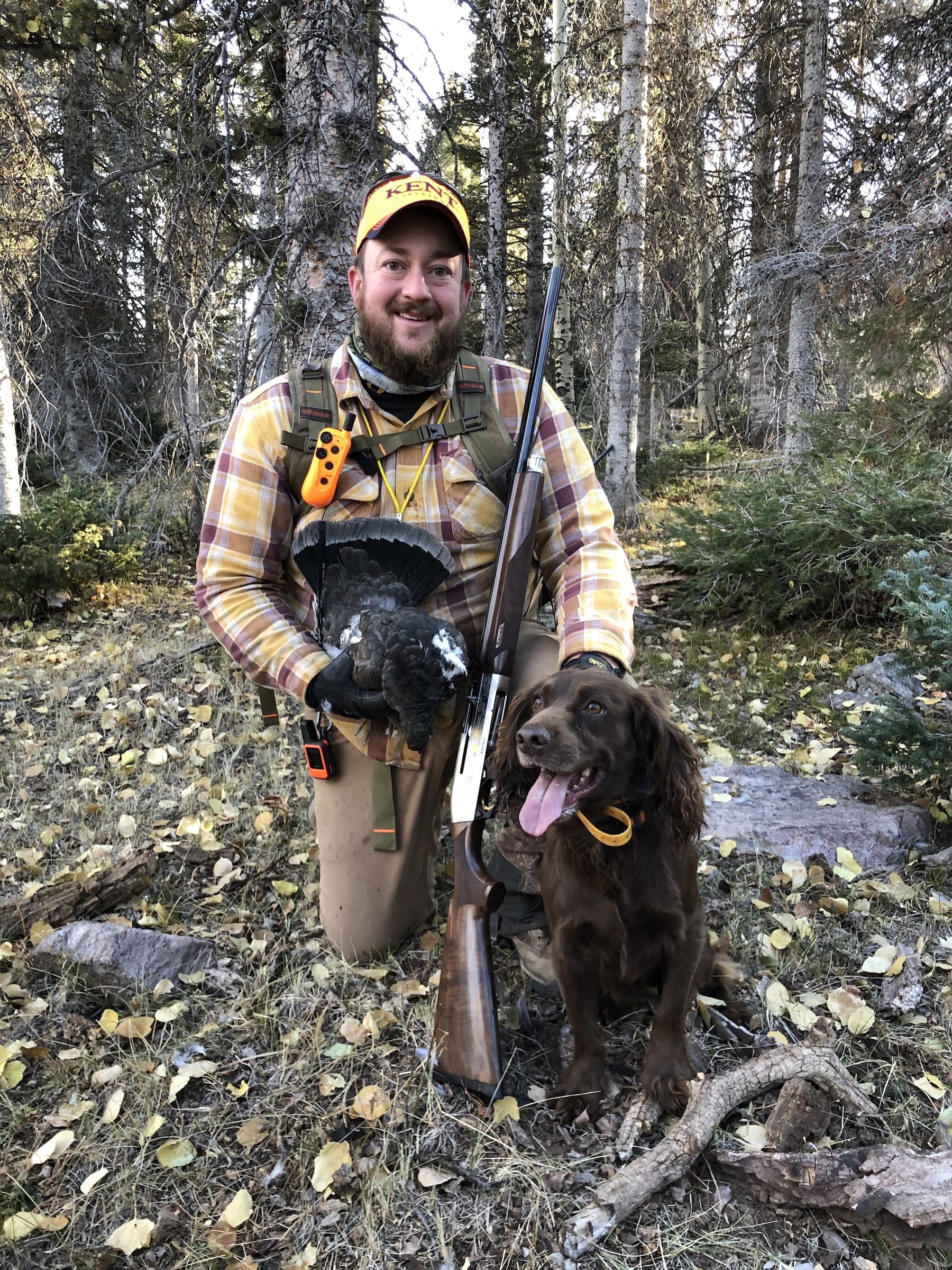
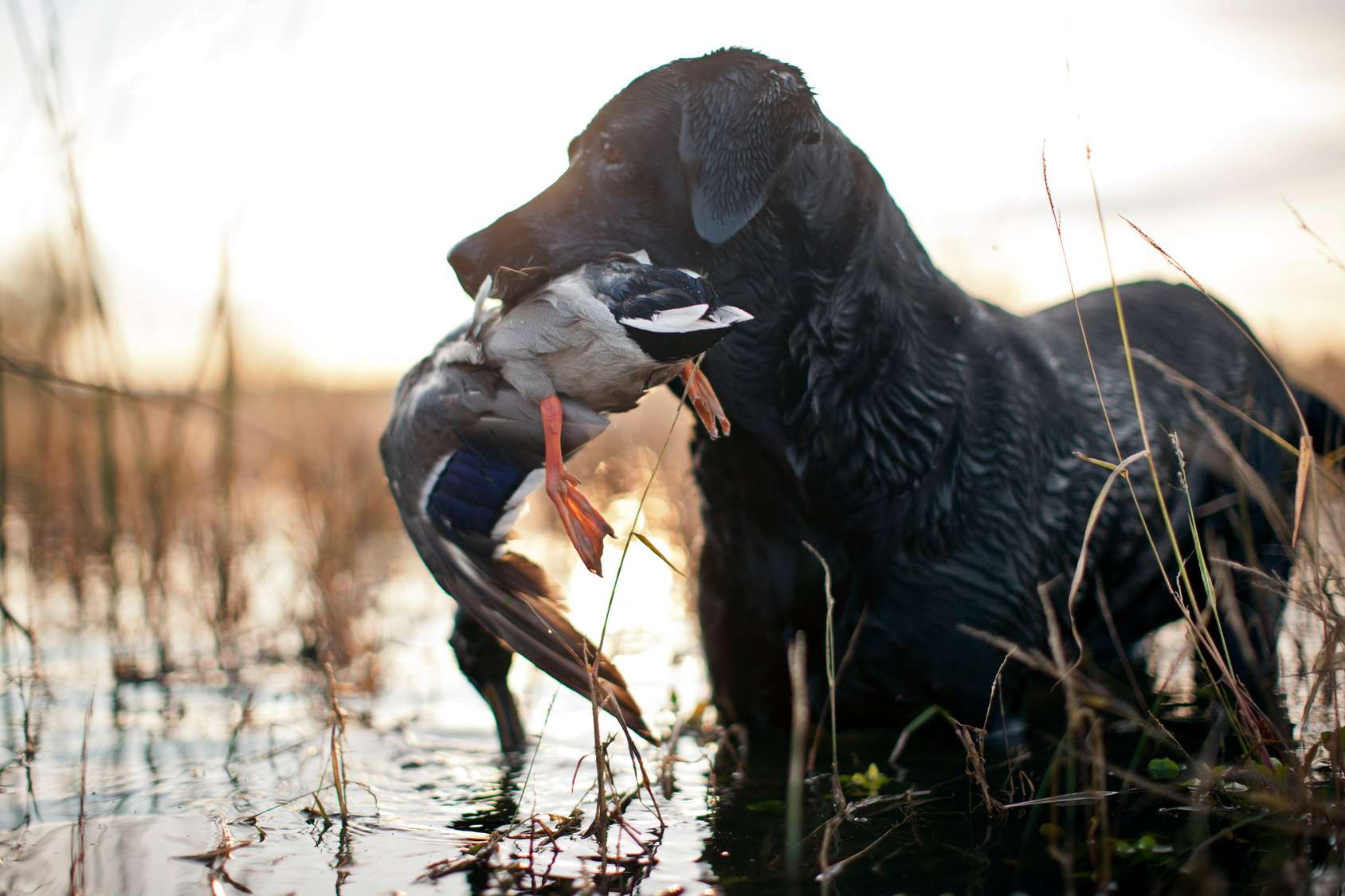
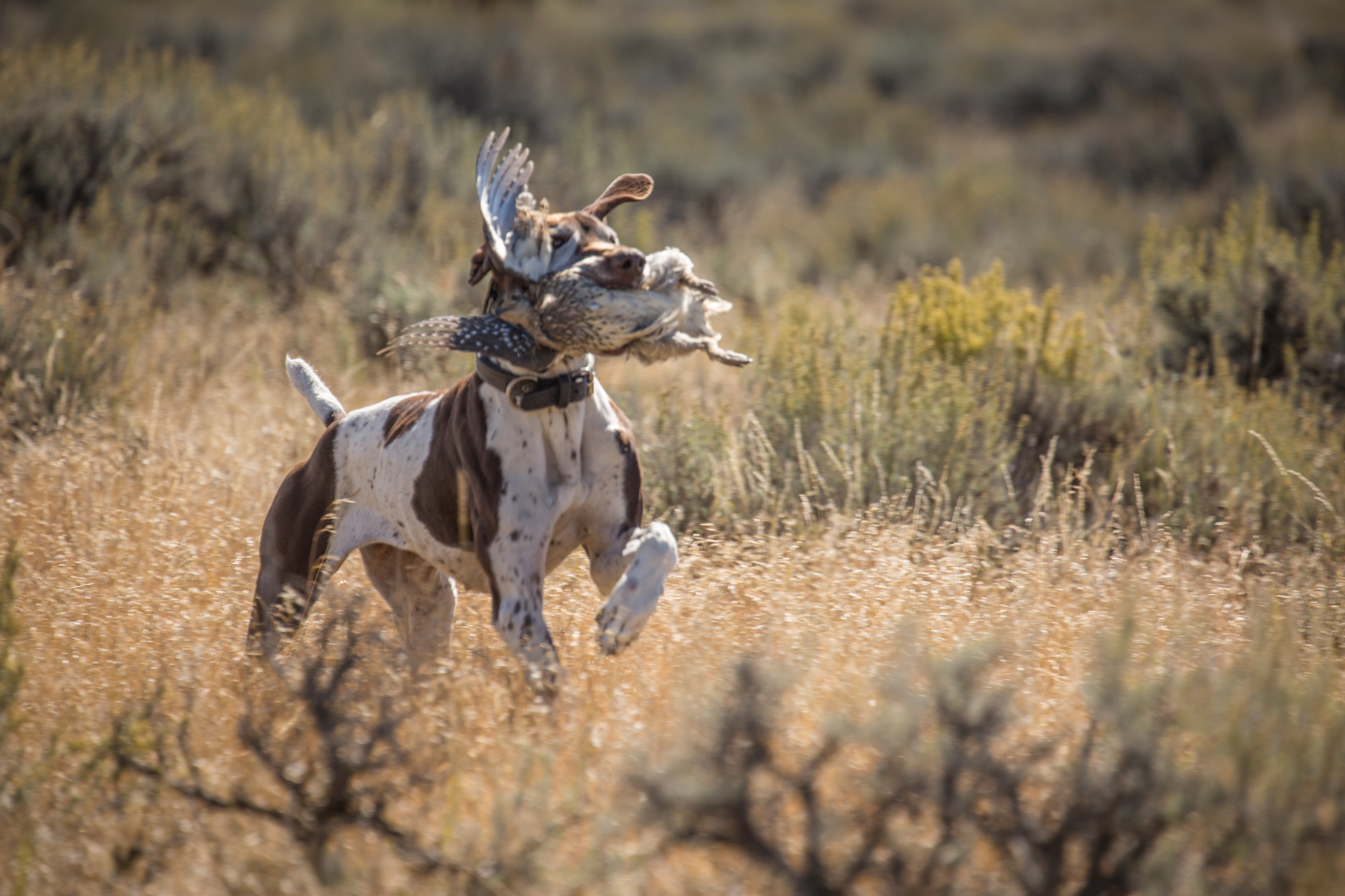
Although regulations vary by state, you can rely on hunting dogs to help you pursue just about any species of game in the U.S. The most common use for hunting dogs are for locating, flushing, and retrieving upland game birds like pheasants, grouse, and quail, and for retrieving waterfowl like ducks and geese, as well as migratory birds like doves. Here’s a list of game (and non-game) species that can be hunted with dogs in certain parts of the country:
Upland Game
- Chukar
- Grouse
- Pheasants
- Ptarmigan
- Quail
- Rabbits
- Squirrels
Migratory Birds
- Doves
- Ducks
- Geese
- Rail
- Sandhill cranes
- Snipe
- Swans
- Woodcock
Big Game and Furbearers
- Black bears
- Coyotes
- Fox
- Mountain lions
- Raccoons
- Turkeys (in the fall)
- Whitetail deer (common in Southern states like Virginia and Mississippi)
- Wild hogs
Scent-Tracking Applications
- Blood tracking game
- Man tracking
- Shed antler hunting
- Mushroom hunting
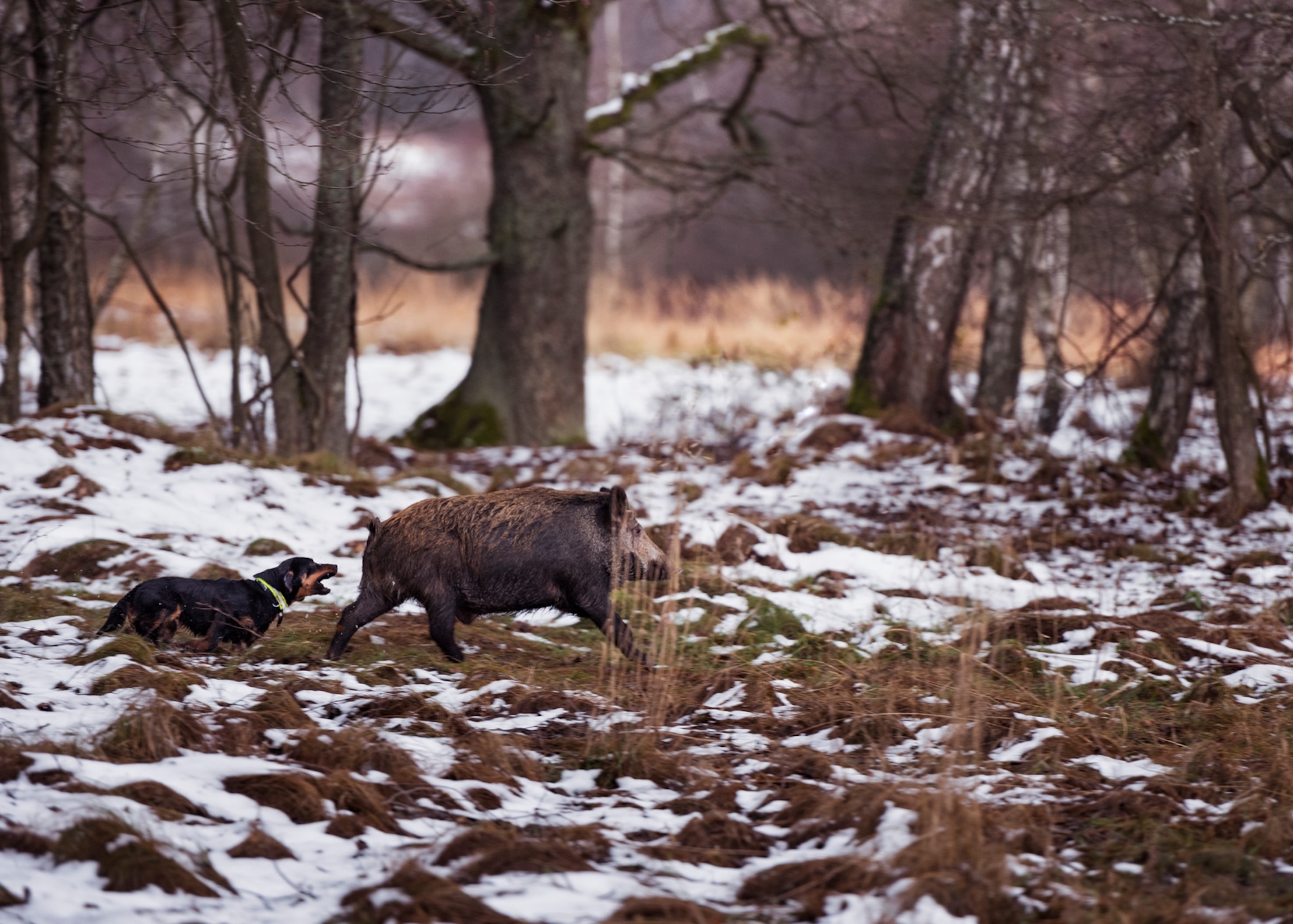
Though it’s much rarer, there are even hunting dogs that can be trained to dive for lobsters or help control invasive species like iguanas. If there’s some hunting or sporting task you want to tackle, there’s almost certainly a dog who can help. Just keep in mind that hunting with dogs is a regulated activity. You may also need to purchase dog training licenses in certain states (such as Montana) to train hunting dogs on public lands. Running hounds in pursuit of live big game (ike deer, black bear, and mountain lions can be less popular with non-hunters than other types of hunting, and can even be contentious within the hunting community.
All of the dogs listed in this article have been bred over generations to emphasize certain instincts. Here’s a look at different breeds, and what they’re known for.
Hunting Dogs by Breed
According to the American Kennel Club, the gatekeeper of purebred dogs in the U.S., there are four general types of sporting breeds: pointers, retrievers, setters, and spaniels. These are primarily recognized as bird hunting dogs. Here are most, if not all, of the popular purebred bird dog breeds that fall into one or more of these categories. We’ve highlighted some of the best-loved breeds of U.S. bird hunters below, but you can click on each to learn more about the breed, courtesy of the AKC. We’re also highlighting some of our favorite breeds for certain game.
A Note on Flushing vs. Pointing Dogs
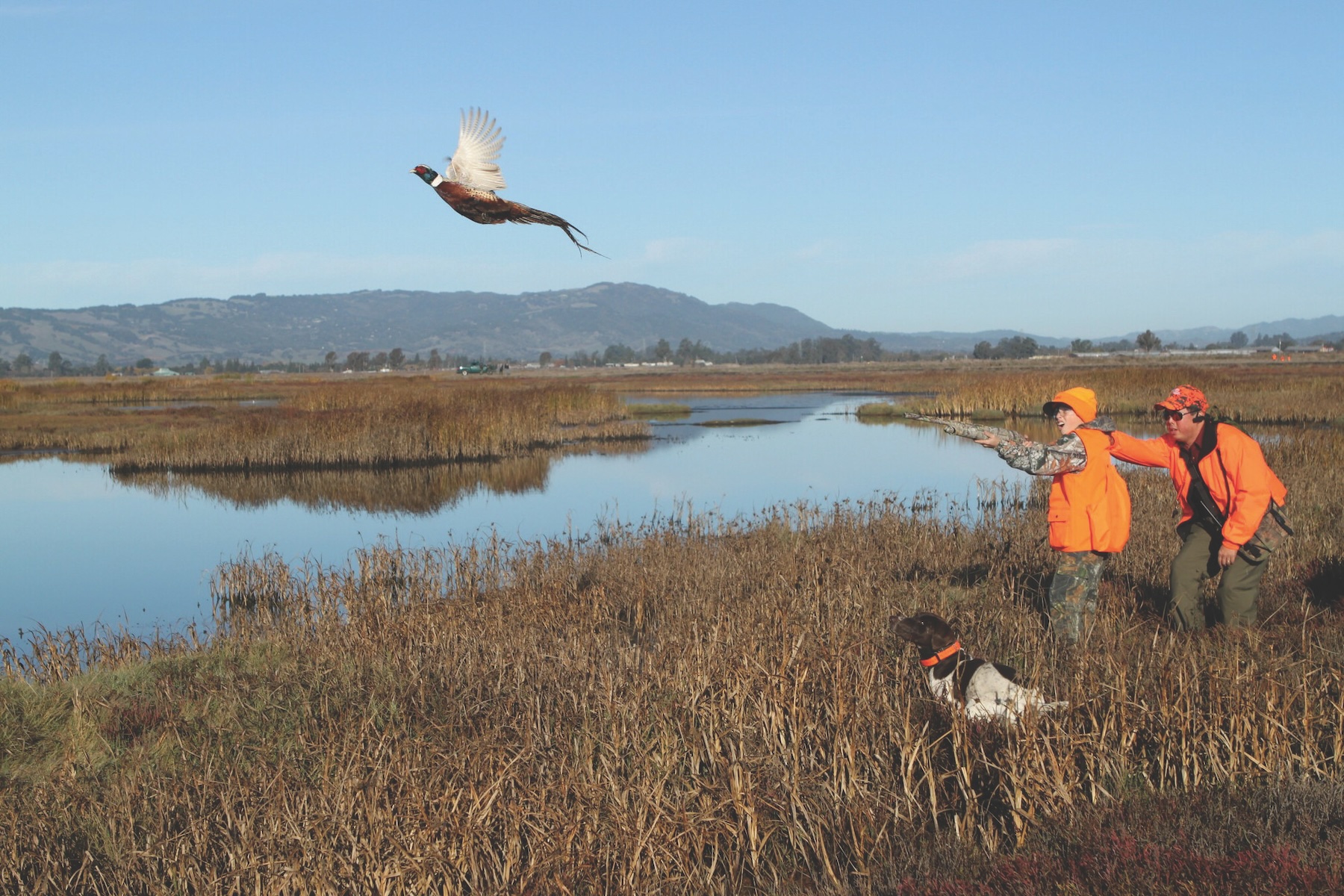
When it comes to bird hunting, you’ll also hear about flushing dogs and pointing dogs, which are a way to broadly describe a dog’s job in the field and can, but don’t necessarily, refer to a particular dog’s breed.
A flushing dog finds birds hiding in cover and charges at them, startling them into flight. Conversely, when a pointing dog locates birds hiding in cover, it literally points its nose and body at the bird, freezing in place (you’ll hear hunters talk about a dog ‘locking up’ on point). This allows you to know the bird’s location and get close for a shot. Often the approaching hunter flushes the bird, or a hunter may send in a flushing dog to the pointed bird.
You’ll also often hear a dog described as a versatile dog. For instance, English setters are often expected to locate, point, and retrieve upland game and even waterfowl. Labs are commonly used for upland and waterfowl hunting, as well as scent tracking, shed hunting, and law enforcement.
Hunting Dogs by Sporting Type
Pointers
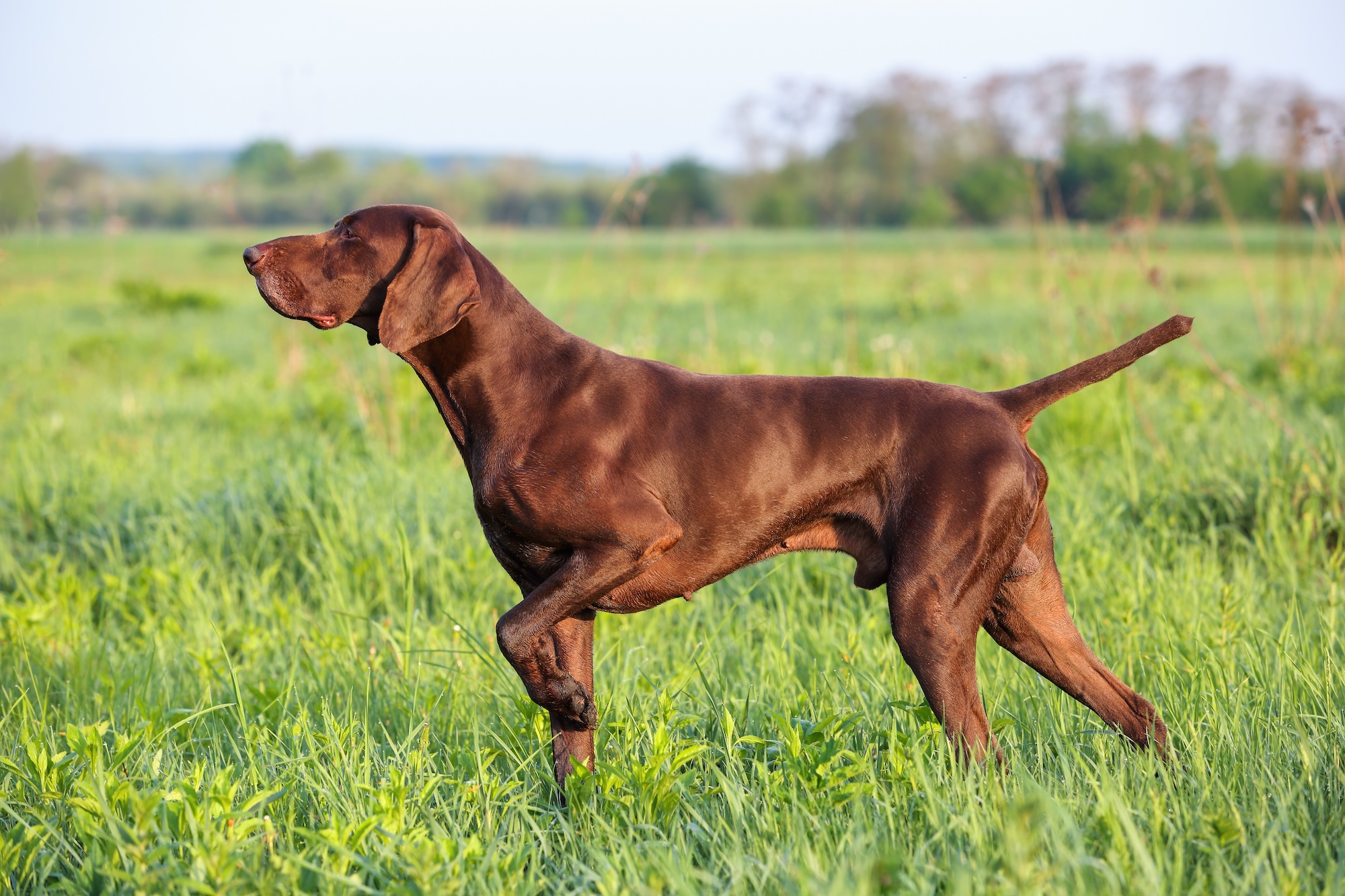
As mentioned, a pointer’s job is to range at distances from 50 to several hundred yards from its handler in search of upland birds. Once a pointer smells birds, they literally point the location in cover with their nose and (should) hold steady as the bird rises into the air for you to shoot. Certain pointers are better suited to certain upland birds. —N.K.
Common Pointing Breeds
- Bracco Italiano
- Brittany
- Pointer (also known as an English pointer)
- German shorthaired pointer
- German wirehaired pointer
- Portuguese pointer
- Wirehaired pointing griffon
- Wirehaired vizsla
- Vizsla
Retrievers
One crisp September afternoon in a north Florida peanut field, I hunted doves with a man who had trained his pit bull to retrieve. The dog sat patiently beside us, waiting to show off its skills, and sprang into action when I downed the first dove. At the owner’s behest, the pit bull galloped to the dead bird, scooped it up in its maw, turned back toward us, made a couple of crunching sounds and swallowed the dove whole. Tongue lolling, it then bounded back to us, obviously pleased with the way things were progressing. “He’ll settle down after he eats one or two,” said the proud owner. And, sure enough, he did.
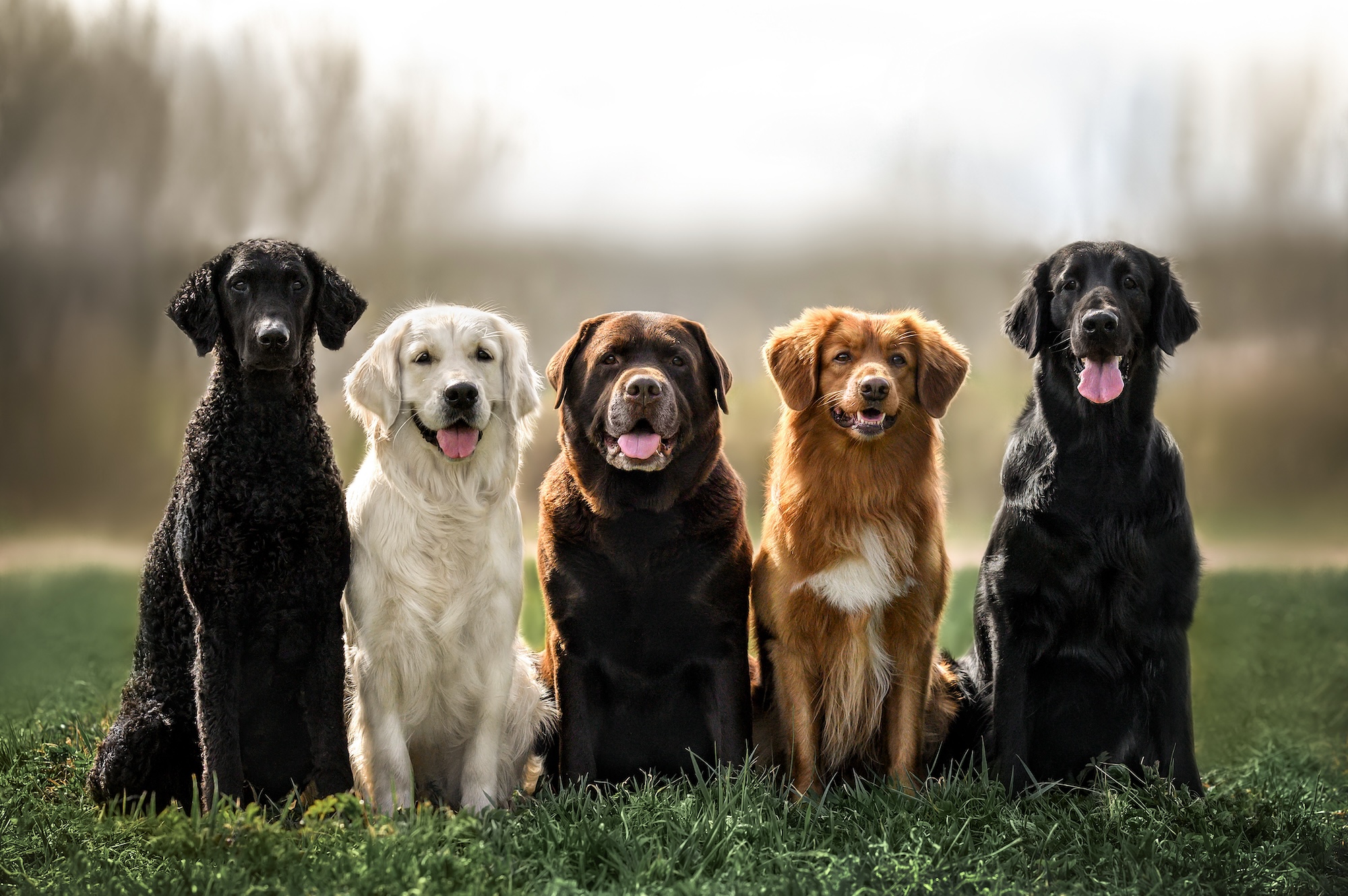
Most dogs, be they squirrel feists, rabbit beagles or pit bulls with large appetites, can be trained to retrieve game. But it’s those whose bloodlines have been finely honed over centuries that excel. Retrievers are versatile, close-ranging dogs bred to find, flush, mark, and retrieve upland birds and waterfowl. —Colin Moore
Common Retrieving Breeds
- Chesapeake Bay retriever
- Curly coated retriever
- Flat coated retriever
- Golden retriever
- Labrador retriever
- Nova Scotia duck tolling retriever
Setters
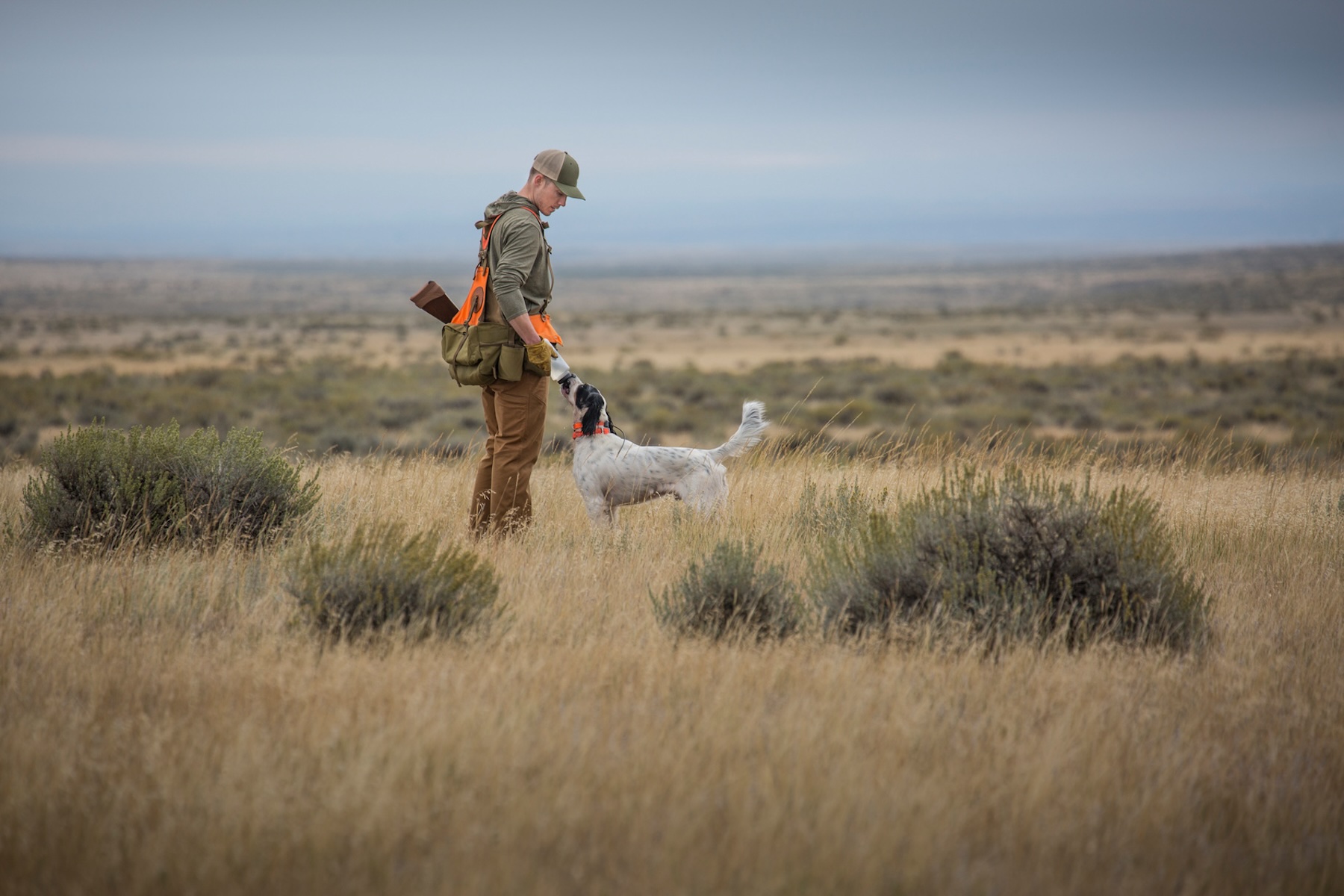
Setters are another versatile breed of bird dogs with longer coats and slim builds. They’re usually pointing dogs that range at distance, and are also known to (and expected to) retrieve birds. —N.K.
Common Setter Breeds
- English setter, which includes the disputed Llewellyn setter
- Gordon setter
- Irish red and white setter
- Irish setter
Spaniels
Spaniels are smaller-statured bird dogs known for their commitment to finding, flushing and retrieving a variety of upland game in all types of habitat.
Common Spaniel Breeds
- American water spaniel
- Boykin spaniel
- Cocker spaniel
- English cocker spaniel
- English springer spaniel
- Field spaniel
- Irish water spaniel
- Sussex spaniel
- Welsh springer spaniel
Hound Dogs
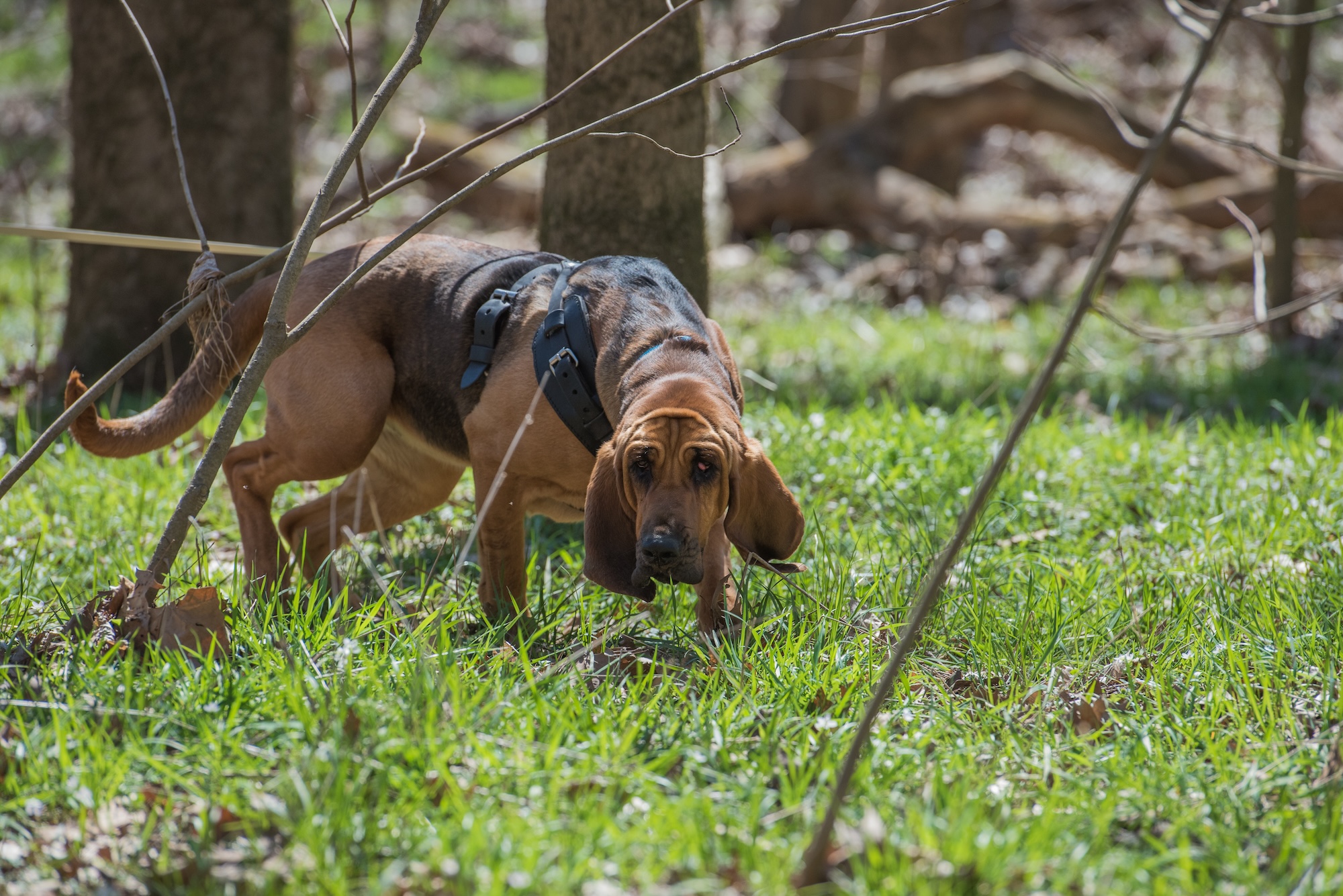
While all hunting dogs rely on their noses, scenthounds are next-level for following smells in the air, on the ground, and across water. Oddly enough, the long ears on many scenthound breeds help stir up scent on the ground and push it into their large naval cavities. Their high endurance allows hounds to trail scent for miles, and their shifting vocalizations let their handlers know exactly where they are on the hunt, including trailing, chasing, and baying game. —N.K.
Common Hound Breeds for Tracking Game
- American English coonhound
- American foxhound
- Basenji
- Basset hound
- Beagle
- Black and tan coonhound
- Bloodhound
- Bluetick coonhound
- Dachshund
- English foxhound
- Harrier
- Norwegian elkhound
- Plott hound
- Redbone coonhound
- Treeing walker coonhound
Other Hunting Dog Breeds
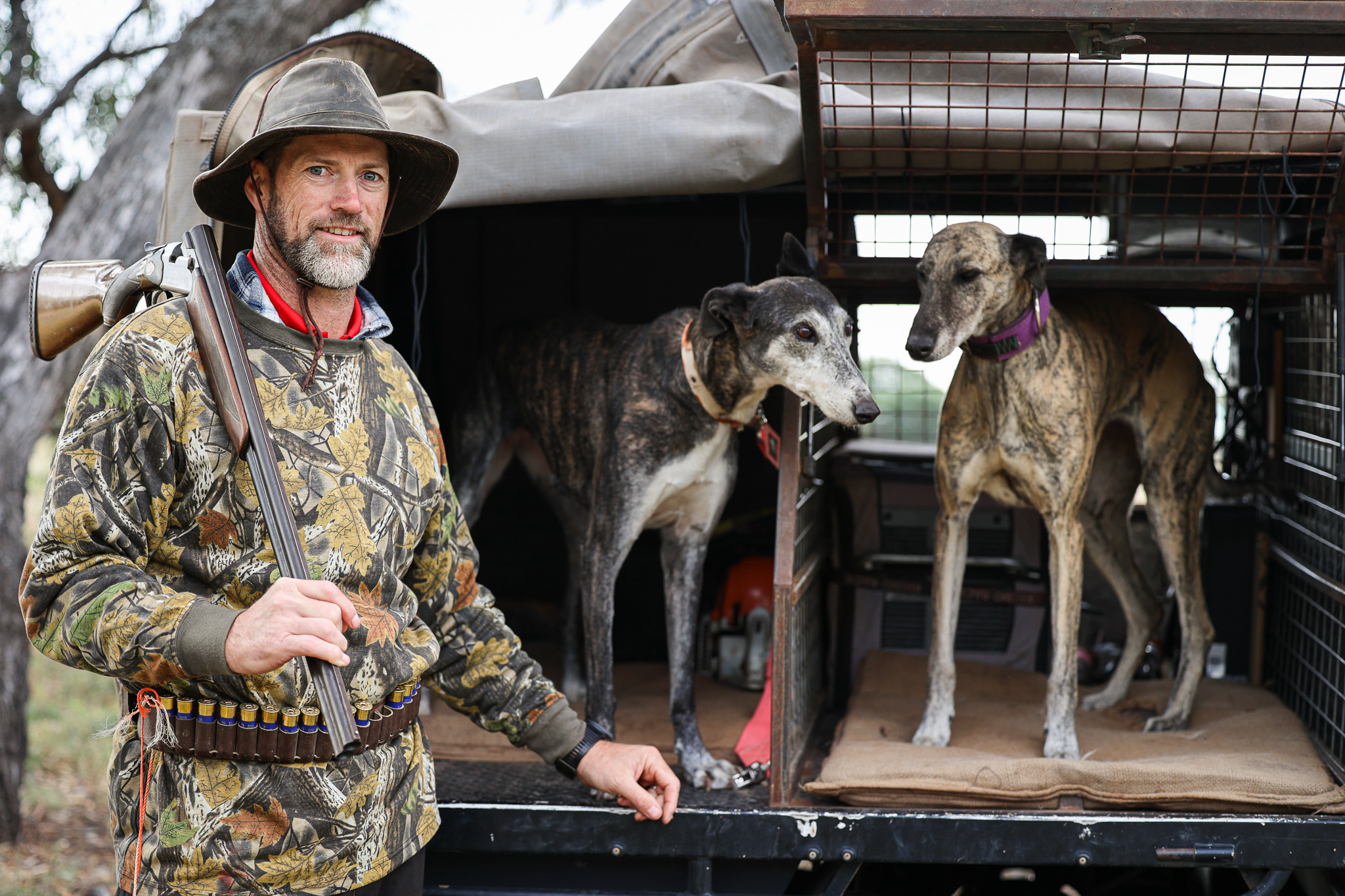
Of course, there’s no such thing as a comprehensive list of hunting dogs. There are many breeds that don’t fall neatly into the AKC-defined categories above, as well as up and coming and underrated dog breeds. Jack Russells are the preferred hunting and tracking safari dogs of South Africa, while sighthound breeds make good coyote dogs, and many other breeds make fine coyote decoy dogs. I even know a Vizsla that’s a kick-ass falconry dog; the breed originated in Hungary to protect falcons and hawks in the field. —N.K.
- Appalachian turkey dogs (not recognized by the AKC)
- American leopard hound
- Bavarian mountain scent hound
- Catahoula leopard dog
- Dogo Argentino
- Greyhound
- Irish wolfhound
- Jagd terrier
- Karelian bear dog
- Russell terrier
- Mountain cur
- Mountain feist (not recognized by the AKC)
- Scottish deerhound
The Best Hunting Dog for Each Type of Game
While many different breeds excel at hunting the same type of game, our experts have picked our favorite sporting breed for a specific species, including everything from roosters and rabbits to bears and wild hogs.
The Best Quail Dog: English Pointers
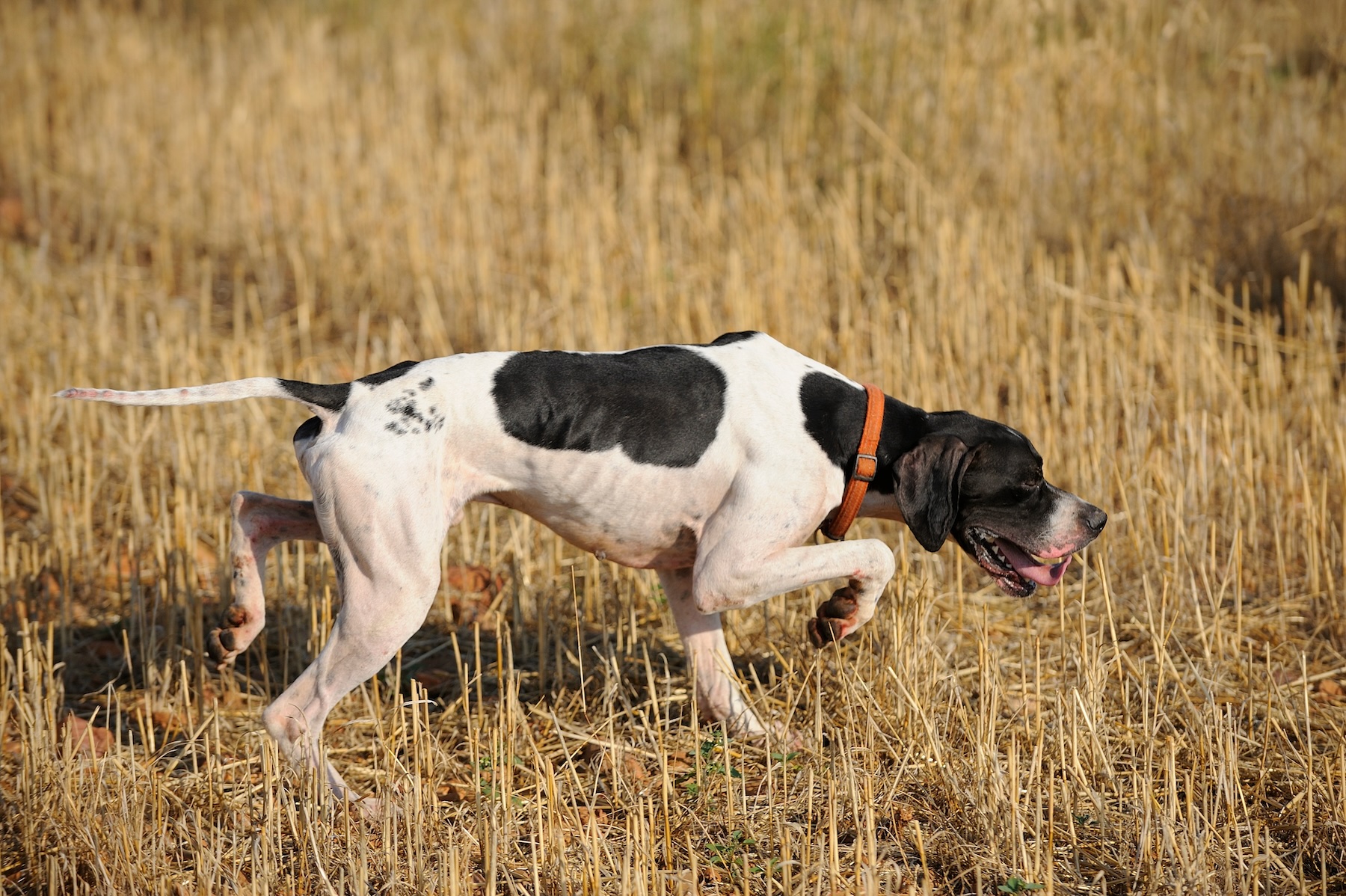
The epitome of all pointing breeds, the slick, speedy and bird-obsessed “English” pointer won’t stop in its endless pursuit of feathers. With a sky-high prey drive, pointers will work the harshest territory in search of a covey – from Texas, where everything pricks, sticks or bites, to the humidity of a Georgia pine plantation. Their thin coat allows them to stay cool in the heat and their endurance ensures there’s enough dog for any hunt. In this capacity, they’re perfectly suited for the quail-rich South, but fair just as well in northern locations.
Read Next: The Best Duck Hunting Dogs
A wide range of lines exists for every hunter, from all-age field trial dogs that can perform for the horseback hunter to closer-working stock that might be desired by woodcock or grouse hunters. If you search them out, you can even find pointers (which are typically high energy dogs that only care about the hunt) that even make suitable family dogs.
Pointers have dominated the field-trial circuit at the highest levels for decades. They work hard, fast and possess a style rivaled only by the pageantry of setters. A well-trained pointer holding staunchly, with tail and head held high, is a sight that any dog man can appreciate—and that ability to lock on and hold for as long as necessary while a covey dances just off its nose is a testament to both the breed’s drive and trainability.
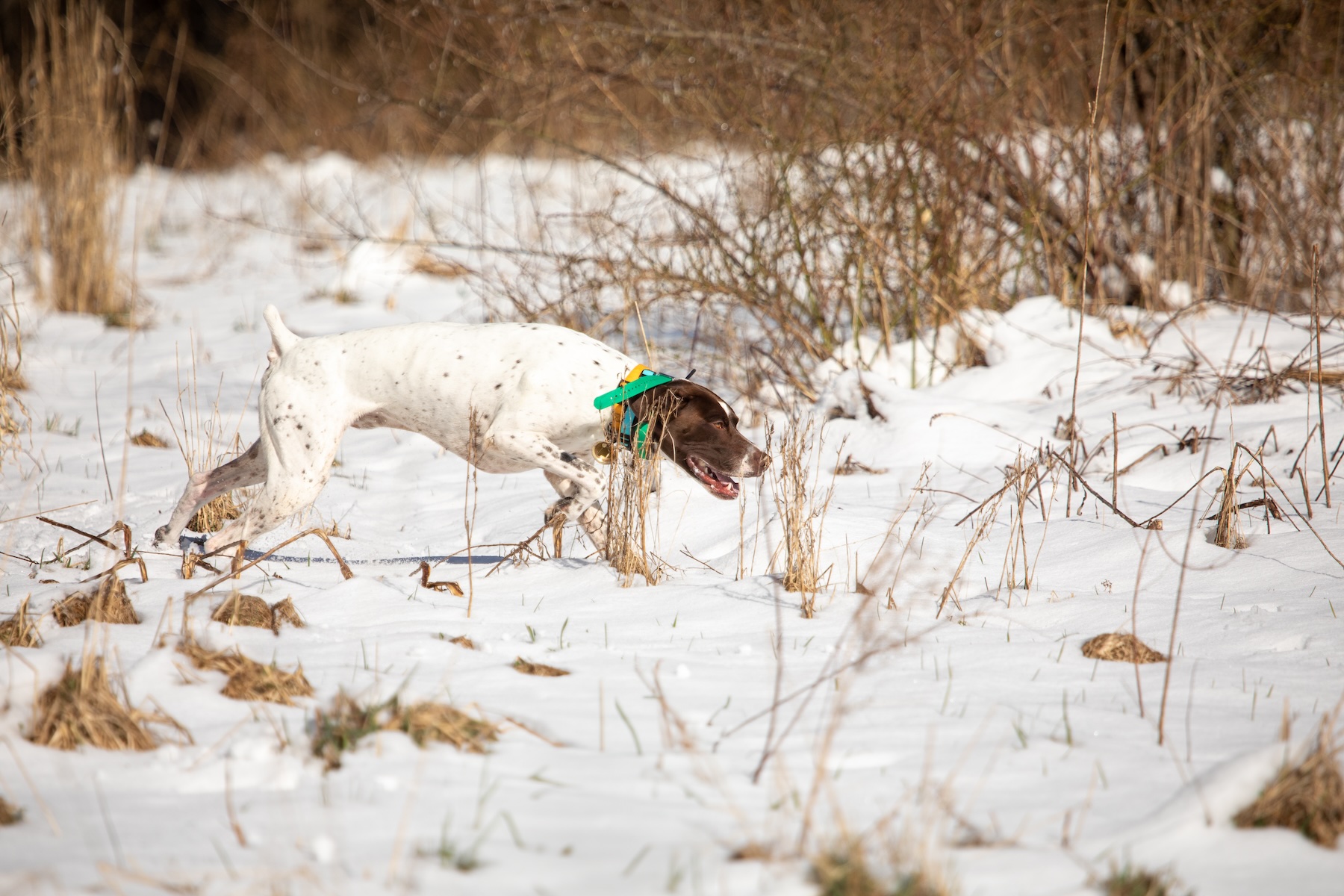
The Best Pheasant Dog: German Shorthair
Chukar, the most frustrating and physically demanding upland bird to hunt in the country, require a dog with a good nose and the stamina to keep up. The Mr. Red Legs is notorious for running up the steepest, nastiest hillsides in an attempt to elude (or perhaps kill) hunters. Just as the hunter catches up to the bird at the crest, the birds take wing and fly to the bottom of the canyon just ascended.
To successfully hunt chukar, you need to be in shape and so does your dog. A pointing breed with an exceptional nose works best; the dog can pinpoint the birds without bumping them, giving the guns a chance at an in-range shot that doesn’t come as a complete surprise.
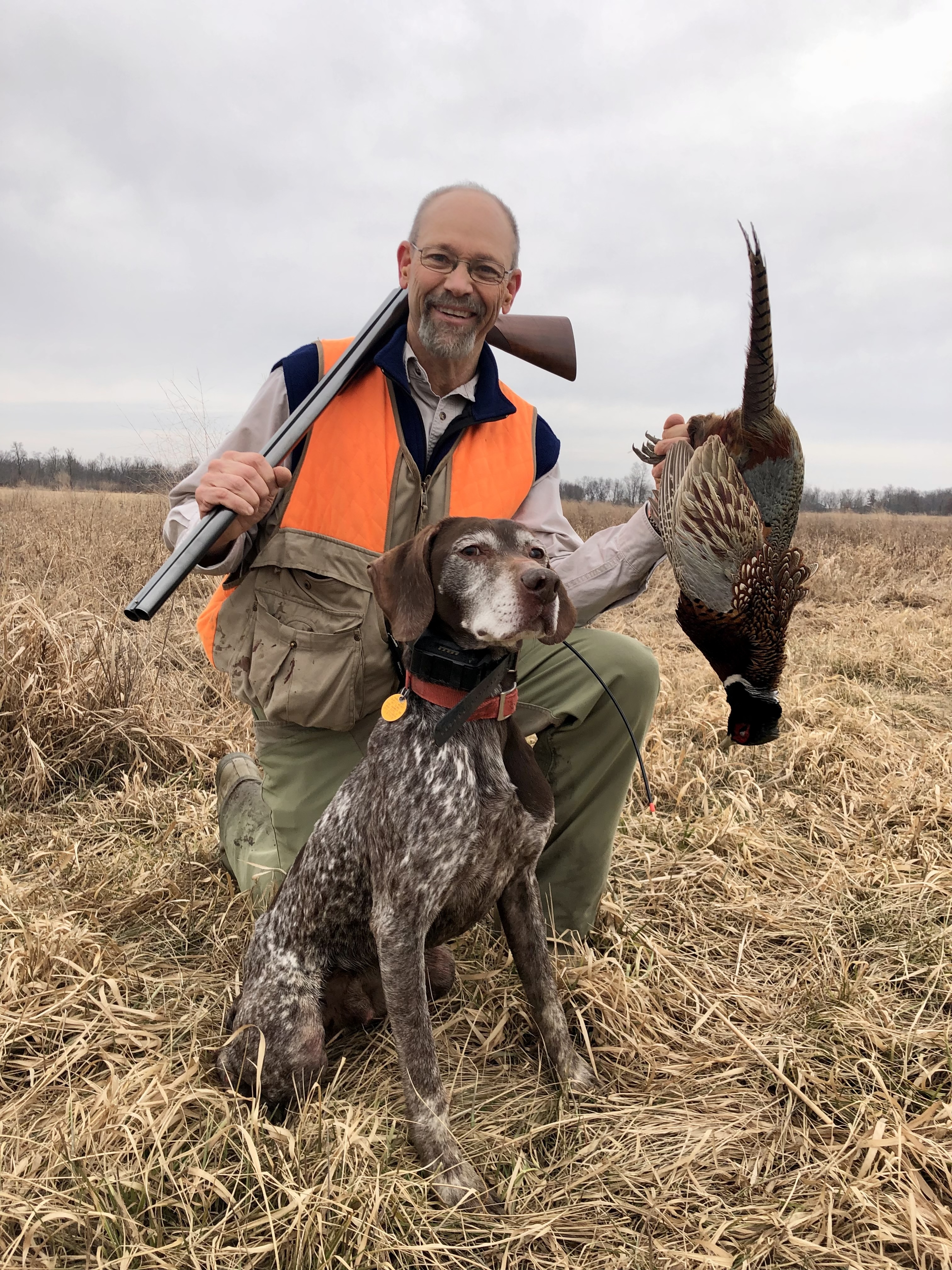
The German shorthair is the dog that can accomplish all of those tasks. It possesses the intelligence to learn to outwit the wily chukar, as well as a keen sense of smell to scent and point them from a safe distance. Perhaps as important as their scenting ability, their physical makeup allows them climb the rugged hills chukars call home and withstand the heat and brutal terrain.
Recognized by the AKC in 1930, shorthairs originated, not surprisingly, in Germany and were a combination of pointing bird dogs and hounds. While they’ll make hunting chukars a less brutal proposition, they’re an all-around bird dog adept at pointing (and even retrieving) everything from quail to pheasant. They’re also one of America’s most popular dog breeds, ranking at No. 10 nationwide in 2023. —B.L.
The Best Dog for Pointing and Retrieving Wild Birds: Brittany
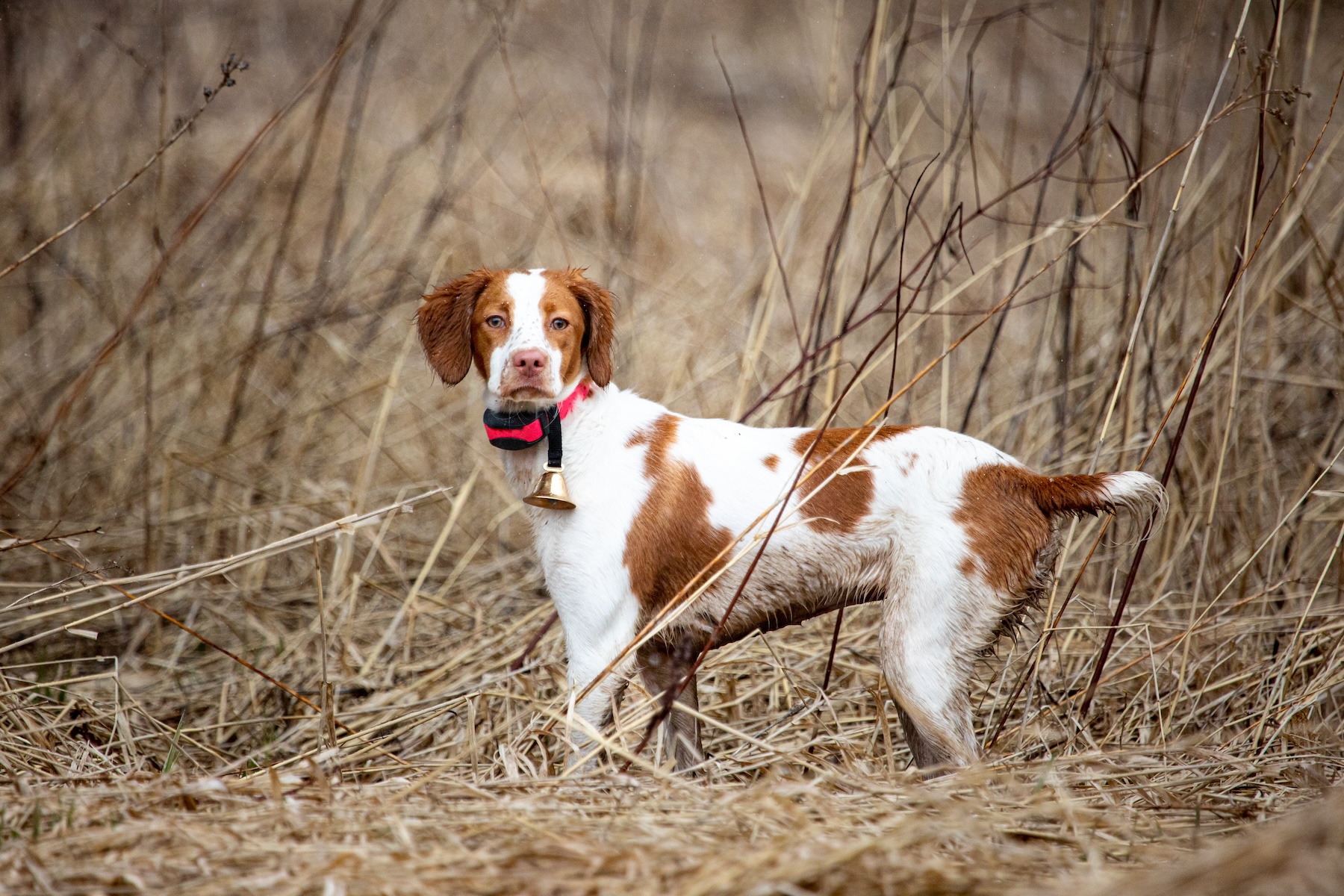
A versatile, energetic, and amiable hunting dog, the Brittany is a good example of a crossover sporting dog. Formerly known as Brittany spaniels when first acknowledged by the AKC in 1934, they were renamed in 1983 when everyone got together and decided they could point birds at least as well as they could flush them. I grew up with a Brittany who was trained to point and retrieve quail. She was such a high-energy pup that my mom threatened to kick her out of the house, but she matured into an obedient, calm house dog who ran marathons and lived to the ripe old age of 17. So if you opt for a Brittany, be prepared to exercise her often.
Meanwhile, Brittanys have more dual championships (show and field trial) than any other sporting breed, which proves they have hunting instincts and good looks. They’re shorter than setters but longer-legged than spaniels, which produces a compact yet athletic dog. Brittanys are most often used for upland bird hunting, but have also proved themselves as waterfowl dogs and in activities like agility, dock diving, and flyball.—N.K.
The Best Duck Dog: The Labrador Retriever
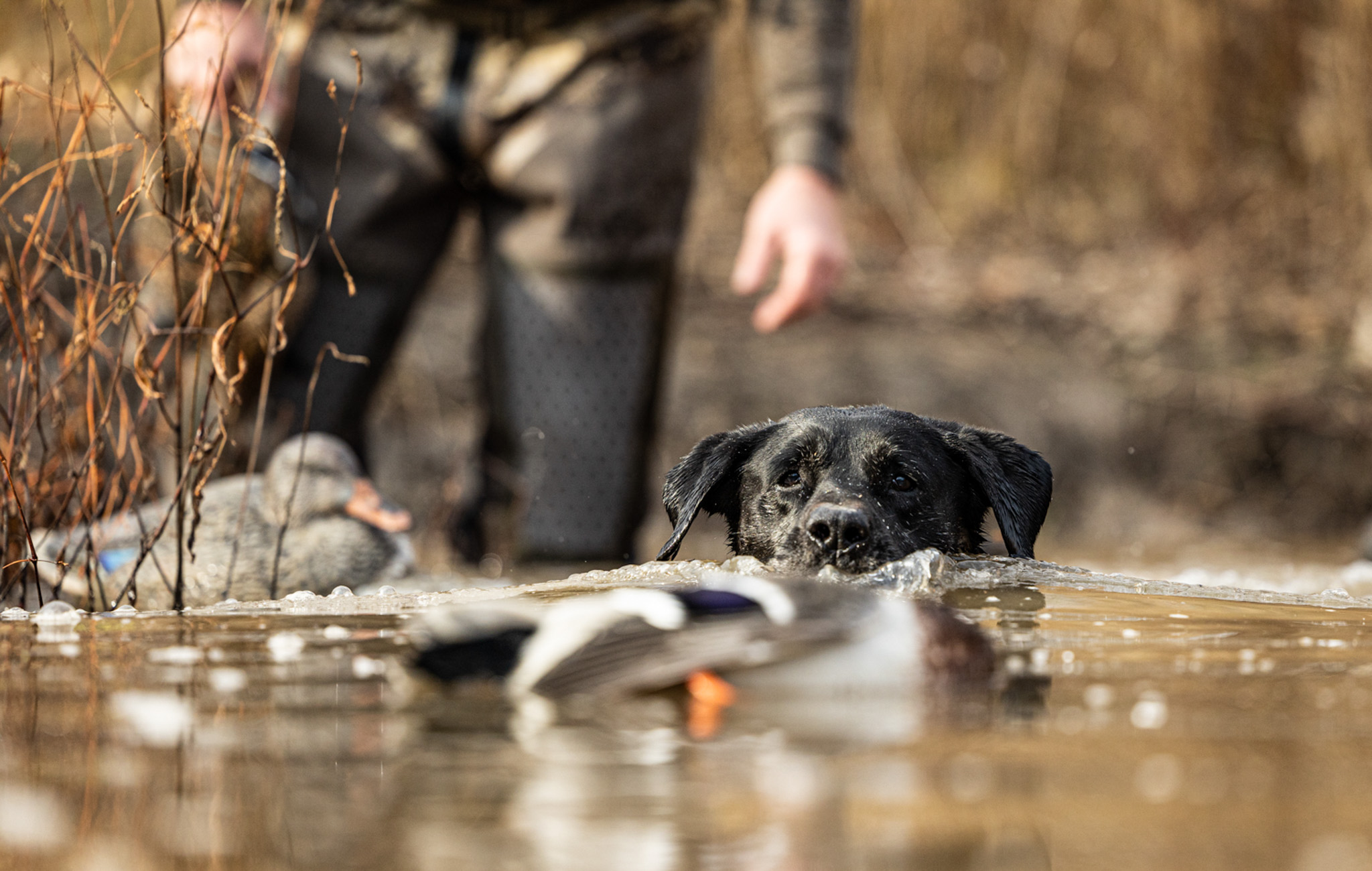
Without a doubt Labradors are the best all-around waterfowl dog you can find. They were bred for marking, retrieving, and delivering waterfowl to a hunter’s hand. Their physical attributes make them perfect for cold-water retrieving: a double coat for warmth and water repellency, webbed feet, a compact, muscled body; a thick otter tail for balance and maneuverability in the water.
As perfectly suited physically as they are for swimming and retrieving, Labradors also mature faster than other breeds. This allows them to grasp training at a younger age and handle the learning curve of taking whistle and hand signals at great distances while performing blind retrieves, as well as the complex concepts involved in field trials. After basic training in his first summer, I was able to hunt my 8-month-old Lab in North Dakota. He was steady to shot, retrieved to hand, and stayed quiet in our hide.

Labs are the all-American dog that can hunt all day and then come home and play with the kids. Labrador retrievers are the most popular hunting dogs in America thanks to their versatility, eagerness to please, and affectionate temperament that makes them well-suited as a family pet and versatile field dog. Labs were the No. 1 overall dog breed in the U.S. for 31 years until they were recently dethroned by the French bulldog in what can only be described as an egregious lack of judgment by the American public. I would also be remise if I didn’t mention that Labs are amazingly versatile dogs that make great upland hunters, too.
Runner Up for Best Duck Dog: Golden Retrievers
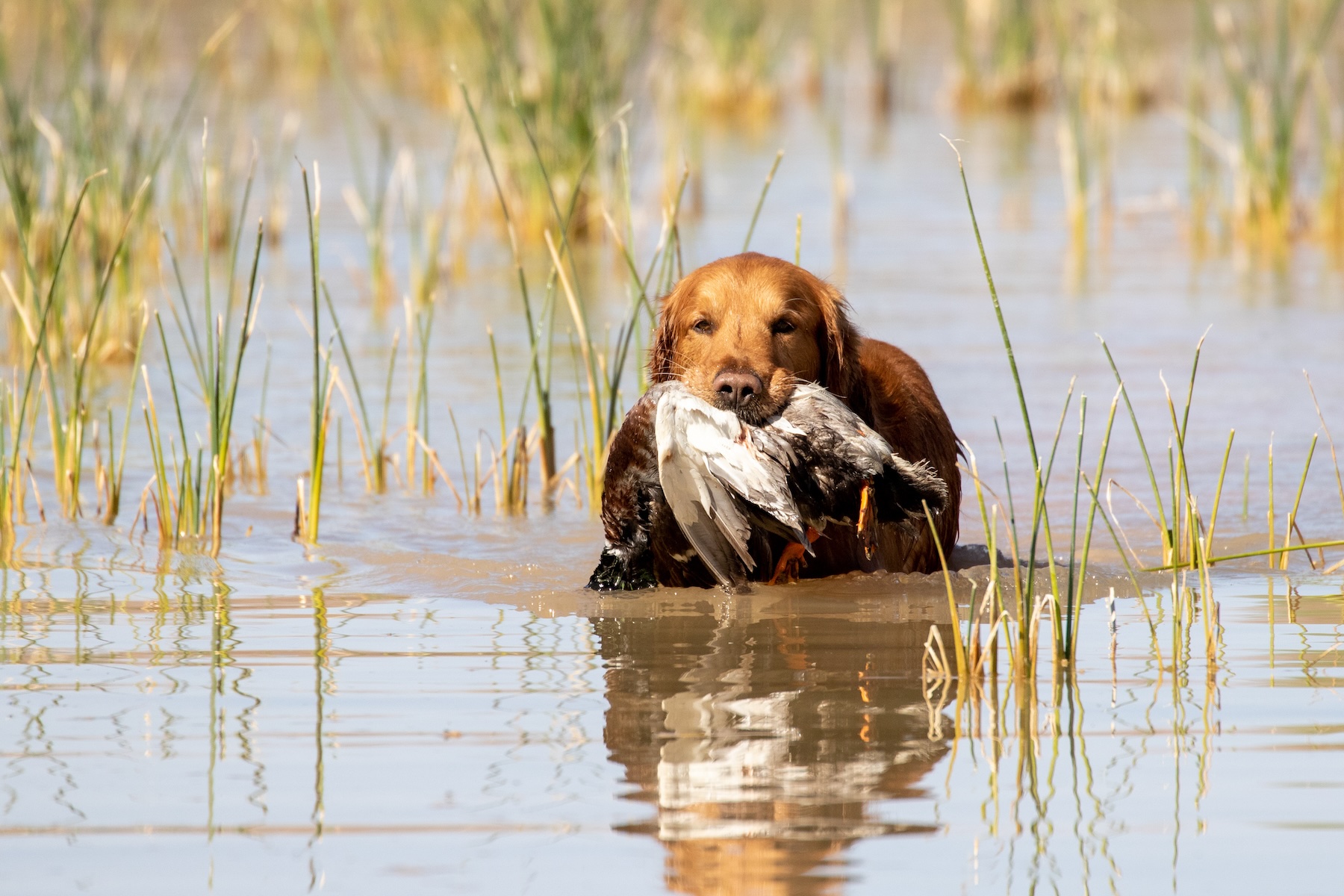
Although goldens have become widely adopted as the preferred family dog of many Americans (they’re the third most popular dog in America, just after the Lab), they were originally bred as waterfowl dogs in Scotland. Today, golden retrievers are less commonly run by American duck hunters, in part because they have a reputation for not being as tough or driven as American Labs. But if you find the right field lines, you’ll discover Golden retrievers make excellent hunting dogs that are easy to train, eager to please, fun-loving, and well-suited for family life.—N.K.
The Best Sea Duck Dog: The Chesapeake Bay Retriever
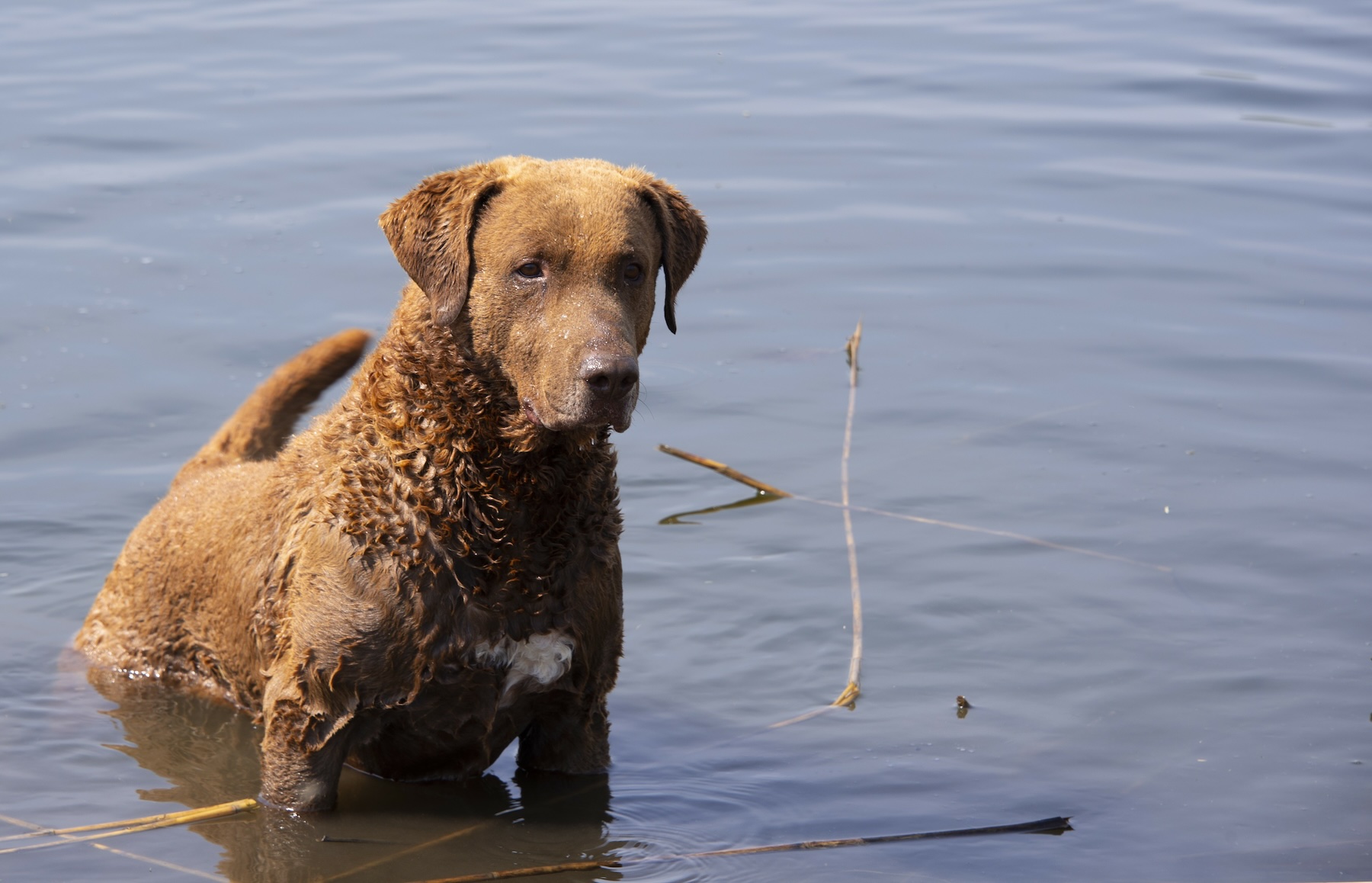
The only retriever bred completely within the U.S., Chessies embody the American hunter: hard working and utilitarian. Used to ply the cold, rough waters of the Chesapeake Bay during the market-hunting days, Chessies picked up the hordes of waterfowl shot by hunters wielding punt guns. They were then tasked with protecting the guns, gear, and boat at the docks while the hunters caroused in waterfront saloons – a one-man dog trait retained to this day.
Chesapeakes are more solidly built than Labs, and have a thick and oily coat to help repel cold seawater, as well as webbed feet for swimming. They love to swim and will repeatedly leap into icy water with eagerness to make retrieves. Their disposition – one of determination – makes them perfectly suited mentally for the tough task of sea-duck hunting.
A slower-maturing dog, Chessies can be tricky to train; you can’t use the same tactics as you would with a Labrador. Trainers must be more highly attuned to their dog, and know when they’re being obstinate and when they’re refusing commands out of confusion – it’s a fine line. That said, Chessies will perform all the tasks required of a waterfowl-hunting retriever, and they’ll do it in the harshest conditions. —B.L.
The Best Grouse Dog: English Setters
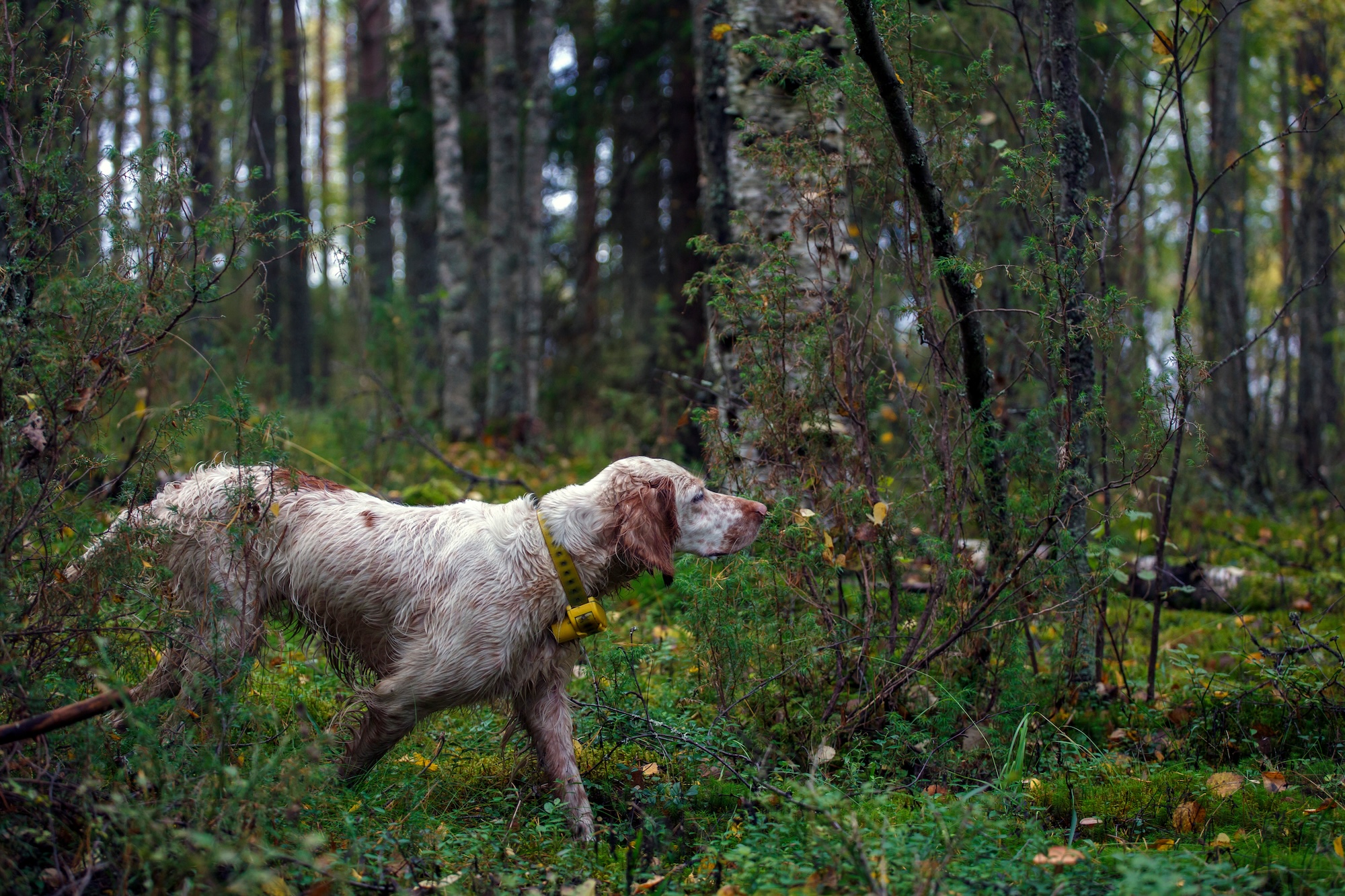
There isn’t a more regal-looking dog than an English setter and no more classic scene than the heavily feathered dog on point in the grouse woods. When it comes to good grouse dogs, a nose keen enough to scent the spooky birds without bumping them is the number-one requirement.
Setters, with their propensity to work closer than an English pointer, will stay in sight, holding a point which allows the hunter to get into position and ready a shot. When shooting at near ghosts in the thick forests of the upper Midwest and Northeast, a second or two head start with an inkling of direction can make all the difference in a hit bird and a whirling flush that only scares the bejesus out of you. After that shot, finding a downed grouse can be a challenge, so make sure your setter enjoys retrieving and force fetch him to cement that command.
Like many dogs who have seen their popularity rise, English setters have two distinct lines: conformation and field. For hunters, the smaller, more lightly feathered field line is the only way to go. An interesting setter fact: an English setter named Adonis was the first dog registered with the American Kennel Club. —B.L.
The Best Versatile Bird Dog: Boykin Spaniel
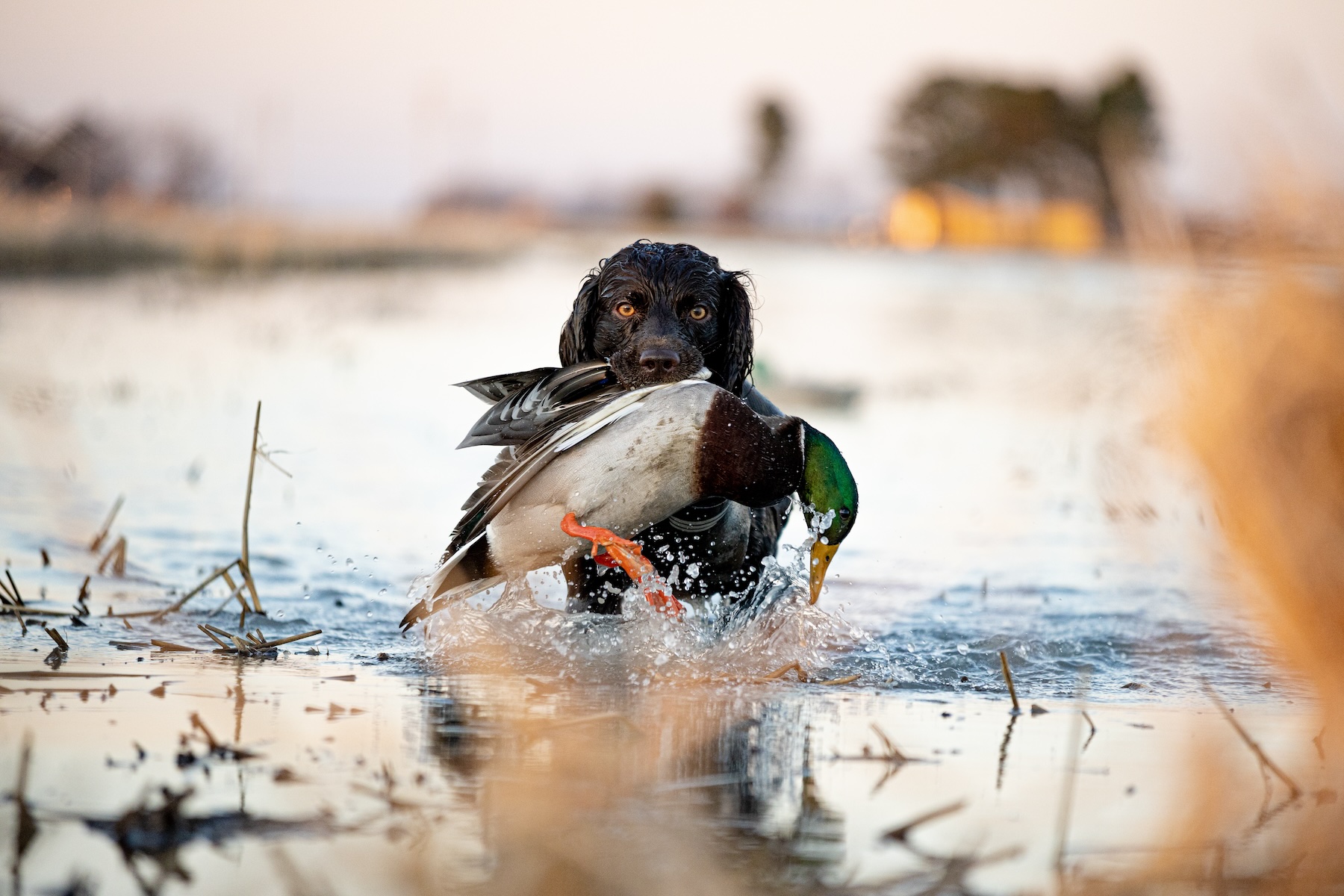
Any of the spaniel breeds have centuries of game-flushing history behind them — except for the ever-popular and versatile Boykin spaniel. A South Carolina hunter named L. Whitaker Boykin was given a stray white spaniel in the first decade of the 20th century. He bred the dog and its offspring to American water spaniels, pointers, retrievers and springer spaniels, and a few generations later a separate breed was developed. Boykin gave his dogs a lot of hunting chores, including scattering flocks of wild turkeys in the fall. —C.M.
Runner Up for Best Versatile Bird Dog: English Springer Spaniel
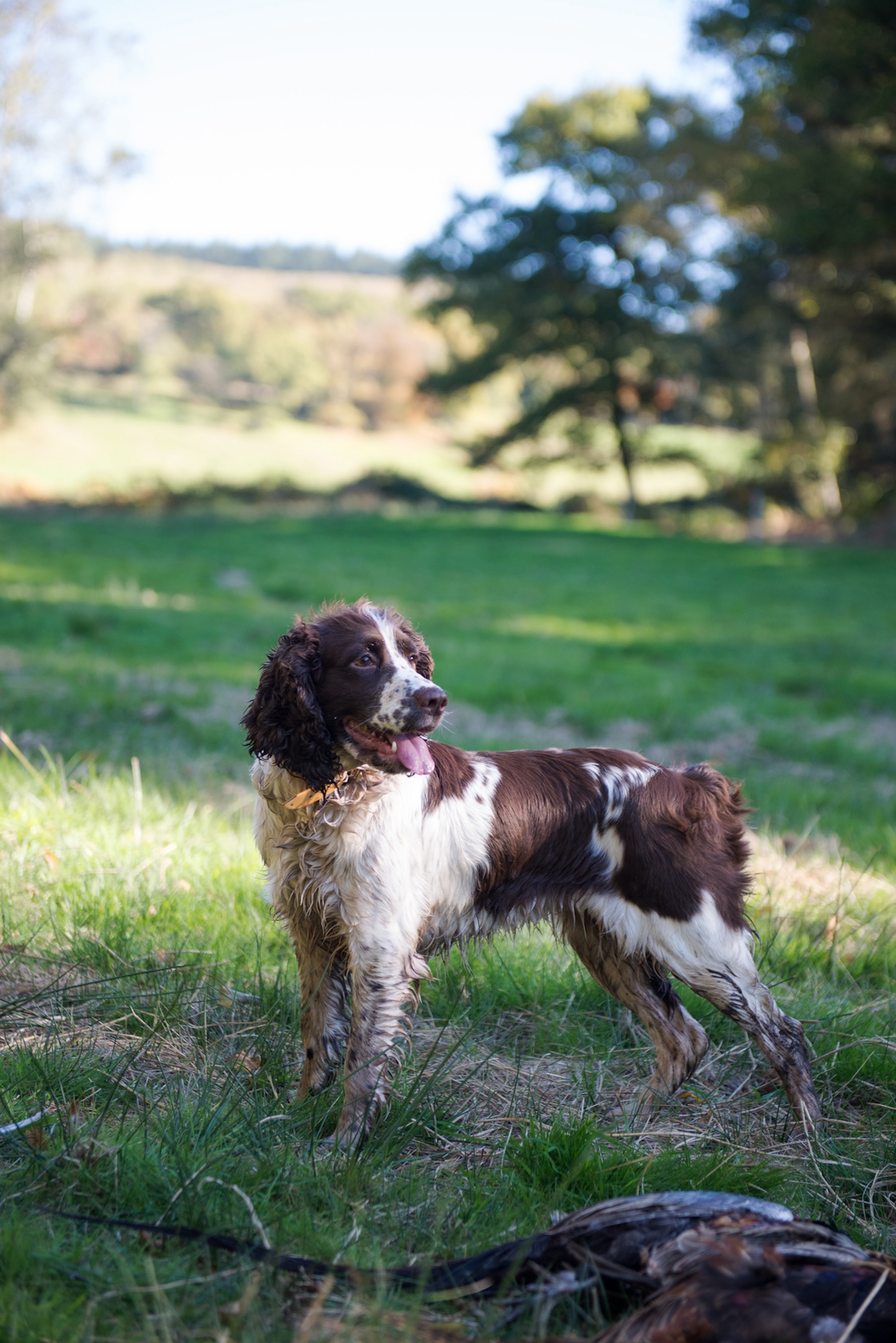
If I couldn’t have a Lab in the pheasant fields, I’d go with an English springer spaniel. Because of the run-and-gun nature of pheasants (not to mention the tricks an experienced rooster can pull), and the fact that unlike quail you can’t shoot hens, I prefer a flushing dog over a pointer. Springers can course an upland field — be it corn, CRP, or cattails — and put birds up with the best of any breed. They also do a fine job on waterfowl. Smaller in size than either a Lab or GSP, springers have no problem covering ground on a hunt thanks to their abundant energy level. Their retrieving instinct is stronger than pointing breeds — a boon when a winged rooster makes a run for it. —B.L.
The Best Rabbit Dog: Beagle
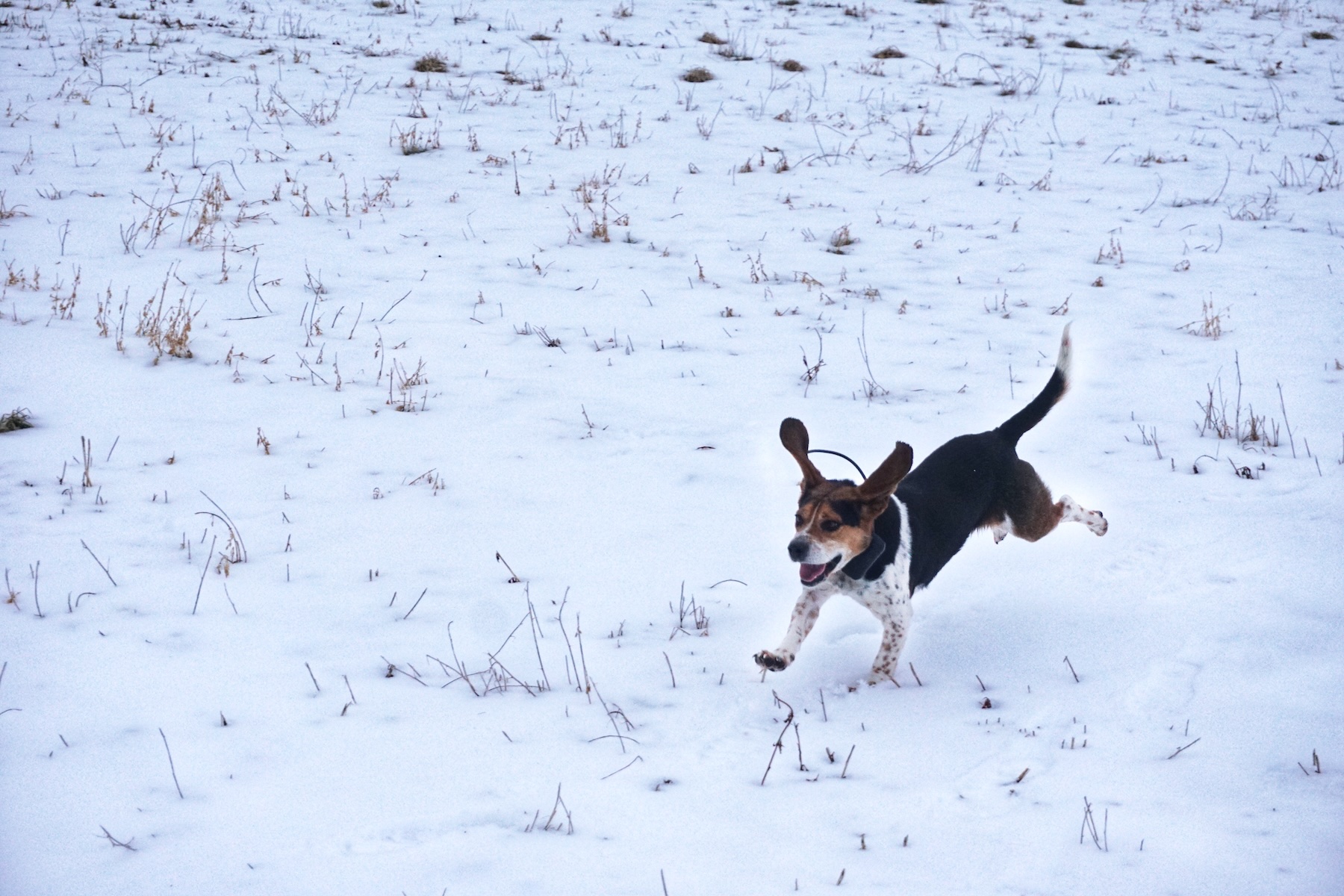
With their incessant barking and baying, beagles are the embodiment of the excitement of a rabbit hunt and often a kid’s first introduction to hunting dogs. They’re also the best canine for chasing bunnies in circles to give hunters a shot.
Diminutive and full of vigor and character, the tri-colored beagle has been used for small game hunting for nearly 200 years. A scent hound, they possess one of the best noses in the canine world (the bloodhound is the indisputable leader of the pack when it comes to scenting abilities, with the basset hound and beagle following as close runner-ups). That supreme scenting ability, combined with speed and agility, make beagles the top choice for rabbits, and their propensity to bark ensures that you’ll never lose track of their whereabouts.
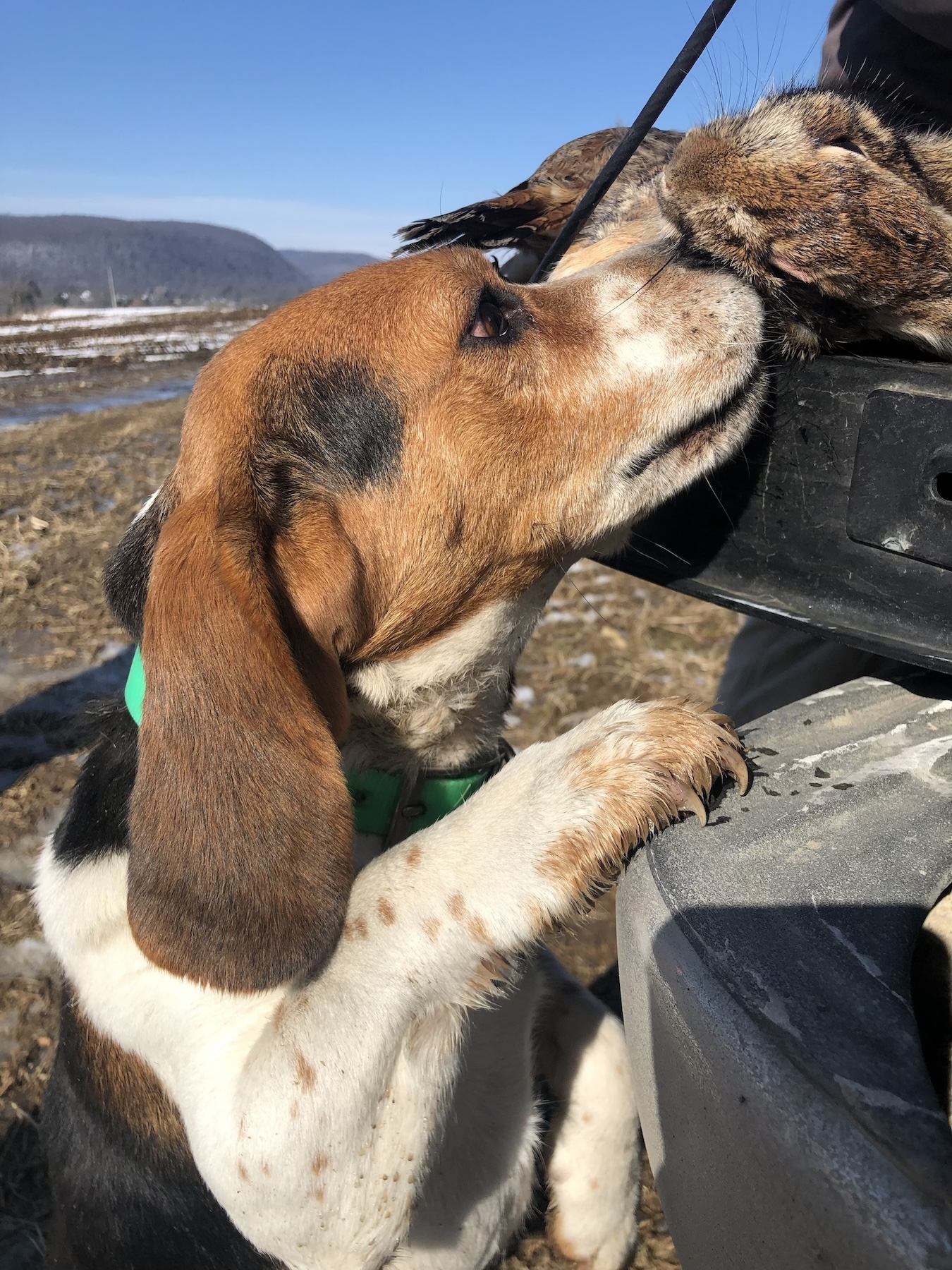
While beagles stand out when coursing the briar patches for bunnies, their scenting abilities are so keen that they’re used as detection dogs as well. Their even disposition and friendly demeanor make them a popular family pet (they held the AKC’s top-registration spot from 1953 to 1959, and still rank in the top 10). Because of their small size, beagles don’t need a large house or yard — giving even suburban-bound houndsmen a chance to get in on the chase.
The Best Deer Hunting Dog: Foxhounds
Few dogs share such a rich American history as the foxhound. Bred here in the U.S. from English foxhounds and a smattering of other breeds, they were the dog of choice for George Washington — and he is often credited as the father of the breed.
Developed in Maryland and Virginia (Washington’s stomping grounds) for fox hunting, the dogs are perhaps the best breed for running deer drives popular in the area to this day. To run deer successfully, you need a rangy, energetic dog with plenty of stamina, a good nose and a desire to sing his love of the hunt for all to hear. And that is the essence of the American foxhound. They pack well with other dogs and can put reluctant deer on their feet and keep them moving better than many other popular breeds, such as the shorter-leg beagle.
Unlike some other scent hounds, foxhounds are “running” hounds, as opposed to “treeing” hounds, and they love the chase much more than the end result of the hunt. As veteran outdoor writer Doug Howlett, who participates in deer drives in his home state of Virginia, says: “American foxhounds will run through hell to get a deer, or a fox for that matter.”
The Best Raccoon Dog: Treeing Walkers
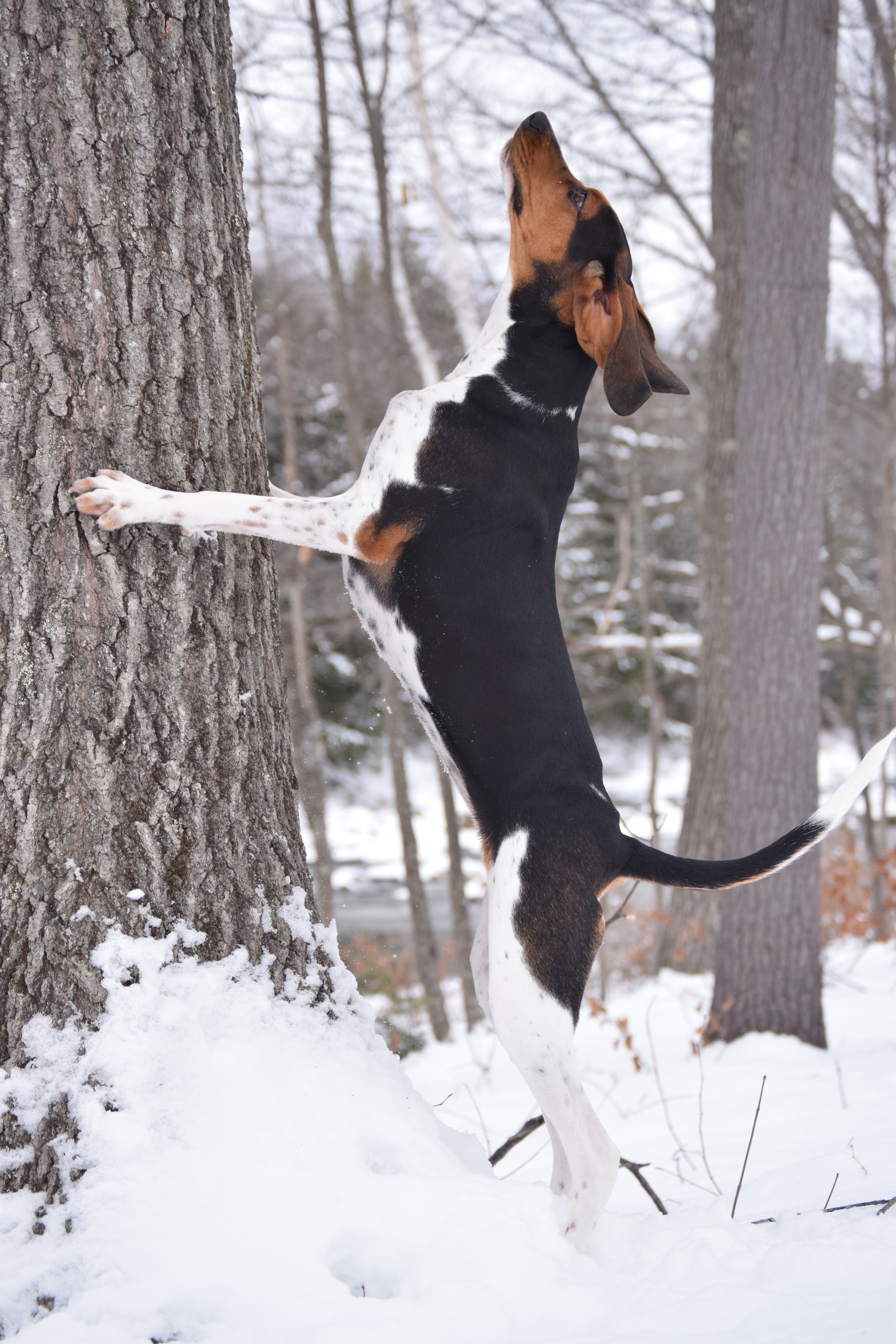
Perhaps the best all-around hound, Walkers are prized for their great nose, prey drive, speed, voice and ability to chase down everything from cougars, bears, and coyotes to raccoons, squirrels, and deer. The granddaddy of all hounding sports however, is coon hunting, and it’s tough to argue the abilities of a Walker when it comes to putting them up a tree.
Walkers were bred in the U.S. and descend from foxhounds. They tend to be more “hot-nosed” than some other hounds, such as the bluetick coonhound, which makes them ideal for competition, as well as “quick” hunts; those that you don’t spend all night tracking a single animal across multiple counties. With their distinctive bawl and chop, tenacious stamina and hot nose, Walkers will keep houndsmen in the coon action all night.
The Best Bear Hunting Dog: Plott Hounds
When you chase black bears in their own habitat, you need a dog that’s smart, tough, gritty, and able to find old scent and track it. The Plott hound is the perfect dog to do that; they’re muscular, athletic and tenacious on both the track and after cornering a bear (or cougar or wild hog). Their short, choppy barks when in pursuit allow the hunter to follow their direction but without impacting their ability to chase.
Plotts can find old scent and track it over heavily wooded hill-and-dale that black bears call home. They’ll fight and tree a black bear in a pack or even by themselves (although it’s unadvisable to let them square-off alone). Descendents of German big-game dogs brought to the contient in 1750 and used for wild boar hunting, Plotts were developed in in North Carolina by the Plott family, who still reside in the area and still breed the dogs
Recognized by the United Kennel Club since 1946, Plotts only received recognition from the AKC in 2006, despite their lengthy and well-documented ancestry. But for houndsmen and big-game hunters, recognition by a governing board is of less concern than performance in the field … as it should be.
The Best Mountain Lion Dog: Bluetick Coonhounds
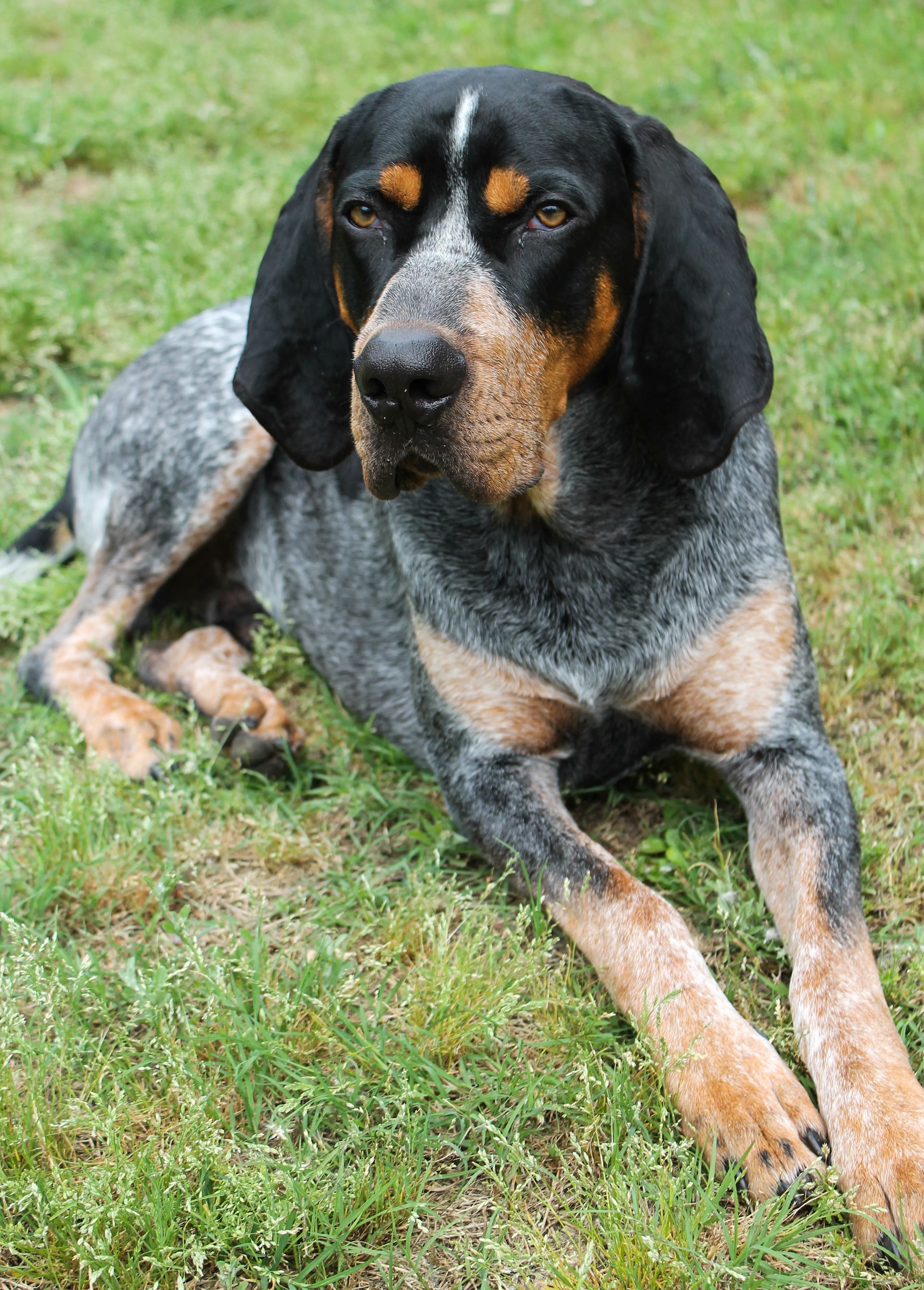
Perhaps the most elusive animal in North America, mountain lions, can live about any place where there are enough deer to feed them. They prowl, almost invisibly, close to homes, towns, and near hunters, hikers, bikers, and campers. To track this big cat, you need a hound with a good nose and stamina. When cornered, the hound needs to have the tenacity to stand toe-to-toe with a powerful enemy capable of killing with ease.
The bluetick coonhound can pick up an old trail (this is key when cutting cougar tracks) and follow it with just enough speed and more than enough staying power to corner a cat in a tree or on a cliff’s edge. The bluetick’s bawl and chop keeps the cat moving, or bayed when the time comes.
Photos: Hunting Raccoons on Muleback with Hounds
Recognized by the AKC as a standalone breed in 1946 (they were originally categorized as foxhounds), blueticks are descended from the Bleu de Gascogne hound of southwest France, the English foxhound, the cur dog, the American foxhound, and the black and tan Virginia foxhound. Purposefully bred to be slower and colder-nosed than foxhounds, blueticks have enough athleticism to keep up with a cougar. —B.L.
The Best Fall Turkey Dog: Appalachian Turkey Dog
Humans have been selectively breeding canines to carry out specialized tasks for tens of thousands of years, and it doesn’t get much more specialized than breaking up flocks of fall turkeys.
While setters are a popular choice for many turkey doggers, it’s hard to argue against the logic and breeding of Appalachian turkey dogs. An unofficial breeding not recognized by the AKC, turkey dogs are a combination of setter, pointer, and Plott hound. Each purebred foundation stock contributes attributes to the turkey dog, among them. From setters it’s stylish looks, drive for feathers, and biddability. Pointers contribute stamina, speed, prey drive, range. Plotts provide the desire to chase, track, and bark.
A fall turkey dog needs to be a big runner that can track by air and ground scent or use its eyes to find flocks of birds. Once it does, it busts the flock and gives chase while barking like a hound on scent, scattering birds in all directions so that the group is busted into singles. The dog then returns to the hunter and curls up and waits patiently; much like a waterfowl dog in the blind.
While I’m typically a skeptic when it comes to mixed breeds in the field (there are plenty of mutts that can get it done, but if you’re betting time and money, I prefer to play the odds), selective breeding for specific tasks has brought us nearly every breed in existence today — and the Appalachian turkey dog fills a hunting niche requiring specific attributes derived from each of the purebreds making up its lineage. —B.L.
The Best Blood-Tracking Dog: Bavarian Mountain Scent Hound
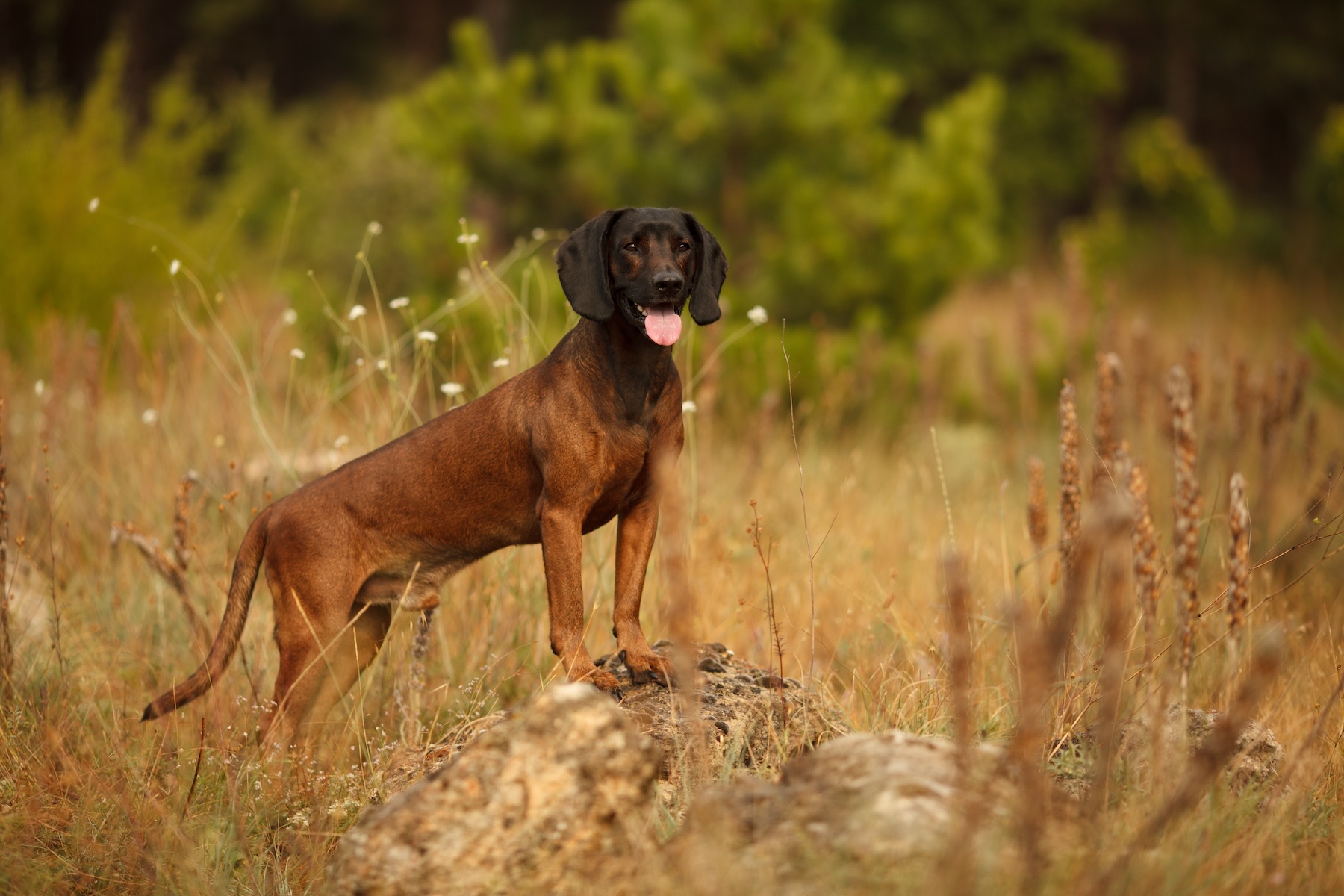
Many hunting dog breeds — particularly hounds— can be trained to blood-track hunter-shot deer and help recover them. But one of the top breeds for the increasingly-in-demand job is the Bavarian mountain scent hound, which has proven itself as an adept tracker. Full-time Wisconsin blood-tracker Dean Muthig puts his Bavarian mountain scent hounds on hundreds of tracks every season with superb results.
As the AKC points out, the breed’s “most notable trait is its outstanding ‘cold nose’ tracking ability. His nose is so acute, he can distinguish between the injured game he is hunting and other animals of the same species.” ( As trackers will tell you, dogs don’t follow the smell of deer blood, but rather the scent of the interdigital glands in their hooves. This can get confusing when a wounded deer criss-crosses trails with many other healthy deer.)—N.K.
The Best Hog Dog: Dogo Argentino
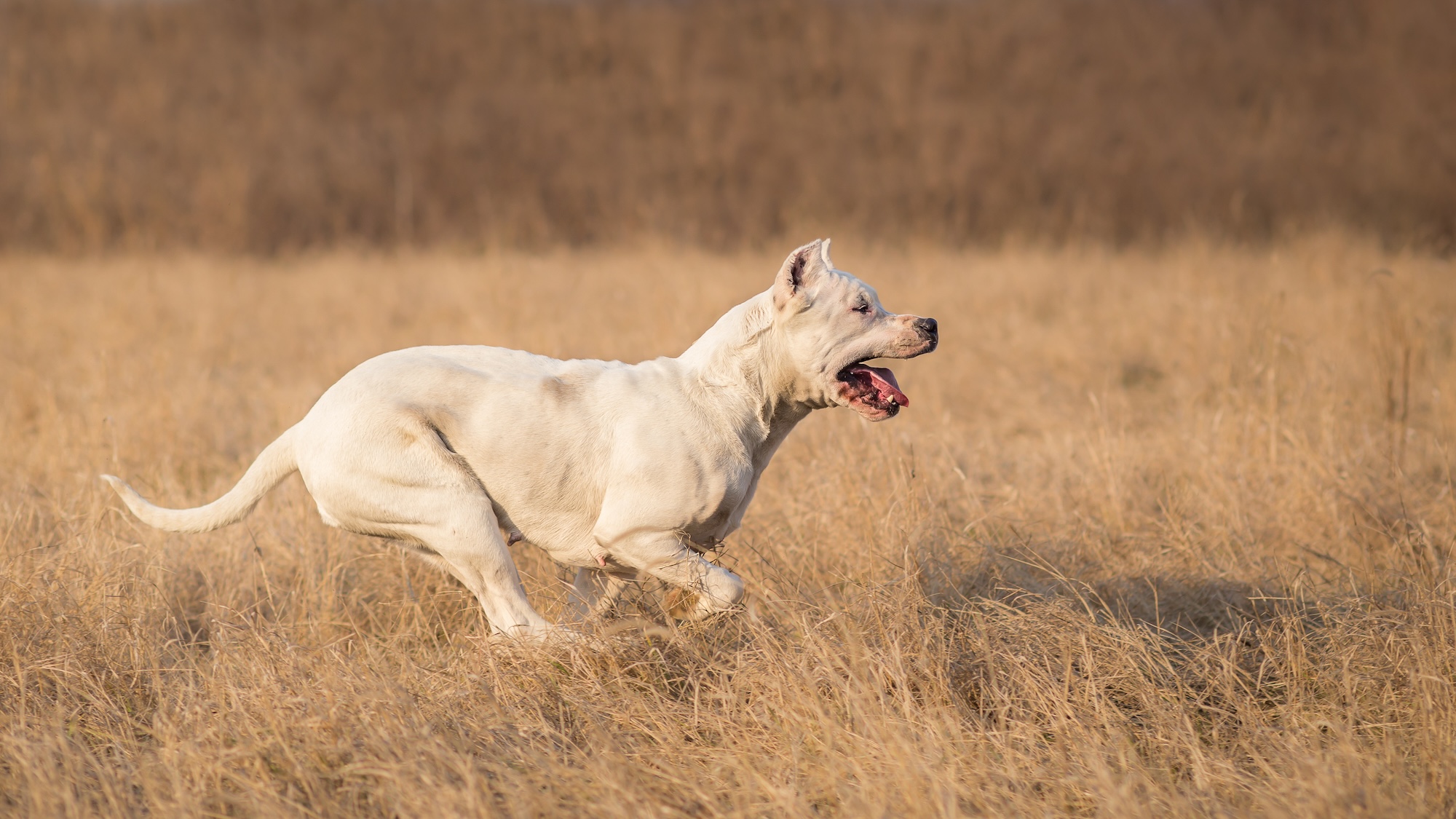
With the rise in feral hogs across the South, more and more hunters are running dogs to locate pigs. Typically, chase dogs find and pursue hogs until they decide to turn and fight. That’s when catch dogs move in and engage the tusked beasts, latching on to ears or any other appendage they can sink their teeth into, and hold them until the hunters arrive. Pit bulls and American bulldogs are a popular choice for catch dogs, but the dogo Argentino is even better.
Photos: The Hog Hunting Dogs of Alabama
Larger and even more powerful and athletic than a pit bull, dogos were designed specifically for big-game hunting. Originating in South America, dogos were bred for hunting pumas and wild hogs. Imported into the U.S. in the 1970s, they are perfectly suited for the hot climate and thick, rugged territory where hogs thrive in the South. Dogos have well-muscled bodies, a thin white coat. and the stamina to go toe-to-toe with a surly boar.
As intimidating as they look, and as fierce as they are on the hunt, dogo Argentinos are equally as friendly and loyal in the home; selective breeding for hunting, rather than the fighting ring, is what keeps this breed from displaying aggression toward people or other dogs: The function of running with chase dogs and hunting as a cooperative pack was a primary driver in their development.
The Best Squirrel Dog: Curs
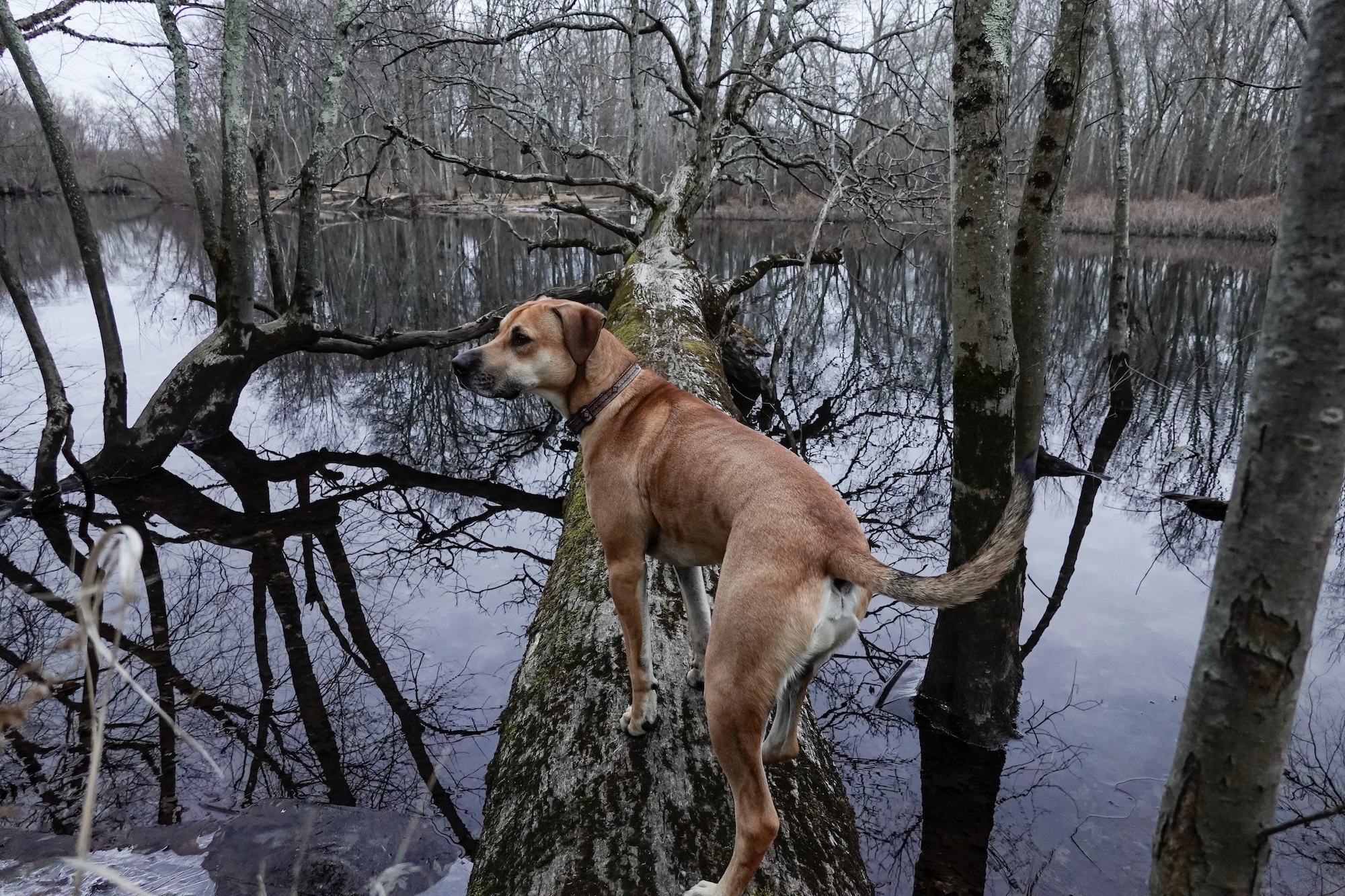
Bushytails. They’re often the first game kids are allowed to hunt, and they’re part of a rich hunting tradition, especially throughout the South and Midwest. You can hunt squirrels by walking through the forest and sniping them or sitting and calling to the territorial rodents. Or you can use dogs to locate and mark them, and then take a shot.
Almost every dog enjoys chasing squirrels, and nearly any could be trained to bark up bushytails, but the curs and feists are bred to do so — and they do it with enthusiasm. The mountain cur, brought from Europe by settlers of Ohio, Kentucky, Virginia, Tennessee, Oklahoma, and Arkansas, historically hunted squirrels and raccoons. They’re an all-around dog that families used for hunting and protection. They’ve been a registered breed with the UKC since 1998.
Read Next: Cur vs. Feist: How to Pick Your Next Squirrel Dog
Curs dominate the Squirrel Dog World Events and are distinctly American. Their ancestry hails from a mix of breeds that proved essential in the frontier wilderness, including hounds (which contributed a great nose and voice), terriers (which added tenacity), and even some shepherd (which allowed the dog to be used for herding purposes). — B.L.
Tips for Choosing a Hunting Dog
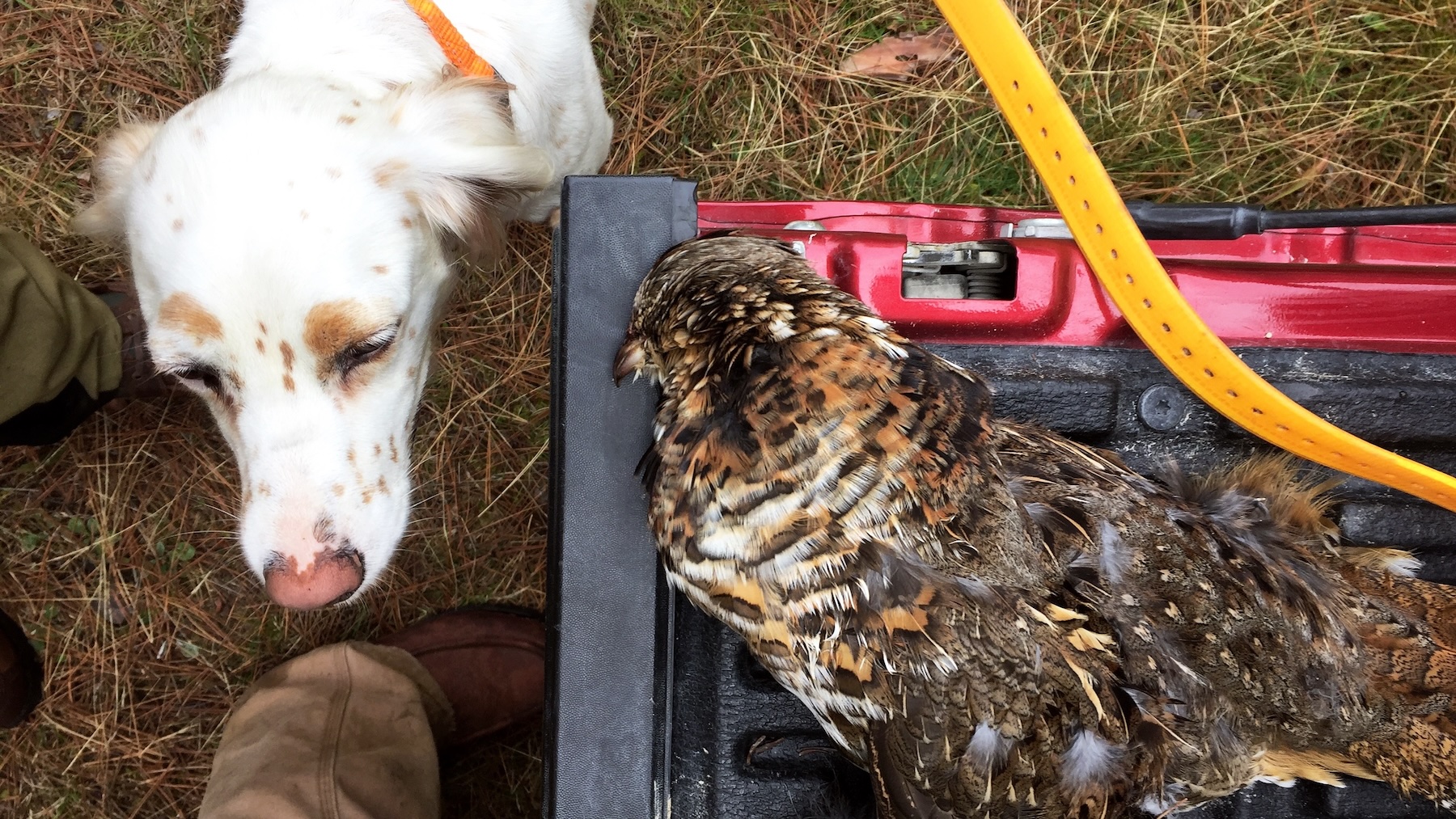
It’s hard to make a bad choice when choosing a sporting breed. More than one breed will easily adapt to where and how you personally hunt. That’s why it’s best to begin by listing your priorities so you can narrow your search. Here are a few things to consider, in no particular order.
Your Budget and Free Time
Dogs are expensive. There are up-front costs, like the actual purchase price of a dog, which can range from a $50 adoption fee to a couple hundred bucks for an unregistered and probably purebred dog (ever see a litter of Labs on craigslist?) to $1,000 or more for an AKC registered puppy. Old-school purists may try to convince you that an expensive dog or championship-riddled pedigree is mandatory for making a good hunting dog; it’s not. If you’ve got time to spare but little cash, consider a cheaper litter or adopting from a rescue that specializes in specific sporting breeds. If you’ve got cash to spare and not much time, consider purchasing a started hunting dog.
Either way, remember that dog food, vet fees, pet sitting or boarding, and training equipment add up. In 2024, the first year of dog ownership costs $2,896 and about $1,866 every year after that, according to the ASPCA. And that’s just for family dogs — there’s no way that tally includes the cost of gear like shotshells, pigeons, or tracking harnesses. If you won’t have time to responsibly exercise a high-energy spaniel or teach a retriever to fetch, then don’t commit to one. Consider a cat instead.
Where You Live
Pay attention to what game is legal to hunt and available where you live, as well as a certain breed’s characteristics. For instance, if you live in the South and plan to hunt ducks, a Chesapeake Bay retriever probably isn’t the best choice. Chessies were bred for duck and goose hunting in the mid-Atlantic, which means they have thicker coats and thrive on hunting in the snow and breaking ice. Instead, opt for a retriever like a Lab or a golden.
If you don’t have wild game within a short drive of your house, you must be willing to visit game farms or drive long distances to find wild game. My Lab and I love to pheasant hunt, but we live in Arkansas. So every fall we hit the road for pheasant country. It’s not convenient, but it’s a compromise I’m happy to make for both of us.
Your Own Physical Abilities
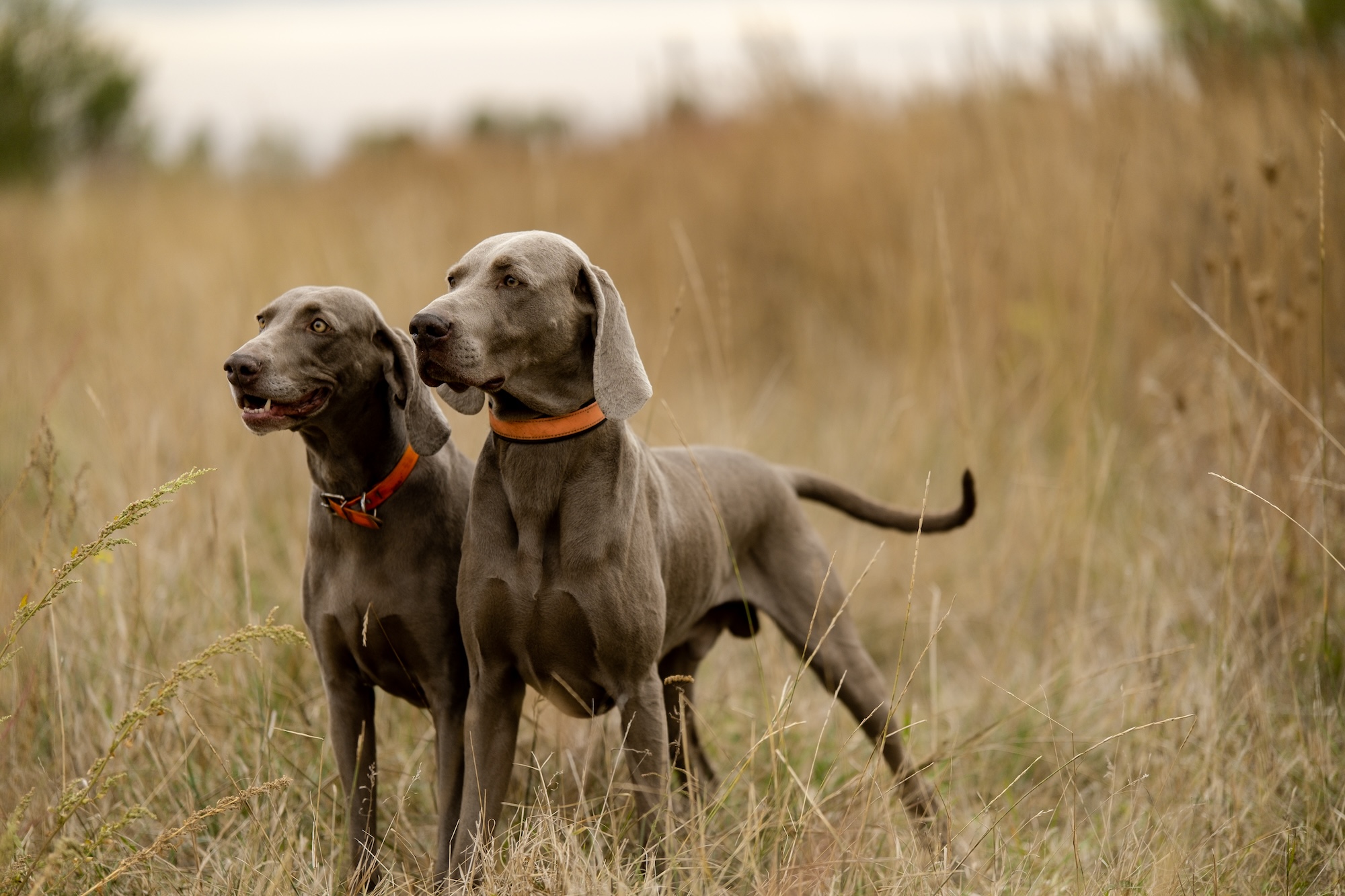
If you’re fit and active, you’ll do just fine with any dog. If your health or mobility is a concern, you should consider dogs that do more of the work for you. For instance, keeping up with a flushing breed like a spaniel or Lab can be difficult for many hunters. I know many older hunters who prefer to run pointing dogs, which cover long distances and find birds for them. There’s still a requirement of fitness to keep up with a pointer — wild birds won’t hold forever — so consider other types of hunting dogs. Beagles are high-energy but can be used to effectively locate and pursue rabbits without excessive legwork from their handlers. In some states and terrain, hunters can track GPS-collared hounds from a vehicle.
Your Family and Household
Take stock of your home, your yard, existing pets, livestock, and your family before making any final decisions about a breed. If you have a small yard in an urban environment, a hound — which loves to pick up scent trails and follow them with a single-minded purpose — may not be advisable. Many breeds are better with young children than others, and it’s important to evaluate a dog’s reputation with children before committing to one (while understanding individual dogs vary in their tolerance to kids). The AKC rates all sporting dog breeds on whether they’re good with young children, affectionate with family members, and good with other dogs.

Your Preferences in a Dog
One fun way to narrow your options are considerations like sex, coat color, and personality traits. If you’re looking for a retriever and a watchdog, a Labrador or Chessie is a good choice; if you want a retriever who wags his tail for everyone, get a golden retriever instead.
While all purebred hunting dogs have a breed standard, there is a smaller ranger of physical characteristics within each, which includes size, coloration, head shape, and more. This is usually a matter of personal preference, so pick what traits speak to you. English setters, for example, are bred with a variety of coat colors, including blue Belton, lemon Belton, roan, and more. When I was researching hunting dogs, I compared the English vs. American Lab and eventually settled on a litter from a pair of British Labs imported from Ireland. I prioritized the parents’ hunting drive, but I also liked their temperament, looks, and size. There’s a whole school of thought about which Labrador retriever colors are best, and plenty of people simply pick a dog’s coat color based on the color of their couch and carpet.
A Puppy vs. a Started Dog
Puppies require extra work and patience, not to mention middle-of-the-night bathroom breaks. The upside is you get to bond with and train your dog from almost the very beginning of its life, allowing you to control proper socialization and foundational experiences. A started dog, meanwhile, allows you to begin hunting immediately, and there’s no denying what a relief it is to live with a matured (or maturing) dog that’s house broken and responsive to commands.
A word of warning: If you do decide to ‘go look’ at a litter of puppies (or a shelter dog), I’ll bet a box of Milk Bones you end up taking one home. So do your research on hunting dogs and decide what you want long before you’re nose to snout with a pile of puppies. —N.K.
How to Pick a Hunting Dog Puppy
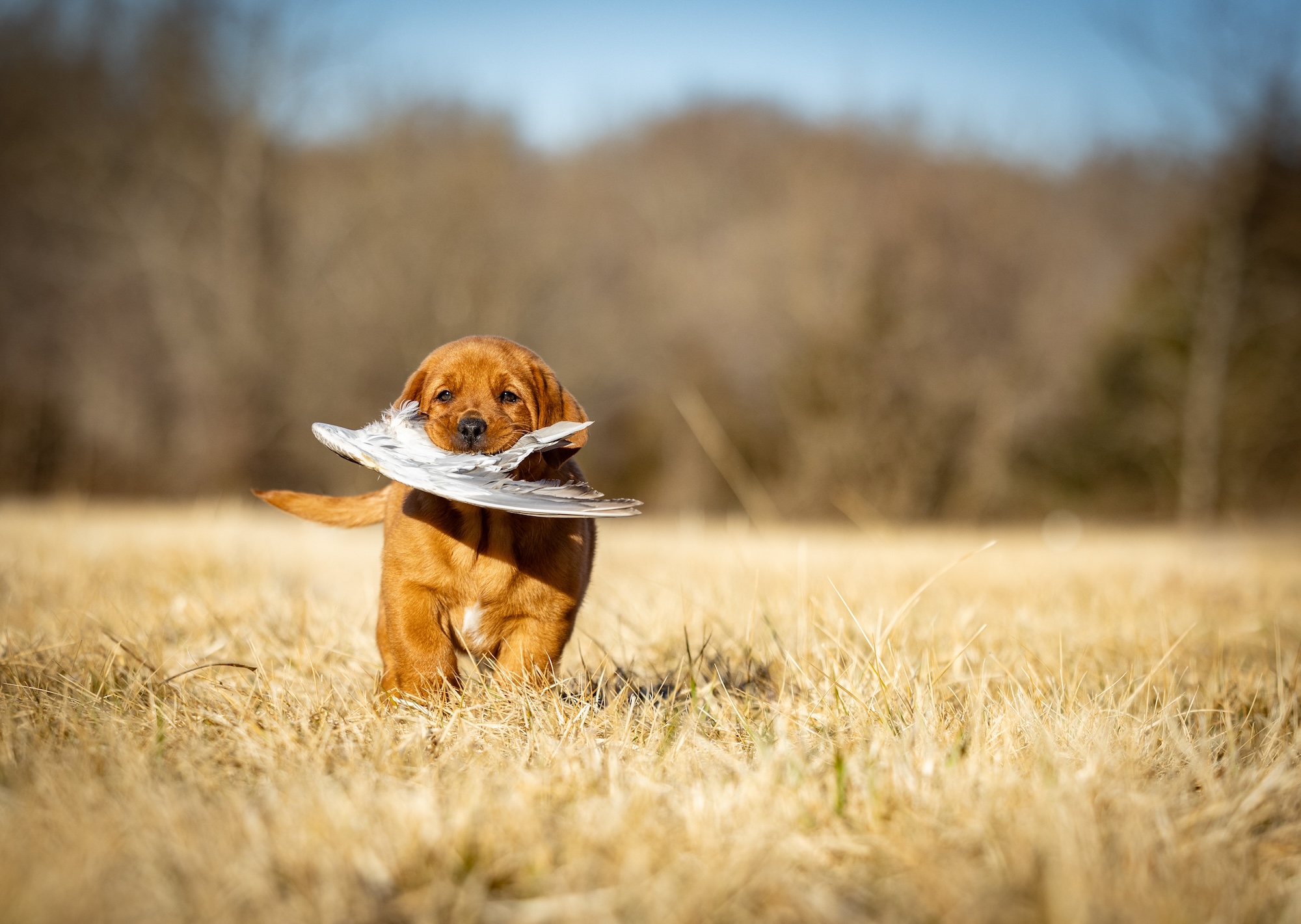
Choosing the ideal hunting dog isn’t about selecting an individual puppy. The real decision comes in picking its parents. Once you’ve chosen a sire and dam, you can simplify the actual puppy-picking decision by focusing on the sex and color you prefer. Then just reach in and grab a pup. They all have similar genetics, and at 8 weeks old, they reveal just a glimpse of their personality and demeanor. So what should you look for in selecting the parents? Here are a few things to keep in mind.
Prioritize Hunting Drive
For a dog to hunt effectively, as well as handle the pressure of training, it has to have desire. That disposition and drive is embedded in its DNA — you can’t instill it with training, though you can discourage or enhance it with training. The best hunting dogs come from field-bred stock. Look for parent hunting dogs that hunt extensively or compete in hunt tests or field trials.
Avoid hunting dog breeds that come from conformation lines; while a few show lines might be able to perform in the field, most of them just can’t cut it. As long as they also hunt or compete in field work, Chesapeake Bay Retrievers may be the only exception to that rule. They’re one of the only remaining breeds that haven’t been split by the politics and influence of the conformation ring and can compete in both worlds.
Preview Your Pup
Your puppy will inherit its body type and energy level from its parents. Consider that the vast majority of time spent with your hunting dog won’t take place in the field, but at home and in the training yard. If the parents’ energy, body size, or temperament wouldn’t work in your everyday life, neither will that of their offspring. If you aren’t able to meet a potential pup’s parents, ask breeders for videos of the sire and dam hunting, training, and around the house — before you commit to a litter.
Get a Matched Set
A big, high-rolling sire paired with a small, mellow dam won’t produce average-size, medium-drive puppies; instead, body size and drive will be unclear, with no direct indication of which puppies inherited which traits. Instead, look for a pair of hunting dogs with similar physiques and energy levels–their puppies will be much more consistent.
Health Clearances
You should only consider breeding pairs that have been vetted for common health problems that affect the hips, elbows, eyes, heart, skin, and muscles. Know what, if anything, the breeder guarantees. If your pup suddenly comes down with hip problems, do you get a refund? Do you have to give the puppy back? Can you keep the pup, get a partial refund, and spay/neuter the animal?
Remember, many maladies don’t show up until later in life. Most guarantees will cover up to the time that a dog can be tested for a disorder (e.g. two years), and by that time the puppy will be part of the family. The best breeders will offer a full refund and allow you to keep your dog.
Read Next: 90 Great Hunting Dog Names
While not foolproof, guarantees help both you and the breeder should something go genetically wrong. Just be sure to talk about it first and get a clear and concise explanation of what happens if something does go awry. — B.L.
Hunting Dog Resources and Further Reading
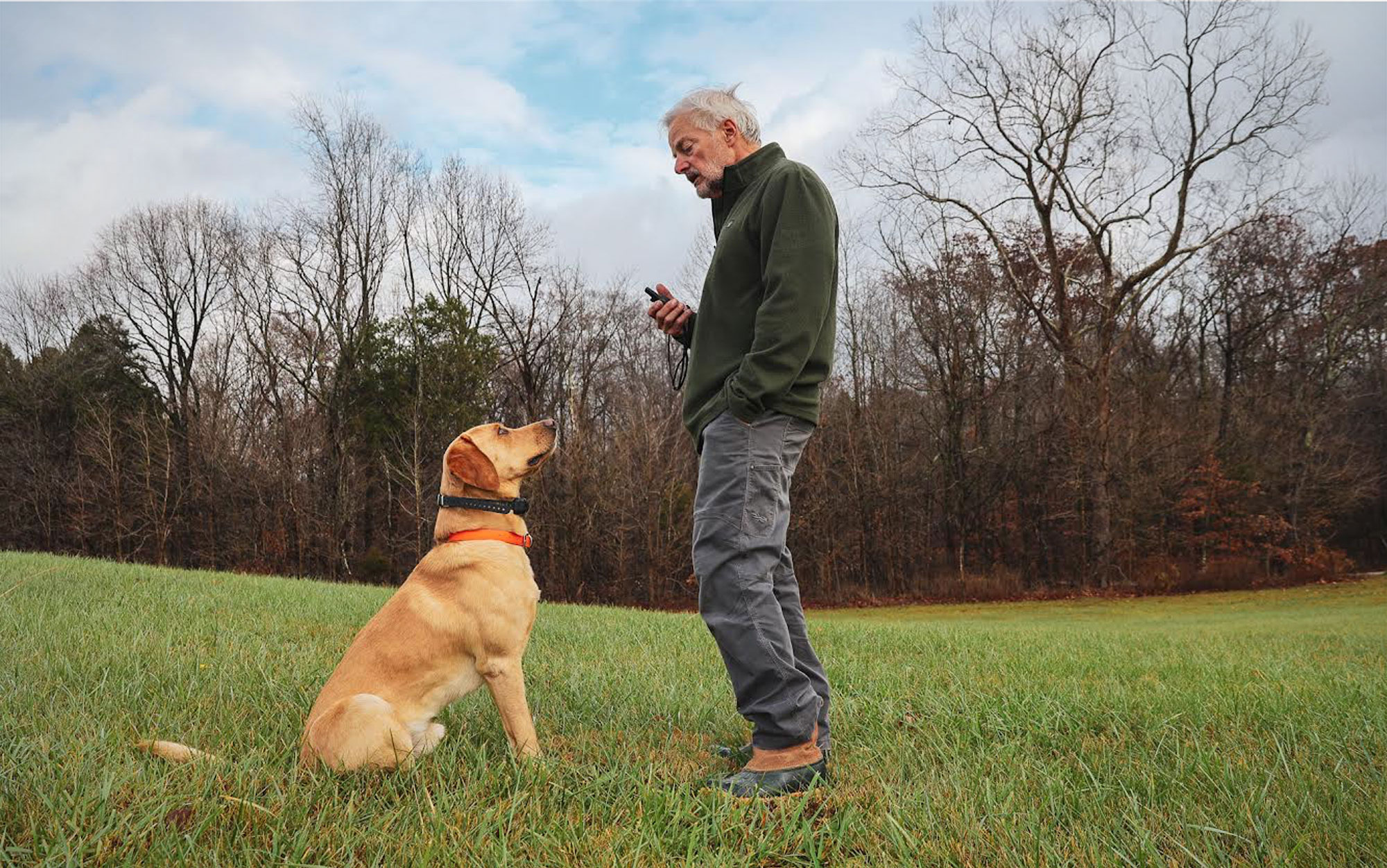
No matter if you get a puppy or a started dog, you’re going to have lots of questions about your hunting dog’s behavior, obedience progress, hunt training, and more. So build a community of fellow hunters, dog owners, and training groups. Here are a few places to start.
- Hunt with experienced dog handlers. Every hunter runs his dogs differently, so hunt with a variety of folks to learn what to do (and often what not to do) with your dog. This is also a good way to help you narrow down which breed you might want to own, since the best way to learn about a particular hunting dog is to hunt over one.
- Online and regional dog groups. You can often find dog training and breed-specific communities on Facebook or regional hunting clubs based on sporting type or breed, which offer member-based training sessions where you can work alongside experienced handlers in a relaxed environment.
- Hunt tests and field trials. The hunt test and field trial communities sometimes get a bad rap (yes, they’re particular and yes there can be drama) but they can also introduce you to a community of like-minded dog handlers who are happy to share their knowledge.
Hunt Tests, Competitions, and Sporting Dog Organizations
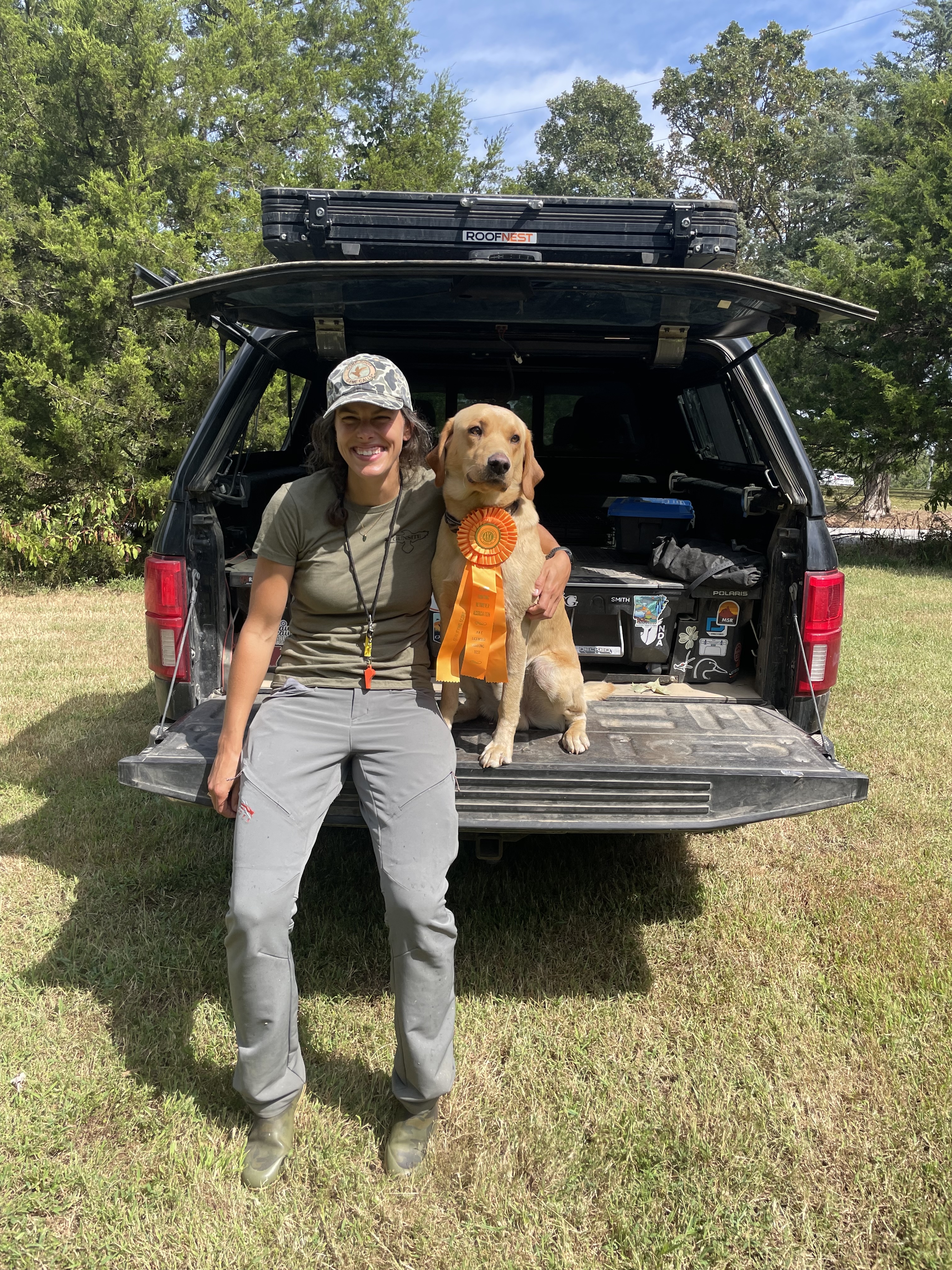
You don’t have to participate in competitions to train a good hunting dog, and plenty of superb hunting dogs don’t have a single competition or title to their name. But if you’re interested in testing yourself and your dog, meeting friends and potential mentor, and learning more about your hunting dog, consider looking into any of these events and organizations:
- AKC Pointing Breed Hunt Tests
- AKC Raccoon Hound Events
- AKC Retriever Hunt Tests
- AKC Spaniel Hunt Tests
- American Pointing Labrador Association
- Cur and Feist World Championship
- Hunting Beagle World Championship
- Hunting Retriever Club (HRC) Hunt Tests
- National Bird Dog Circuit
- North American Shed Hunting Dog Association
- UKC Beagle Gundog Nationals
- UKC Coonhound Events
- UKC Elite Shed Dogs
- United Blood Trackers
Hunting Dog Training, Resources, and Tips
- Cornerstone Gundog Academy for DIY Trainers
- Retriever University
- Book: Game Dog: The Hunter’s Retriever for Upland Birds and Waterfowl – A Concise New Training Method
- Book: Tom Dokken’s Retriever Training: The Complete Guide to Developing Your Hunting Dog
- Book: Canine Field Medicine: First Aid for Your Active Dog
- The Best Hunting Dog Names
- How to Train a Duck Dog Throughout His First Season
- 7 Myths About Shed Hunting Dogs
- Are Hunting Dogs Better Kept Indoors or Outdoors?
- The Ultimate Guide to Buying and Training a Squirrel Dog
- How to Get Started Hunting Squirrels with a Dog
Dog Gear
- The Best Dog GPS Collars
- The Best Dog Training Collars
- The Best Dog Beds for Your Family Hunting Dog
FAQs
A hunting dog’s loyalty often has more to do with the dog’s handler than any particular breed. Proper obedience skills, field training, affection, and a predictable routine are the best ways to build a loyal hunting dog. If your dog can’t rely on you to keep your temper or teach her obedience skills, then don’t be surprised when she doesn’t do what you ask.
If you insist on identifying a specific breed of loyal hunting dog, then follow this old adage: the dumber the breed, the more loyal the dog. Highly intelligent working breeds like standard poodles have a reputation for acting in their own self-interest, while Labrador retrievers (who ranked dead-last in an IQ test of 13 dog breeds) are much more eager to please.
Hunting dogs eat just about anything (including your birds, if you aren’t careful), but adult hunting dogs should really just eat quality dog food and, sure, vet-approved treats. Buy kibble from a reputable dog food brand and, if you have the budget, choose a formula created for sporting breeds, which contain extra protein and fat for active dogs (like Purina Pro Plan Sport 30/20 or Eukanuba Sporting Dog). Beware trendy dog food products advertised in your Instagram feed, which often don’t have many of the essential nutrients dogs require.
Hunt training begins the moment you bring your dog home. You should begin working on basic obedience training, which is essential groundwork for the high-intensity situations you’ll find yourself in while hunting. (If your dog doesn’t recall in the yard, good luck calling him off a pheasant that’s flying toward a busy road.) Start with the basic obedience, then find training resources like books, videos, and professional trainers to help you accomplish your goal, which will include gunbreaking and game introduction.
Final Thoughts About Hunting Dogs
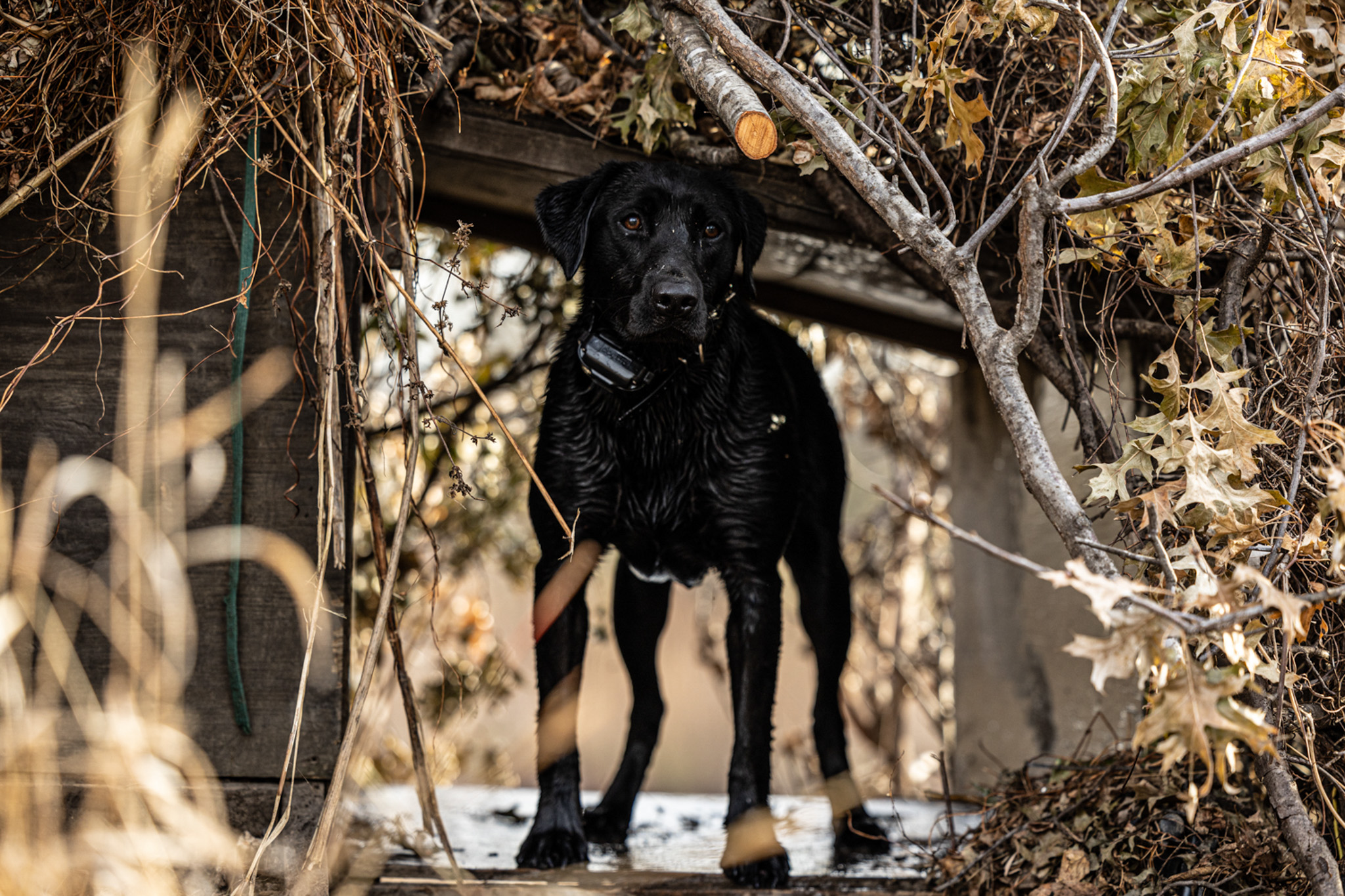
You can guarantee that owning and training hunting dogs is frustrating, expensive, and time-consuming. It will also lead to some of the most rewarding and memorable hunts of your life. Set yourself up for success by researching the best hunting breed for your home and hunting lifestyle, then follow an obedience and training program. —N.K.